Walk into a gallery today, and you might not see a painting on the wall. You might step into a room filled with fog, stand in front of a mirror that distorts your reflection, or look at a screen showing a live feed of yourself from five minutes ago. This isn't science fiction; it is Contemporary Art, which is art produced in the present period that often rejects traditional boundaries to explore new ways of seeing the world. For decades, art was about representation-painting a bowl of fruit so it looked real. Today, contemporary art asks a much more unsettling question: Is what you see actually real?
We live in an age where deepfakes can mimic voices perfectly, augmented reality overlays data onto our streets, and social media curates a version of life that rarely matches reality. Artists are not just observing these changes; they are weaponizing them. They create experiences that force us to confront the fragility of our senses and the constructed nature of truth. If you have ever felt unsure about what is genuine in your daily life, contemporary art offers a space to explore that doubt without judgment.
The Shift From Representation to Experience
To understand why contemporary art feels so different, we have to look at what came before. In classical art, the goal was mimesis-the imitation of nature. A Renaissance painter wanted you to believe the person on the canvas was breathing. But starting in the early 20th century, movements like Cubism broke objects apart to show multiple perspectives at once. By the mid-century, Abstract Expressionism removed recognizable forms entirely, focusing on emotion and gesture.
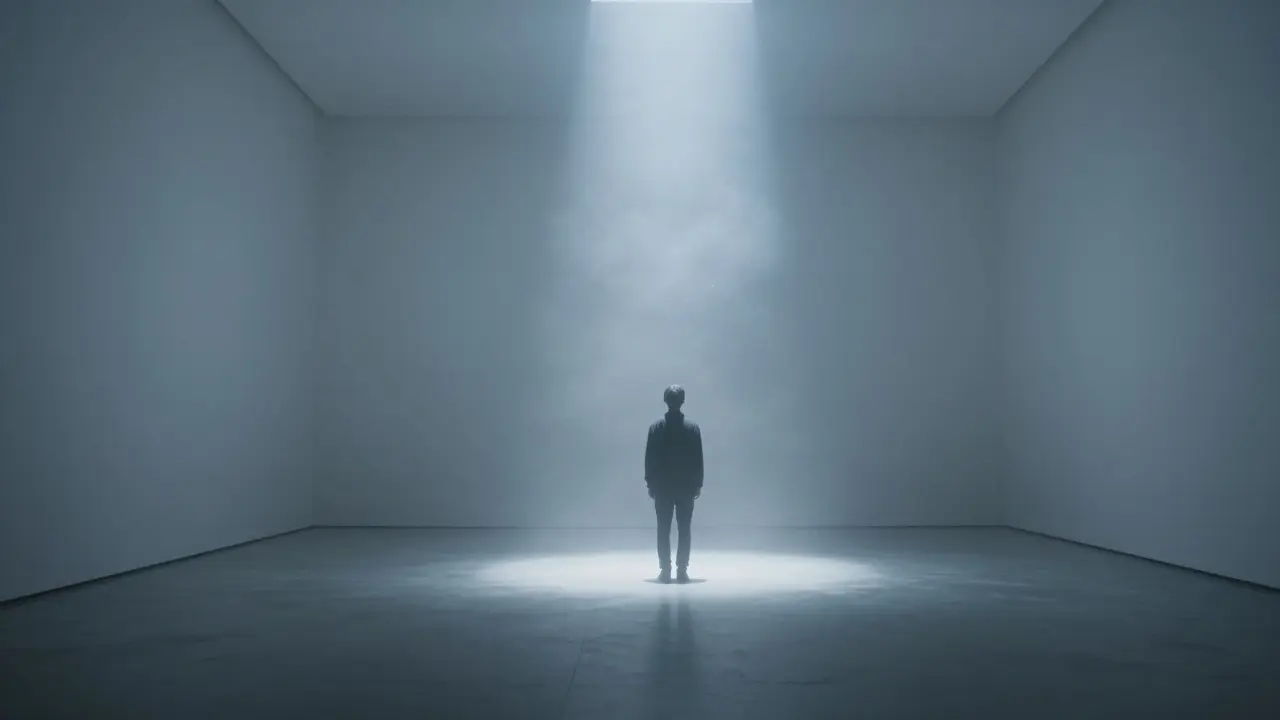
Contemporary art takes this further by removing the object altogether. Instead of looking at a thing, you participate in an event. This shift is crucial because it moves the burden of meaning from the artist to the viewer. When you stand in a dark room with a single light bulb swinging slowly, as in James Turrell’s installations, there is no "subject" to interpret. There is only your experience of light and space. The art exists only while you are perceiving it. This challenges the idea that reality is stable and independent of the observer. It suggests that reality is something we co-create through our attention.
- Traditional Art: Passive observation of a static object.
- Modern Art: Interpretation of abstract forms or emotions.
- Contemporary Art: Active participation in an ephemeral experience.
This evolution means that when you engage with contemporary work, you are not just consuming culture; you are testing your own cognitive limits. Are you seeing what is there, or what you expect to be there?
Immersive Installations and Sensory Overload
One of the most powerful tools in contemporary art is immersion. Artists like Olafur Eliasson creates large-scale installations that manipulate natural elements such as water, light, and temperature. In his work The Weather Project at Tate Modern, he built a false sun using mist and yellow lights. Thousands of people lay on the floor, taking selfies under this artificial glow, convinced for a moment that they were experiencing something monumental and natural.
Why does this matter? Because it exposes how easily our brains accept simulation as reality. Eliasson didn’t trick us with magic; he used simple physics and psychology. He showed that if the sensory input is consistent enough, our mind will fill in the gaps. In a world where virtual reality headsets promise to replace physical travel, these installations serve as early warnings. They ask us to consider: How much of our emotional response is tied to the authenticity of the source, versus the intensity of the stimulus?
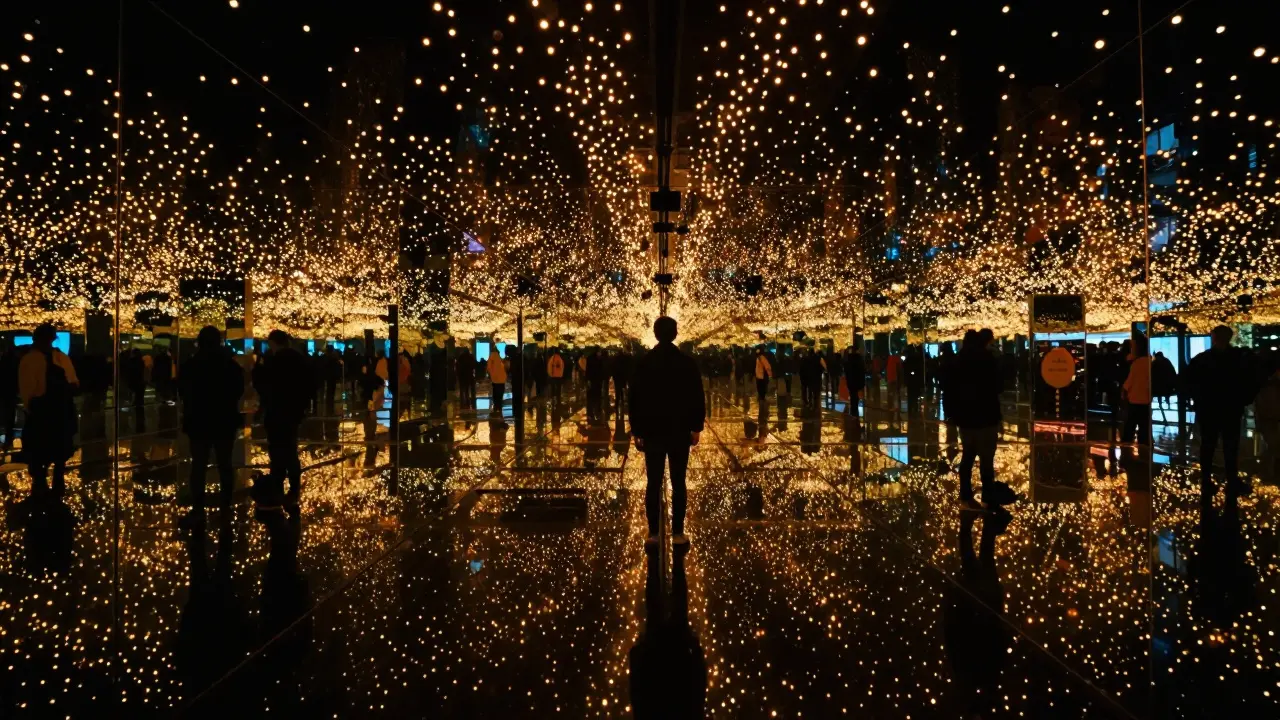
Another example is Yayoi Kusama's Infinity Mirror Rooms. These enclosed spaces use mirrors and LED lights to create the illusion of infinite space. Visitors often report feeling small, lost, or overwhelmed. This is not just aesthetic pleasure; it is a confrontation with the concept of infinity itself. Our brains struggle to process endless repetition, leading to a state of cognitive dissonance. By inducing this feeling, Kusama forces us to acknowledge the limits of human perception. We cannot truly grasp infinity; we can only simulate it.
Digital Media and the Post-Truth Era
If installation art plays with physical perception, digital art plays with informational reality. We now live in a post-truth era where facts are often secondary to emotion and belief. Contemporary artists use digital tools to highlight this instability. AI-generated art has become a major topic since the rise of models like Midjourney and DALL-E. When an AI creates an image based on text prompts, who owns the reality depicted? The machine has never seen the subject; it has only processed statistical patterns of pixels.
Consider the work of Refik Anadol, who uses machine learning to visualize massive datasets. He turns architectural archives or environmental data into flowing, liquid-like structures. At first glance, these look like organic growths or dreams. But they are purely mathematical. Anadol challenges us to find beauty and meaning in cold data. More importantly, he shows that "truth" can be rendered in infinitely many ways depending on the algorithm used. If two different algorithms process the same data, they produce two different realities. Which one is correct? Neither. Both are valid interpretations.
This has profound implications for how we consume news and information. Just as Anadol’s visuals are subjective representations of data, so too are our narratives about the world. Contemporary digital art makes this abstraction visible, reminding us that every image we see online is filtered through code, bias, and design choices.
| Technique | Primary Medium | Psychological Effect | Real-World Parallel |
|---|---|---|---|
| Immersive Installation | Light, Space, Sound | Sensory overload, loss of scale | Virtual Reality environments |
| AI Generation | Algorithms, Data | Questioning authorship and authenticity | Deepfakes and synthetic media |
| Conceptual Art | Ideas, Text, Objects | Cognitive dissonance, intellectual engagement | Political propaganda and framing |
| Bio-Art | Tissue, DNA, Bacteria | Ethical discomfort, boundary blurring | Genetic engineering and cloning |
Conceptual Art and the Power of Ideas
Not all contemporary art relies on technology or spectacle. Some of the most challenging works are purely conceptual. Conceptual Art emerged in the 1960s with the belief that the idea behind the work is more important than the finished object. A prime example is Marcel Duchamp's Fountain (1917), a urinal signed with a pseudonym. While Duchamp is modern rather than contemporary, his legacy lives on in artists who use everyday objects to disrupt expectations.
Take Mona Hatoum's Homebound (2007). She created a model of a room using tea towels and olive wood, but the windows are covered with grillwork, and the door is locked. It looks like a domestic space, but it functions as a prison. This piece challenges our perception of safety and home. We assume our homes are sanctuaries, but geopolitical conflicts and surveillance technologies have blurred those lines. Hatoum forces us to see the potential threat in familiar surroundings.
Conceptual art works by creating a gap between expectation and reality. You expect a sculpture to be solid; instead, it is fragile. You expect a portrait to reveal identity; instead, it hides it. This friction keeps your brain active. You cannot passively scroll past conceptual art; you must stop and think. In a world designed for quick consumption, this demand for slow, critical thinking is radical.
Bio-Art and the Ethics of Life
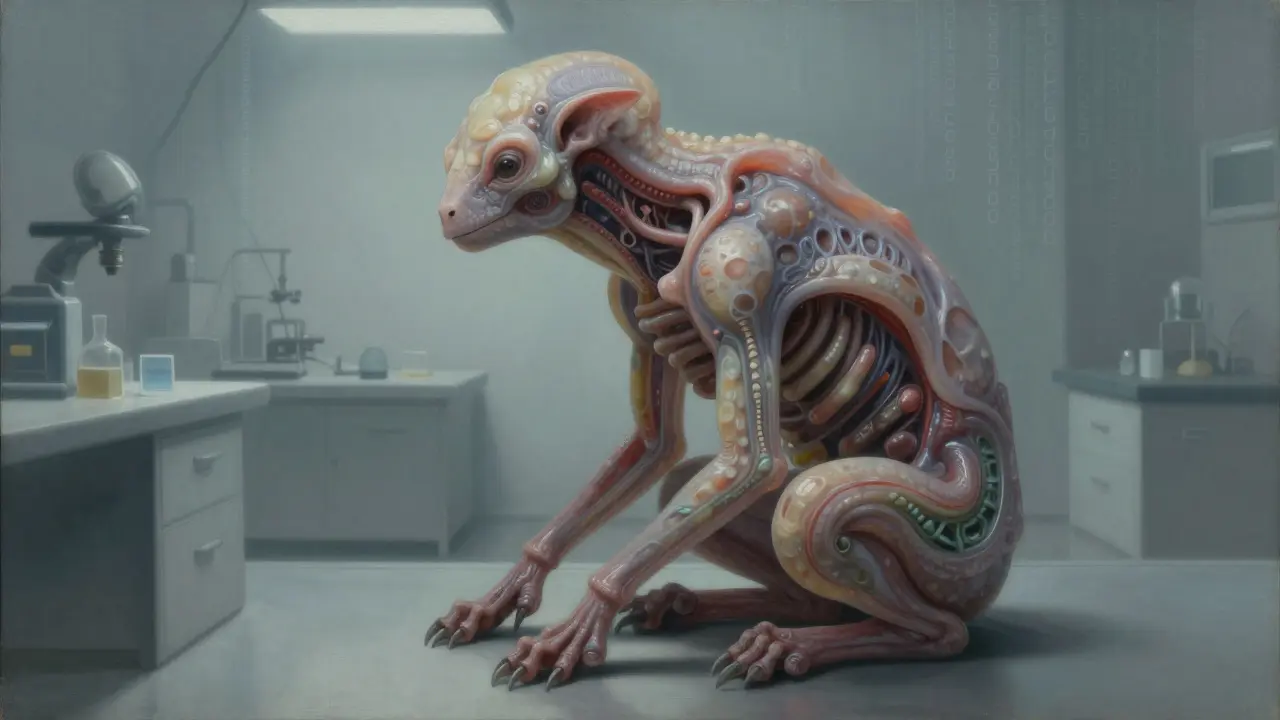
Perhaps the most direct challenge to our perception of reality comes from bio-art. This field combines biological materials with artistic practice. Artists like Eduardo Kac created the GFP Bunny, a rabbit genetically modified to glow green under blue light. Was this art? Science? Ethics experiment? All three. Kac challenged the boundary between nature and culture. If we can edit the genetic code of a living being for aesthetic purposes, what defines "natural"?
Bio-art also deals with decay and mortality. Patricia Piccinini creates hyper-realistic sculptures of hybrid creatures. Her works look like animals you might encounter in a zoo, but closer inspection reveals unnatural features-extra limbs, strange textures, ambiguous gender markers. These creatures evoke empathy and revulsion simultaneously. They challenge our anthropocentric view of reality, suggesting that life could evolve in ways we currently find disturbing. As genetic editing becomes more accessible, these questions move from speculative to urgent.
Bio-art reminds us that reality is not fixed. Biology is mutable. What we consider "real" or "normal" is often just a temporary consensus. By presenting alternative forms of life, bio-art expands our imagination beyond current limitations.
Why This Matters in Daily Life
You might wonder why any of this matters if you don’t visit galleries. The answer is simple: contemporary art trains your brain to question assumptions. Every day, you navigate a world full of curated realities. Your phone screen filters your contacts. Your news feed prioritizes outrage. Your job performance metrics reduce your complex labor to numbers.
Engaging with contemporary art builds resilience against manipulation. When you have experienced the ambiguity of an installation or the deception of a digital image, you become less likely to accept surface-level truths. You learn to look for the mechanism behind the message. This critical literacy is essential for democratic participation and personal autonomy.
Moreover, contemporary art provides a safe space to fail. In life, misinterpreting reality can have serious consequences. In art, confusion is part of the journey. Being wrong about a piece of art teaches humility. It reminds us that our perspective is limited. This openness to uncertainty is a valuable trait in a rapidly changing world.
What is the main goal of contemporary art?
The main goal is not necessarily to create beautiful objects, but to provoke thought, challenge assumptions, and explore new ways of understanding the world. It often focuses on ideas, experiences, and social issues rather than technical skill alone.
How does contemporary art differ from modern art?
Modern art roughly covers the late 19th to mid-20th century and focused on breaking away from traditional representation. Contemporary art refers to art made from the late 20th century to today. It is characterized by global influences, diverse media (including digital and biological), and a focus on concepts and audience participation.
Can anyone understand contemporary art?
Yes, but it requires a shift in mindset. Instead of asking "What does this depict?", ask "What does this make me feel or think?" There is no single right answer. Your personal reaction is part of the artwork's meaning.
Why do some contemporary artworks look unfinished or simple?
Many contemporary works prioritize the idea over the execution. A simple object may carry complex historical, political, or philosophical meanings. The simplicity invites viewers to project their own interpretations and engage more deeply with the concept.
How does digital art change our perception of reality?
Digital art highlights the fluidity of information. It shows that images and data can be easily manipulated, replicated, and altered. This makes us aware that what we see on screens is often a constructed version of reality, influenced by algorithms and user preferences.