What if the point of art wasn’t to be beautiful - but to break everything you thought beauty meant? That’s exactly what Dadaism did. In the middle of World War I, when the world was falling apart, a group of artists in Zurich decided to make art that didn’t care about skill, harmony, or meaning. They laughed at galleries. They glued random objects together. They called a urinal a masterpiece. And somehow, it changed art forever.
Why Dadaism Was Born in Chaos
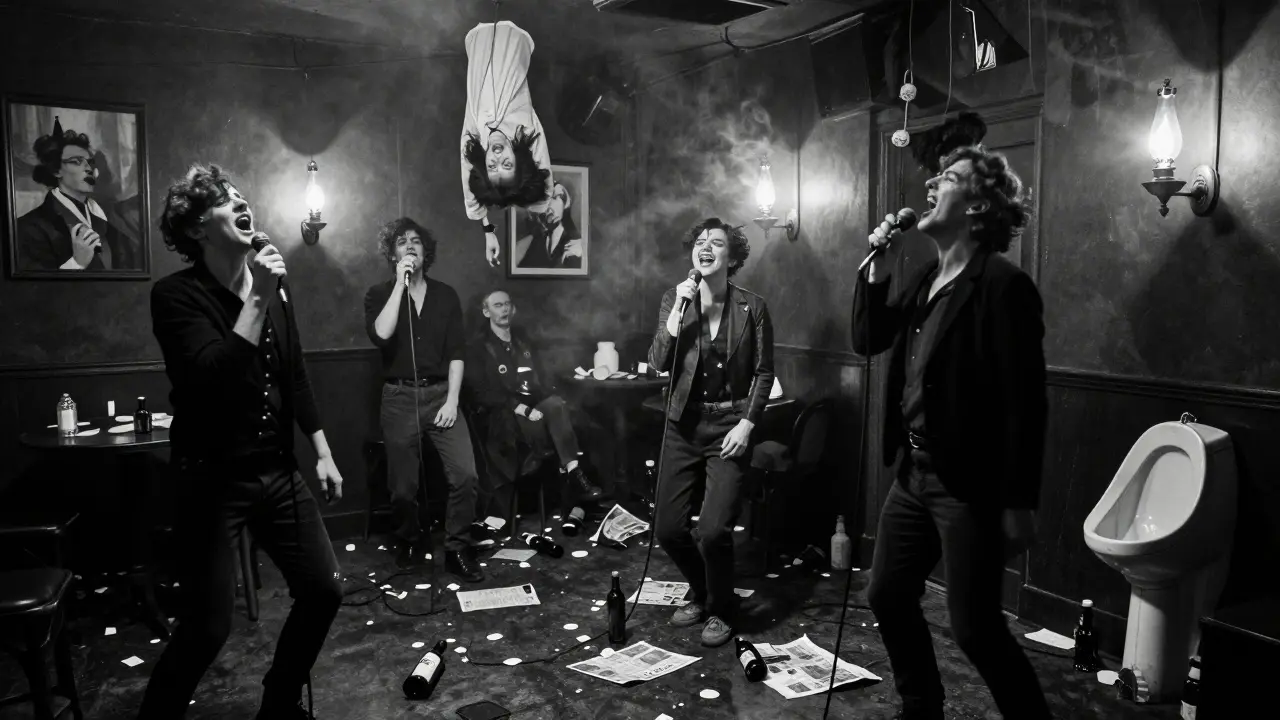
Dadaism didn’t start in a studio. It started in a cabaret. In 1916, at the Cabaret Voltaire in Zurich, poets, painters, and musicians who hated the war gathered to scream poems, play chaotic music, and hang upside-down paintings. They weren’t trying to create something new - they were trying to destroy the old. The name ‘Dada’ was picked randomly from a dictionary. It means nothing in French or German. And that was the point.
These artists were fed up. They watched their parents’ generation send millions to die over borders, flags, and pride. They saw art as part of the problem - polished, pretentious, and pretending to be above the mess of real life. So they made art that was ugly, absurd, and loud. No brushstrokes. No rules. No respect.
It wasn’t rebellion for the sake of shock. It was a scream. A protest. A refusal to play along.
Marcel Duchamp and the Fountain That Broke Art
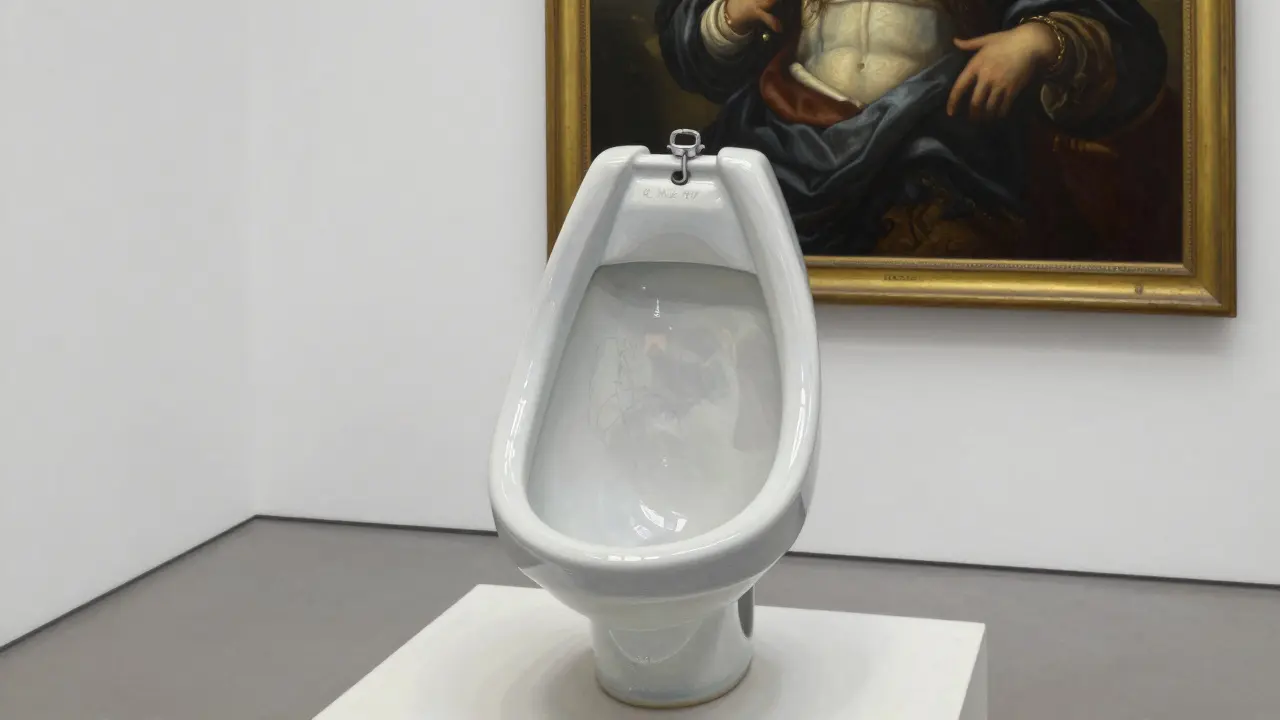
Marcel Duchamp didn’t paint a single brushstroke for his most famous work. He bought a porcelain urinal, turned it upside down, signed it ‘R. Mutt 1917’, and called it Fountain. He submitted it to an exhibition in New York. The committee refused to display it. The art world exploded.
Before Fountain, art was about craftsmanship. You needed to draw well. Paint realistically. Show emotion. Duchamp said: What if the idea matters more than the hand that made it? He wasn’t trying to make a beautiful object. He was asking: Who gets to decide what counts as art?
Today, Fountain is considered one of the most influential artworks of the 20th century. It’s in museums. It’s in textbooks. It’s on posters. And it started as a joke.
The Tools of Dada: Collage, Readymades, and Nonsense
Dada artists didn’t need paint. They used what was lying around.
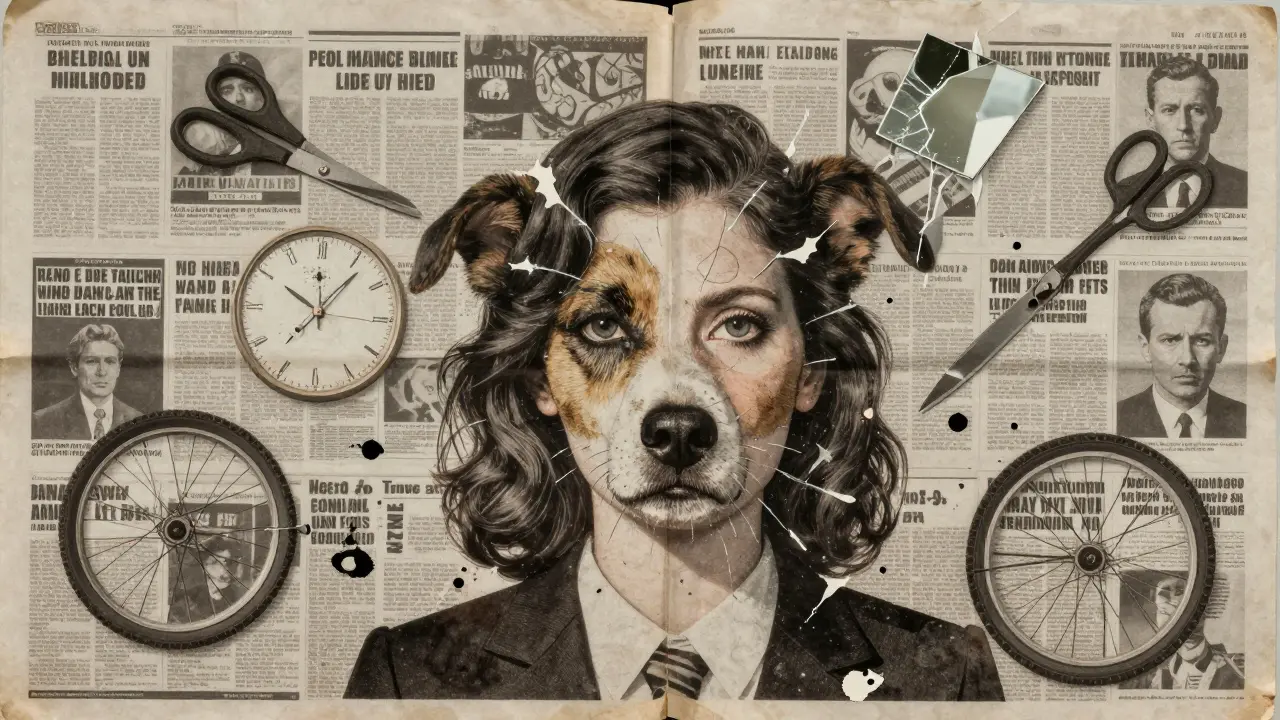
- Collage: Tearing up newspapers, photos, and posters to make chaotic, layered images. Hannah Höch used images of politicians and women to mock gender roles and nationalism.
- Readymades: Ordinary objects, signed and presented as art. A bottle rack. A bicycle wheel. A pair of scissors. Duchamp called them ‘anti-art’ - but they forced people to rethink what art could be.
- Sound poetry: Words stripped of meaning. Just sounds. Like ‘barm barf barf bar’ - shouted into a microphone. Tristan Tzara wrote poems by pulling words from a hat.
- Photomontage: Cutting and pasting photos to create surreal, jarring scenes. John Heartfield used this to attack Hitler and capitalism.
These weren’t just techniques. They were weapons. They attacked the idea that art had to be ‘made’ by skilled hands. Anyone could do it. And that scared the art world.
Dada vs. Beauty: A Radical Rejection
For centuries, beauty meant balance. Symmetry. Harmony. Dada said: Forget that.
They didn’t just make ugly art. They made art that refused to be understood. A painting with no subject. A sculpture made of trash. A poem that didn’t rhyme. They didn’t want you to admire it. They wanted you to be confused. Angry. Laughing. Questioning.
Think of a Renaissance painting - perfect skin, soft light, calm expression. Now imagine a Dada portrait: a face stitched together from magazine clippings of a dog, a clock, and a politician. No beauty. No meaning. Just noise.
Dada didn’t replace beauty. It shattered the idea that beauty had to be the goal. And that opened the door for everything that came after - Surrealism, Pop Art, Conceptual Art. Without Dada, there’s no Warhol. No Banksy. No art made from trash, toilet paper, or a banana duct-taped to a wall.
The Legacy: How Dada Still Lives Today
Dada didn’t last long as a movement. By the early 1920s, most of its key figures had moved on. Some went to Paris. Some became Surrealists. But the damage was done.
Today, you see Dada everywhere:
- Artists who use trash as materials - like El Anatsui’s bottle-cap tapestries.
- Performance art that makes audiences uncomfortable - like Marina Abramović’s silent stares.
- Internet memes that mock seriousness - a cat in a suit labeled ‘CEO of Chaos’.
- Brand campaigns that parody advertising - like IKEA’s surreal, nonsensical ads.
Even social media is Dadaist. A viral video of someone doing nothing? A tweet that makes no sense but gets a million likes? That’s Dada. It’s not about meaning. It’s about disruption.
Dada didn’t die. It just went underground. And now, in a world flooded with ads, filters, and polished influencers, its spirit feels more alive than ever.
Who Were the Key Players?
Dada wasn’t one person. It was a crowd of radicals:
- Marcel Duchamp - The quiet provocateur. His readymades changed the rules of art.
- Hannah Höch - The only major female Dadaist. Used photomontage to expose sexism and war propaganda.
- Tristan Tzara - The poet who wrote manifestos in blood. He believed art should be as random as life.
- George Grosz - A German artist who drew grotesque portraits of corrupt politicians and capitalists.
- John Heartfield - Turned political posters into weapons. His anti-Nazi collages saved lives.
- Man Ray - Took surreal photos and invented rayographs - images made without a camera.
Each of them attacked beauty in their own way. But they all agreed: art shouldn’t comfort. It should wake you up.
Dada’s Biggest Misunderstanding
People still think Dada was just nonsense. That it was a joke. That it didn’t mean anything.
That’s the joke.
Dada didn’t mean nothing. It meant: Stop accepting things because they’re supposed to be true. Stop believing that art has to be pretty. Stop trusting institutions that say what’s valuable. Question everything.
When you see a child draw a square with five legs and call it a dog - that’s Dada. Not because it’s funny. But because it’s honest. It doesn’t care what adults think it should look like.
Dadaism wasn’t about destroying art. It was about freeing it.
How to Spot Dada Today
You don’t need to go to a museum to find Dada. Look around.
- A street artist paints a giant banana on a brick wall - and sells it for $120,000. Dada.
- A TikTok video of someone slowly eating a spoonful of salt. 5 million views. Dada.
- A museum displays a pile of shredded newspapers and calls it ‘The End of Art’. Dada.
- A fashion brand releases a jacket made entirely of plastic bags. Dada.
Dada doesn’t need to be old. It just needs to be disruptive. To laugh at the rules. To say: This isn’t art - but why not?
That’s why Dada still matters. Not because it was beautiful. But because it refused to be.
Was Dadaism really art?
Dadaism didn’t care whether it was called art. It challenged the idea that art needed approval from museums, critics, or tradition. By presenting everyday objects as art - like a urinal or a bottle rack - Dada artists forced people to ask: Who decides what art is? Today, institutions accept Dada as art because it changed the definition of art itself.
Why did Dadaists use nonsense and chaos?
They used nonsense because the world felt insane. World War I had shown that logic, reason, and civilization could lead to mass death. Dadaists rejected the systems that caused the war - including the idea that art should be orderly, beautiful, or meaningful. Chaos was their protest. Nonsense was their truth.
How is Dada different from Surrealism?
Dada was angry and destructive. Surrealism was curious and dreamy. Dada rejected meaning; Surrealism tried to uncover hidden meanings in the unconscious mind. Many Dadaists, like André Breton, became Surrealists. But while Dada laughed at the world, Surrealism tried to understand it.
Did Dada have any political goals?
Yes. Many Dadaists were fiercely anti-war and anti-capitalist. John Heartfield’s collages attacked Hitler. George Grosz drew corrupt bankers as monsters. Hannah Höch exposed gender inequality. Dada wasn’t just about art - it was about tearing down the systems that caused suffering.
Can anyone create Dada art today?
Absolutely. Dada doesn’t require training. It requires rebellion. Take something ordinary - a sock, a receipt, a broken phone - and present it as art. Give it a strange title. Don’t explain it. That’s Dada. It’s not about skill. It’s about attitude.