
Paul Artistry

Recent Posts
  • Art Nouveau: A Fusion of Beauty and Craftsmanship
  • Embracing the Abstract: The Intricacies of Constructivism Art
  • Unveiling Bauhaus: Pioneers of Contemporary Architecture
  • Travel Back in Time: Exploring Rococo's Golden Age
  • The Lasting Legacy of De Stijl in Modern Design
Archives
  • December 2025 (6)
  • November 2025 (10)
  • October 2025 (9)
  • September 2025 (9)
  • August 2025 (10)
  • July 2025 (8)
  • June 2025 (7)
  • May 2025 (10)
  • April 2025 (8)
  • March 2025 (9)
  • February 2025 (8)
  • January 2025 (9)
Categories
  • Art and Culture (126)
  • Art History (86)
  • Art and Design (51)
  • Culture (7)
  • Literature and Fiction (7)
  • Home and Garden (4)
Paul Artistry
  • Baroque Influence
  • Bauhaus Influence
  • Expressionism Impact
  • Gothic Romance

Nature-Based Art: Earth, Land, and Environmental Works That Redefine Creativity

When we talk about nature-based art, art that uses natural materials and landscapes as both medium and subject. Also known as environmental art, it doesn’t hang on walls—it lives in fields, deserts, and riverbanks, shaped by wind, rain, and time. This isn’t just art that pictures nature. It’s art that becomes part of it.

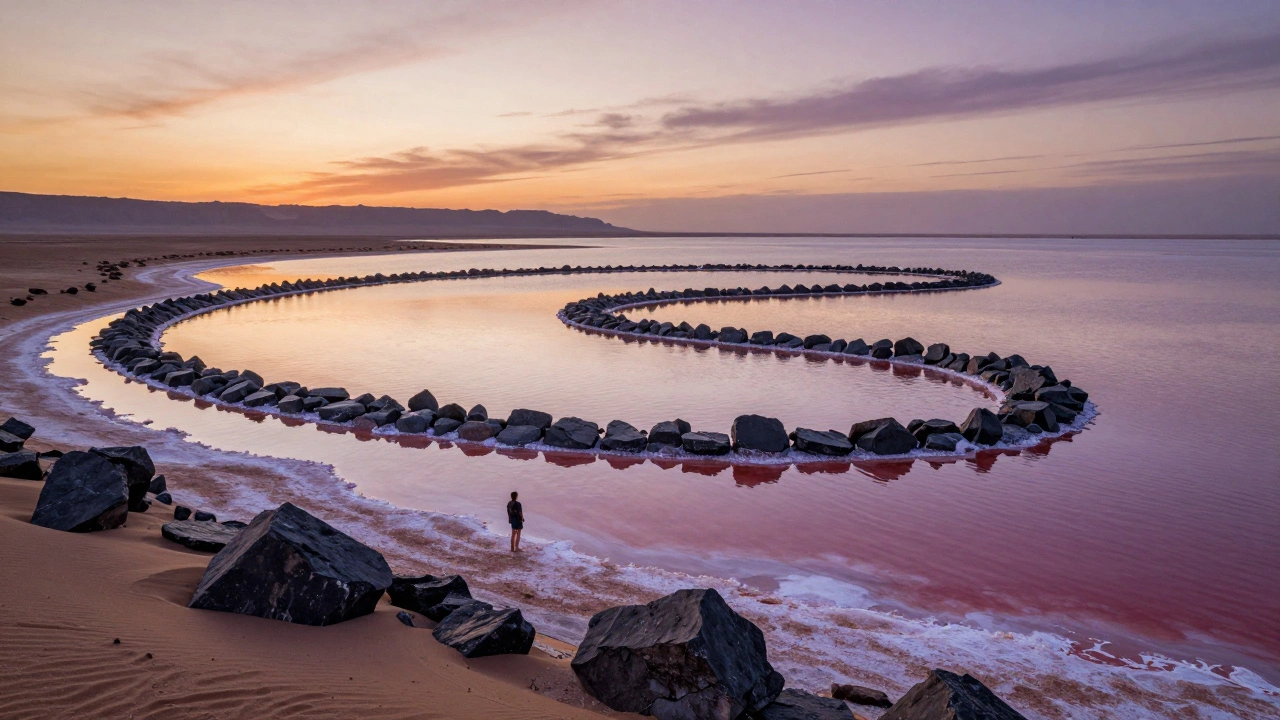
One of its most powerful forms is land art, large-scale works built directly into the environment using earth, rocks, and vegetation. Also called earthworks, these pieces reject galleries and museums entirely. Think of Robert Smithson’s Spiral Jetty, a 1,500-foot coil of rocks and salt crystals jutting into Utah’s Great Salt Lake, or Andy Goldsworthy’s delicate leaf mosaics that dissolve after a single rain. These aren’t meant to last. Their impermanence is the point. Nature-based art asks us to rethink ownership, permanence, and our place in the natural world. It doesn’t decorate the landscape—it对话 with it.

This movement connects deeply with how we see ecology, time, and even grief. When an artwork melts into the ground or is carried away by a river, it forces us to accept change as part of beauty. It’s not about control—it’s about collaboration. Artists don’t impose on nature; they listen to it, work with its rhythms, and let it have the final say.

You’ll find this theme woven through many of the posts below: from how land art challenges traditional ideas of sculpture, to how artists use natural materials to make political statements about climate and consumption. Some pieces are massive and remote. Others are quiet, hidden, and fleeting. All of them ask the same question: what does it mean to create when the world itself is the gallery?

Why Land Art Matters in Today's World

Why Land Art Matters in Today's World

4 Dec
Art and Culture Malcolm Blythe

Land art reconnects us to the natural world through temporary, site-specific works made from earth, stone, and organic materials. It challenges consumerism, responds to climate change, and reminds us we belong to the land-not above it.

Read
More

Menu

  • About
  • Terms of Service
  • Privacy Policy
  • UK GDPR
  • Contact

© 2025. All rights reserved.