Abstract Expressionism didn’t just change painting-it broke it open. Before the 1940s, the center of the art world was Paris. After World War II, it shifted to New York, and a new kind of art emerged that no one had seen before: large canvases, wild splatters, deep colors that seemed to hum with emotion, and brushstrokes that looked like raw energy frozen in time. This wasn’t about painting a tree or a person. It was about painting feelings-anger, joy, fear, silence-without using any recognizable shapes. That’s the core of Abstract Expressionism: an artistic language built not on what you see, but on what you feel.
What Makes Abstract Expressionism Different?
Most art before this movement tried to represent something real. Even Impressionists painted light on water or people in parks. Abstract Expressionists didn’t care. They wanted to bypass the eye and speak directly to the soul. The paintings weren’t illustrations. They were experiences. A Jackson Pollock drip painting isn’t a picture of a storm-it’s the storm itself. A Mark Rothko rectangle doesn’t depict a sunset-it *is* the weight of twilight.
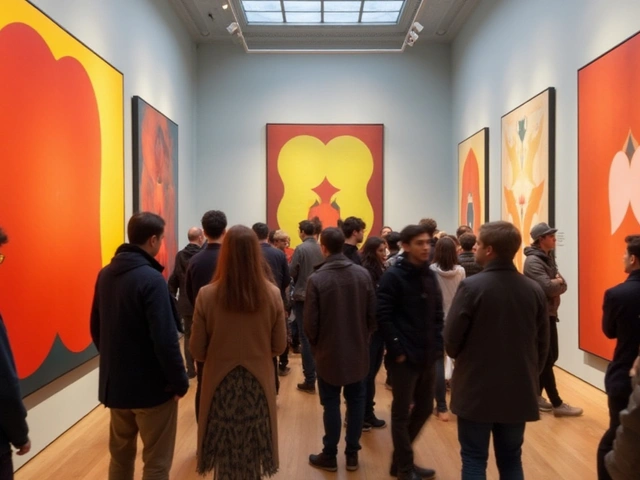
This movement rejected traditional techniques like perspective and realistic shading. Instead, artists focused on the physical act of painting. The canvas became a stage. The brush, the stick, the pour-each gesture carried meaning. The size of the paintings mattered too. Many were taller than a person. You didn’t look at them from across the room. You stood in front of them. You were surrounded. That’s intentional. The goal was immersion.
The Two Main Branches: Action Painting and Color Field
Abstract Expressionism wasn’t one style. It split into two powerful directions: Action Painting and Color Field.
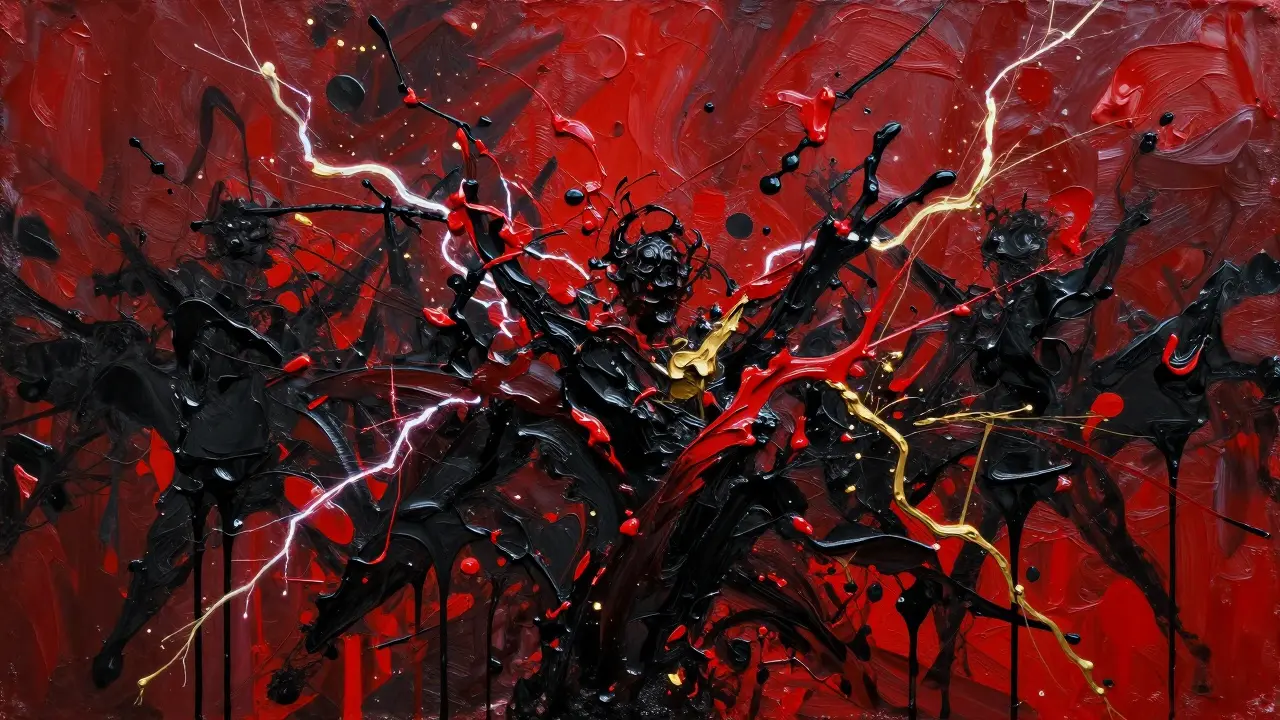
Action Painting is what most people picture when they hear the term. Think Jackson Pollock. He’d lay his canvas on the floor, drip and fling paint from above, move around it like a dancer, sometimes even using sticks or syringes. His work was chaotic, physical, and deeply personal. The paint wasn’t applied-it was released. The canvas captured his movements, his energy, his state of mind. This wasn’t planning. It was instinct. Pollock called it "the painting has a life of its own."
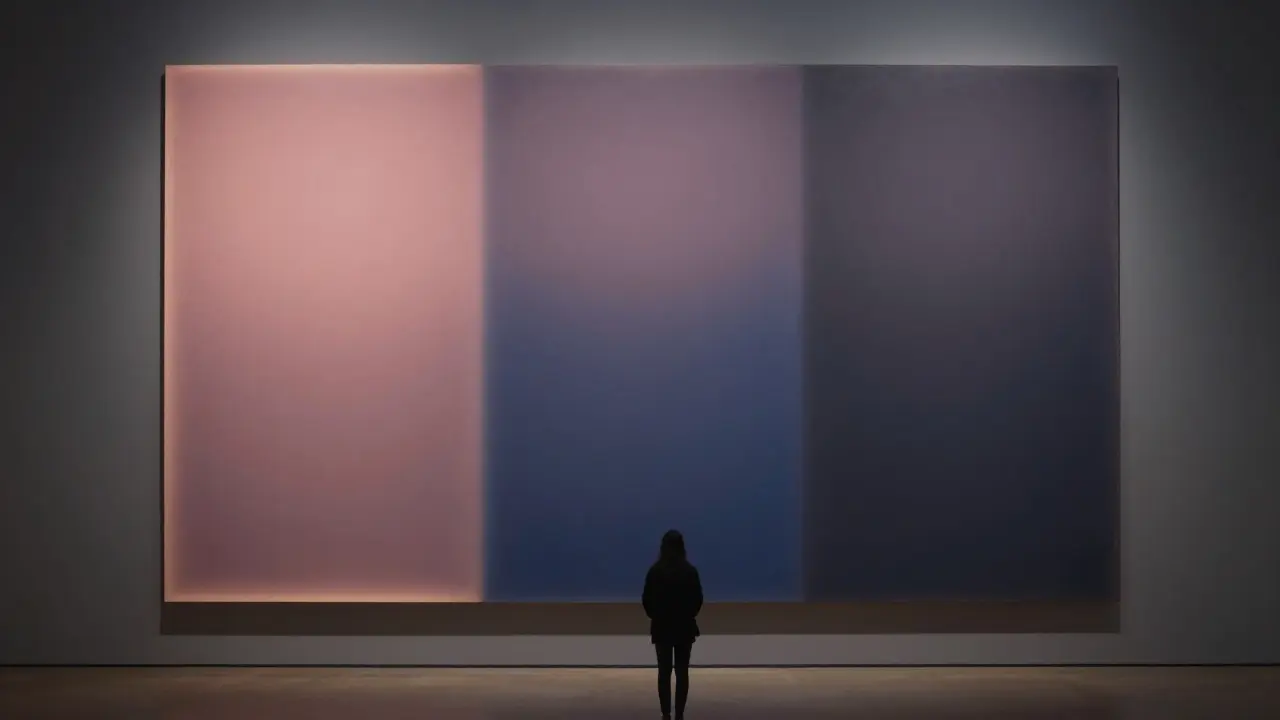
On the other side was Color Field painting. Artists like Mark Rothko, Barnett Newman, and Clyfford Still focused on large areas of flat, saturated color. No drips. No brushstrokes. Just vast fields of red, orange, black, or violet. Rothko’s paintings often had two or three soft-edged rectangles stacked vertically. They looked simple. But stand in front of one for five minutes, and something shifts. The colors seem to glow. The edges breathe. You feel a quiet ache, a sense of awe, even grief. These weren’t decorations. They were meditations.
Why Did This Happen in New York?
It wasn’t random. The rise of Abstract Expressionism was tied to history. Europe was shattered after World War II. Many European artists-like Mondrian, Kandinsky, and Ernst-fled to America. They brought Surrealism, Cubism, and ideas about the unconscious mind. American artists absorbed these, but they didn’t copy them. They took the emotional depth of Surrealism and the freedom of abstraction and turned them into something new.
At the same time, America was becoming a superpower. New York was booming. Galleries like Betty Parsons and Sidney Janis started promoting these bold, unconventional works. The Museum of Modern Art gave them space. Critics like Clement Greenberg and Harold Rosenberg championed them as the true voice of modern art. For the first time, American art wasn’t playing catch-up. It was leading the world.
Key Artists and Their Voices
Each Abstract Expressionist had their own language within the movement.
Jackson Pollock was the rebel. His drip paintings, like "No. 5, 1948," sold for $140 million in 2006-the highest price ever paid for a painting at the time. He didn’t sketch. He didn’t plan. He worked on the floor, letting gravity and motion guide him. His work was raw, messy, and alive.
Mark Rothko was the poet. He painted slowly, layering thin glazes of color until the surface shimmered. He wanted viewers to feel something profound, almost spiritual. He once said, "I’m not interested in the relationship of color or form or anything else. I’m interested only in expressing basic human emotions-tragedy, ecstasy, doom."
Barnett Newman cut his canvases with vertical lines he called "zips." These thin stripes weren’t just lines-they were moments of revelation. His painting "Vir Heroicus Sublimis" is nearly 18 feet wide. It doesn’t show anything. It makes you feel small, and yet connected to something vast.
Clyfford Still used jagged, torn edges of color that looked like land cracked by drought. His work felt ancient and elemental. He refused to explain his art. He didn’t want to be famous. He wanted his paintings to stand alone, without context.
How to Look at Abstract Expressionist Art
If you’ve ever stood in front of a Pollock or Rothko and thought, "I could do that," you’re not alone. But here’s the thing: you could do it. But you couldn’t do it with the same weight. These artists spent years stripping away everything that wasn’t essential. They didn’t paint to be pretty. They painted to be true.
To understand their work, forget about finding meaning. Instead, ask yourself: What does this make me feel right now? Is it calm? Tense? Empty? Overwhelming? The answer isn’t right or wrong. It’s yours.
Try this: stand in front of a Color Field painting for at least three minutes. Don’t look away. Don’t think about what it "means." Just let the color wash over you. Notice how the edges blur. How the light changes as you move. That’s the point. The painting isn’t a picture. It’s a moment.

Legacy and Influence
Abstract Expressionism didn’t just end. It opened doors. It gave future artists permission to feel first, think later. It paved the way for Minimalism, Performance Art, and even street art. When you see a giant mural with bold, emotional brushwork, you’re seeing its echo.
It also changed how we think about art itself. Before, art was something you admired from a distance. After Abstract Expressionism, art became something you entered. You didn’t just see it-you lived inside it.
Today, museums around the world-MoMA in New York, the Tate Modern in London, the National Gallery of Art in Washington-keep these paintings in the most prominent rooms. Not because they’re old. But because they still speak. Loudly. Quietly. Personally.
Why It Still Matters
In a world full of images-fast, filtered, edited-Abstract Expressionism feels radical again. It asks you to slow down. To sit with discomfort. To feel without needing to name it. In 2026, when everything is designed to be understood instantly, these paintings refuse to explain themselves. And that’s why they’re still powerful.
You don’t need to know art history to feel them. You just need to be still. And open.
Is Abstract Expressionism still relevant today?
Yes. While the movement peaked in the 1950s, its influence is everywhere-in large-scale installations, contemporary painting, even digital art. Artists today still use scale, gesture, and emotion as tools, just as Pollock and Rothko did. The core idea-that art can express inner states without relying on recognizable forms-remains powerful.
Can anyone create Abstract Expressionist art?
Anyone can make a painting with drips or big colors. But what made Abstract Expressionism powerful wasn’t the technique-it was the intention. These artists were responding to trauma, searching for meaning after war, rejecting commercialism, and seeking truth in chaos. Without that depth, the work becomes decoration. The emotion has to be real.
Why are these paintings so expensive?
They’re expensive because they’re rare, historically significant, and emotionally powerful. Only a few artists defined the movement, and their best works are held by major museums. When one comes up for sale, collectors compete fiercely. A single Pollock or Rothko represents a turning point in art history-not just a pretty picture.
Do I need to understand the artist’s life to appreciate the art?
Not to feel it. But knowing their stories-Pollock’s struggles with alcohol, Rothko’s depression, Still’s isolation-adds layers. These weren’t detached geniuses. They were people wrestling with inner pain, searching for peace. That humanity is part of what makes the work resonate.
How is Abstract Expressionism different from other abstract art?
Earlier abstract art, like Kandinsky’s or Mondrian’s, often followed rules-geometric forms, musical harmony, spiritual symbolism. Abstract Expressionism threw out the rules. It was messy, personal, and emotional. It wasn’t about order. It was about release. It’s abstract, yes-but it’s also deeply human.
If you’ve ever felt overwhelmed by a painting and couldn’t explain why, you’ve already experienced Abstract Expressionism. You don’t need to be an expert. You just need to be present.