Land Art Knowledge Quiz
Land art isn’t just sculptures made from rocks and dirt. It’s a quiet rebellion against the way we’ve disconnected from the earth. In a world where screens dominate our attention and cities stretch endlessly, land art pulls us back-barefoot, breathless, and awestruck. It doesn’t hang in museums. It doesn’t come with a price tag. It lives where the wind blows and the rain washes it away.
What Land Art Actually Is
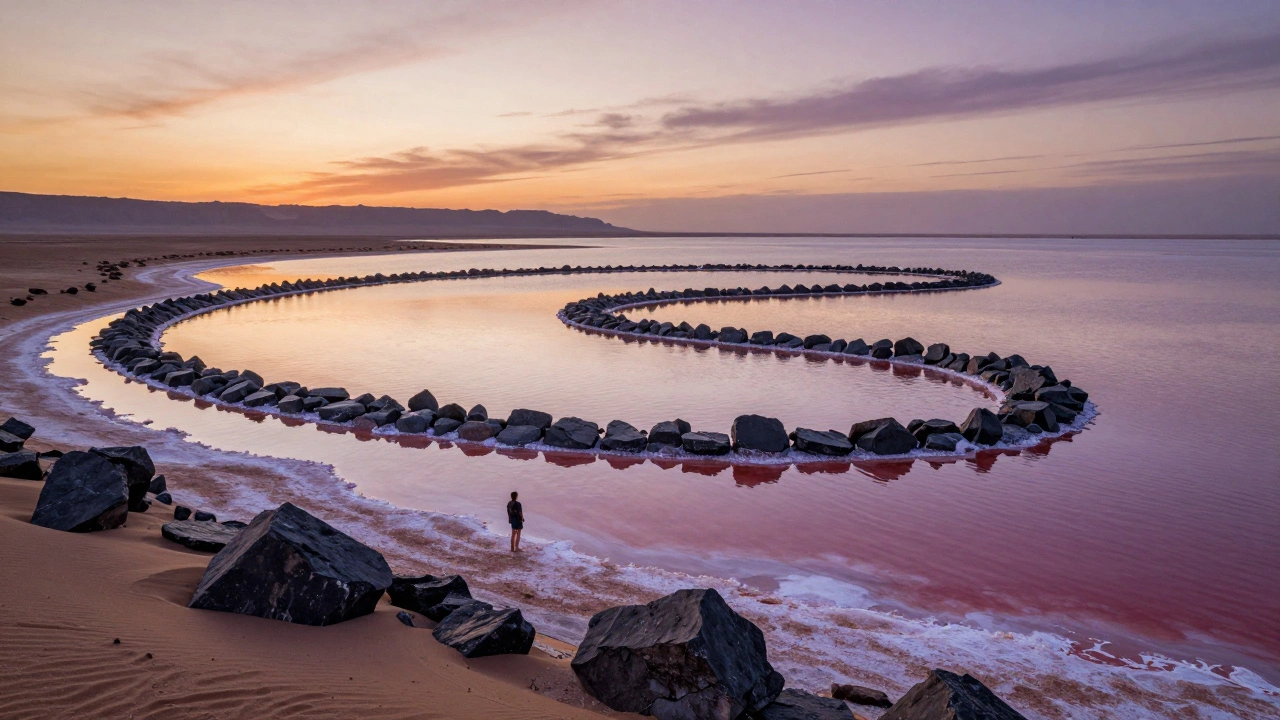
Land art, also called earthworks, is art made directly in the landscape using natural materials: soil, rocks, wood, water, plants. It’s not decorative. It’s not meant to last. Think of Robert Smithson’s Spiral Jetty in Utah’s Great Salt Lake-a 1,500-foot coil of black basalt rocks and earth, built in 1970. It disappears under water for years, then reemerges like a ghost. That’s the point. It’s not about permanence. It’s about presence.
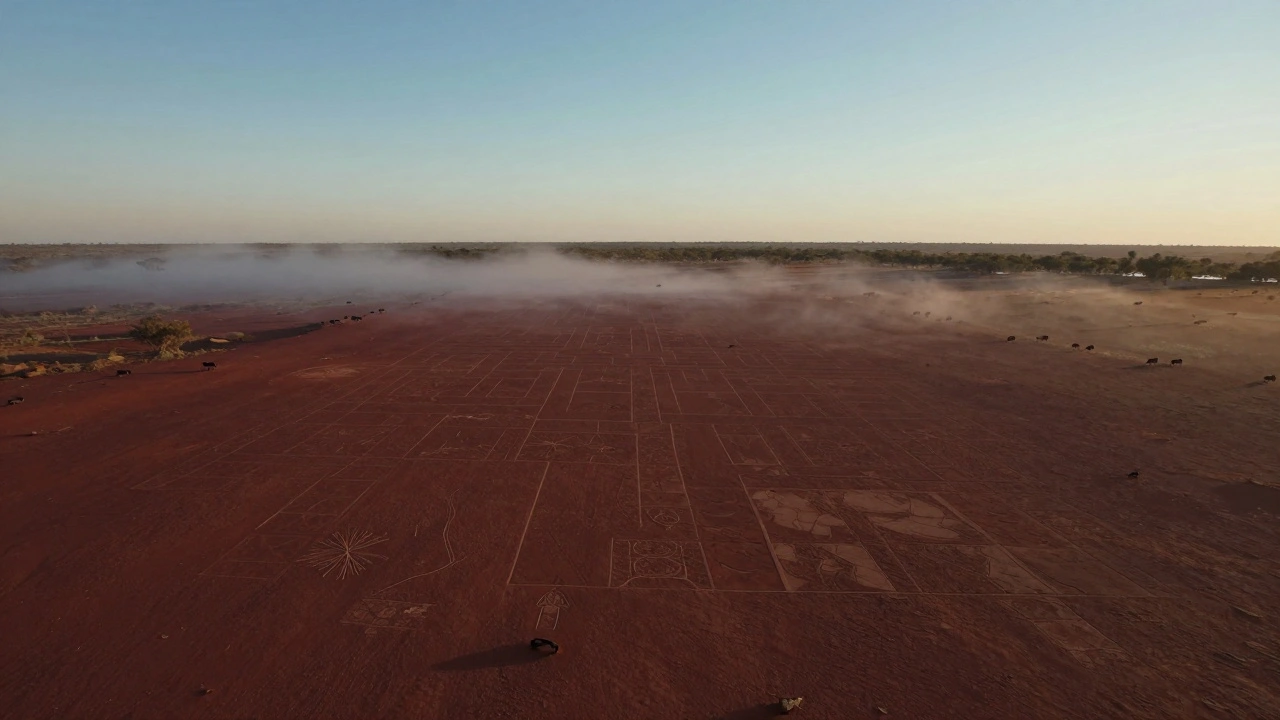
Unlike traditional sculpture, land art doesn’t require a gallery. It doesn’t need lighting or climate control. It’s shaped by the seasons, the tides, the animals that walk through it. In Australia, artists like Andrew Rogers have created massive stone geoglyphs across the Outback, visible only from the air. These aren’t tourist attractions. They’re conversations with the land.
Why It’s Different From Regular Sculpture
Traditional art is something you visit. Land art is something you enter. You don’t look at it from a distance-you walk across it, feel the texture under your shoes, smell the wet earth after rain. It changes as you move. It responds to weather. It grows moss. It cracks in the heat. A bronze statue in a plaza stays the same. A land art piece becomes part of the ecosystem.
It also rejects the idea that art must be owned. You can’t buy a land art piece. You can’t hang it on your wall. You can’t resell it. That’s why it’s so radical in a market-driven art world. It doesn’t care about auction houses. It doesn’t need collectors. It belongs to the sky, the soil, and whoever takes the time to be there.
Land Art as a Response to Climate Change
In 2025, we’re living with the consequences of ignoring nature’s rhythms. Forests burn. Rivers dry. Coral bleaches. Land art doesn’t preach. It doesn’t need infographics. It simply reminds us-through its materials, its scale, its impermanence-that we are not separate from the earth. We are part of it.
Artists today are using land art to document ecological loss. In Alaska, teams have laid out white stones along melting glaciers to mark their retreat. In the Netherlands, floating earthworks made from reeds and silt show how rising waters reshape coastlines. These aren’t protests. They’re quiet records. They say: this was here. This is changing.
Land art doesn’t fix climate change. But it makes us feel it. Not as data. Not as a graph. As something real you can touch, walk on, and lose.
It Reconnects Us to Place
Most of us live in places we don’t know. We commute through neighborhoods without naming the trees. We shop in malls that look the same in Sydney, Toronto, or Berlin. Land art forces you to pay attention to where you are. It uses local stone, local clay, local grasses. It responds to the slope of the hill, the direction of the wind, the migration path of birds.
In Western Australia, artists have built earthworks using red ochre from Aboriginal sites, not as appropriation, but as collaboration. These works honor traditional knowledge of land and sky. They remind us that Indigenous cultures have been doing land art for tens of thousands of years-before the word ‘art’ even existed.
When you stand in the middle of a land art piece, you’re not just viewing something. You’re remembering that you’re part of a place. That you belong here. That the ground beneath you has stories.
It’s Anti-Consumerist
Modern art is a product. You buy it. You frame it. You post it on Instagram. Land art refuses that cycle. It doesn’t need packaging. It doesn’t need shipping. It doesn’t need a certificate of authenticity. It’s made from what’s already there. Often, it’s made by hand, with no machinery. No drones. No apps.
That’s why it’s so rare in today’s art world. It doesn’t fit the business model. But that’s also why it’s powerful. It says: you don’t need to own beauty to experience it. You just need to show up.
There’s no ‘land art subscription’. No ‘limited edition earthwork’. No NFT. And that’s the point.
How to Experience Land Art Today
You don’t need a ticket. You don’t need a guide. You just need to go outside.
- Visit Spiral Jetty in Utah. Drive 60 miles from the nearest town. Walk the rocky shore. Watch the water rise and fall around it.
- Find The Lightning Field in New Mexico. Stay overnight. Wait for the storm. Let the lightning strike the steel poles as the artist intended.
- Look for local earthworks near you. In the UK, there are stone circles in the Pennines. In Japan, there are moss gardens that change with the rain. In Perth, there are forgotten sand dunes where people have laid out patterns with shells and driftwood.
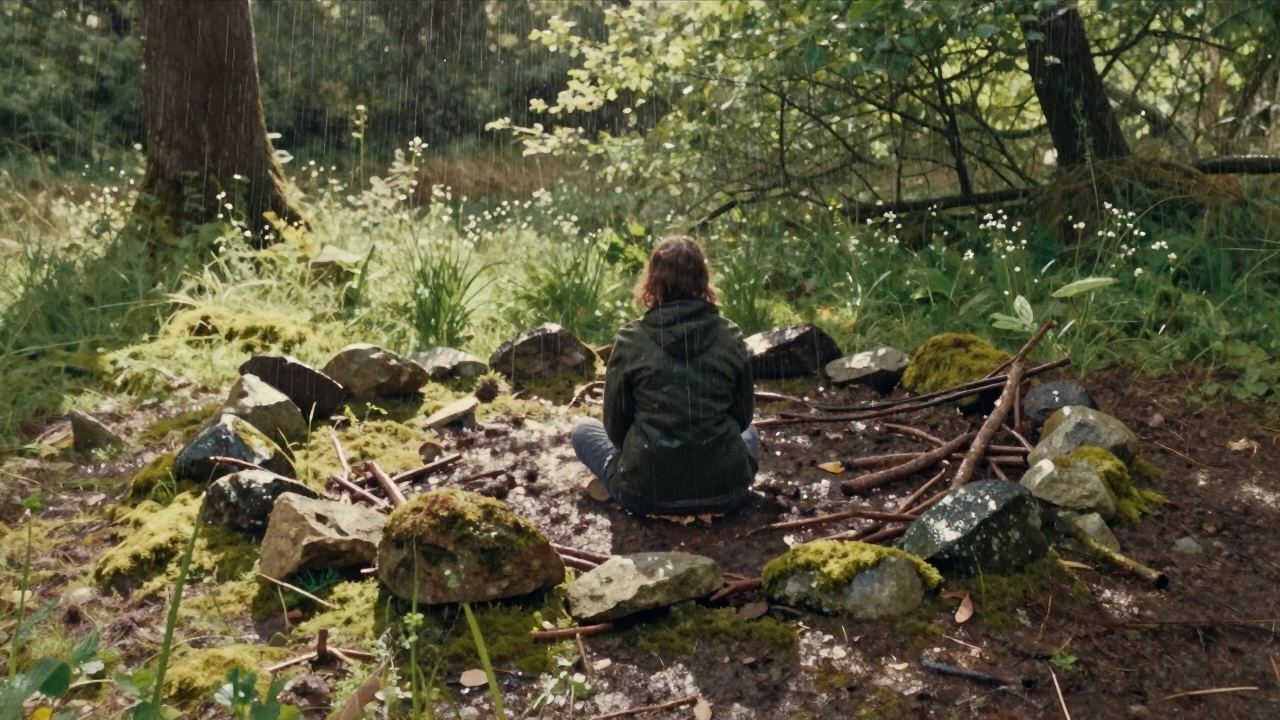
Don’t take photos first. Sit still. Listen. Feel the wind. Notice how the light moves across the earth. Let the piece work on you, not the other way around.
Why This Matters Now
We’re drowning in digital noise. We’re told to consume, upgrade, optimize, post. Land art asks nothing of you except to be still. To be present. To remember that you’re made of the same dust as the soil beneath your feet.
It doesn’t solve the climate crisis. But it helps us feel the weight of it. It doesn’t fix our loneliness. But it reminds us we’re not alone-we’re part of something older, deeper, and wilder.
Land art matters because it doesn’t ask for your attention. It earns it.
Is land art the same as environmental art?
They overlap, but they’re not the same. Land art is made from natural materials and shaped by the landscape itself. Environmental art often includes interventions meant to raise awareness about ecological issues-like cleaning up a river or planting trees as part of the artwork. Land art is more about form and presence; environmental art is more about action and message.
Can land art be preserved?
Most land art isn’t meant to be preserved. That’s part of its meaning. But some pieces, like Spiral Jetty, are protected as cultural landmarks. The U.S. National Park Service monitors its condition. Still, even those are allowed to change. Conservation here means letting nature take its course-not freezing the artwork in time.
Do you need permission to create land art?
Yes-if you’re on public or protected land. National parks, Indigenous territories, and nature reserves often have strict rules. Many artists work with local communities or government agencies to create pieces legally and respectfully. Unauthorized earthworks can damage ecosystems and are often removed. The best land art is made with care, not just with dirt.
Is land art expensive to make?
Not in money. Most land art uses free, local materials. But it can be expensive in labor and logistics. Moving tons of rock, setting up remote camps, transporting supplies to isolated sites-all that costs time and resources. Some artists fund projects through grants or community donations. Others work for years with no pay. The cost isn’t in dollars. It’s in commitment.
Can I make land art in my backyard?
Absolutely. You don’t need a desert or a mountain. A circle of stones in your garden, a spiral of fallen leaves, a mound of soil shaped like a wave-those count. Land art is about intention, not scale. The smallest piece can still connect you to the earth. Start simple. Let the materials guide you. Don’t overthink it. Just make something that feels true to the place you’re in.