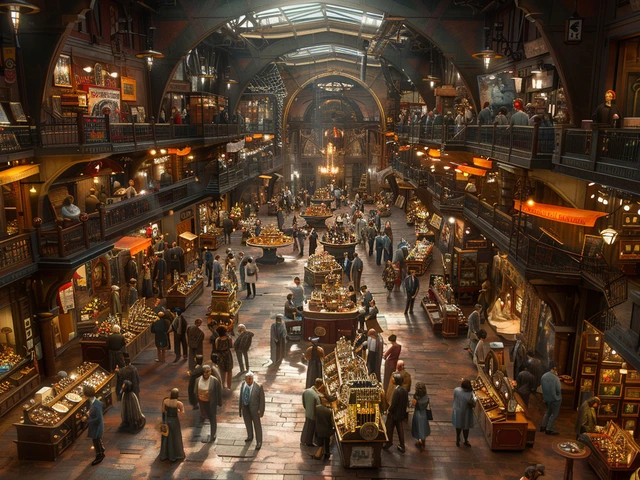
Walk into a gallery today, and you might find yourself standing inside a giant pile of dirt, surrounded by humming motors, or trapped in a room where the walls seem to breathe. This isn't a theme park; it's an installation art exhibition. Unlike a painting hanging on a wall, this form of art demands your physical presence. It transforms space, time, and perception into the medium itself. But how did we get here? How did art move from the pedestal to the entire room?
The story of installation art is not just about objects; it's about experience. It’s about artists who decided that looking at art wasn't enough-they wanted you to feel it, walk through it, and sometimes even lose your sense of direction within it. To understand where we are now, we have to look back at the pioneers who broke the rules of traditional sculpture and painting. These were the rebels who turned galleries into environments and viewers into participants.
Marcel Duchamp: The Grandfather of Conceptual Space
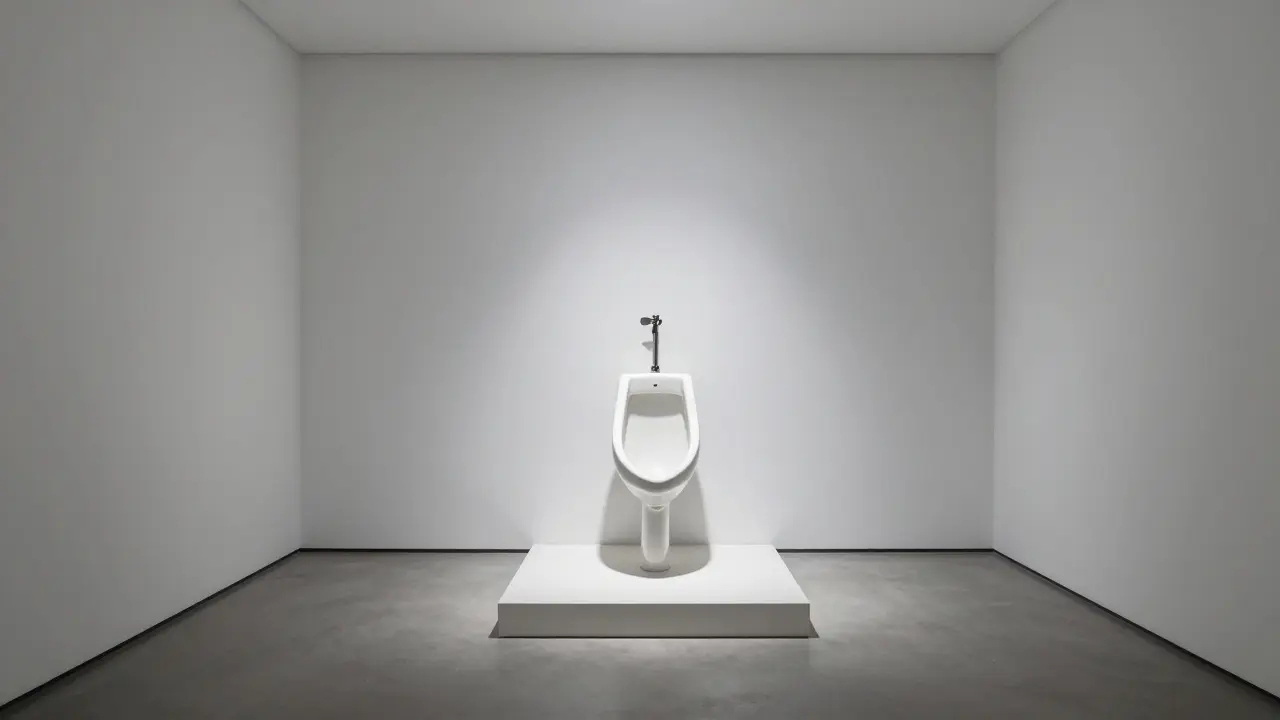
If you trace the lineage of installation art, every line leads back to Marcel Duchamp. You can't talk about modern art without mentioning him, but his specific contribution to spatial art often gets overlooked in favor of his famous readymades like *Fountain*. While *Fountain* was a urinal signed with a pseudonym, Duchamp’s true genius lay in challenging the very definition of what art could be.
In the early 20th century, Duchamp introduced the idea that the artist's concept mattered more than the craftsmanship. He didn't just place objects in a room; he placed ideas. His work forced museums to reconsider their role as temples of beauty versus spaces for intellectual engagement. By removing the 'aura' of the unique handmade object, he paved the way for later artists to use industrial materials, found objects, and entire rooms as their canvas. Without Duchamp’s radical questioning of value and context, the conceptual backbone of installation art wouldn't exist.
The Dada Movement and the Chaos of Space
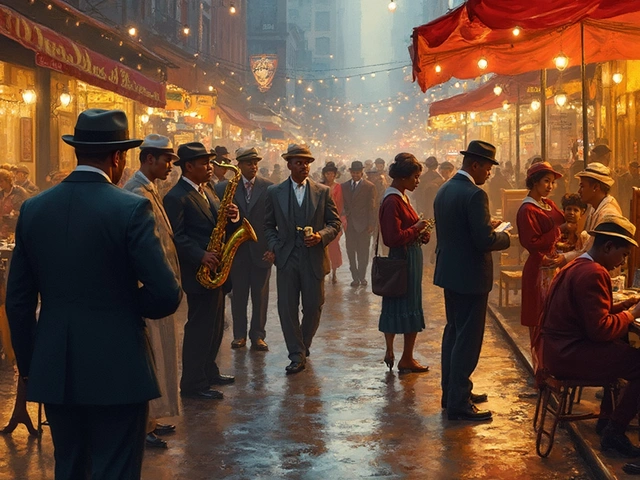
Duchamp didn't work in a vacuum. He was part of the Dada movement, a chaotic, anti-art rebellion born out of the disillusionment of World War I. Dadaists believed that logic and reason had led humanity to war, so they embraced nonsense, chance, and absurdity. In terms of installation, Dada exhibitions were some of the first instances where the arrangement of works created a unified, albeit confusing, experience.
Imagine walking into a show where paintings hang upside down, sculptures are made of garbage, and the lighting is deliberately poor to create a sense of unease. That was Dada. They weren't trying to make things pretty; they were trying to shock the viewer into awareness. This approach to curating space as a narrative tool-where the relationship between objects matters more than the objects themselves-is a core tenet of installation art today. The Dadaists taught us that context is king.
Marsel van der Broek and the Birth of Kinetic Environments
While Dada dealt with chaos, another pioneer brought motion and light into the equation. Marsel van der Broek is a name that deserves more recognition in mainstream art history. Working in the mid-20th century, particularly in the Netherlands and Belgium, van der Broek created large-scale kinetic structures that changed over time. His installations weren't static; they moved, shifted, and responded to environmental factors.
Van der Broek’s work blurred the line between architecture and art. He used mirrors, lights, and mechanical parts to create immersive environments that felt alive. For example, his piece *The Moving City* (a conceptual title for his series of urban interventions) suggested that the city itself was an artwork that people lived inside. This shift-from viewing art as a separate object to seeing it as an environment that surrounds you-is crucial. Van der Broek showed that art could occupy volume and duration, not just height, width, and depth.
Robert Morris: Minimalism and the Viewer's Body
By the 1960s, Minimalism took hold, and Robert Morris became one of its leading figures. Morris moved away from expressive gestures toward simple, geometric forms. However, his contribution to installation art was profound because he focused on the viewer's physical experience of these forms. He called this "phenomenology"-the study of conscious experience.
Morris would arrange large blocks of wood, felt, or metal in a gallery space in ways that forced you to navigate around them. You couldn't just glance at his work; you had to walk past it, duck under it, or feel its weight. In his essay "Notes on Sculpture," Morris argued that the art wasn't just the object, but the process of moving through it. He introduced the concept of "time" into sculpture. When you walk around a Morris installation, your perception changes with every step. This emphasis on the body’s interaction with space is a hallmark of contemporary installation art.
| Artist/Movement | Key Contribution | Primary Medium | Impact on Viewer |
|---|---|---|---|
| Marcel Duchamp | Conceptual framework; readymades | Found objects | Intellectual challenge |
| Dada Movement | Contextual chaos; anti-aesthetic | Collage, performance, space | Shock and disorientation |
| Marsel van der Broek | Kinetic environments; light/motion | Mechanical structures, mirrors | Sensory immersion |
| Robert Morris | Phenomenology; bodily navigation | Industrial materials, geometry | Physical engagement |
Yayoi Kusama: Infinity and Obsession
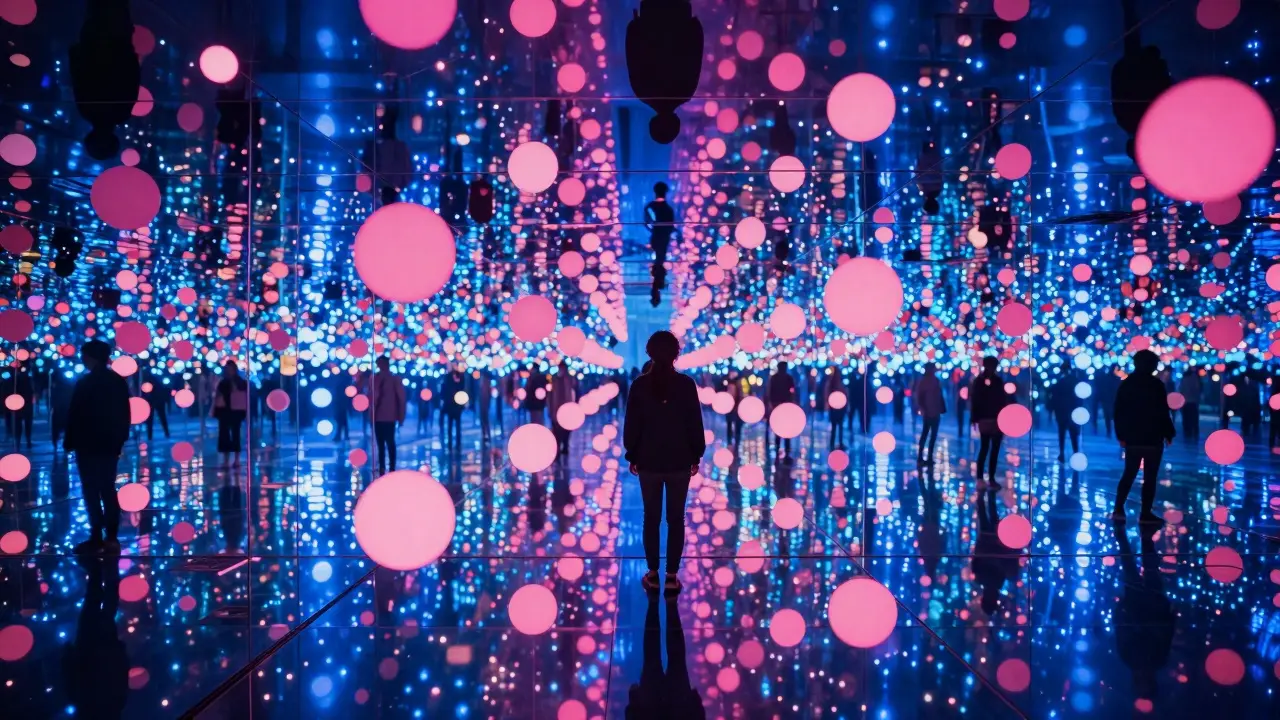
No discussion of installation pioneers is complete without Yayoi Kusama. Though she gained massive global fame later, her early work in New York during the 1960s laid the groundwork for immersive installation art. Kusama created the "Infinity Nets" paintings, but she quickly expanded this into three-dimensional rooms. Her *Infinity Mirror Rooms* are perhaps the most famous examples of this.
These rooms use mirrors, lights, and repetitive patterns to create the illusion of infinite space. Stepping into one of Kusama’s installations feels like stepping out of reality. She uses repetition to evoke feelings of obsession, infinity, and self-obliteration. For Kusama, installation art wasn't just about filling a room; it was about dissolving the boundary between the self and the universe. Her work demonstrates how installation can be deeply psychological, triggering emotional responses through sensory overload.

Christo and Jeanne-Claude: Wrapping the World
While many pioneers worked inside galleries, Christo and Jeanne-Claude took installation art outside. They are best known for wrapping monumental landmarks in fabric, such as the Reichstag in Berlin or the Pont Neuf in Paris. Their work redefined scale and temporality. An installation didn't have to be permanent or housed in a museum; it could be ephemeral, existing for only a few days before disappearing.
Their projects required years of planning, engineering, and negotiation with governments. This highlighted another aspect of installation art: it is often a collaborative effort involving architects, engineers, and local communities. Christo and Jeanne-Claude showed that installation art could transform public perception of familiar places. By wrapping a bridge, they forced people to see its structure and form in a new way, stripping away its function to reveal its pure aesthetic presence.
The Evolution: From Object to Experience
Looking at these pioneers, a clear pattern emerges. Installation art evolved from a reaction against traditional sculpture to a comprehensive exploration of human experience. It started with Duchamp’s intellectual provocation, moved through Dada’s contextual chaos, incorporated van der Broek’s kinetic energy, deepened with Morris’s phenomenological focus, expanded with Kusama’s psychological immersion, and scaled up with Christo and Jeanne-Claude’s public interventions.
Today, installation art continues to evolve with technology. Digital projections, virtual reality, and interactive sensors are the new tools in the artist’s kit. But the core principle remains the same: the viewer is no longer a passive observer. You are part of the work. Your movement, your perspective, and your time spent in the space complete the artwork.
Why Context Matters More Than Ever
In our current digital age, where screens dominate our visual field, installation art offers something rare: tangible presence. It reminds us that art can be a physical event. The pioneers we’ve discussed taught us that the space around an object is just as important as the object itself. Whether it’s a dark room filled with fog or a bright plaza wrapped in yellow fabric, the goal is to disrupt our normal perception and offer a new way of seeing the world.
Understanding these pioneers helps us appreciate the complexity of the art we encounter today. Next time you visit a gallery and find yourself navigating a maze of mirrors or standing under a suspended cloud of feathers, remember that you’re walking in the footsteps of Duchamp, Morris, Kusama, and others who dared to turn the entire room into art.
Who is considered the father of installation art?
There is no single "father" of installation art, as it evolved from multiple movements. However, Marcel Duchamp is often cited as a key precursor due to his introduction of readymades and conceptual art. Robert Morris and Yayoi Kusama are also frequently credited with defining the immersive and phenomenological aspects of the genre in the mid-20th century.
What is the difference between sculpture and installation art?
Sculpture is typically a standalone object that you view from the outside. Installation art, on the other hand, is an environment or space that you enter or interact with. Installation art often incorporates the surrounding architecture, lighting, and sound to create a total sensory experience, whereas sculpture focuses on form and material.
How did Marcel Duchamp influence installation art?
Duchamp influenced installation art by shifting the focus from aesthetic beauty to conceptual meaning. His use of readymades (ordinary objects presented as art) challenged the idea that art must be handmade. This opened the door for later artists to use any material or space as their medium, prioritizing the idea behind the work over its physical construction.
What role does the viewer play in installation art?
The viewer is an active participant in installation art. Unlike painting, where the image is fixed, installation art often changes based on the viewer's movement and perspective. Artists like Robert Morris designed works specifically to engage the viewer's body and time, making the act of walking through the space part of the artistic experience.
Are there famous examples of outdoor installation art?
Yes, Christo and Jeanne-Claude are famous for their large-scale outdoor installations, such as wrapping the Reichstag building in Berlin or the Pont Neuf in Paris. Other notable examples include Andy Goldsworthy’s natural land art and Olafur Eliasson’s weather installations, which often use light and water to transform public spaces.
What is phenomenology in the context of installation art?
Phenomenology refers to the study of conscious experience. In installation art, particularly in the work of Robert Morris, it means focusing on how the viewer perceives the artwork through their own body and senses. It emphasizes the immediate, physical experience of space, time, and movement rather than just the visual appearance of the object.
How has technology changed installation art?
Technology has expanded the possibilities of installation art significantly. Digital projections, virtual reality (VR), augmented reality (AR), and interactive sensors allow artists to create dynamic, responsive environments. These technologies enable installations to change in real-time based on viewer interaction, blurring the lines between the physical and digital worlds.