The Core of the Movement
At its heart, Pop Art is an art movement that emerged in the mid-1950s, utilizing imagery from popular and commercial culture. It was a direct reaction against the moody, emotional intensity of Abstract Expressionism. While previous artists were painting their inner turmoil with splattered paint and chaotic shapes, Pop artists looked outward. They saw the neon lights of Las Vegas, the glossy pages of magazines, and the assembly lines of factories. They decided that if the world was becoming a giant supermarket, art should be too.
This movement wasn't just about making "cool" pictures. It was about democratizing art. For centuries, high art was for the elite-people who understood Greek mythology or religious iconography. Pop Art flipped the script. It used a visual language that everyone understood, regardless of their education level. If you've ever bought a Coca-Cola, you're qualified to understand the art.
The Heavy Hitters of Pop
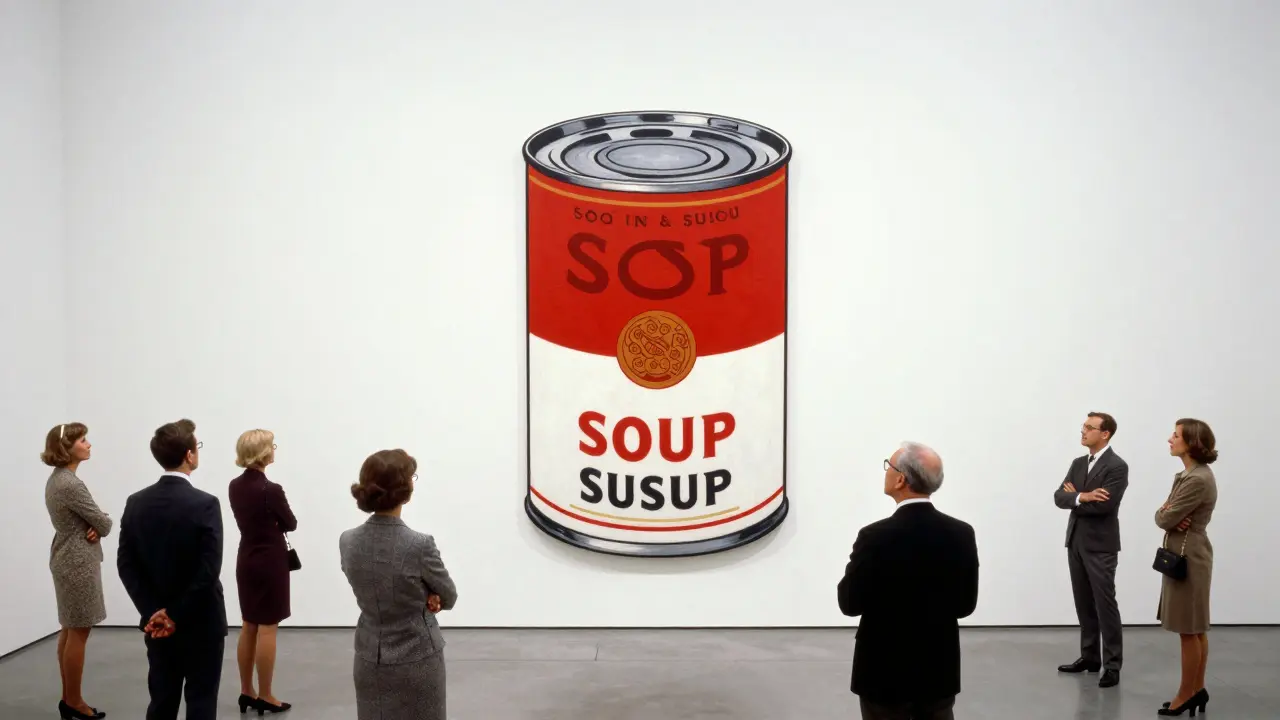
You can't talk about this era without mentioning the man who turned his studio into a factory. Andy Warhol is a pivotal figure in Pop Art known for his exploration of celebrity culture and mass production. Warhol didn't just paint; he mechanized. By using screen printing, he could create dozens of identical images of Marilyn Monroe or Campbell's Soup cans. This process removed the "artist's touch," which was a radical move. He was essentially saying that the machine is the new brush.
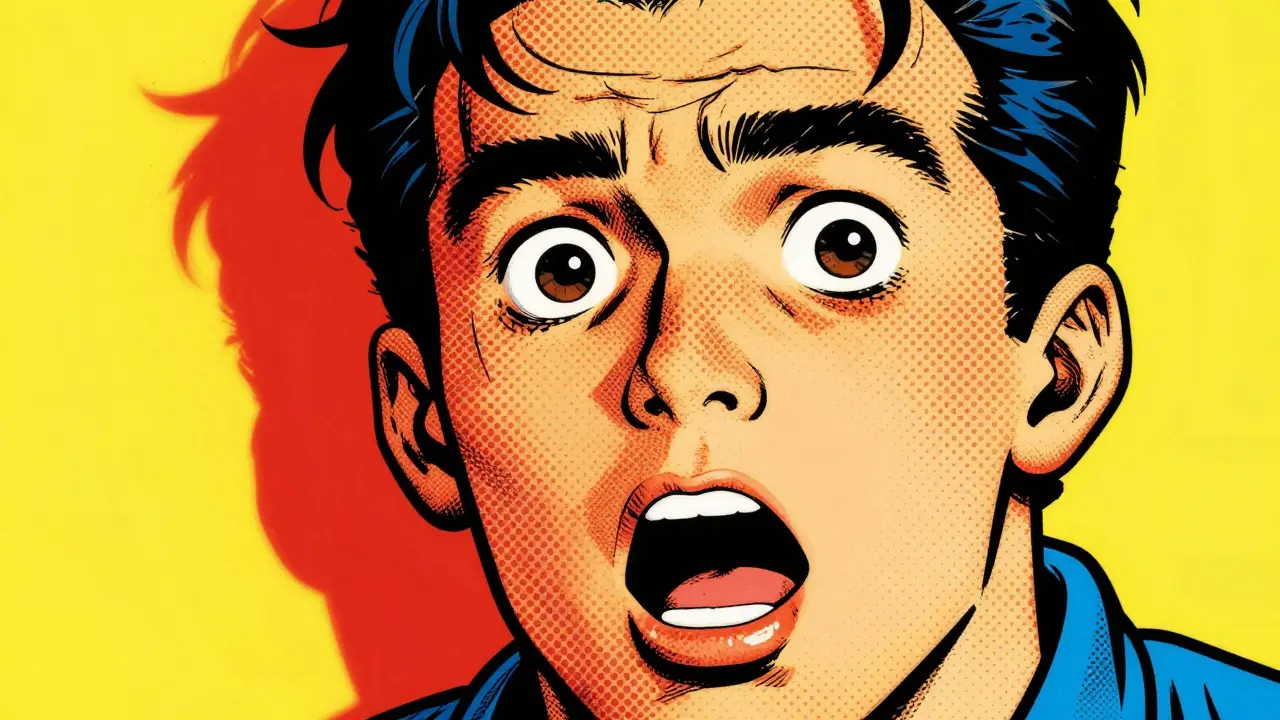
Then there's Roy Lichtenstein, an artist who specialized in the aesthetic of comic books and commercial printing. If you look closely at his work, you'll see tiny dots. These are called Ben-Day dots, a cheap printing technique used in newspapers to create color and shading. By painstakingly painting these dots by hand on a huge canvas, Lichtenstein mocked the difference between "low" commercial art and "high" gallery art. He took a fleeting, disposable comic panel and turned it into a permanent monument.
| Artist | Primary Medium | Core Theme | Signature Style |
|---|---|---|---|
| Andy Warhol | Screen Printing | Celebrity & Consumerism | Repetition and Bold Colors |
| Roy Lichtenstein | Oil and Magna | Comic Book Narratives | Ben-Day Dots & Heavy Outlines |
| Claes Oldenburg | Soft Sculpture | Everyday Objects | Giant, Oversized Scale |
The Obsession with Consumerism
Why was the world suddenly obsessed with soap boxes and hamburgers? To understand this, we have to look at the post-WWII boom. The 1950s and 60s saw a massive rise in advertising. For the first time, people were being bombarded by a constant stream of "perfect" lifestyles sold through television and billboards. Pop Art captured this sensory overload.
Artists like Richard Hamilton, a British artist credited with helping define the Pop Art movement in the UK, began creating collages that looked like advertisement catalogs. His work highlighted the "planned obsolescence" of the era-the idea that you should buy something, use it, and throw it away to make room for the next new thing. By placing these items in a gallery, the artists asked: Is the object valuable, or is the brand valuable?
Think about a diamond ring. The rock itself is just carbon, but the marketing makes it a symbol of eternal love. Pop Art does the same thing with a soup can. It strips away the utility (eating the soup) and focuses on the symbol (the red and white label). It's a critique of a society that defines its identity by what it buys.

Expanding the Palette: Beyond the Canvas
Pop Art didn't stay confined to flat paintings. It leaked into sculpture and environment. Claes Oldenburg an American sculptor known for creating large-scale versions of everyday objects took the world and turned it upside down. He created a giant, drooping slice of cake and massive clothespins. By changing the scale and material-making a hard object look soft-he forced viewers to experience the physical world in a strange, surreal way.
This period also saw the rise of Conceptual Art, art in which the idea or concept is more important than the finished physical object. Pop Art laid the groundwork for this. Once Warhol decided that the *idea* of repeating an image was more important than the *skill* of painting it, the door was open for artists to experiment with performance, installation, and digital media. The physical object became secondary to the message.
The Legacy in the Digital Age
If you think Pop Art ended in the 70s, look at your Instagram feed. The modern obsession with "the brand" and the curated image of the self is a direct descendant of Warhol's celebrity studies. Every time we use a filter to make our lives look like a glossy advertisement, we are participating in a form of digital Pop Art.
Contemporary artists like Jeff Koons continue this tradition by creating stainless steel balloon animals that cost millions of dollars. He takes the kitsch-the cheap, tacky stuff you'd find at a carnival-and treats it with the reverence of a Renaissance sculpture. This tension between "trash" and "treasure" is exactly what the original Pop artists were playing with. They proved that art doesn't have to be "deep" or "spiritual" to be meaningful; sometimes, the most honest thing an artist can do is show us the surface of things.
The movement also changed how we perceive Graphic Design, the art of combining text and images in print or digital media to communicate a message. The bold lines, saturated colors, and flat perspectives of Pop Art are now staples in everything from movie posters to app interfaces. We live in a world that was visually redesigned by a group of rebels who thought a comic book was as important as a cathedral.
Is Pop Art actually "art" or just a copy of ads?
It's a bit of both. The skill in Pop Art isn't always in the technical execution-like painting a realistic portrait-but in the choice of subject and the commentary it provides. By copying ads, artists were commenting on the nature of mass production and the loss of individuality in a consumer-driven world. The "art" is in the idea and the irony.
Why did Andy Warhol call his studio "The Factory"?
Warhol named it The Factory because he wanted to move away from the romantic image of the lone artist in a garret. He employed assistants to help produce his screen prints, mirroring the assembly-line process of the products he painted. It was a statement that art could be manufactured just like a car or a can of soup.
What are Ben-Day dots?
Ben-Day dots are small, closely spaced colored dots used in old-school printing to create optical illusions of shading and different colors. Roy Lichtenstein adopted this style to make his large paintings look like they were printed by a cheap machine, blurring the line between high art and mass-produced media.
Did Pop Art start in America?
While it's most famous for its American iteration, Pop Art actually had strong roots in the UK. The Independent Group in London was experimenting with these themes in the mid-1950s, before the movement exploded in New York. Artists like Richard Hamilton were analyzing American consumer culture from a distance before the US artists fully embraced it.
How can I tell if something is Pop Art?
Look for a few key signs: bold, primary colors; images taken from advertising or comics; a lack of visible brushstrokes (a "flat" look); and a focus on common, everyday objects rather than nature or mythology. If it looks like it could have been a billboard or a magazine cover, it's likely leaning into the Pop aesthetic.