Have you ever looked at a painting and felt your stomach drop? Not because it was ugly, but because it felt *true* in a way that realism never could? That’s the power of Expressionism, an early 20th-century artistic movement that prioritized subjective emotion over objective reality. It wasn’t about capturing how a tree looked; it was about capturing how the tree made you feel-lonely, angry, or terrified.
This movement didn't just change art; it changed how we see ourselves. Born from the anxiety of modern life, Expressionism gave voice to the unheard voices of a generation on the brink of World War I. Today, more than a century later, its influence is everywhere-from horror movies to graphic novels. But what exactly makes an artwork "Expressionist," and why does it still resonate so deeply with us?
The Core Philosophy: Subjectivity Over Objectivity
To understand Expressionism, you have to unlearn what you know about traditional art. Before this movement, artists like the Impressionists were obsessed with light and color as they appeared in nature. They wanted to capture a fleeting moment of visual truth. Expressionists rejected this entirely. For them, the external world was irrelevant compared to the internal landscape of the human psyche.
Subjectivity became the new standard. If an artist felt fear, the sky shouldn’t be blue; it should be a swirling, violent red. If they felt isolation, figures shouldn’t stand naturally; they should look like jagged, distorted shadows. This shift marked a radical departure from Realism, which aimed for photographic accuracy. Instead, Expressionism used distortion, exaggeration, and vivid colors to evoke moods rather than depict scenes.
Think of it like listening to music. A realistic painting is like a recording of a bird singing. An Expressionist painting is like a jazz improvisation inspired by that bird’s song-it might not sound exactly like the bird, but it captures the energy and feeling of the moment far more intensely.
The Birth of a Movement: From Munch to Munich
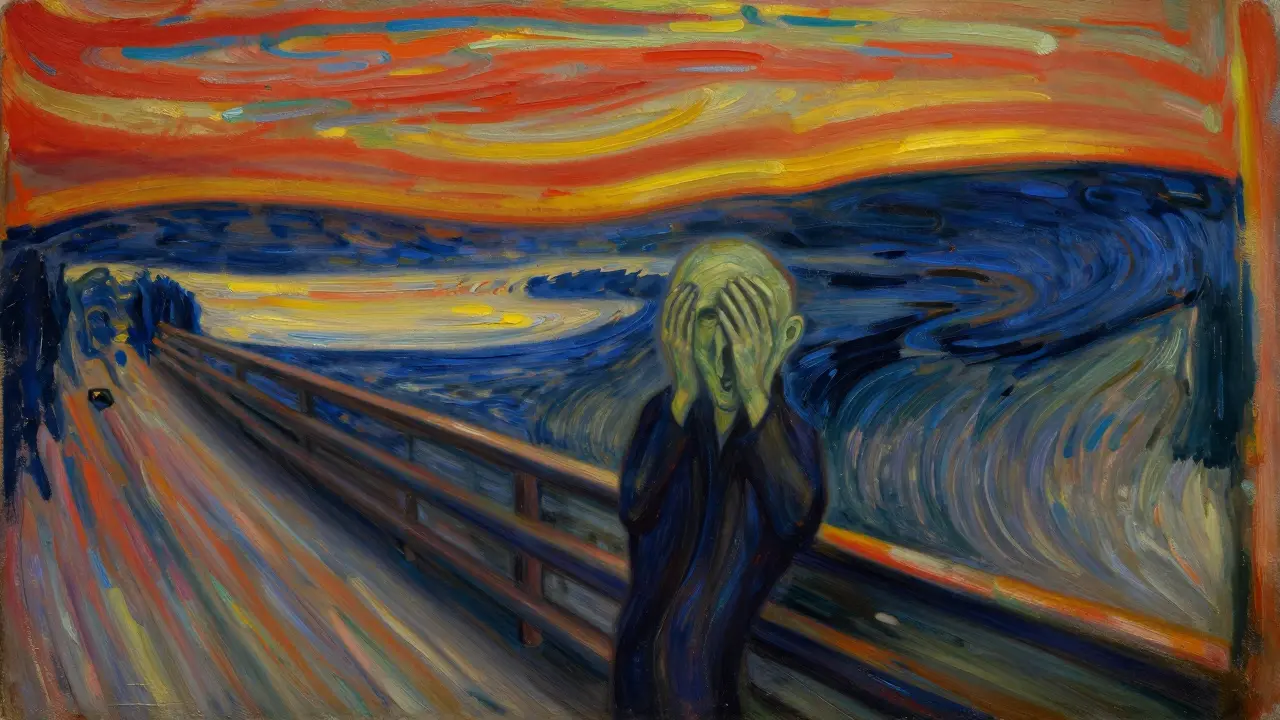
While Expressionism officially emerged in Germany around 1905, its roots go back further. Many point to Edvard Munch’s The Scream (1893) as the spiritual ancestor of the movement. In that iconic image, the figure isn’t screaming; they are reacting to a scream passing through nature. The landscape melts into blood-red hues, mirroring the protagonist’s existential dread. This work established the template: use art to visualize psychological states.
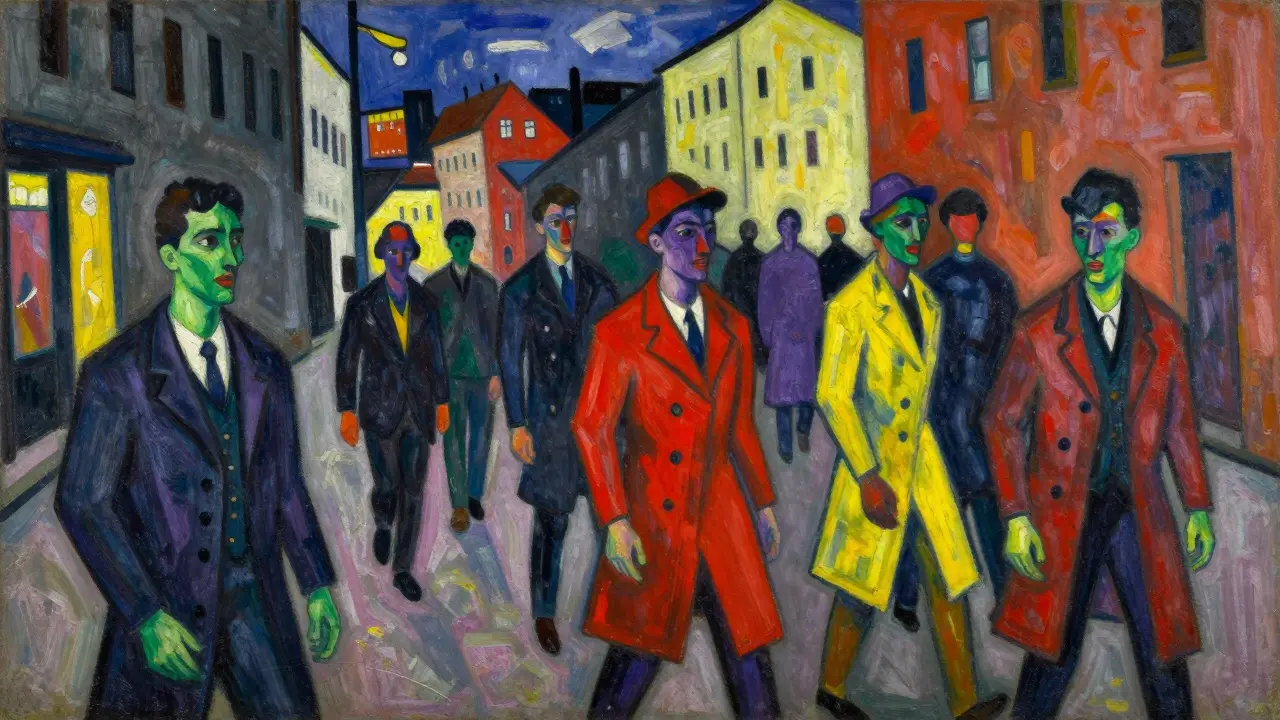
In Germany, two major groups defined the era. First came Die Brücke (The Bridge), founded in Dresden in 1905 by Ernst Ludwig Kirchner and others. They sought to build a bridge between past and future, rejecting academic traditions for raw, primal energy. Their works often featured bold, non-naturalistic colors and rough, urgent brushstrokes.
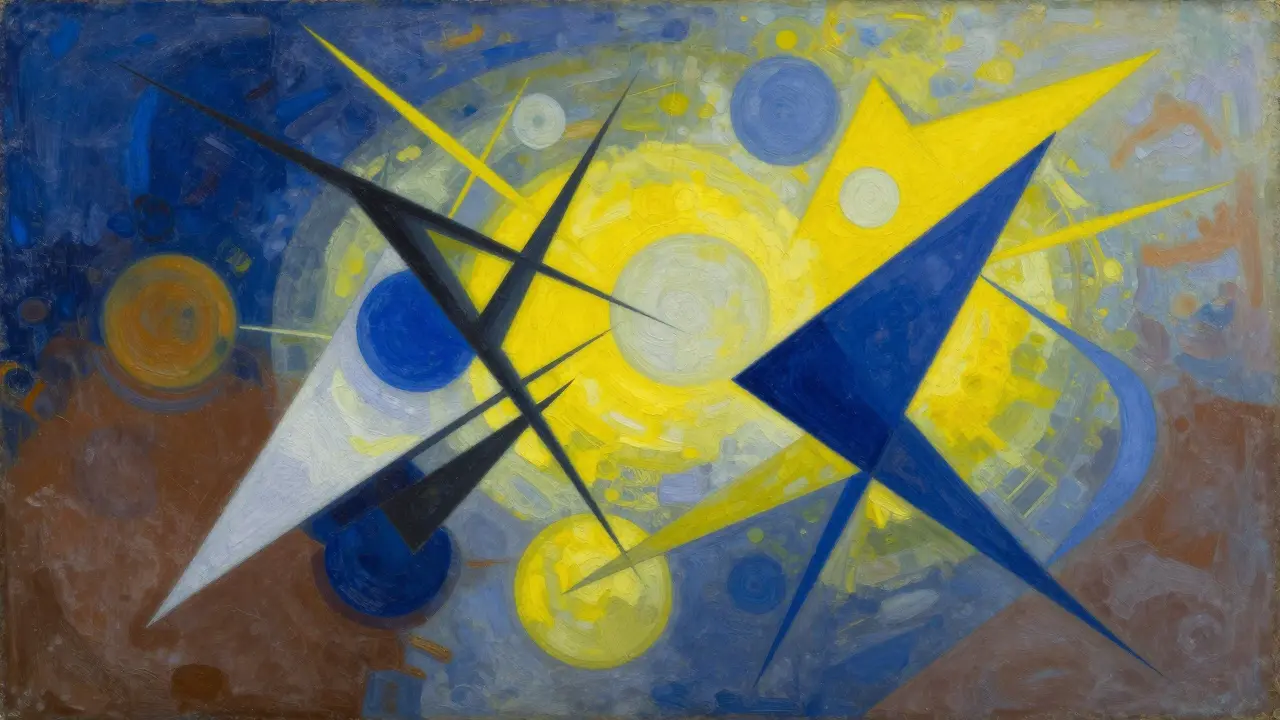
Then there was Der Blaue Reiter (The Blue Rider), formed in Munich in 1911 by Wassily Kandinsky and Franz Marc. While Die Brücke focused on social angst and urban alienation, Der Blaue Reiter leaned toward spirituality and abstraction. They believed color had a direct, almost musical relationship to the soul. Kandinsky, for instance, argued that yellow could feel aggressive while blue felt peaceful.
Visual Language: How to Spot an Expressionist Work
You don’t need an art degree to recognize Expressionism. Look for these key traits:
- Distortion: Faces are elongated, bodies are twisted, and perspectives are skewed. This isn’t bad anatomy; it’s intentional deformation to show inner turmoil.
- Vivid, Non-Naturalistic Color: Grass might be purple, skin might be green. Colors are chosen for their emotional impact, not their accuracy.
- Aggressive Brushwork: Strokes are often visible, choppy, or frantic. The texture of the paint adds to the sense of urgency and instability.
- Dark Themes: Topics include anxiety, loneliness, death, and social decay. Joyful subjects are rare and usually tinged with melancholy.
| Feature | Impressionism | Expressionism |
|---|---|---|
| Goal | Capture light and moment | Express inner emotion |
| Color | Naturalistic, bright | Arbitrary, intense |
| Form | Soft, blurred edges | Jagged, distorted shapes |
| Subject | Leisure, landscapes | Anxiety, urban life |
Austere Beauty: Egon Schiele and the Viennese Scene
While German Expressionism gets much of the spotlight, Vienna had its own distinct flavor. Egon Schiele, a protégé of Gustav Klimt, took Expressionism to darker, more intimate extremes. His drawings and paintings feature contorted bodies, bare limbs, and stark backgrounds. Schiele didn’t just distort faces; he stripped away social pretense entirely.
Schiele’s work is uncomfortable because it forces us to confront our own vulnerability. Unlike the broader social commentary of Kirchner’s street scenes, Schiele focused on the individual’s physical and psychological nakedness. His lines are sharp, angular, and often claustrophobic. This style influenced later movements like Neo-Expressionism and even contemporary comic book art.
The Dark Turn: Expressionism and World War I
Expressionism couldn’t survive the war intact. The movement began during a time of rising industrialization and urban alienation, but the outbreak of World War I in 1914 shattered any remaining optimism. Many Expressionist artists served in the trenches, and their work shifted from personal angst to outright horror.
Otto Dix and George Grosz, though often associated with the later New Objectivity movement, started as Expressionists. Their post-war work depicted the grotesque reality of soldiers and the moral decay of society. The vibrant colors faded into grim grays and browns. The movement effectively ended with the rise of the Nazi regime, which labeled Expressionist art as "Degenerate" (Entartete Kunst). Thousands of works were confiscated, destroyed, or mocked in propaganda exhibitions.
Legacy: Why Expressionism Still Matters
So, why do we care about a movement that died nearly a century ago? Because Expressionism invented the visual language of modern anxiety. Every time you see a superhero movie with a villain whose face is twisted in rage, or a horror film where the lighting turns sickly green, you’re seeing Expressionism at work.
It also paved the way for Abstract Expressionism in the 1940s and 50s, when artists like Jackson Pollock took the emphasis on emotion to its logical conclusion: no subject matter at all, just pure gesture and color. Even today, digital illustrators and graphic designers use Expressionist techniques to convey mood quickly and powerfully. In a world saturated with hyper-realistic images, the raw honesty of Expressionism offers a refreshing escape from perfection.
Key Takeaways
- Expressionism prioritizes subjective emotion over realistic depiction.
- Key groups included Die Brücke and Der Blaue Reiter in Germany.
- Look for distortion, vivid colors, and aggressive brushwork to identify the style.
- The movement was suppressed by the Nazis but heavily influenced modern cinema and design.
- It remains relevant because it validates our inner emotional experiences.
Who are the most famous Expressionist artists?
The most prominent figures include Edvard Munch (precursor), Ernst Ludwig Kirchner (Die Brücke), Wassily Kandinsky (Der Blaue Reiter), Egon Schiele (Vienna), and Emil Nolde. Each brought a unique perspective to the movement, from urban angst to spiritual abstraction.
What is the difference between Cubism and Expressionism?
Cubism breaks objects down into geometric shapes to show multiple viewpoints simultaneously. Expressionism distorts forms to express emotional intensity. Cubism is intellectual and structural; Expressionism is visceral and emotional.
Why did the Nazis hate Expressionism?
The Nazis viewed Expressionism as chaotic, degenerate, and unpatriotic. Its focus on individual suffering and rejection of traditional beauty clashed with their ideal of strong, orderly, and heroic Aryan culture. They organized the "Degenerate Art" exhibition to ridicule these works.
Is there a modern equivalent of Expressionism?
Yes, Neo-Expressionism emerged in the late 1970s and 80s with artists like Jean-Michel Basquiat and Julian Schnabel. Additionally, many contemporary graphic novels and animated films use Expressionist techniques to convey psychological depth.
Where can I see original Expressionist artworks?
Major collections are held in museums such as the Museum Ludwig in Cologne, the Brücke Museum in Berlin, the Kunstmuseum Basel, and the Philadelphia Museum of Art. Many online archives also offer high-resolution views of these works.