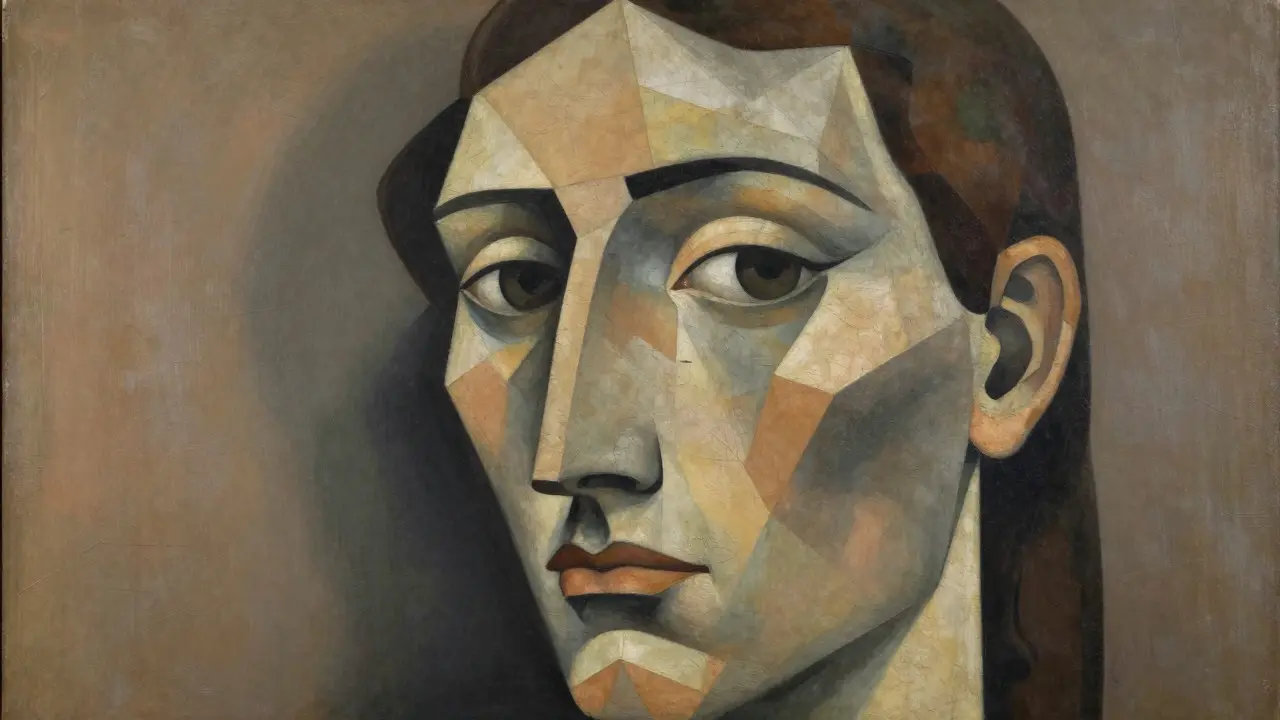
Imagine looking at a face, but seeing it from the front, side, and top all at once. That’s not a glitch in your vision; it’s Cubism. Before this movement, artists tried to trick your eye into believing they were painting a window into reality. Cubism shattered that window. It didn’t just change how we paint; it changed how we see the world around us.
You might have seen a famous Cubist painting and thought, "That looks like a mess of broken glass." But there is logic behind the chaos. This style emerged in the early 20th century as a radical break from tradition. It challenged the idea that art must look like a photograph. Instead, it focused on form, structure, and the multiple perspectives of an object simultaneously.
The Birth of a Revolution in Paris
Pablo Picasso and Georges Braque are the two names you need to know when discussing the origins of this movement. They worked together in Paris during the years 1907 to 1914. Their collaboration was intense and secretive. They met frequently to discuss their work, often sharing techniques and pushing each other further into abstraction.
Before them, artists like Paul Cézanne had already started questioning perspective. Cézanne believed that nature could be reduced to cones, cylinders, and spheres. He suggested that we should treat objects as geometric forms rather than realistic depictions. Picasso and Braque took this idea and ran with it. They stripped away color, light, and shadow to focus purely on shape and structure. This phase is known as Analytical Cubism.
Analytical vs. Synthetic: Two Sides of the Same Coin
Cubism isn't just one thing. It evolved into distinct phases, each with its own rules and visual language. Understanding these phases helps you appreciate why some paintings look dark and fragmented while others look bright and collage-like.
| Feature | Analytical Cubism | Synthetic Cubism |
|---|---|---|
| Time Period | 1908-1912 | 1912-1919 |
| Visual Style | Muted colors (browns, grays), fragmented shapes | Bright colors, flat planes, collage elements |
| Technique | Breaking down objects into geometric parts | Building up images using real materials (paper, fabric) |
| Goal | To analyze the structure of the subject | To synthesize new reality from found objects |
In the Analytical phase, the goal was deconstruction. Artists broke subjects apart into overlapping planes. You couldn't always tell what the object was because it was so fragmented. The background merged with the foreground. There was no clear separation between the subject and its environment.
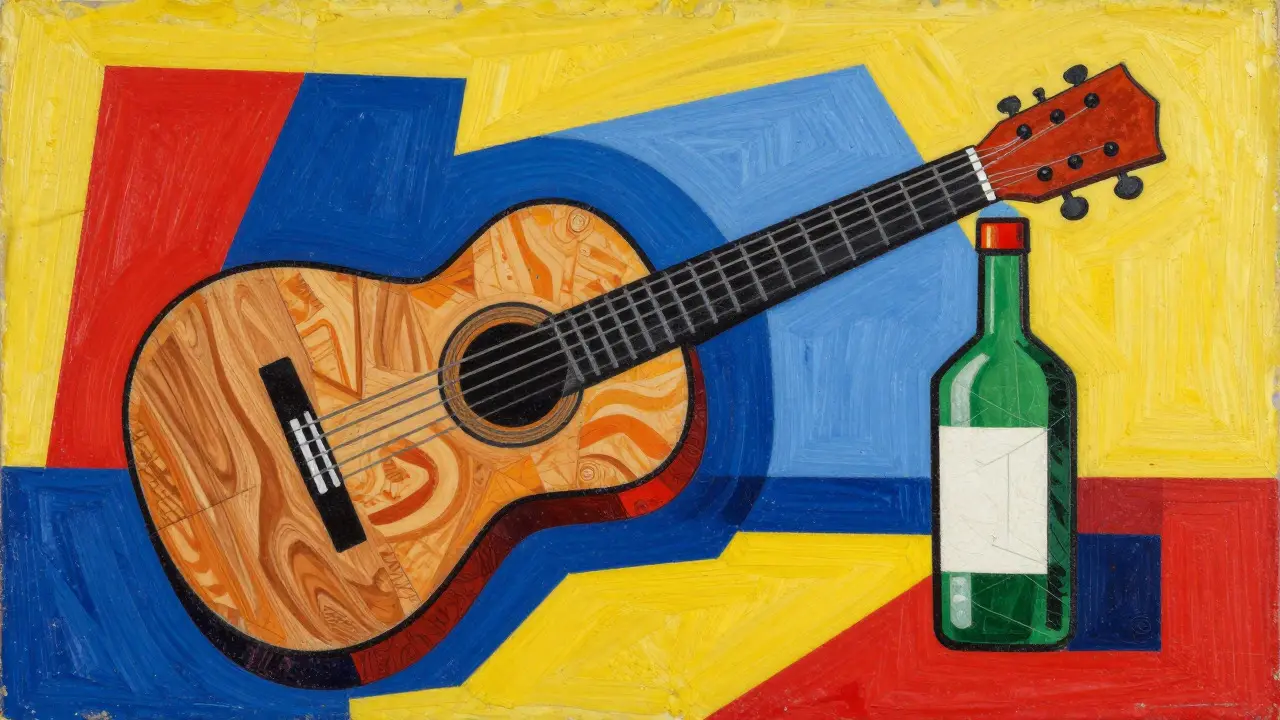
Synthetic Cubism flipped the script. Instead of breaking things down, artists built things up. They started pasting newspaper clippings, ticket stubs, and wallpaper onto canvas. This technique is called papier collé. By using real-world textures, they blurred the line between art and life. A guitar wasn't just painted; it was made from actual wood grain paper and strings drawn in ink. This approach made the artwork feel more immediate and connected to everyday reality.
Key Artists Beyond the Founders
While Picasso and Braque started the trend, many other artists joined the movement, bringing their own unique twists. Juan Gris, for example, was a Spanish painter who brought a mathematical precision to Cubism. His works often featured still lifes with sharp, clean lines and vibrant colors. He helped popularize the style across Europe.
Then there was Robert Delaunay, who focused on color and light. His version of Cubism, sometimes called Orphism, emphasized the emotional impact of color over strict geometric structure. If you look at his paintings of cityscapes or circuses, you’ll see dynamic, swirling patterns that capture movement and energy. This shows that Cubism wasn't a rigid rulebook; it was a flexible framework for experimentation.
Why Does It Look So Strange?
If you’re struggling to understand a Cubist painting, you’re not alone. The human brain is wired to recognize faces and objects in a single, fixed perspective. When an artist shows you a nose from the side and an eye from the front on the same plane, your brain rebels. It tries to make sense of the contradiction and fails, leading to that feeling of confusion.
But that’s the point. Cubism asks you to stop seeing the world as a static snapshot. In real life, you move around objects. You see different sides at different times. A Cubist painting captures that entire experience in one moment. It’s a mental map of perception, not a physical record of appearance. Once you accept that the painting represents time and movement, the "chaos" starts to make sense.
The Legacy of Fragmentation
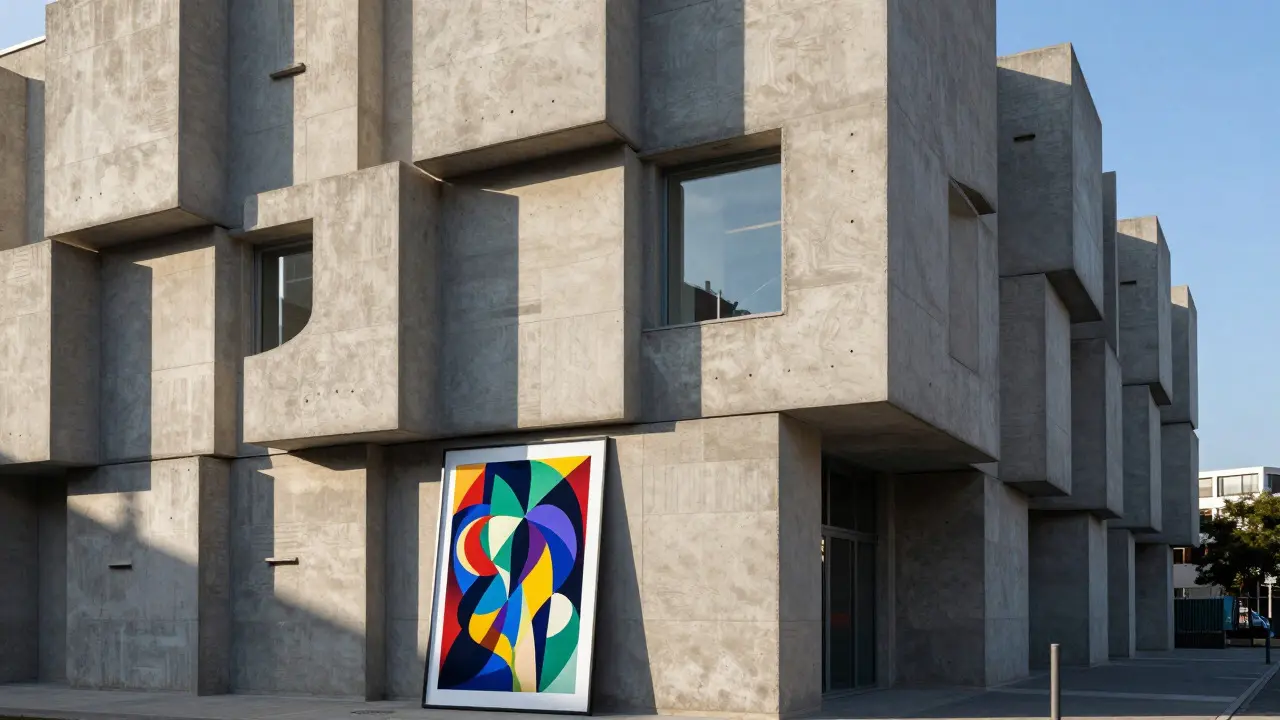
The influence of Cubism extends far beyond oil paintings. It changed architecture, design, and even photography. Architects like Le Corbusier adopted Cubist principles to create buildings that looked like stacked boxes or interlocking shapes. Designers used fragmented lines in posters and typography. Photographers began experimenting with multiple exposures and unusual angles to mimic the multi-perspective view.
Today, when you see a logo that uses geometric shapes or a building with angular facades, you’re seeing echoes of early 20th-century Cubism. It taught us that reality is complex and can be represented in ways that go beyond simple imitation. It gave artists permission to be abstract, to be experimental, and to challenge the viewer's expectations.
Frequently Asked Questions
Who invented Cubism?
Pablo Picasso and Georges Braque are credited with developing Cubism together in Paris between 1907 and 1914. While influenced by Paul Cézanne’s earlier work, it was their collaborative effort that defined the movement.
What is the difference between Analytical and Synthetic Cubism?
Analytical Cubism breaks objects down into geometric fragments using muted colors. Synthetic Cubism builds images up using brighter colors and real materials like paper and fabric pasted onto the canvas.
Is Cubism considered abstract art?
Yes, Cubism is a major precursor to abstract art. While early Cubist works still depicted recognizable objects like guitars or bottles, later works became so fragmented that the subject matter was nearly unrecognizable, paving the way for pure abstraction.
How did Cubism influence modern design?
Cubism introduced the use of geometric shapes, fragmentation, and multiple perspectives. These elements are now common in graphic design, architecture, and fashion, where designers use angular lines and layered structures to create dynamic visuals.
Can I learn to paint in the Cubist style?
Absolutely. Start by choosing a simple object like a cup or a chair. Draw it from three different angles on separate pieces of paper. Then, combine those views onto one canvas, breaking the object into geometric planes. Focus on shape first, then add color and texture.