Art Nouveau Identification Quiz
Can you spot Art Nouveau?
Test your knowledge of Art Nouveau design characteristics. Identify which features are authentic Art Nouveau traits.
Question 1 of 5
Which design feature is MOST characteristic of Art Nouveau?
Question 2 of 5
How did Art Nouveau use natural elements?
Question 3 of 5
How did Art Nouveau approach mass production?
Question 4 of 5
Which statement correctly describes Art Nouveau's relationship with materials?
Question 5 of 5
What is Art Nouveau's most significant legacy?
Your Score
0/5
Correct Incorrect
Art Nouveau didn’t just change how buildings looked-it changed how people felt about everyday objects. Around 1890, a new wave of design swept across Europe and America, turning door handles, posters, and street lamps into something alive. Curves weren’t just pretty-they were rebellion. This was the age of the Belle Époque, a time of peace, prosperity, and quiet revolution. And Art Nouveau was its visual heartbeat.
What Made Art Nouveau Different?
Before Art Nouveau, most design stuck to the past. Neoclassical columns, Gothic arches, and Victorian clutter dominated. Art Nouveau threw all that out. It looked to nature-not as a backdrop, but as the blueprint. Think vines wrapping around lamp posts, dragonfly wings turned into stained glass, and flowers twisting into iron railings.
It wasn’t about copying nature. It was about capturing its energy. Artists like Hector Guimard in Paris and Antoni Gaudí in Barcelona didn’t draw leaves-they made metal behave like tendrils. They didn’t paint flowers-they let the material itself grow into shape. That’s why you can’t pin Art Nouveau to one style. It’s not a pattern. It’s a feeling.
The Belle Époque: A World in Transition
The Belle Époque, or "Beautiful Era," spanned from the 1870s to 1914. It was the last stretch of peace before the world shattered in war. Cities were expanding. Trains connected villages to capitals. Electricity lit up streets. And with it came a new middle class who wanted to live differently-not just in grand houses, but in their teacups and theater tickets.
Art Nouveau thrived here because it spoke to this new identity. It was modern, but not cold. Elegant, but not stiff. It blended craftsmanship with industry. You could buy a mass-produced vase, but it still looked hand-sculpted. That’s the magic: it made the machine feel human.
Where You’ll Find It
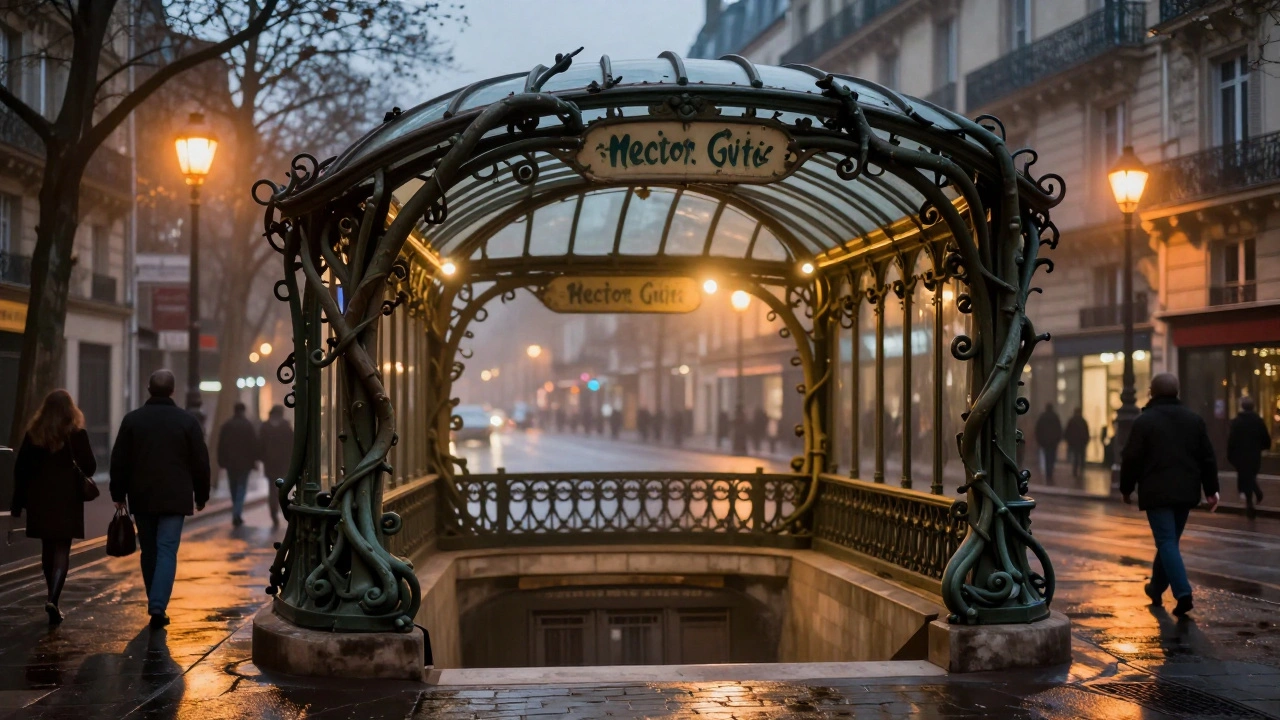
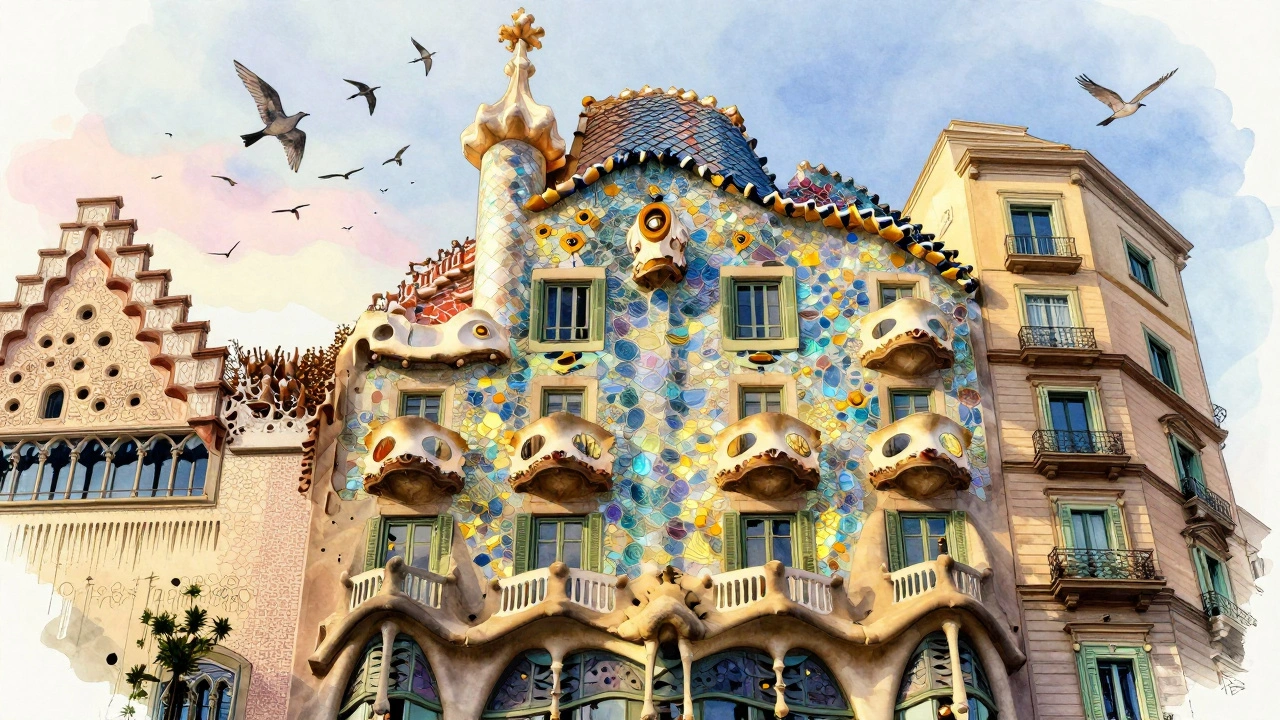
Walk through Paris today and you’ll see it in the Métro entrances. Guimard’s ironwork, with its sinuous lines and glass canopies, looks like it’s breathing. In Brussels, Victor Horta’s Hôtel Tassel has staircases that curl like ferns and ceilings that ripple like water. In Barcelona, Gaudí’s Casa Batlló looks like a dragon’s spine covered in scales made of ceramic tiles.
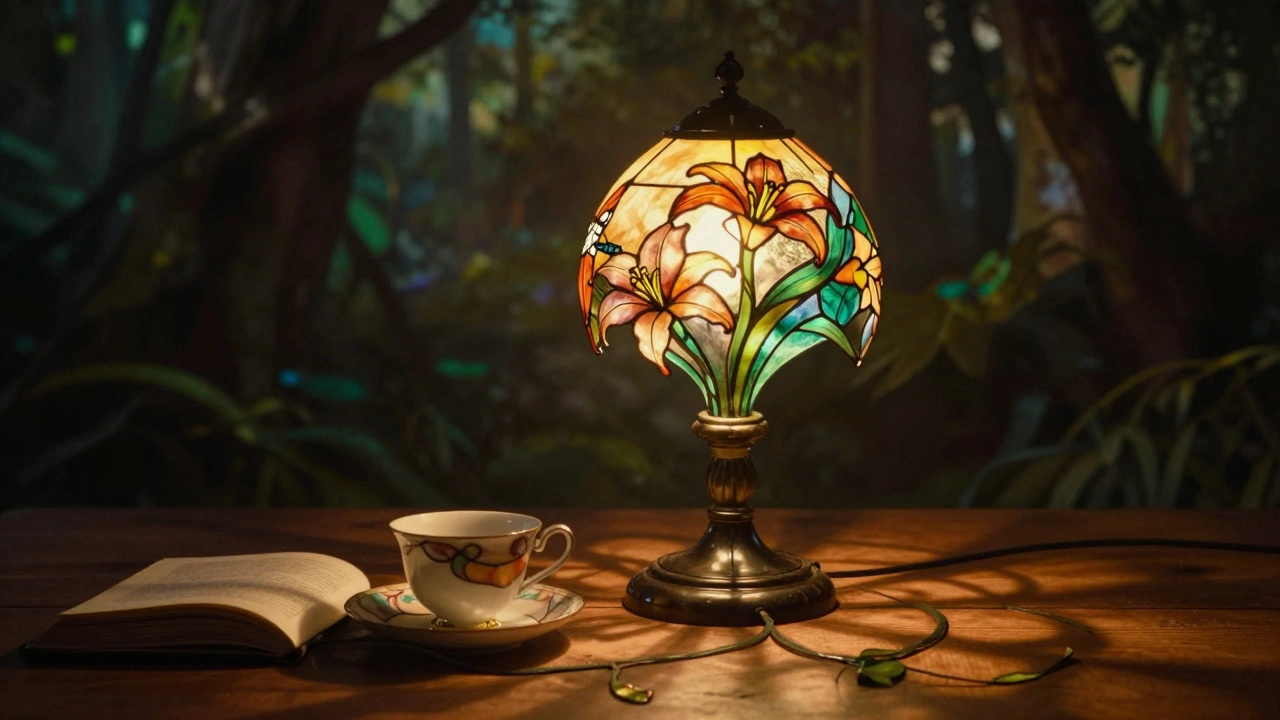
It wasn’t just architecture. It was everywhere. Alphonse Mucha’s posters for Sarah Bernhardt turned women into goddesses of flowing hair and floral halos. In Vienna, Koloman Moser designed wallpaper where lilies seemed to grow off the page. Even in the U.S., Louis Comfort Tiffany turned glass into stained-glass lamps that glowed like dawn through tree leaves.
Materials That Breathed
Art Nouveau designers didn’t care about traditional hierarchies. Iron, glass, wood, and ceramics weren’t just materials-they were collaborators. Iron, once used only for bridges and rails, became delicate as lace. Glass, once just for windows, became sculpted into organic forms. Wood was carved not with chisels alone, but with the rhythm of the grain.
Why? Because they believed beauty should come from the material’s nature, not from decoration slapped on top. A wooden doorframe wasn’t painted to look like a vine-it was shaped so the wood itself looked like it was growing. That’s why many Art Nouveau pieces feel alive. They don’t sit still. They seem to move.
Why It Faded
By 1910, the movement was already winding down. The First World War changed everything. The world didn’t want flowers on its buildings anymore. It wanted efficiency. Speed. Function. Modernism came in with clean lines, steel frames, and white walls. Art Nouveau looked old-fashioned-too decorative, too emotional.
But it never disappeared. It just went underground. Mid-century designers like Charles Rennie Mackintosh in Scotland kept its spirit alive in subtle ways. Even today, you’ll see its influence in jewelry with swirling gold vines, in tattoos that mimic tendrils, in the curved edges of modern furniture that feel more like a wave than a line.
Art Nouveau’s Legacy
It wasn’t just a style. It was the first time design said: beauty doesn’t have to be grand to matter. A doorknob could be art. A train station could be poetry. You didn’t need a palace to live beautifully.
That idea-that everyday objects carry meaning-still shapes how we think about design today. When you see a modern lamp with a soft curve, or a café chair that looks like it was grown, not built, that’s Art Nouveau whispering in your ear.
How to Spot It Today
- Curves over angles: If something looks like it grew, not built, it’s probably Art Nouveau.
- Nature as the star: Look for vines, flowers, insects, birds-not as decorations, but as the structure.
- Handmade feel: Even if mass-produced, it has an irregular, organic rhythm.
- Integrated design: The building, furniture, lighting, and even the door handles belong to one vision.
- No straight lines: If you see a perfectly straight edge, it’s probably not Art Nouveau.
Visit Melbourne’s historic buildings-some early 20th-century shops in the CBD still carry its fingerprints. The curved glass and wrought iron on the old Royal Arcade? That’s Art Nouveau, quietly surviving.
Is Art Nouveau the same as Art Deco?
No. Art Nouveau is about curves, nature, and flowing lines. Art Deco, which came after World War I, is about geometry, symmetry, and machine-age glamour. Think zigzags and chrome instead of vines and stained glass. They’re opposites in spirit.
Who were the main artists of Art Nouveau?
Key figures include Hector Guimard in France, Antoni Gaudí in Spain, Victor Horta in Belgium, Charles Rennie Mackintosh in Scotland, and Alphonse Mucha in Czechoslovakia. Each had a regional twist, but all shared the same core: nature as design.
Was Art Nouveau expensive?
Yes, originally. Handcrafted pieces by masters like Horta or Tiffany cost a fortune. But by the 1890s, manufacturers began producing affordable versions-wallpaper, ceramics, and metalwork-so the middle class could afford it. That’s what made it a true movement, not just for the rich.
Why is it called Art Nouveau?
"Art Nouveau" is French for "New Art." The term came from a Paris gallery called "Maison de l’Art Nouveau," opened in 1895 by art dealer Siegfried Bing. He used it to promote modern design. In Germany, it was called Jugendstil (Youth Style). In Italy, it was Liberty Style, after the London department store Liberty & Co. Each name reflects the same idea: a fresh start in design.
Can you still buy Art Nouveau pieces today?
Yes, but they’re rare and valuable. Original furniture, glassware, and posters by major artists sell for tens of thousands. But reproductions and inspired designs are common. Many modern jewelers, lighting makers, and interior designers still use Art Nouveau’s organic shapes-just without the 19th-century price tag.