Have you ever walked past a building and felt like it was breathing? Maybe you’ve seen a poster that looks less like an advertisement and more like a piece of jewelry. That’s the magic of Art Nouveau, a style that swept across Europe and America in the late 19th century, turning everyday objects into dreamlike experiences. It wasn’t just about looking pretty; it was a rebellion against the stiff, industrial age. This movement promised to bring nature back into our homes, our streets, and our lives. But what exactly makes this style so unique, and why does it still feel fresh today?
The Roots of a Natural Revolution
To understand Art Nouveau, you have to look at what came before it. In the mid-1800s, factories were churning out mass-produced goods. They were functional, sure, but they lacked soul. The Industrial Revolution had given us efficiency, but it had taken away beauty. Artists and designers felt trapped by rigid traditions and cold machinery. They wanted something different. They wanted art that felt alive.
This desire sparked a global movement. In France, it was called Jugendstil in Germany, Stile Liberty in Italy, and simply "the new style" in Britain. But everywhere, the goal was the same: to create a total work of art where architecture, furniture, painting, and sculpture worked together harmoniously. The central idea was simple yet radical-nature is the ultimate source of design. If you look closely at any genuine Art Nouveau piece, you’ll see curves that mimic vines, leaves, and flowers. There are no sharp corners here. Everything flows.
| Country | Local Name | Key Characteristics |
|---|---|---|
| France | Art Nouveau | Elegant, asymmetrical lines, emphasis on female figures |
| Germany/Austria | Jugendstil | More geometric, abstracted natural forms, structural clarity |
| Italy | Stile Liberty | Influenced by British Arts and Crafts, floral motifs |
| Spain | Modernisme | Grandiose architecture, organic shapes, symbolic elements |
| USA | Chicago Style / Tiffany Style | Skyscraper integration, stained glass, wrought iron |
The movement didn’t start with a manifesto or a single leader. It grew organically from workshops and studios where craftsmen refused to compromise on quality. Think of it as the original "slow fashion" movement, but for everything from teapots to train stations. People were tired of cheap imitations. They wanted objects that told a story and connected them to the natural world.
Masterpieces That Defined the Era
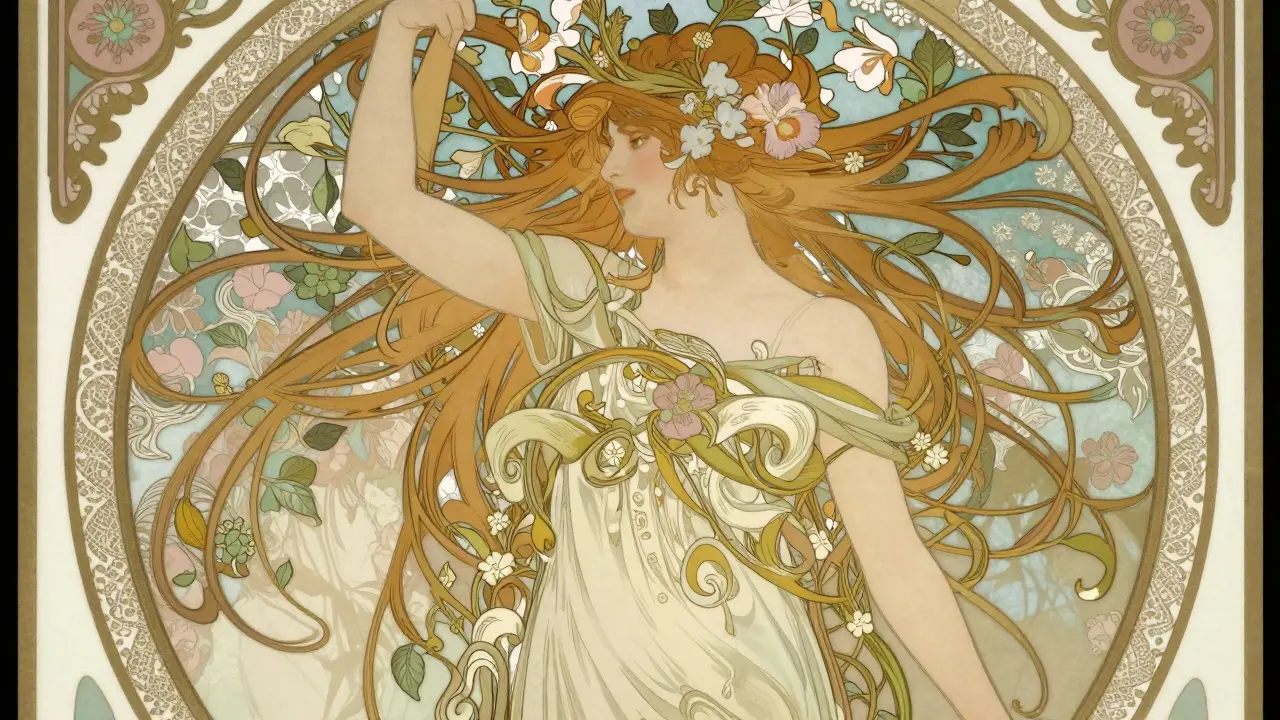
You can’t talk about Art Nouveau without mentioning its giants. These artists didn’t just paint pictures; they designed entire worlds. Take Alphonse Mucha, for example. His posters for actress Sarah Bernhardt became iconic overnight. He used flowing hair, halos of light, and intricate patterns that looked like lace made of gold. Mucha proved that commercial art could be high art. His work wasn’t just advertising; it was poetry on paper.
Then there’s Gustav Klimt in Vienna. While Mucha was soft and romantic, Klimt was bold and decorative. His famous painting The Kiss is covered in gold leaf and geometric patterns that blend human intimacy with artistic abstraction. Klimt challenged the idea that fine art had to be realistic. He showed that emotion could be expressed through texture and color alone. His work influenced generations of designers who followed him.
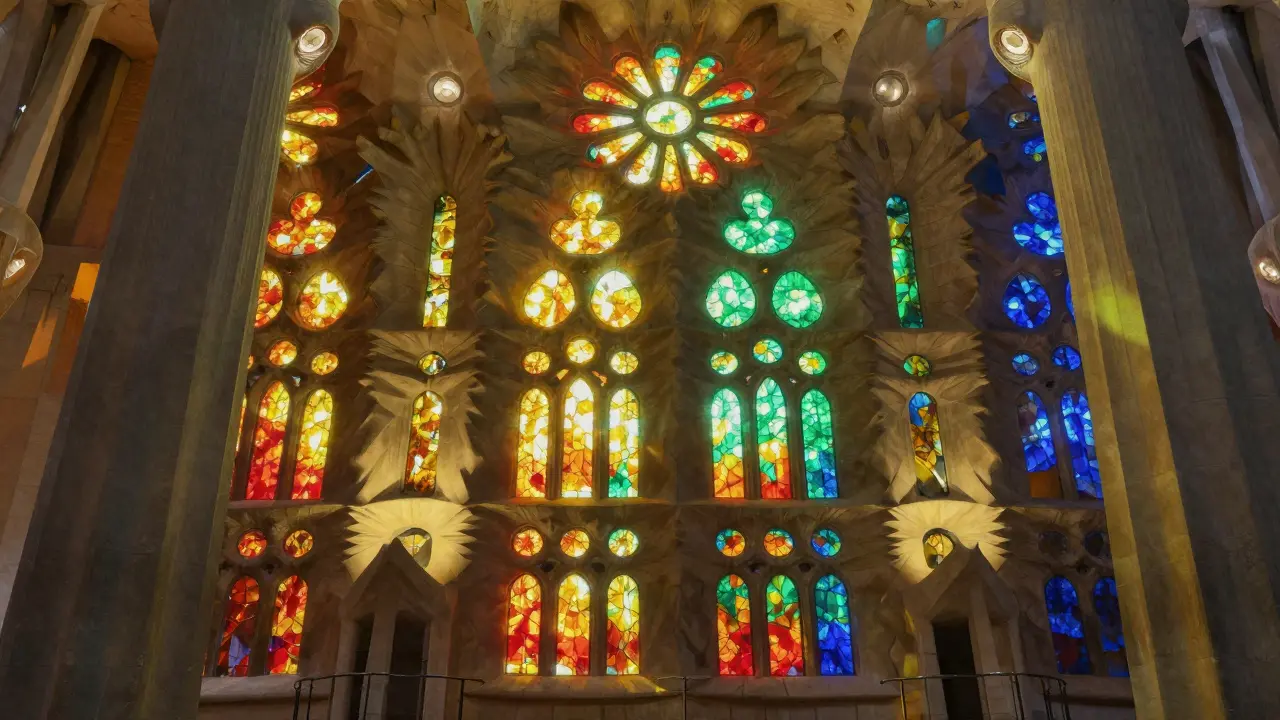
But perhaps the most surprising figure is Antoni Gaudí. An architect, yes, but one who treated buildings like living organisms. His masterpiece, La Sagrada Família in Barcelona, looks like it grew out of the ground rather than being built. Columns branch like trees, facades ripple like waves, and every detail serves both function and beauty. Gaudí believed that straight lines belonged only to humans, while curved lines belonged to God. This philosophy turned his buildings into spiritual experiences.
These creators shared a common vision: art should not sit behind glass in a museum. It should surround you. It should touch your hands when you open a door, catch your eye when you read a book, and lift your spirit when you walk down the street. That’s why Art Nouveau feels so personal even now.
Design Principles You Can Still Use Today
So, how do you recognize Art Nouveau if you see it? Look for these key features:
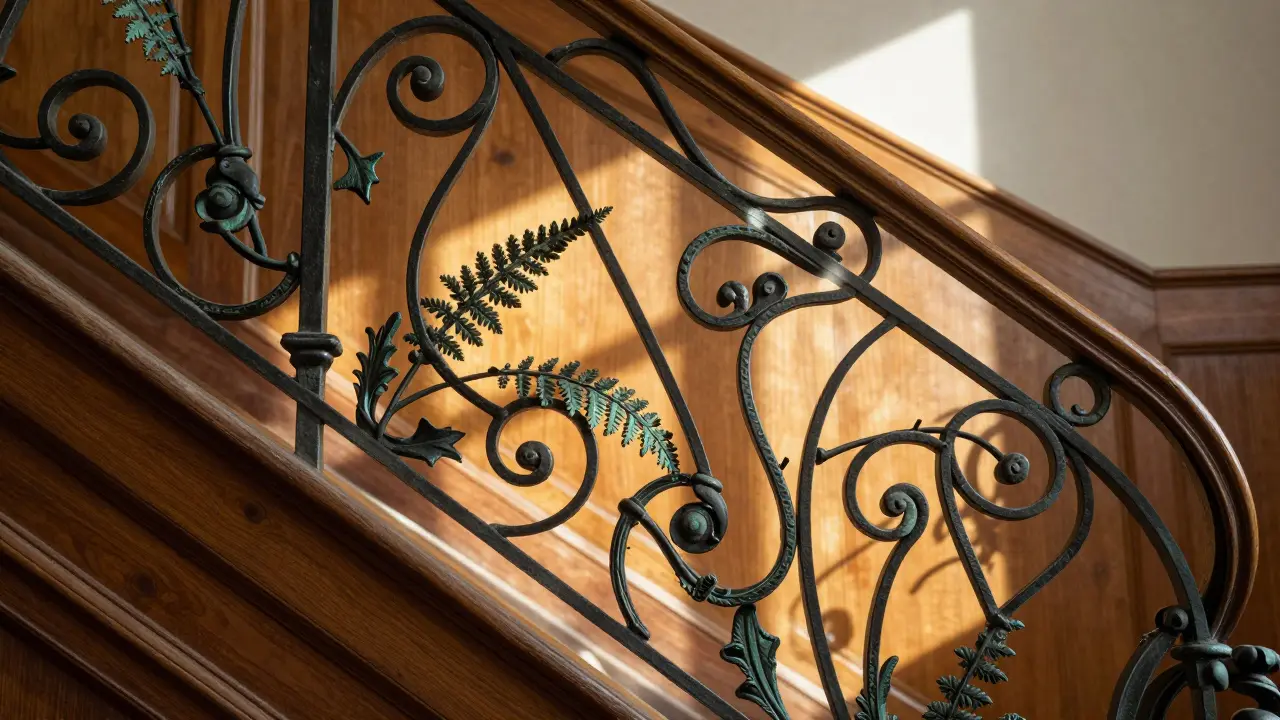
- Organic Lines: Curves dominate over angles. Think whiplash curves, spirals, and S-shapes that mimic plant growth.
- Natural Motifs: Flowers, insects, birds, and water appear frequently. Even when stylized, they retain their essential form.
- Total Design: Every element-from wallpaper to light fixtures-is part of a cohesive whole. Nothing stands out awkwardly.
- Craftsmanship: Materials matter. Wood grain, metal patina, and fabric texture are celebrated, not hidden.
- Asymmetry: Balance doesn’t mean symmetry. Art Nouveau embraces imbalance as long as it feels natural.
These principles aren’t just historical curiosities. They’re practical tools for modern design. When you apply them, you create spaces that feel warm and inviting. For instance, using curved furniture instead of boxy pieces can make a room feel softer. Adding botanical prints or woven textiles brings life indoors. Even small touches, like choosing a lamp with a hand-blown glass shade, honor the Art Nouveau spirit.
One reason this style endures is its flexibility. It works in minimalist settings because it adds warmth without clutter. It fits maximalist interiors because it offers rich textures and colors. Whether you’re renovating a Victorian home or decorating a modern apartment, Art Nouveau elements can bridge the gap between old and new.
The Rise and Fall of a Global Movement
Art Nouveau peaked between 1890 and 1910. During those two decades, it transformed cities from Paris to New York. Street lamps, subway entrances, and shop windows all bore its signature curves. Then, suddenly, it faded. Why? Several factors contributed.
First, the outbreak of World War I changed priorities. Nations needed steel and concrete, not stained glass and wrought iron. Practicality trumped aesthetics. Second, the rise of Modernism offered a cleaner, simpler alternative. Architects like Le Corbusier argued that decoration was unnecessary. Machines could produce perfect rectangles faster and cheaper than artisans could carve leaves.
Yet, despite its decline, Art Nouveau never truly disappeared. Its influence lingered in the Arts and Crafts movement, which emphasized handmade quality. It inspired later styles like Art Deco, which borrowed its elegance but added sharper geometry. And today, we’re seeing a resurgence. Young designers are rediscovering its values-sustainability, craftsmanship, and connection to nature-in a world increasingly dominated by digital screens.
This revival isn’t nostalgia. It’s recognition. We’re learning that technology alone doesn’t make life better. Beauty matters. Touch matters. Feeling connected to the earth matters. Art Nouveau reminds us of that truth.
Where to Find Art Nouveau Now
If you want to experience Art Nouveau firsthand, you don’t need to travel far. Many cities preserve examples from the era. In Paris, visit the Hôtel de Ville’s ornate staircases or explore the Musée d'Orsay’s collection of posters and paintings. In Brussels, admire Victor Horta’s Hotel Tassel, considered the first true Art Nouveau building. Its iron framework twists like tree branches, supporting floors that seem to float.
In London, check out the Underground Station Entrances designed by Harry Beck. Though simplified, they retain the elegant curves characteristic of the style. In Chicago, the Louis Sullivan Buildings showcase early American interpretations of organic architecture. Each location tells a different chapter of the same story.
Beyond museums and landmarks, you can find Art Nouveau in unexpected places. Antique shops often carry vintage jewelry, vases, and mirrors. Online marketplaces list reproductions of classic designs. Some contemporary brands still produce items inspired by the movement, blending tradition with modern materials.
Even if you don’t own anything authentic, you can incorporate the aesthetic into your daily life. Choose books with illustrated covers featuring floral borders. Wear clothing with embroidered vine patterns. Decorate with ceramics shaped like shells or petals. Small choices add up to a meaningful environment.
Why Art Nouveau Matters More Than Ever
We live in an age of algorithms and automation. Our screens glow constantly, our messages arrive instantly, and our products arrive within hours. Convenience has never been greater. Yet, many of us feel disconnected. From each other. From nature. From ourselves.
Art Nouveau offers an antidote. It invites us to slow down. To notice details. To appreciate imperfection. A hand-carved chair may have slight variations in shape, but that’s what makes it unique. A painted tile might show brushstrokes, reminding us of the artist’s presence. These flaws aren’t mistakes-they’re signatures.
Moreover, the movement promotes sustainability long before the term existed. By valuing durable, beautiful objects, it discouraged disposable culture. Instead of buying cheap replacements, people repaired and cherished their possessions. This mindset aligns perfectly with today’s push toward circular economies and ethical consumption.
Finally, Art Nouveau celebrates diversity. It emerged independently in multiple countries, adapting to local traditions while sharing core ideals. French elegance merged with German precision, Spanish symbolism blended with Italian flair. No single version claimed superiority. This inclusivity resonates deeply in our multicultural world.
As we navigate complex challenges-from climate change to social inequality-we need reminders of balance. Between progress and preservation. Between innovation and heritage. Between individual expression and collective harmony. Art Nouveau provides those reminders through its timeless beauty.
What defines Art Nouveau as a distinct art movement?
Art Nouveau is defined by its use of organic, flowing lines inspired by nature, rejection of industrial uniformity, and integration of art into everyday life. Key characteristics include asymmetry, natural motifs (flowers, vines), emphasis on craftsmanship, and holistic design where architecture, furniture, and decor form a unified whole. Unlike previous styles, it sought to erase boundaries between fine art and applied arts.
Who were the most influential artists in Art Nouveau?
Major figures include Alphonse Mucha (posters), Gustav Klimt (paintings), Antoni Gaudí (architecture), Hector Guimard (design), and Louis Comfort Tiffany (glasswork). Each contributed uniquely: Mucha elevated commercial illustration, Klimt explored decorative abstraction, Gaudí reimagined building structures, Guimard created iconic public spaces, and Tiffany pioneered colored glass techniques.
How did Art Nouveau differ from earlier art movements?
Unlike Renaissance or Baroque styles focused on religious or mythological themes, Art Nouveau centered on contemporary life and natural forms. Compared to Neoclassicism’s strict symmetry, it embraced fluidity and irregularity. Versus Impressionism’s fleeting moments, it aimed for permanence through durable materials and integrated environments. Most importantly, it rejected academic hierarchy by treating crafts equal to painting and sculpture.
Can Art Nouveau be incorporated into modern interior design?
Absolutely. Incorporate curved furniture, botanical artwork, textured fabrics, and artisanal lighting. Avoid overwhelming spaces-choose one focal point per room. Pair vintage pieces with clean-lined modern items for contrast. Use muted earth tones or jewel accents depending on desired mood. Remember: authenticity lies in intentionality, not replication.
Why did Art Nouveau decline after 1910?
Decline resulted from World War I shifting focus to utility over ornamentation, rising costs of handcrafted goods, emergence of Modernism favoring minimalism, and technological advances enabling mass production. Additionally, some critics viewed its complexity as excessive compared to emerging functionalist philosophies.
Is Art Nouveau experiencing a resurgence today?
Yes, particularly among younger designers seeking alternatives to sterile minimalism. Trends include sustainable materials, tactile surfaces, biophilic design principles, and appreciation for handmade uniqueness. Digital platforms also facilitate access to reproductions and tutorials, making the style more accessible globally.
What role does nature play in Art Nouveau aesthetics?
Nature serves as primary inspiration-not literal representation, but abstract interpretation. Leaves become swirling ribbons, stems transform into structural supports, petals evolve into decorative panels. This approach connects viewers emotionally to ecosystems while maintaining artistic freedom beyond photographic realism.
How does Art Nouveau relate to current environmental concerns?
Its emphasis on durability, repairability, and material honesty prefigures eco-conscious practices. By prioritizing longevity over disposability, it reduces waste. Celebrating local crafts supports regional economies. Connecting users to natural rhythms fosters stewardship attitudes-all relevant to addressing ecological crises.