
Have you ever sat in a chair that feels like it was designed for efficiency rather than comfort? Or walked into an office with floor-to-ceiling windows and stark white walls? You are likely experiencing the legacy of the Bauhaus, a German art school operational from 1919 to 1933 that revolutionized modern design by merging craft, fine art, and technology. It is not just a style; it is a philosophy that dictates how we live, work, and build today. The movement stripped away ornamentation to focus on function, creating a visual language that is still dominant in everything from iPhone interfaces to skyscrapers.
The Origins: A Response to Industrial Chaos
To understand why the Bauhaus emerged, you have to look at the state of Europe after World War I. Germany was devastated. There was a desperate need to rebuild society, but also a deep distrust of the industrial mass-production methods that had fueled the war. Many artists believed that machines were destroying the soul of craftsmanship. They wanted to return to medieval guilds, where makers cared deeply about their work.
This tension between handcraft and machine production defined the early years. In 1919, Walter Gropius, the founding director of the Bauhaus who advocated for the unification of all arts under one roof published the Bauhaus Manifesto. He didn't want separate silos for painters, sculptors, and carpenters. He wanted a new guild of craftsmen without the class distinctions that separated "fine art" from "applied art." His goal was radical: to create a total work of art, or Gesamtkunstwerk, where architecture, interior design, furniture, and typography worked together as a unified whole.
The first location was Weimar, a city with a strong tradition of arts education. However, the curriculum was initially very abstract and spiritual, influenced by Johannes Itten, an expressionist painter and teacher at the Bauhaus who developed the foundational Vorkurs (preliminary course). Itten’s teaching focused on intuition, materials, and color theory, often bordering on mysticism. While this sparked creativity, it clashed with Gropius’s desire for practical, industrially viable designs. This conflict would eventually lead to significant shifts in the school's direction.
The Core Philosophy: Form Follows Function
If there is one phrase that sums up the Bauhaus ethos, it is "form follows function." This principle means that the shape of a building or object should primarily relate to its intended function or purpose. Ornamentation for ornamentation's sake was considered a waste of resources and a distraction from utility.
This wasn't just about aesthetics; it was political and economic. The Bauhaus aimed to create beautiful, high-quality objects that were affordable for the masses. By designing for industrial production, they could lower costs and improve living standards for everyone, not just the wealthy elite. This democratization of design was a core tenet of the movement.
Key elements of this philosophy include:
- Simplicity: Removing unnecessary details to reveal the essential structure.
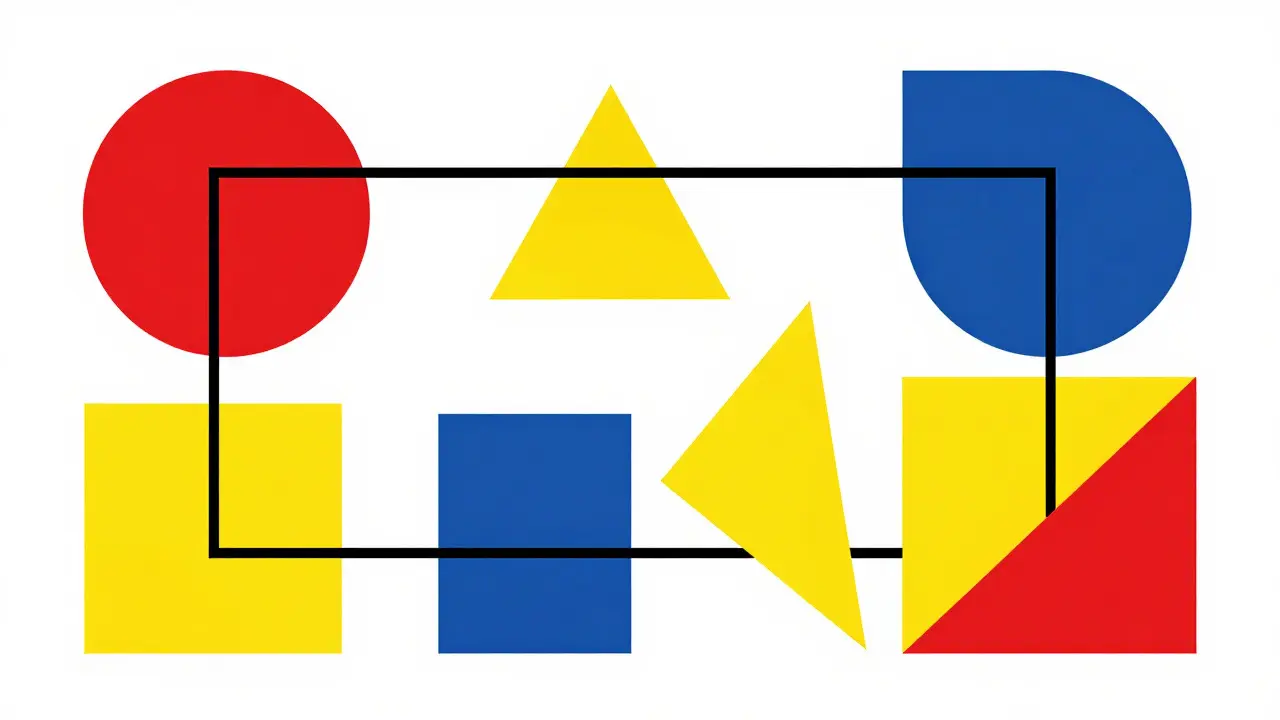
- Geometry: Using basic shapes like circles, squares, and triangles as the building blocks of design.
- Primary Colors: Favoring red, blue, and yellow alongside black, white, and gray for clarity and impact.
- Truth to Materials: Letting wood look like wood and steel look like steel, rather than hiding them behind paint or veneer.
You can see this in the iconic Wassily Chair by Marcel Breuer, a Hungarian architect and designer known for inventing tubular steel furniture while at the Bauhaus. Inspired by bicycle handlebars, Breuer created a chair that was lightweight, durable, and easily mass-produced. It looked nothing like traditional wooden armchairs, yet it provided the same function. This shift in perspective changed furniture design forever.

Three Cities, Three Phases
The Bauhaus didn't stay in one place, and its character changed drastically depending on where it was located. Understanding these three phases helps explain the diversity within the movement.
| Location | Years | Director | Focus & Style |
|---|---|---|---|
| Weimar | 1919-1925 | Walter Gropius | Expressionist, mystical, emphasis on craft and individual creativity. |
| Dessau | 1925-1932 | Walter Gropius | Industrial, functionalist, integration of art and technology, iconic campus building. |
| Berlin | 1932-1933 | Ludwig Mies van der Rohe | Minimalist, private institute, final stand before closure by Nazis. |
In Weimar, the school struggled with political pressure and funding issues. When Gropius moved the school to Dessau in 1925, things changed. Dessau offered a blank canvas. Gropius designed the famous Bauhaus Building, which became a manifesto in concrete and glass. The building featured asymmetrical wings for workshops, classrooms, and student dormitories, connected by a glazed bridge. It showcased the new industrial aesthetic: steel frames, glass curtain walls, and flat roofs.
This period marked the shift toward rationalism and engineering. Teachers like László Moholy-Nagy, a Hungarian artist and photographer who emphasized the use of new materials and technologies in art replaced Itten, bringing a focus on photography, photograms, and experimental materials. The curriculum became more structured and aligned with industrial needs.
By 1932, political pressure from the rising Nazi party forced another move, this time to Berlin. Under Ludwig Mies van der Rohe, the last director of the Bauhaus who championed minimalist architecture and the phrase 'less is more', the school operated as a private institute. Mies tried to keep the flame alive, but the Nazis viewed the Bauhaus as "degenerate" and politically subversive due to its international staff and socialist ideals. In 1933, the school closed, forcing its members to scatter across the globe.
Key Figures and Their Contributions
The Bauhaus was a collective effort, but several individuals left indelible marks on specific disciplines. Their work continues to influence designers today.
Wassily Kandinsky, a Russian painter and art theorist who taught abstract painting and color theory at the Bauhaus brought his expertise in abstract art to the school. He wrote "Point and Line to Plane," a theoretical framework that analyzed the emotional impact of geometric forms. His classes helped students understand how composition could evoke feelings, bridging the gap between pure art and design.
Paul Klee, a Swiss-German painter whose whimsical and colorful works explored the relationship between form and nature taught alongside Kandinsky. Klee’s approach was more playful and organic, contrasting with Kandinsky’s structural rigor. Together, they formed the core of the painting workshop, influencing generations of artists to think critically about color and form.
In typography, Herbert Bayer, an Austrian painter and graphic designer who pioneered universal sans-serif typefaces at the Bauhaus revolutionized lettering. He argued that traditional serif fonts were outdated and inefficient. Bayer created the "Universal" typeface, which used only lowercase letters and geometric shapes. This idea-that readability and simplicity should drive typography-laid the groundwork for modern digital fonts like Helvetica and Arial.
Women faced significant barriers at the Bauhaus, despite Gropius’s egalitarian rhetoric. Most women were steered toward the textile workshop, considered a "feminine" craft. However, figures like Anni Albers, a German-American textile artist who transformed weaving into a respected fine art form turned this limitation into a strength. Albers experimented with synthetic fibers and industrial looms, elevating textiles to the status of high art. Her work demonstrated that craft could be both intellectually rigorous and aesthetically powerful.
The Global Spread and Modern Legacy
When the Nazis closed the Bauhaus, its members fled to various countries, spreading its ideas worldwide. This diaspora ensured that the movement survived and evolved. In the United States, many former Bauhaus teachers joined institutions like the Illinois Institute of Technology and Black Mountain College. Mies van der Rohe went on to design some of the most famous skyscrapers in Chicago, embedding the Bauhaus aesthetic into the American skyline.
The influence extends far beyond architecture. Think about your smartphone interface. The clean lines, minimal icons, and intuitive layout are direct descendants of Bauhaus principles. Apple’s design philosophy, under Jony Ive, heavily borrowed from the Bauhaus emphasis on simplicity and functionality. Even corporate branding often uses bold, primary colors and geometric logos, echoing the visual language developed in Dessau.
Critics argue that the Bauhaus sometimes prioritized efficiency over human comfort, leading to sterile environments. The post-war housing projects inspired by Bauhaus ideals sometimes suffered from poor maintenance and lack of community spaces, contributing to social problems. Yet, these criticisms don’t negate the movement’s importance. They highlight the need to balance function with humanity-a lesson that contemporary designers continue to grapple with.
How to Identify Bauhaus Design Today
You don’t need a degree in art history to spot Bauhaus influence. Look for these telltale signs:
- Geometric Shapes: Circles, squares, and triangles dominate the composition.
- Limited Color Palette: Use of primary colors (red, blue, yellow) against neutral backgrounds (black, white, gray).
- Lack of Ornament: No decorative flourishes, patterns, or unnecessary details.
- Industrial Materials: Visible use of steel, glass, concrete, and plastic.
- Asymmetry: Balanced but not symmetrical compositions, creating dynamic tension.
Next time you’re in a museum, a coffee shop, or even scrolling through social media, pay attention to these elements. You’ll likely find that the Bauhaus is everywhere, quietly shaping your visual world.
Why did the Bauhaus movement close?
The Bauhaus closed in 1933 because the Nazi regime viewed it as culturally degenerate and politically subversive. The Nazis opposed its internationalist staff, socialist ideals, and modernist aesthetic, which they associated with Jewish and communist influences. After being forced to move from Weimar to Dessau and then Berlin, the school finally shut down under intense political pressure and financial strain.
Who founded the Bauhaus?
Walter Gropius, a German architect, founded the Bauhaus in 1919 in Weimar. He combined two existing art schools-the Grand-Ducal Saxon Academy of Fine Arts and the School of Arts and Crafts-to create a new institution focused on integrating art, craft, and technology.
What is the main principle of Bauhaus design?
The core principle is "form follows function," meaning that the design of an object should be based on its purpose rather than decorative appearance. This led to simple, geometric forms, minimal ornamentation, and the use of industrial materials to create affordable, functional products for mass production.
How did the Bauhaus influence modern architecture?
The Bauhaus introduced the International Style, characterized by flat roofs, open floor plans, large glass windows, and lack of decoration. Architects like Ludwig Mies van der Rohe popularized this style globally, influencing skyscrapers and residential buildings worldwide. The emphasis on structural honesty and spatial efficiency remains central to contemporary architectural practice.
Are there any famous Bauhaus buildings still standing?
Yes, the original Bauhaus Building in Dessau, Germany, is still standing and serves as a UNESCO World Heritage site. Other notable examples include the Meisterhäuser (Master Houses) in Dessau and the Tugendhat House in Brno, Czech Republic, designed by Mies van der Rohe. These structures exemplify the movement’s architectural ideals.
Did women play a role in the Bauhaus?
Yes, although women were often restricted to the textile workshop, several achieved great success. Anni Albers became a renowned textile artist, and Gunta Stölzl led the weaving department. Despite gender biases, women contributed significantly to the development of new materials and techniques, proving that craft could be a serious artistic medium.
How does Bauhaus design differ from Art Deco?
While both movements emerged in the early 20th century, they differ significantly. Art Deco is ornate, luxurious, and often features zigzag patterns and exotic materials. Bauhaus, in contrast, is minimalist, functional, and rejects decoration. Art Deco celebrates wealth and glamour, whereas Bauhaus aims for democratic accessibility and industrial efficiency.
Where can I study Bauhaus design today?
Several universities offer programs inspired by Bauhaus principles. The Bauhaus-Universität Weimar in Germany is the direct successor. Other institutions like the Rhode Island School of Design (RISD) and the Royal College of Art in London incorporate Bauhaus methodologies into their curricula, emphasizing the integration of art, technology, and critical thinking.