
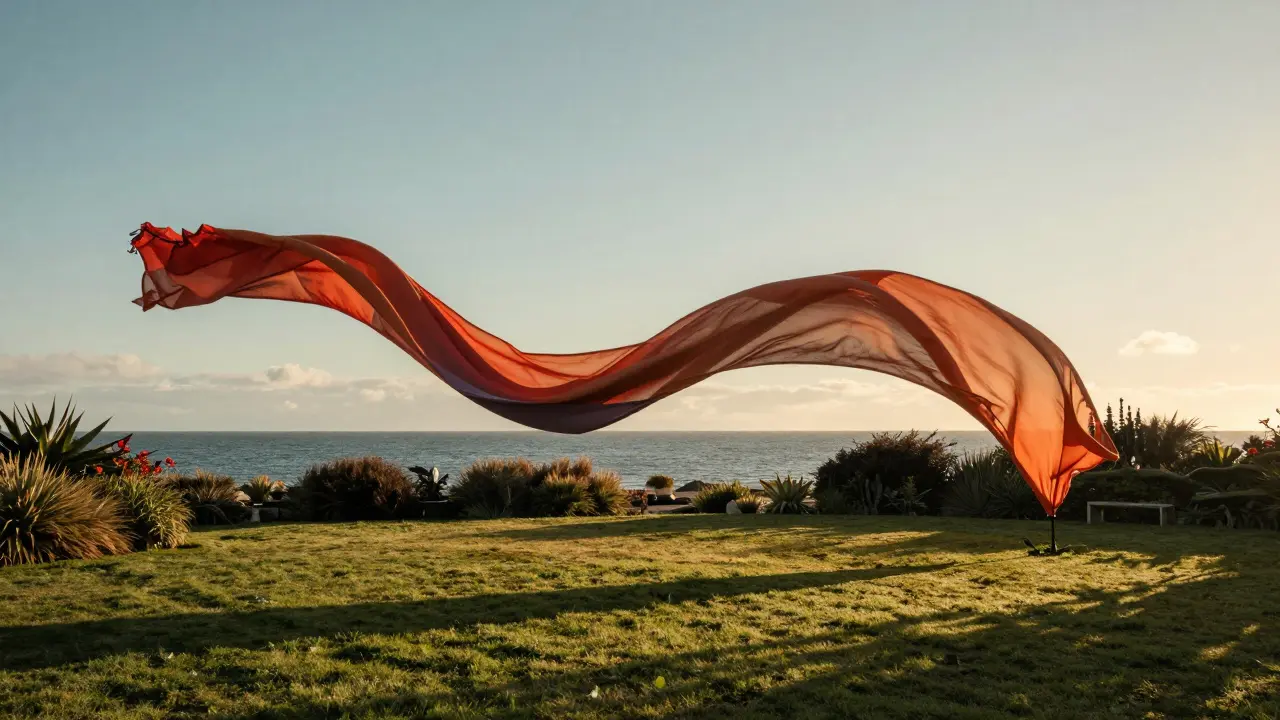
What if a sculpture could breathe? Not metaphorically-actually move, sway, spin, or ripple like wind through grass? Kinetic art isn’t just about looking at something static. It’s about watching it come alive. Since the 1920s, artists have been building pieces that don’t sit still. They rely on motors, magnets, air, water, or even your own movement to create change. This isn’t decoration. It’s experience.
What Exactly Is Kinetic Art?
Kinetic art is any artwork that contains movement as a core part of its design. The word comes from the Greek kinetikos, meaning "moving." Unlike traditional sculptures that invite you to walk around them, kinetic art demands you watch it change over time. It might turn slowly, flash in rhythm, or respond to touch. Some pieces are powered by electricity. Others use natural forces like sunlight or breeze. A few even need you to push a button or walk past them to activate motion.
The first widely recognized kinetic sculptures appeared in the 1920s, made by artists like Naum Gabo and Alexander Calder. Gabo’s Linear Construction in Space used transparent plastic and wire to suggest motion without motors. Calder, on the other hand, built delicate mobiles suspended from ceilings-pieces that danced with air currents. His work proved you didn’t need a motor to create movement. Just balance, weight, and a little wind.
How Does Movement Become Art?
It’s not enough to make something spin. The movement has to mean something. Kinetic artists think about rhythm, timing, and how motion affects emotion. A slowly turning wheel can feel meditative. A sudden jerk can feel jarring. A piece that responds to your presence makes you part of the artwork.
Take Lightning Field by Walter De Maria. It’s not a sculpture you see in a gallery-it’s a field of 400 stainless steel poles spread across a remote desert in New Mexico. The poles don’t move, but the way light hits them changes with the sun and weather. People sit for hours watching shadows stretch and fade. The movement here isn’t mechanical-it’s atmospheric. And that’s kinetic art too.
Another example: Water Clock by Jean Tinguely. This giant, clanking machine didn’t just tell time-it destroyed itself. Every hour, gears turned, hammers dropped, and water spilled. Then, after 12 hours, it collapsed into a pile of scrap. The art wasn’t just the motion-it was the decay. The impermanence.
Types of Kinetic Art You’ll See Today
Modern kinetic art comes in several forms. Here’s what’s common now:
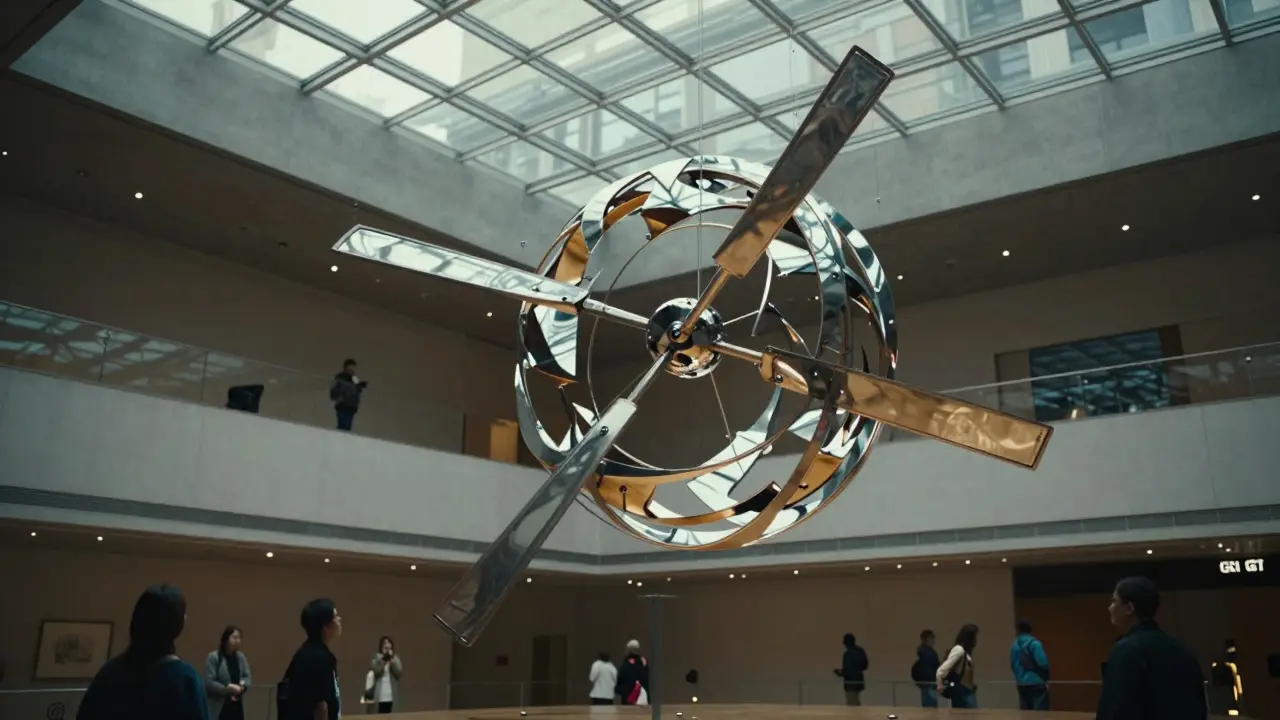
- Motor-driven sculptures - These use small electric motors to rotate, vibrate, or oscillate parts. Think of a spinning disc covered in mirrors, casting shifting light patterns across a wall.
- Wind-powered mobiles - Descendants of Calder’s work, these hang in gardens, lobbies, or balconies. They react to even the lightest breeze. Some are made of metal, others of fabric or recycled plastic.
- Interactive installations - Sensors detect your movement. As you walk by, lights pulse, sounds play, or parts rotate. These are common in museums and public spaces.
- Hydraulic and water-based art - Water flows through channels, drips rhythmically, or sprays in patterns. Artists like Olafur Eliasson use water to create illusions of motion and depth.
- Solar-powered kinetic pieces - These rely on sunlight to power movement. A sun tracker might turn a panel to follow the sun, or a small fan spins as heat rises.
In Sydney, you can find kinetic installations at the Art Gallery of New South Wales and the Museum of Contemporary Art. One popular piece, Wind Sculpture VII by Yinka Shonibare, stands outside the MCA. It’s a giant, colorful fabric tube that twists and flutters in the sea breeze. People stop to watch it. Some take photos. Others just stand there, quiet, letting the motion calm them.
Why Does Kinetic Art Matter Now?
In a world of screens and static images, kinetic art brings back the physical. You can’t scroll past it. You can’t mute it. It exists in real time, in real space. It reminds us that movement is part of life-and that art doesn’t have to be frozen in time to be powerful.
It also connects to technology. Today’s artists use Arduino boards, LED strips, and motion sensors in ways that would’ve seemed like magic 50 years ago. But the core idea hasn’t changed: art should engage you, not just decorate your wall.
Kinetic art is also becoming more sustainable. Artists are using recycled materials-old fan blades, discarded electronics, reclaimed wood-to build moving pieces. One Melbourne artist, Lisa Roet, creates animal sculptures from repurposed metal scraps. Her kangaroo, made from bicycle chains and steel rods, sways gently as visitors pass. It’s beautiful. And it tells a story about reuse.
How to Experience Kinetic Art
If you want to feel the power of movement in art, don’t just look-you need to be there. Go to a gallery with kinetic pieces. Stand close. Watch how the light changes as a part rotates. Notice how your shadow might interact with it. Some pieces only work when you’re near.
Try visiting public spaces. Many cities now install kinetic art in parks, train stations, and plazas. In Melbourne, the Sound Garden uses wind to make chimes ring in different patterns. In Berlin, a giant pendulum swings through a museum atrium, marking the hour with a slow, heavy motion.
You don’t need to travel far. Even a simple wind chime on your porch counts. If it moves with the wind and makes you pause, you’re already experiencing kinetic art.
Can You Make Your Own?
Yes. And you don’t need a degree in engineering. Start small. Take a coat hanger, bend it into a shape, hang it from a tree, and add lightweight objects-bottle caps, old keys, plastic spoons. Let the wind do the work. Watch how the sound and motion change with the weather.
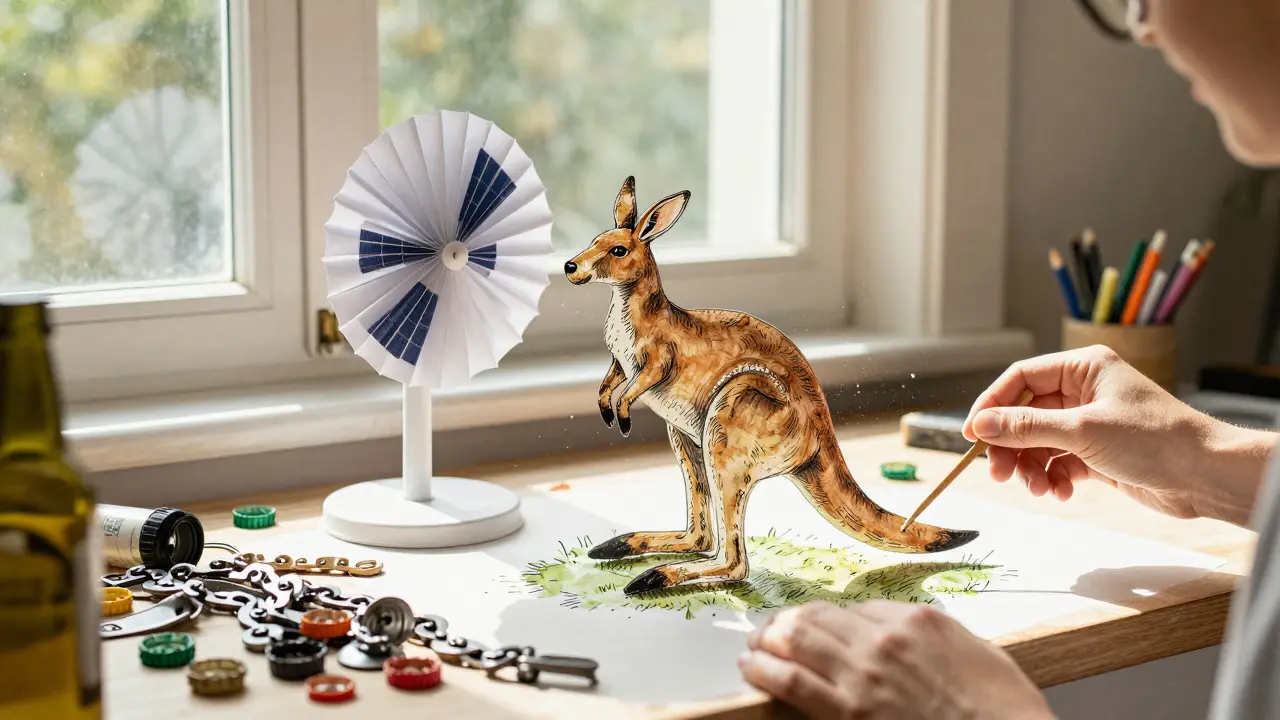
Or try a solar-powered version. Buy a small solar motor from a hobby store. Attach it to a paper fan. Place it in a sunny window. When the sun hits it, the fan spins. That’s kinetic art. Simple. Real. Yours.
Some artists use Arduino kits to add sensors. A motion sensor can trigger a motor when someone walks by. A light sensor can make a piece glow brighter as dusk falls. These tools are cheap and easy to learn. YouTube tutorials walk you through building your first moving sculpture in under an hour.
What Kinetic Art Teaches Us
At its heart, kinetic art is about change. Nothing stays still-not the wind, not the light, not us. This art reminds us that beauty doesn’t need to be permanent to be meaningful. In fact, the fleeting moments are often the most powerful.
It teaches patience. You can’t rush a spinning sculpture. You have to wait for it to turn. You have to be present.
It teaches connection. When a piece moves because of you, you’re no longer just a viewer. You’re part of the system.
And maybe most importantly, it reminds us that art doesn’t have to be silent. It doesn’t have to sit on a pedestal. It can hum, sway, spin, and sing.
Is kinetic art the same as mechanical art?
Mechanical art is a subset of kinetic art. All mechanical art moves, but not all kinetic art is mechanical. For example, a wind-powered mobile isn’t mechanical-it doesn’t use motors or gears. Kinetic art includes any movement, whether powered by electricity, wind, water, or human interaction.
Who are the most famous kinetic artists today?
Alexander Calder remains the most iconic, but living artists like Rebeca Horn, Anthony Howe, and Olafur Eliasson are shaping modern kinetic art. Howe builds intricate, wind-driven sculptures that look like cosmic machines. Eliasson uses light and water to create illusions of motion. Horn combines movement with the human body in immersive installations.
Can kinetic art be indoors?
Absolutely. Many kinetic pieces are designed for indoor spaces-museums, lobbies, homes. Indoor works often use motors, sensors, or LEDs instead of wind. Some even respond to sound or body heat. The key is that they move in a way that changes how you experience the space.
Does kinetic art require electricity?
No. Many kinetic artworks run on natural forces: wind, water, sunlight, or gravity. Alexander Calder’s mobiles move with air. Some modern pieces use solar panels to power small motors without wires. Even a pendulum swinging under gravity counts as kinetic art.
Is kinetic art expensive to collect?
It can be, but it doesn’t have to be. Large motorized installations by well-known artists can cost tens of thousands. But small, hand-built mobiles or solar-powered pieces by emerging artists sell for under $500. Many local makers offer affordable kinetic art through craft fairs or online shops.
If you’ve ever stood in front of a spinning sculpture and felt time slow down-you’ve felt the power of kinetic art. It doesn’t shout. It doesn’t need words. It just moves. And in that movement, it speaks.