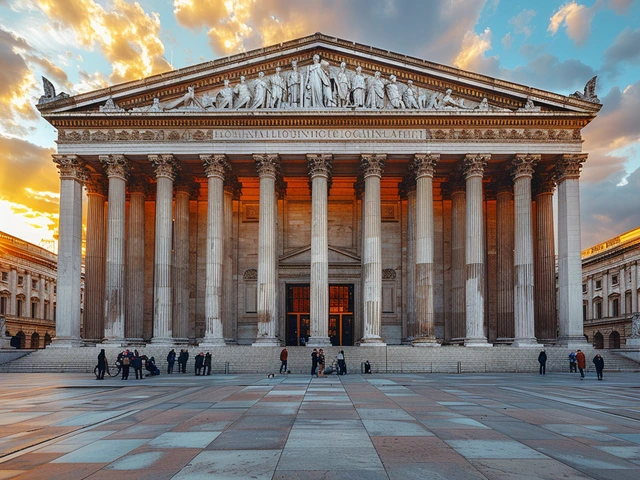
Walk into a cathedral in Paris or London, look up at those soaring stone ribs, and feel that sudden drop in your stomach. It’s not just awe; it’s a specific kind of unease mixed with wonder. That feeling is the heartbeat of Gothic art, which is a style of visual culture that emerged in 12th-century France, characterized by verticality, light, and an embrace of the sublime and sometimes terrifying aspects of existence. For centuries, critics called it "barbaric" because it broke away from the perfect circles of classical Rome. Today? We are obsessed with it.
We don't just love Gothic art for its spooky vibes. We love it because it captures something raw about the human condition-the tension between faith and fear, order and chaos. From the stained glass of Chartres to the twisted figures of Hieronymus Bosch, this style refuses to let us rest easy. So, why does a style born nearly nine hundred years ago still dominate our Halloween decorations, our video games, and even our fashion?
The Birth of a Style: More Than Just Pointy Arches
To understand why Gothic art feels so heavy, you have to see how it started. Before the 1100s, European buildings were thick, dark, and squat. This was the Romanesque period. Churches looked like fortresses. Then came Abbot Suger at the Basilica of Saint-Denis near Paris. He wanted more light. He believed light was divine.
Suger didn't just want a brighter church; he wanted a building that seemed to dissolve into heaven. To do this, architects had to invent new engineering tricks. They used flying buttresses-those external stone arms that hold up the walls-to push the weight outward. This allowed the walls to be thinner and filled with massive windows. The result was a skeletal structure of stone that felt impossibly tall and fragile.
This shift wasn't just technical; it was emotional. The viewer was forced to look up. Your neck strained. You felt small. That physical reaction was intentional. It created a sense of the sublime-a beauty so vast it scares you. This foundation set the stage for everything that followed in Gothic aesthetics.
| Feature | Romanesque (Pre-Gothic) | Gothic |
|---|---|---|
| Arc Shape | Rounded arches | Pointed arches |
| Wall Structure | Thick, solid, few windows | Thin, skeletal, large stained glass |
| Support System | Internal pillars only | Flying buttresses (external support) |
| Emotional Tone | Grounded, fortress-like, secure | Vertical, ethereal, awe-inspiring |
| Lighting | Dim, shadowy | Bright, colored, luminous |
Stained Glass: Painting with Light
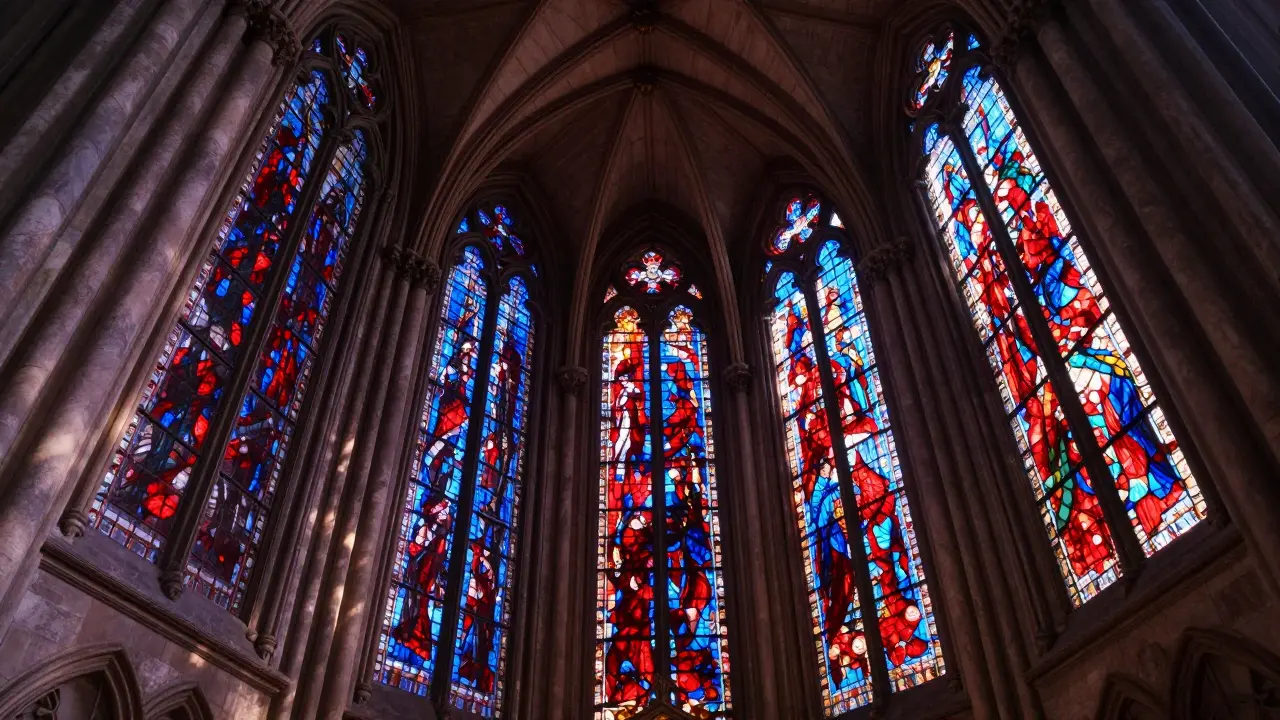
If architecture is the body of Gothic art, stained glass is its soul. In an era before widespread literacy, these windows were the Bible for the common person. But they weren't just educational tools; they were magical experiences.
Think about the Sainte-Chapelle in Paris. Built in the 13th century to house relics of Christ's passion, it is essentially a cage of gold and glass. When sunlight hits those panels, the room fills with ruby reds and deep blues. It doesn't look like natural light anymore. It looks like liquid color pouring from the sky. This technique transformed the interior space into something otherworldly. It blurred the line between earth and heaven.
The artists who made these glasses didn't just paint scenes; they painted emotions. The faces of saints often show intense suffering or ecstatic joy. There is no neutrality here. Every face tells you exactly what it feels like to stand in God's presence-and it isn't always comfortable. This intensity is a hallmark of the Gothic mindset: nothing is half-measured.
The Grotesque and the Human Body
You can't talk about Gothic art without mentioning the gargoyles. Those weird, twisted creatures perched on cathedral corners aren't just decoration. They serve a practical purpose (draining rainwater) and a symbolic one. They represent the chaos outside the church walls. Inside, there is order and prayer. Outside, there are demons and storms.
This fascination with the grotesque extended to sculpture and painting. Gothic statues of saints were often elongated, their bodies twisting in unnatural ways. Their robes flowed like water, but their faces were thin, almost gaunt. Why? Because the medieval mind saw the body as a prison for the soul. Emaciation was a sign of spiritual focus. Eating too much, looking too healthy-that was worldly. Looking starved and intense? That was holy.
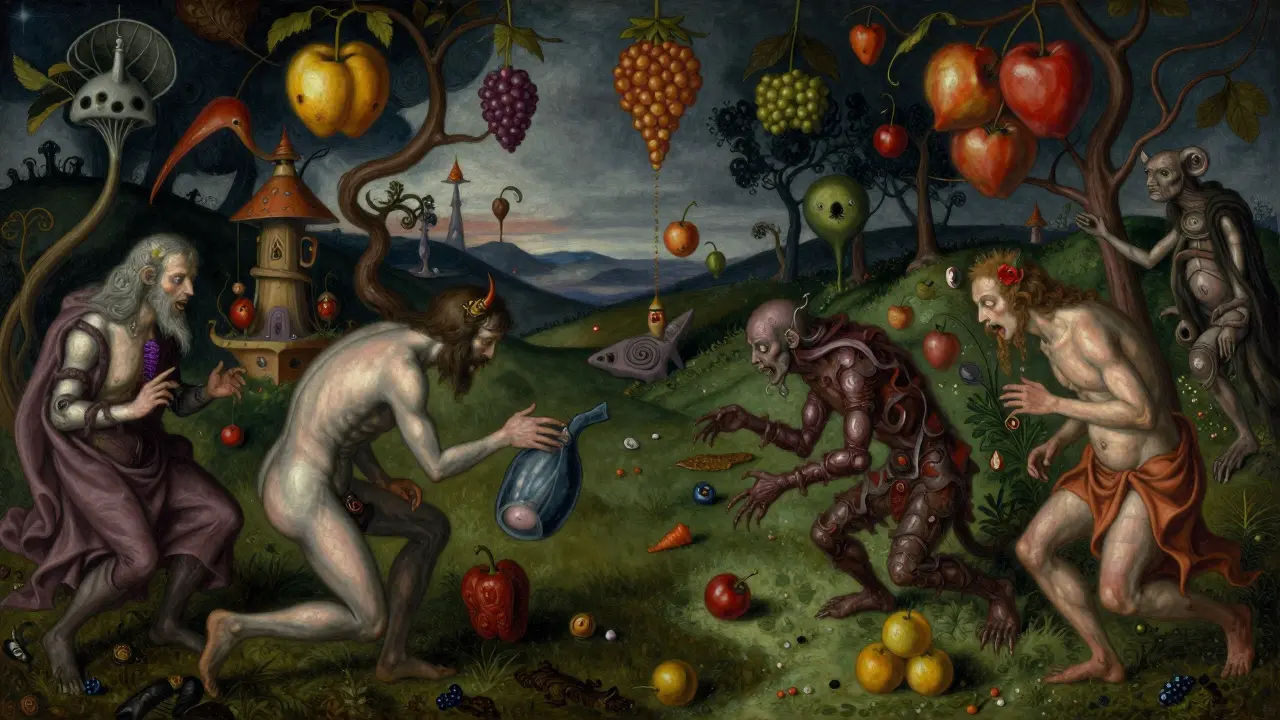
Later, during the late Gothic period, artists like Hieronymus Bosch took this further. His paintings, like The Garden of Earthly Delights, are full of hybrid monsters, strange fruits, and surreal punishments. Bosch didn't just show hell; he showed the absurdity of human sin. His work proves that Gothic art wasn't just about religion; it was about exploring the darkest corners of the human psyche.
Why We Still Crave the Dark
Fast forward to today. Gothic art didn't die out; it went underground and then exploded back into pop culture. Why? Because modern life is safe, sanitized, and predictable. We live in a world of soft edges and user-friendly interfaces. Gothic art offers the opposite: danger, mystery, and complexity.
Consider the Gothic Revival of the 19th century. Writers like Edgar Allan Poe and architects like Augustus Pugin rejected the clean lines of the Enlightenment. They wanted the shadows back. They built castles with turrets and wrote stories about haunted mansions. This wasn't just nostalgia; it was a rebellion against rationalism. People were tired of being told that science could explain everything. They missed the mystery.
Today, we see this same hunger in video games like Dark Souls or movies like Dracula. These works use Gothic aesthetics to create spaces where players and viewers can confront fear in a controlled environment. It’s cathartic. You get to feel scared without actually being in danger. That’s a powerful psychological release.
Gothic Elements in Modern Design
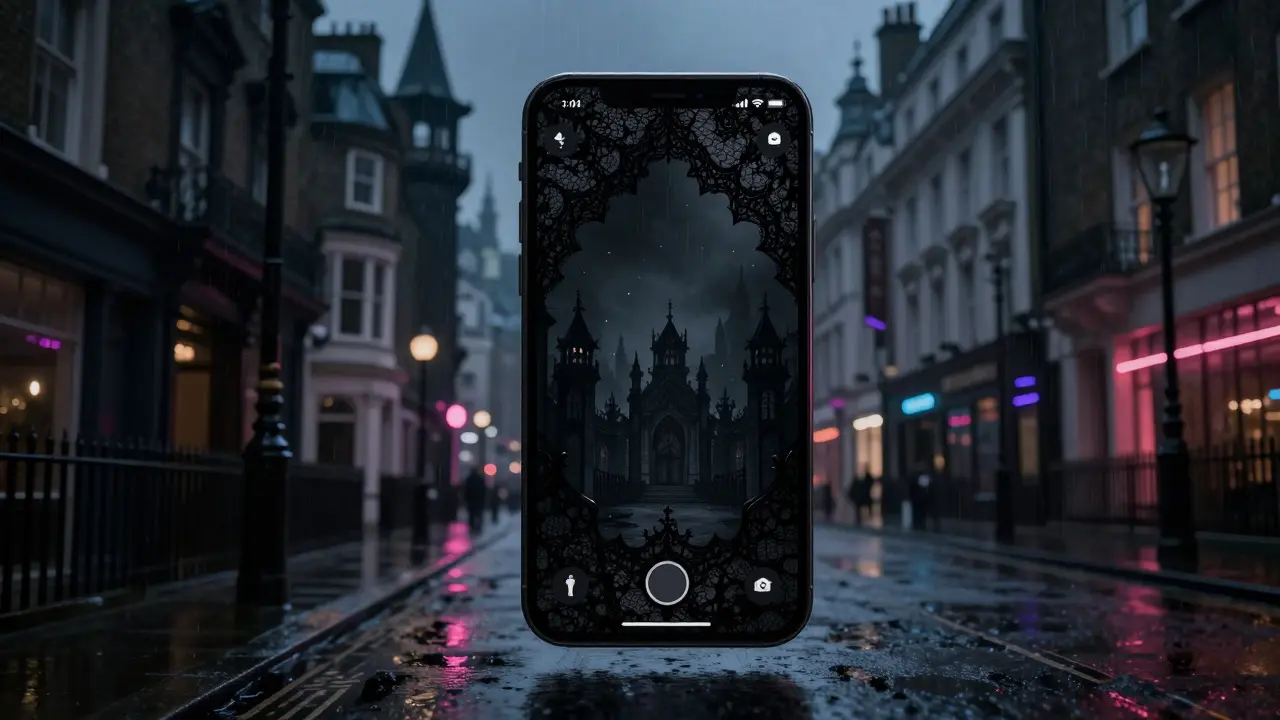
You might think Gothic art is stuck in museums, but it’s everywhere. Look at your smartphone interface. It’s clean, flat, and bright. Now look at a high-end fashion brand like Alexander McQueen or Rick Owens. They use black lace, sharp silhouettes, and dramatic textures. That’s Gothic DNA.
Even in web design, we see traces of it. Dark mode isn’t just easier on the eyes; it feels premium and mysterious. Websites that use dark backgrounds with neon accents are tapping into that same contrast of light and shadow that defined Gothic cathedrals. It creates depth. It makes the content feel important.
Here are three ways you can spot Gothic influence in everyday life:
- Architecture: Look for pointed arches in doorways or ironwork with intricate, vine-like patterns.
- Fashion: Notice clothing that emphasizes silhouette over comfort, using layers, corsets, or asymmetrical hems.
- Media: Pay attention to stories that feature isolated protagonists facing overwhelming, ancient forces.
The Enduring Power of Mystery
Gothic art survives because it respects our intelligence and our fears. It doesn’t try to comfort us with simple answers. Instead, it invites us to stare into the abyss and find beauty there. Whether it’s the dizzying height of Notre Dame or the nightmarish details of a Bosch painting, Gothic art reminds us that the world is bigger, darker, and more complex than we can fully understand.
And maybe that’s the point. In a world that tries to optimize every second of our lives, Gothic art gives us permission to linger in the shadows. It tells us that mystery is valuable. That darkness has texture. And that sometimes, the most beautiful things are the ones that make us feel a little bit afraid.
What is the main difference between Gothic art and Medieval art?
Gothic art is actually a subset of Medieval art. While "Medieval" covers the entire Middle Ages (roughly 500-1500 AD), Gothic specifically refers to the style that emerged in the 12th century and lasted until the Renaissance. Earlier Medieval art includes Romanesque styles, which were heavier and less focused on light and verticality than Gothic works.
Why did people call Gothic art "barbaric" originally?
During the Renaissance, scholars revived interest in classical Greek and Roman art, which valued symmetry, proportion, and logic. They viewed the Gothic style-with its irregular shapes, towering heights, and emphasis on emotion-as chaotic and uncivilized. The term "Gothic" was originally an insult, referring to the Goths who had helped destroy the Roman Empire.
How did Gothic art influence modern horror movies?
Modern horror relies heavily on Gothic tropes: isolated locations (castles, mansions), atmospheric lighting (shadows, fog), and themes of decay or madness. Films like Frankenstein or Dracula directly borrow from Gothic literature and art, using visual cues like pointed arches, stormy skies, and grotesque figures to evoke fear and suspense.
Is Gothic art only religious?
No. While early Gothic art was primarily religious (cathedrals, altarpieces), later periods included secular works. Portraits of nobility, tapestries depicting battles, and illuminated manuscripts with decorative borders all fall under Gothic art. By the late Gothic period, artists began exploring personal expression and surreal imagery, moving beyond strict religious doctrine.
What role did light play in Gothic cathedrals?
Light was central to the Gothic experience. Architects designed cathedrals to maximize natural light through large stained-glass windows. This wasn't just for visibility; it was theological. Light symbolized divine truth and God's presence. The colorful glow created an immersive, spiritual atmosphere that aimed to lift the worshipper's mind toward heaven.