
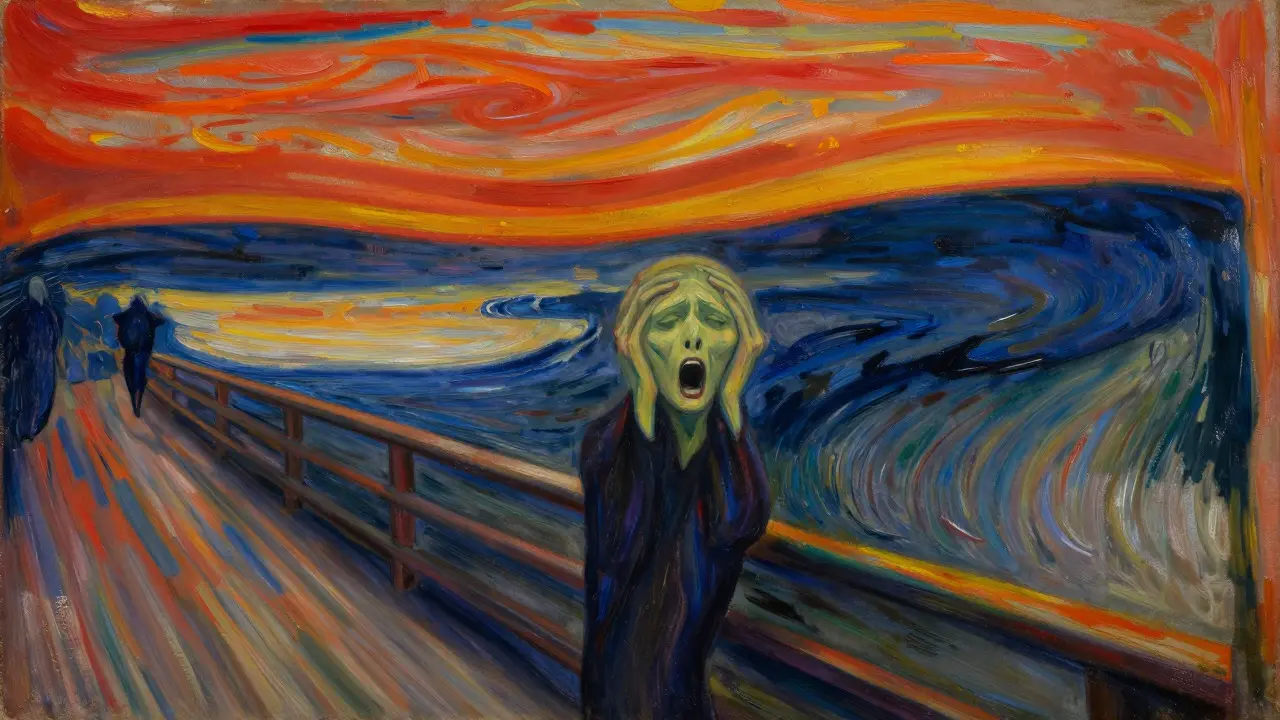
Imagine looking at a painting where the sky is blood-red, the trees look like twisted skeletons, and the faces of people are distorted into masks of pure anxiety. It’s not a nightmare; it’s Expressionism, an early 20th-century art movement that deliberately broke the rules of realism to show how the world *felt*, rather than how it looked.
This wasn't just a stylistic choice. It was a reaction against the cold logic of industrialization and the trauma of war. Artists stopped trying to copy nature and started using color, line, and form as weapons to expose the raw nerves of the human experience. If you’ve ever felt overwhelmed by modern life, this movement speaks directly to that chaos.
The Birth of Angst: Why Did Expressionism Start?
To understand why artists suddenly started distorting reality, you have to look at the context of Europe in the late 1800s and early 1900s. Society was changing fast. Cities were exploding with factories, smoke, and crowds. People felt isolated despite being surrounded by millions. The old religious and social structures were crumbling under the weight of scientific progress and political instability.
Edvard Munch, a Norwegian painter often seen as the grandfather of this style, captured this shift perfectly with his 1893 masterpiece, The Scream. He didn’t paint a person screaming; he painted the sound of nature screaming through the figure. This idea-that art should express inner emotion over external appearance-became the core philosophy of the movement. It was influenced heavily by Sigmund Freud's theories on the unconscious mind, which suggested that our true selves are hidden beneath layers of social behavior.
Artists wanted to strip away those layers. They weren't interested in beauty for beauty's sake. They wanted truth, even if that truth was ugly, chaotic, or terrifying.
Die Brücke and Der Blaue Reiter: The Two Main Groups
While Expressionism started as a loose feeling, it quickly organized into specific groups, primarily in Germany. These two factions defined the movement's visual language.
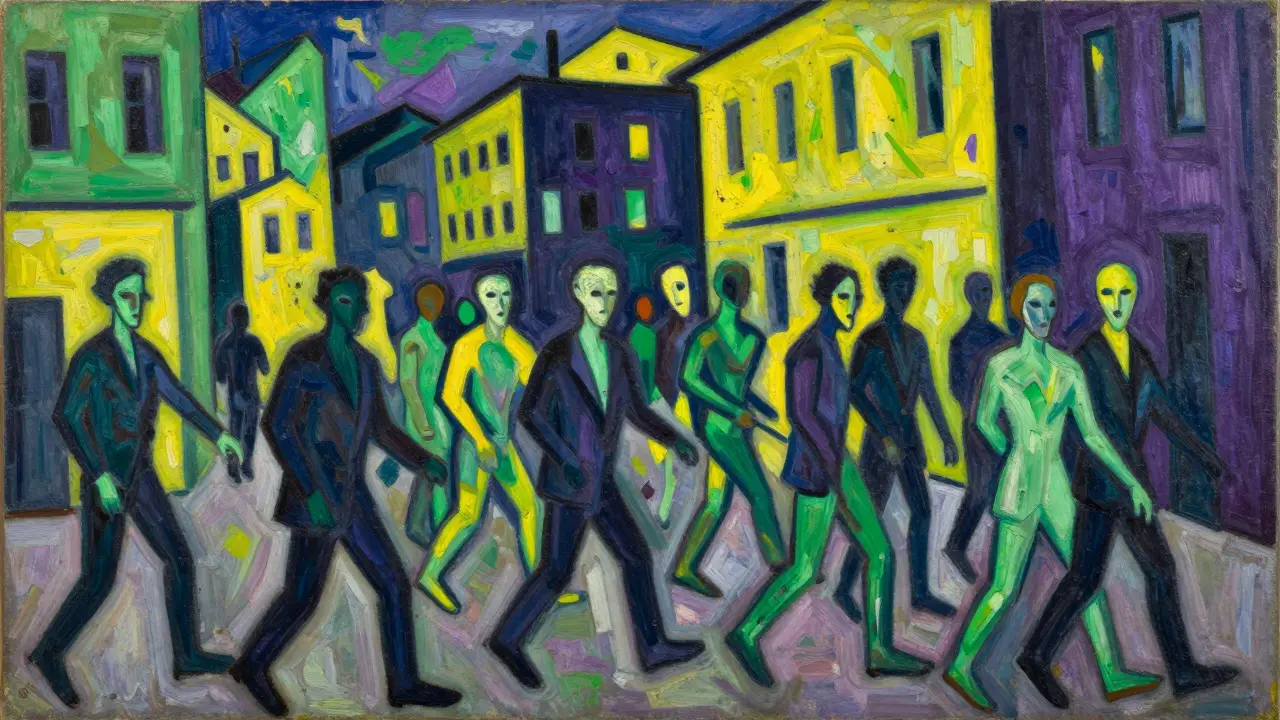
Die Brücke (The Bridge) was founded in Dresden in 1905 by Ernst Ludwig Kirchner and others. They called themselves "the bridge" between the past and the future. Their work was raw, angular, and often focused on urban life and the naked body. They used harsh colors and jagged lines to show the stress of city living. Think of their paintings as visual shouts.
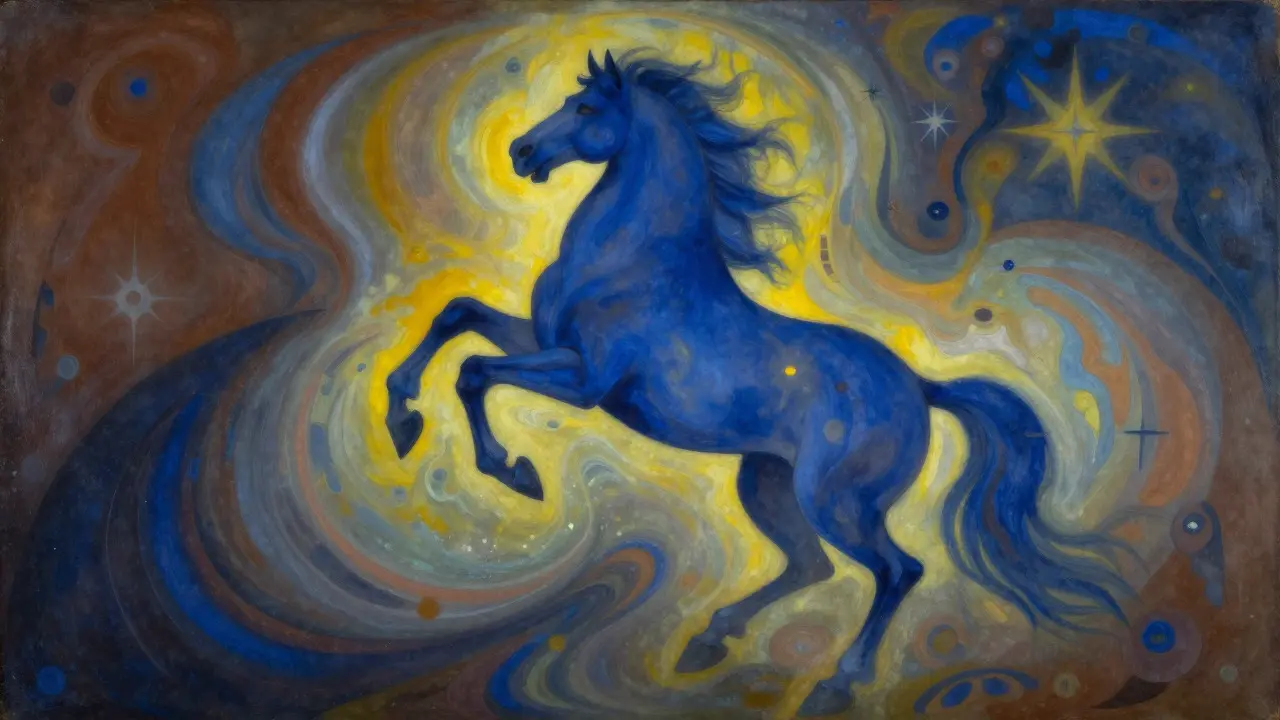
Then there was Der Blaue Reiter (The Blue Rider), formed in Munich around 1911 by Wassily Kandinsky and Franz Marc. This group was more spiritual and abstract. They believed color had its own soul. For them, blue represented spirituality, while yellow was earthly and aggressive. Unlike Die Brücke, who stayed rooted in recognizable figures, Der Blaue Reiter pushed toward total abstraction, believing that art could communicate directly with the spirit without needing objects.
Key Techniques: How to Spot Expressionist Art
You don’t need an art degree to recognize Expressionism. The techniques are bold and deliberate. Here is what to look for when you’re standing in front of a canvas:
- Distorted Forms: Faces might be elongated, bodies twisted, or perspectives skewed. This isn’t bad drawing; it’s intentional distortion to show emotional state.
- Non-Naturalistic Color: Trees might be red, skies green, skin yellow. Colors are chosen for their emotional impact, not their accuracy. Red means anger or passion; blue means sadness or calm.
- Visible Brushstrokes: The artist’s hand is obvious. You can see the energy and speed of the brush moving across the canvas. It feels urgent and unfinished.
- Dark Subject Matter: Themes often include death, madness, poverty, and alienation. There is very little happy, sunny pastoral scenery here.
These techniques were designed to shock the viewer out of complacency. If you walked into a gallery and felt uneasy, the artist succeeded.
Beyond Painting: Expressionism in Film and Theater
Expressionism didn’t stay in the studio. It spilled into other mediums, most notably cinema. German Expressionist film became famous for its stark black-and-white visuals, shadowy sets, and psychological horror.
The 1920 film The Cabinet of Dr. Caligari is the perfect example. The sets weren’t realistic buildings; they were painted, twisted cardboard cutouts with sharp angles and impossible geometry. The environment reflected the madman’s mind. This style influenced countless horror movies today, from Sing Street to Tim Burton’s gothic worlds.
In theater, directors like Erwin Piscator used expressionist staging to critique society. Actors wore masks, moved in robotic ways, and spoke in heightened, poetic dialogue. The goal was to make the audience think critically about politics and class, not just get lost in a story.
The Dark Side: Nazi Persecution and Degenerate Art
Expressionism’s fate took a dark turn with the rise of the Nazi regime in Germany. Adolf Hitler hated the movement. He saw it as chaotic, un-German, and a symptom of cultural decay. In 1937, the Nazis launched a propaganda exhibition called Entartete Kunst (Degenerate Art).
They confiscated thousands of expressionist works from museums across Germany. Many paintings were destroyed, sold abroad for pennies, or displayed in a mocking, disorganized way to ridicule them. Artists like Kirchner and Emil Nolde were forced out of public life. This persecution actually helped spread Expressionism globally, as collectors in America and elsewhere bought up the banned works, preserving the legacy while it was being erased at home.
Legacy: How Expressionism Lives On Today
Although the original movement ended with World War II, its DNA is everywhere. After the war, Abstract Expressionism emerged in New York, led by artists like Jackson Pollock and Mark Rothko. They took the emotional intensity of European Expressionism but removed the figurative elements entirely. The focus shifted to the act of painting itself as a spiritual gesture.
Even in popular culture, you see expressionist influences. Comic books use exaggerated expressions and dynamic angles. Music videos often use surreal, colorful distortions to match the mood of the song. When you watch a movie where the lighting turns blue during a sad scene or red during a fight, you’re experiencing expressionist principles.
| Feature | Die Brücke | Der Blaue Reiter |
|---|---|---|
| Location | Dresden, Germany | Munich, Germany |
| Focus | Urban life, raw emotion, social critique | Spirituality, abstraction, music parallels |
| Style | Jagged lines, harsh colors, figurative | Fluid forms, symbolic color, abstract tendencies |
| Key Figures | Ernst Ludwig Kirchner, Erich Heckel | Wassily Kandinsky, Franz Marc |
Frequently Asked Questions
What is the main difference between Impressionism and Expressionism?
Impressionism focuses on capturing the fleeting effects of light and color in the outside world, often with soft, blended brushstrokes. Expressionism ignores accurate light and color to instead portray the artist's inner emotional state, using distorted forms and jarring colors to evoke feelings like anxiety or joy.
Who is considered the father of Expressionism?
While many contributed, Edvard Munch is often cited as the precursor due to his influential work The Scream. However, Ernst Ludwig Kirchner is frequently called the leader of the first major Expressionist group, Die Brücke.
Why did the Nazis hate Expressionism?
The Nazis viewed Expressionism as "degenerate" because it rejected traditional realistic standards and often depicted themes of mental illness, urban decay, and moral ambiguity. They preferred classical, heroic art that promoted Aryan ideals and national pride.
Is Abstract Expressionism the same as Expressionism?
Not exactly. Abstract Expressionism is a later American movement (mid-20th century) that evolved from European Expressionism. While both prioritize emotion, Abstract Expressionism removes recognizable subjects entirely, focusing on color, shape, and gesture, whereas early Expressionism often kept distorted but identifiable figures and scenes.
How can I identify an Expressionist painting?
Look for non-naturalistic colors (like green faces or purple skies), distorted or exaggerated shapes, visible and energetic brushstrokes, and subjects that convey strong emotions such as fear, loneliness, or ecstasy. The image should feel intense and subjective rather than objective and calm.