Dadaism didn’t just influence modern art-it shattered it. Born in the chaos of World War I, Dada was never meant to be admired. It was meant to provoke, confuse, and insult. At its core, Dada rejected everything art had stood for: beauty, skill, logic, and meaning. In Zurich, in 1916, a group of poets, artists, and musicians gathered at the Cabaret Voltaire and declared war on culture itself. They didn’t want to make something beautiful. They wanted to make something that made you ask: Why does any of this matter?
What Was Dadaism, Really?
Dadaism wasn’t a style. It wasn’t a technique. It didn’t have a manifesto you could follow. That was the point. While other movements like Cubism or Surrealism had clear rules, Dada thrived on chaos. It was a reaction to a world that had gone mad-where governments sent millions to die in trenches, and artists were still expected to paint pretty landscapes. Dada artists asked: If the world is nonsense, why should art be anything else?
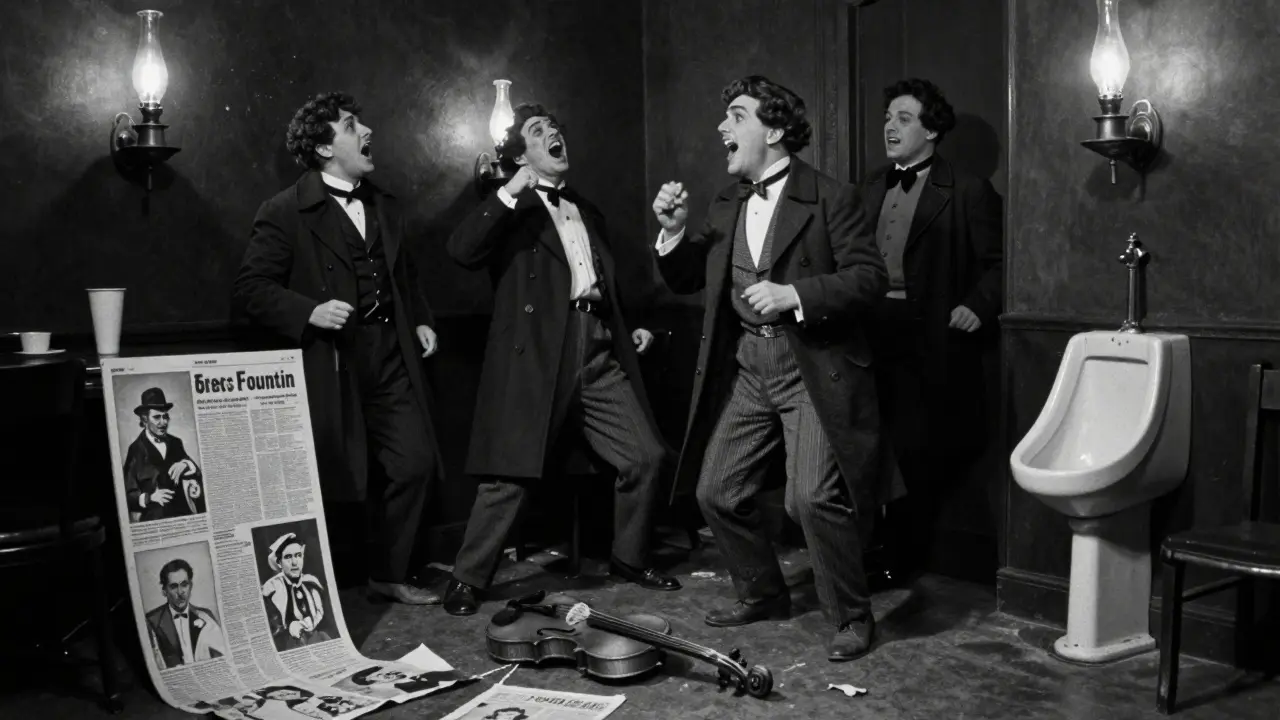
Marcel Duchamp’s Fountain-a porcelain urinal signed "R. Mutt"-is the most famous example. It wasn’t about craftsmanship. It wasn’t about aesthetics. It was about context. By placing an ordinary object in a gallery and calling it art, Duchamp forced people to confront a simple question: Who decides what art is? The answer? No one. Or everyone. Either way, the rules were broken.
Dada didn’t care about galleries, museums, or critics. It used nonsense poetry, collage, sound performances, and absurd theater. Hannah Höch cut up magazines and glued together faces of politicians and movie stars to expose the absurdity of media. Raoul Hausmann wore a sign that read "I AM A DADAIST" and walked through Berlin shouting random phrases. Dada wasn’t about creating masterpieces. It was about creating moments that made you feel uncomfortable.
The Anti-Art Revolution
Dada didn’t just change art-it changed how we think about it. Before Dada, art was something you admired from a distance. After Dada, art became something you had to argue about. It wasn’t enough to say "I like it." You had to ask: "Why is this here?" "Who made this decision?" "What does this say about power?"
Take the readymades-ordinary objects chosen by artists and presented as art. A bicycle wheel on a stool. A bottle rack. A snow shovel. These weren’t jokes. They were philosophical weapons. Each one attacked the idea that art required talent, time, or training. If a factory-made object could be art, then anyone could be an artist. And if anyone could be an artist, then the whole system of galleries, patrons, and critics was built on a lie.
Even today, when you see a pile of bricks in a museum or a toilet bowl on a pedestal, you’re seeing the ghost of Dada. It didn’t die. It just got absorbed into the system it tried to destroy.
How Dada Changed the Tools of Art
Dada didn’t just change what art could be-it changed how it was made. Before Dada, painting and sculpture were the main tools. After Dada, anything could be a medium. Collage became a weapon. Photomontage became a way to tear apart propaganda. Performance became a way to bypass the canvas entirely.
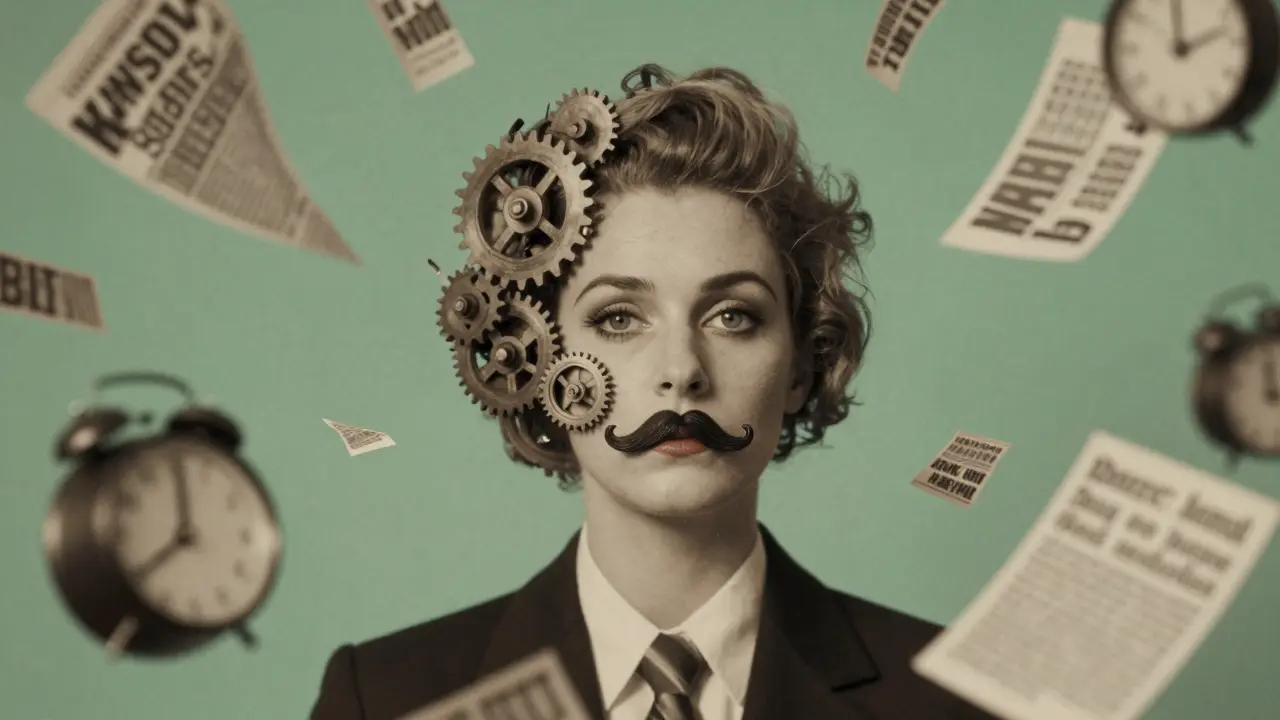
Hannah Höch’s collages used images from fashion magazines and political newspapers to create surreal portraits of women with machine parts for heads. These weren’t just pretty pictures. They were critiques of gender, consumerism, and war. Her work showed that art didn’t need to be painted-it could be cut, pasted, and rearranged from the trash of everyday life.
Man Ray’s rayographs-photographs made by placing objects directly on photo paper and exposing them to light-were another breakthrough. No camera. No lens. Just objects and chemistry. This wasn’t photography as a record. It was photography as a surprise. And that surprise became a new language.
Dada taught artists that you didn’t need to know how to draw to make art. You just needed to have an idea. And sometimes, the weirder the idea, the more powerful it became.
The Legacy: From Dada to Everything Else
If you’ve ever seen a graffiti tag, a punk album cover, a meme, or a viral TikTok that makes no sense but somehow feels profound-you’ve seen Dada’s children.
Pop Art? Andy Warhol’s soup cans? That’s Dada with a marketing department. Conceptual Art? Sol LeWitt’s instructions for drawings that others execute? Pure Dada logic. Performance Art? Marina Abramović sitting silently across from strangers? That’s Raoul Hausmann shouting in a Berlin street, 80 years later.
Dada didn’t give us new styles. It gave us permission. Permission to break rules. Permission to use trash. Permission to laugh at the system. Permission to say: "This doesn’t make sense-and that’s the point."
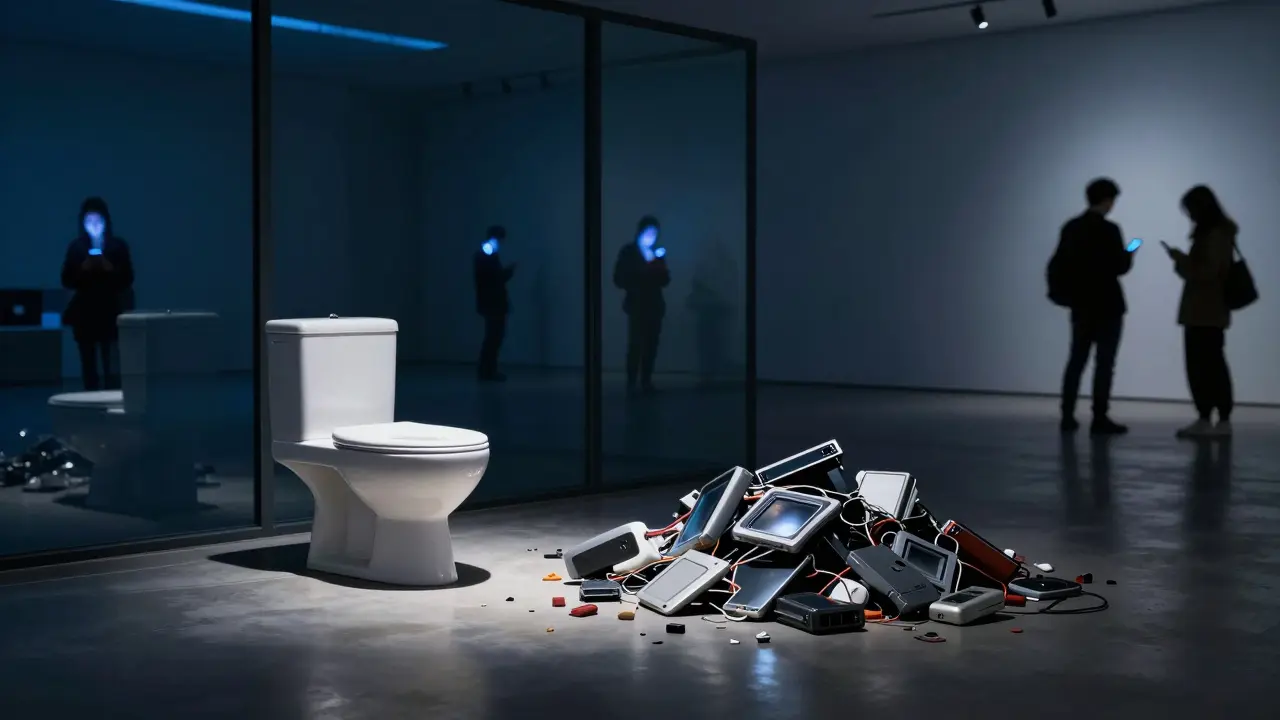
Even today, when artists use AI to generate absurd images or install broken electronics as "sculptures," they’re following Dada’s playbook. The movement didn’t end. It just went underground. It became the quiet voice that whispers: "What if we just stopped trying to make sense?"
Why Dada Still Matters Today
In 2026, we live in a world saturated with images, messages, and noise. Every scroll feeds us another curated moment. Every ad tells us what to feel, what to buy, what to believe. Dada understood this before anyone else. It knew that if you keep repeating the same messages, people stop seeing them. So Dada artists didn’t repeat. They broke.
They made art that didn’t sell. Art that didn’t hang on walls. Art that didn’t last. Art that was meant to be forgotten. And that’s why it still hits so hard today. Because in a world obsessed with permanence, Dada said: Let it fall apart.
Think about social media. A viral video of someone doing nothing-just staring into a camera-is often called "Dadaist." Why? Because it refuses to explain itself. It refuses to entertain. It refuses to be useful. And that’s exactly what Dada wanted.
Dadaism didn’t shape modern art by giving us new techniques. It shaped it by giving us new questions. And those questions are still unanswered. Are we still trying to make sense of art? Or are we just waiting for someone to throw a urinal at the system again?
Was Dadaism really an art movement?
Yes and no. Dadaism didn’t follow the rules of traditional art movements. It didn’t have a unified style, technique, or goal. But it did have a shared purpose: to reject the values of art as it existed at the time. It was a movement in the sense that a group of people came together with a common rebellion-not to create something new, but to destroy the idea that art had to be beautiful, meaningful, or skillful. That’s why it’s called an art movement: because it changed how art was defined.
Who were the key figures in Dadaism?
The most important figures include Marcel Duchamp, who introduced the readymade with works like Fountain; Hannah Höch, who pioneered photomontage and critiqued gender and media; Raoul Hausmann, known for his sound poems and political collages; Tristan Tzara, who wrote Dada manifestos and organized chaotic performances; and Man Ray, who experimented with photograms and surreal photography. These artists came from different countries-Germany, France, Switzerland, the U.S.-and worked in different mediums, but they all shared a refusal to play by the rules.
Did Dadaism have any political goals?
Absolutely. Dada was born out of disgust with World War I and the nationalist, capitalist systems that led to it. Many Dadaists were anarchists or anti-war activists. They saw art as a tool to expose hypocrisy. Hannah Höch’s collages mocked politicians and gender roles. George Grosz used satire to attack the German elite. Dada wasn’t just about aesthetics-it was a political act. Even when it seemed random, it was always a protest.
Why did Dadaism end?
Dada didn’t really "end"-it split. By the early 1920s, members began to disagree. Some, like André Breton, wanted to channel Dada’s rebellion into something more structured: Surrealism. Others, like Duchamp, moved away from art altogether. The movement fractured because its core idea-rejecting all systems-made it impossible to sustain as a group. But Dada didn’t disappear. It spread. Its ideas became the foundation for almost every radical art movement that followed.
Is Dadaism still relevant today?
More than ever. In an age of AI-generated art, viral memes, and endless content, Dada’s message is clearer than ever: meaning is constructed, not inherent. When someone posts a video of a rock labeled "Sculpture of the Year," or when a brand uses nonsense slogans for marketing, they’re using Dada’s playbook. Dada taught us that art doesn’t need to be pretty-it just needs to make you think. And in a world that’s constantly trying to sell us meaning, that’s the most radical thing of all.