The Core Ideas of the Suprematists
To get why this matters, you have to stop thinking about art as a window to the world. For centuries, painting was about showing something-a king, a landscape, or a battle. Malevich and his circle wanted to break that chain. They believed that when you remove the "object" (the thing you recognize), you are left with pure emotion. They used simple shapes like circles, squares, and crosses. By stripping away the noise of the real world, they felt they could reach a spiritual level of art. It's like listening to a single, clear note on a piano instead of a full orchestra; sometimes the single note tells you more about the mood than the whole symphony ever could. This shift moved art away from being a mirror of nature and turned it into a new reality entirely.Kazimir Malevich and the Black Square
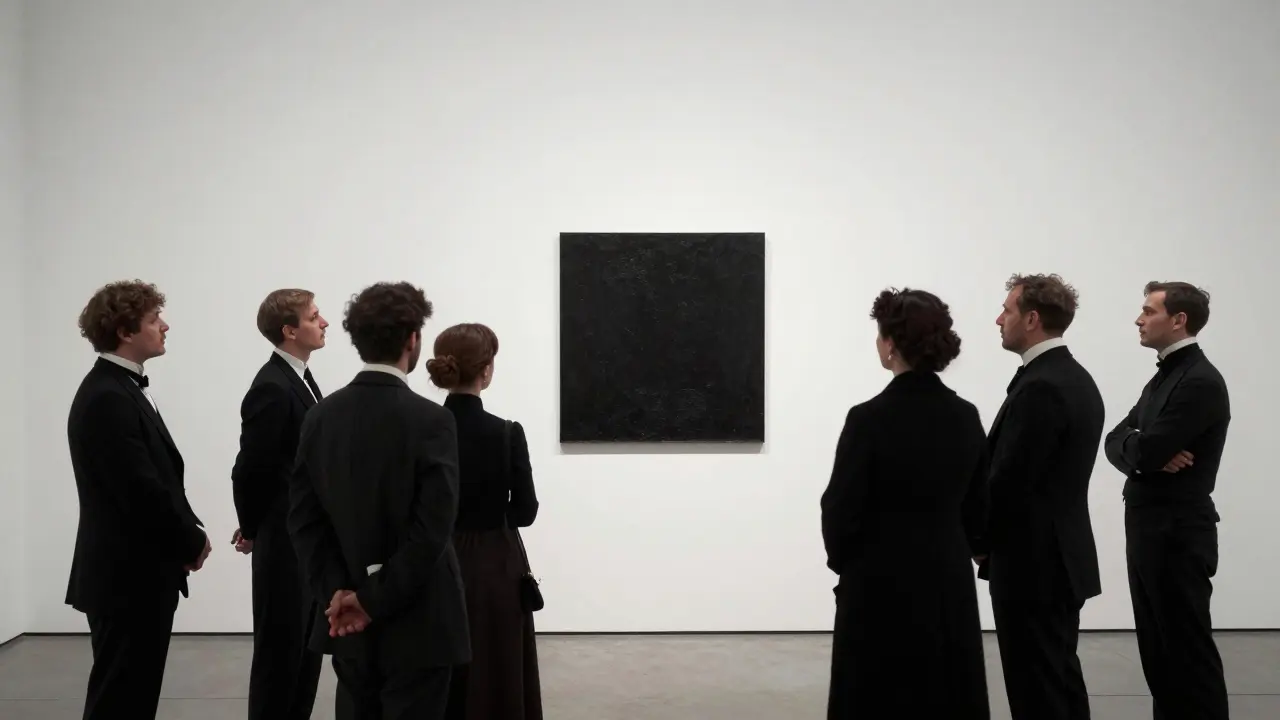
You can't talk about this movement without mentioning Kazimir Malevich. He is the engine that drove the whole thing. His most famous work, the Black Square, is essentially the "ground zero" of abstract art. He didn't just paint a square; he presented it as an icon. In a way, he was replacing the traditional religious icons of Russia with a new, secular icon of purity. Malevich didn't just stop at black. He evolved his style into what he called "white on white." Imagine a white square tilted slightly on a white background. It sounds boring until you realize he was trying to represent the infinite. He wanted the viewer to feel the space and the void, pushing the boundaries of what we even consider "painting." His work wasn't about technique in the traditional sense-it was about the intellectual courage to leave everything else behind.The Toolkit of Suprematist Art
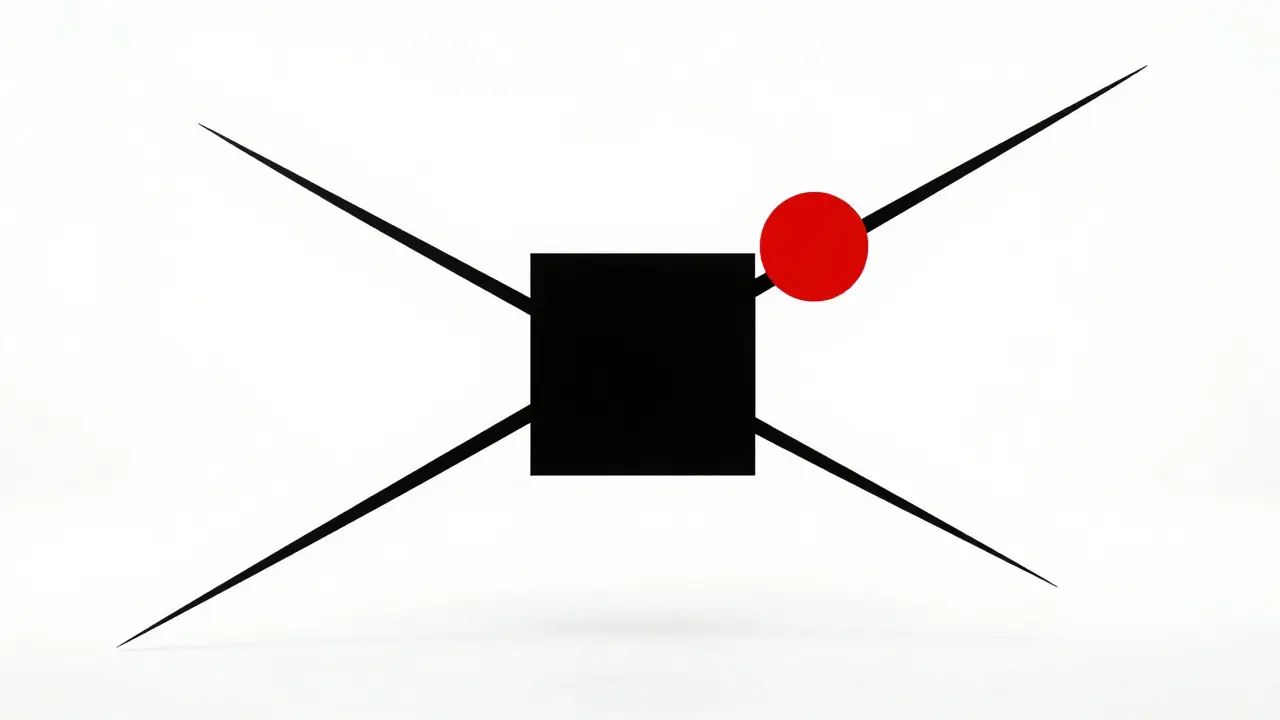
If you're looking at a piece of art and wondering if it's Suprematist, look for a few specific markers. First, the shapes are almost always geometric. You won't find a hand-drawn squiggle here; you'll find precise rectangles and circles. Second, the colors are usually limited. Black, red, and white are the heavy hitters, though later works introduced more variety.| Element | Typical Value/Use | Psychological Effect |
|---|---|---|
| The Square | Solid Black or White | Stability, zero point, purity |
| The Circle | Often Red or Black | Dynamism, cosmic movement |
| The Line | Sharp, intersecting diagonals | Tension, direction, energy |
| Background | Flat White (The Void) | Infinite space, liberation |
How it Differed from Other Movements
People often confuse Suprematism with Constructivism because they both love squares and circles. But the difference is huge. Constructivism was about utility. Those artists wanted to build things that helped society-posters for the government, better chairs, or efficient buildings. They saw art as a tool for the state. Suprematism, on the other hand, was purely spiritual. Malevich didn't care if his squares were "useful." He wanted them to be free. While a Constructivist might use a red triangle to point you toward a factory, a Suprematist uses a red triangle to make you feel the energy of the color red. One is a blueprint; the other is a poem.The Influence of the Avant-Garde
This movement didn't happen in a vacuum. It was part of the broader Avant-Garde wave in Europe and Russia. These artists were reacting to the chaos of the early 20th century, including the First World War and the Russian Revolution. They felt the old world was dying, so they needed a brand new visual language to match the new era. Their influence leaked into almost everything we see today. If you like the clean look of a modern smartphone interface or the minimalist design of an IKEA catalog, you're seeing the ghost of Suprematism. The idea that "less is more" and that a simple shape can communicate a powerful message started with these radicals in St. Petersburg.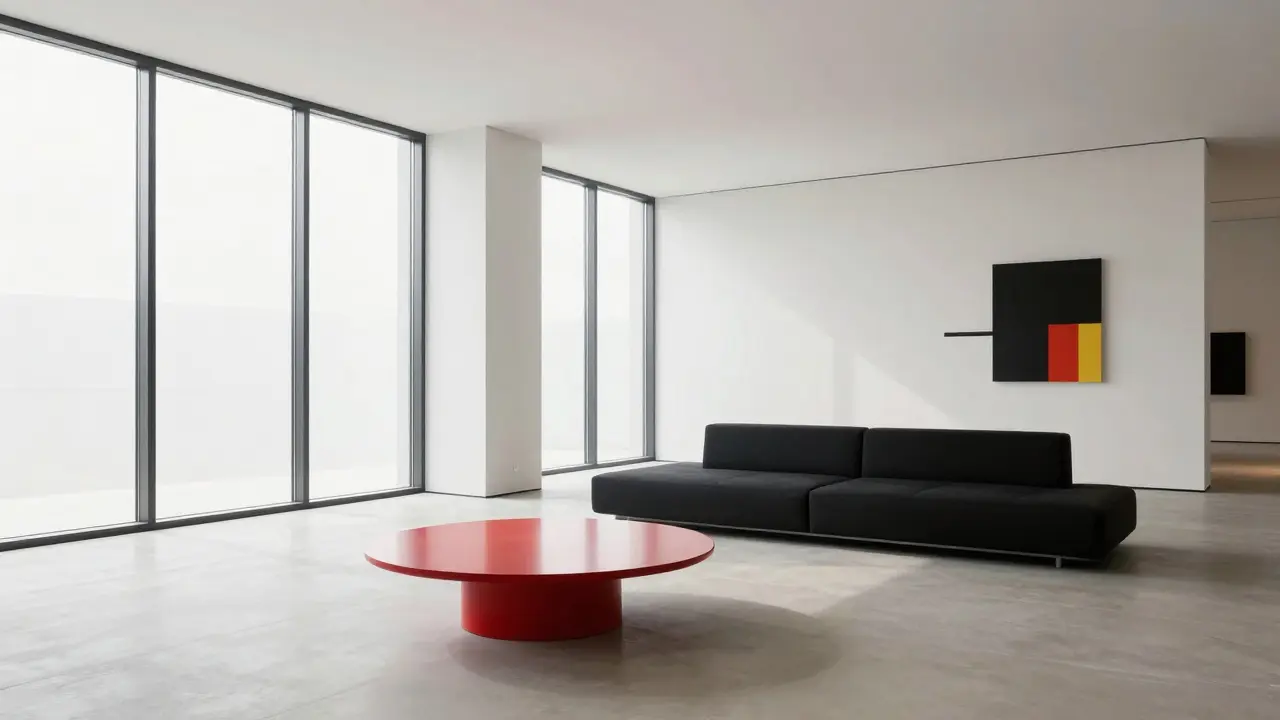
The Legacy and the End of the Era
As the political climate in the Soviet Union shifted, the freedom of the Suprematists became a problem. The government started demanding "Socialist Realism"-art that showed happy workers and strong leaders. Abstract shapes were suddenly seen as "bourgeois" or useless. Malevich was eventually forced to stop painting his squares and return to more recognizable figures, though the spirit of his work lived on in secret. Despite the crackdown, the ripple effect was permanent. The movement paved the way for Abstract Expressionism in the US and influenced the Bauhaus school in Germany. It taught the world that art doesn't have to be a picture of something to be meaningful. It can just be... art.Tips for Viewing Suprematist Art
When you visit a museum and stand in front of a Suprematist piece, don't ask "What is this a picture of?" That question is the fastest way to miss the point. Instead, ask yourself: "How does this shape make me feel?" Try these three steps to get more out of the experience:- Notice the balance. Is the painting "heavy" on one side, or does it feel like it's floating?
- Focus on the colors. Does the red feel aggressive or warm? Does the white background feel like a wall or like open sky?
- Step back. See how the overall composition affects your mood. Do you feel a sense of peace, or does the intersecting geometry make you feel anxious?
Is Suprematism just about painting squares?
While the square is the most famous symbol, the movement is about the total liberation of art from the objective world. It uses a variety of geometric forms, including circles and crosses, to explore themes of space, infinity, and pure emotion. The square was simply the "zero point" where the old art ended and the new art began.
What is the difference between Suprematism and Minimalism?
Suprematism came much earlier (early 1900s) and had a strong spiritual and mystical focus. Minimalism, which peaked in the 1960s, is more about the physical properties of the material and the space it occupies. Suprematists wanted to evoke "pure feeling," while Minimalists often wanted to remove any emotional or symbolic meaning entirely.
Why is the Black Square considered a masterpiece?
Its value isn't in the technical skill required to paint a square-anyone can do that. Its value is in the idea. It was the first time an artist declared that art no longer needed to represent anything from the physical world. It broke the 500-year-old tradition of Western representational art, making it one of the most radical acts in art history.
Did other artists follow Malevich?
Yes, several artists were influenced, including El Lissitzky, who took Suprematist ideas and applied them to architecture and graphic design. This transition helped the movement evolve into Constructivism, which focused more on social utility and industrial design.
Where can I see Suprematist art today?
Major works are held in the Tretyakov Gallery and the State Russian Museum in St. Petersburg. However, because of their influence on global modernism, pieces inspired by the movement are found in museums worldwide, including the MoMA in New York.