Modern art didn’t start with a manifesto or a grand announcement. It began quietly, in the 1860s, when a group of painters in Paris started ignoring the rules. They painted outside. They used bright colors. They didn’t care if their brushstrokes looked messy. The Academy hated it. The public laughed. But something shifted. Art was no longer just about perfect portraits or biblical scenes. It became about how people saw the world-and how they felt inside it.
Breaking the Rules: The Birth of Modern Art
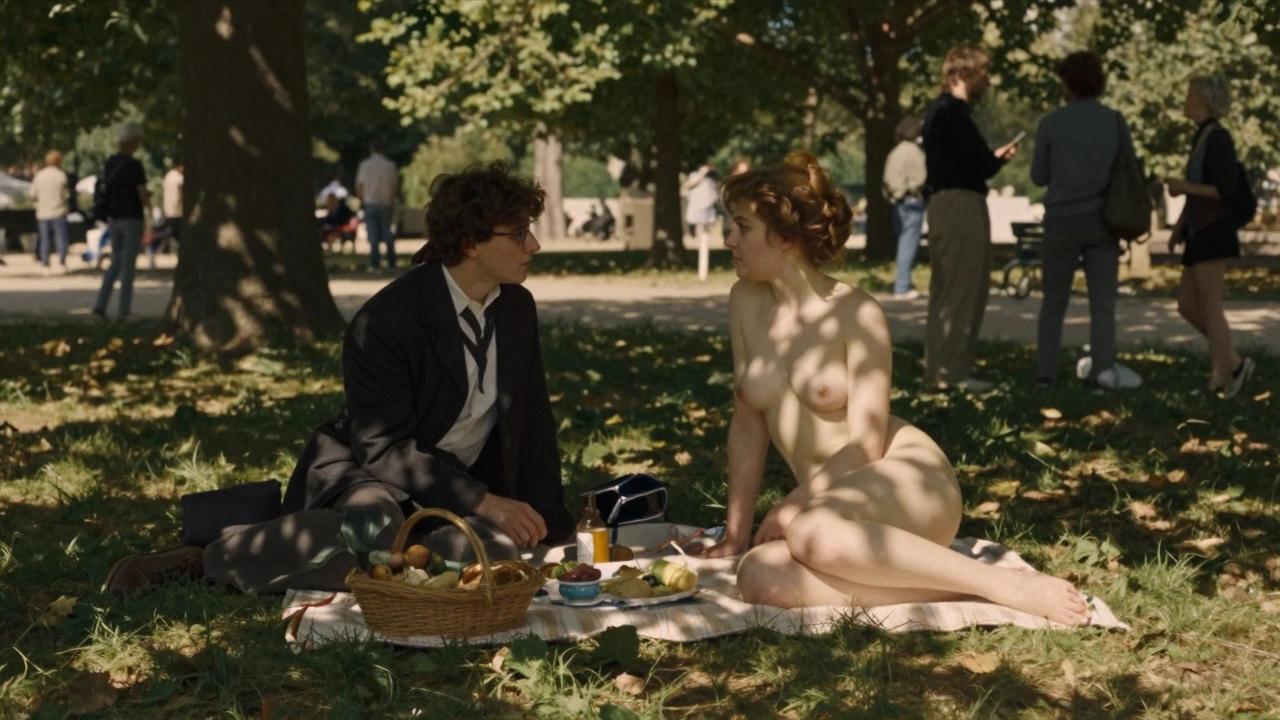
In 1863, the Salon in Paris rejected over 3,000 artworks. In protest, Emperor Napoleon III allowed the rejected pieces to be shown in the Salon des Refusés. Among them was Édouard Manet’s Le Déjeuner sur l’herbe. Critics called it scandalous. But it was revolutionary. Manet didn’t idealize his figures. He painted them as real people, in modern clothes, under natural light. That was the first crack in the old system.
By the 1870s, artists like Monet, Renoir, and Degas were painting light as it changed-morning fog over a river, dancers mid-motion, steam rising from a train station. They didn’t wait for studio lighting. They worked fast. They used loose brushwork. They called themselves Impressionists. Their goal wasn’t to copy reality. It was to capture a moment, a feeling, a flicker of perception. This was the true beginning of modern art: art that prioritized experience over perfection.
Cubism and the Shattering of Form
By the early 1900s, artists were tired of just capturing light. They wanted to break apart how we see things. Enter Pablo Picasso and Georges Braque. In 1907, Picasso painted Les Demoiselles d’Avignon. Five figures, distorted, angular, almost violent in their simplicity. Faces looked like shattered masks. Bodies were twisted into geometric planes. No perspective. No depth. No rules.
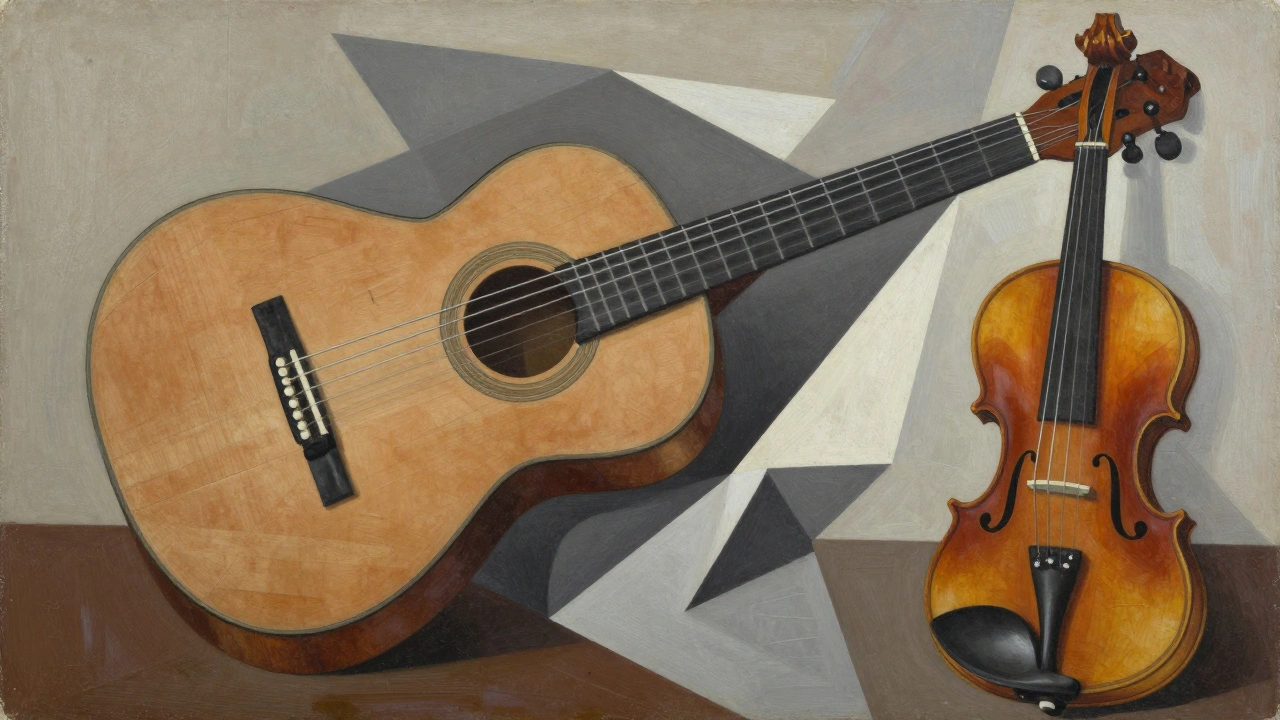
This was Cubism. And it changed everything. Instead of showing one view of an object, Cubists showed multiple views at once. A guitar wasn’t just a guitar-it was the front, the side, the strings, the soundhole, all mashed together on a flat canvas. It wasn’t about beauty. It was about truth: that reality isn’t one single angle. It’s layered, broken, complex.
By 1914, Cubism had spread. Artists in Germany, Russia, and Italy picked it up and twisted it further. Futurists celebrated speed and machines. Constructivists turned art into blueprints for a new society. Art wasn’t just hanging on walls anymore. It was becoming part of how people thought.
Emotion Over Form: Abstract Expressionism
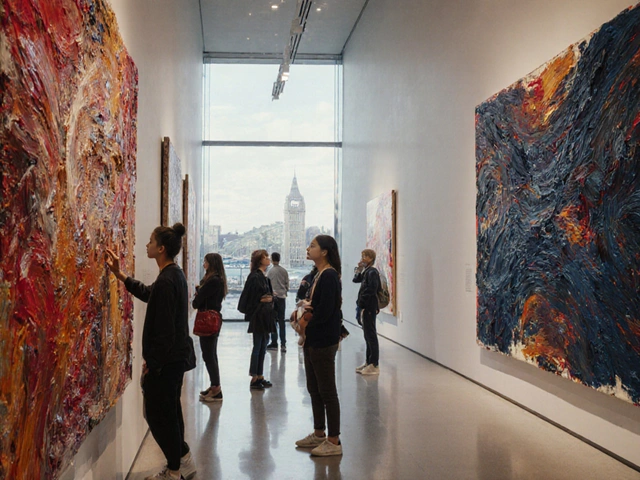
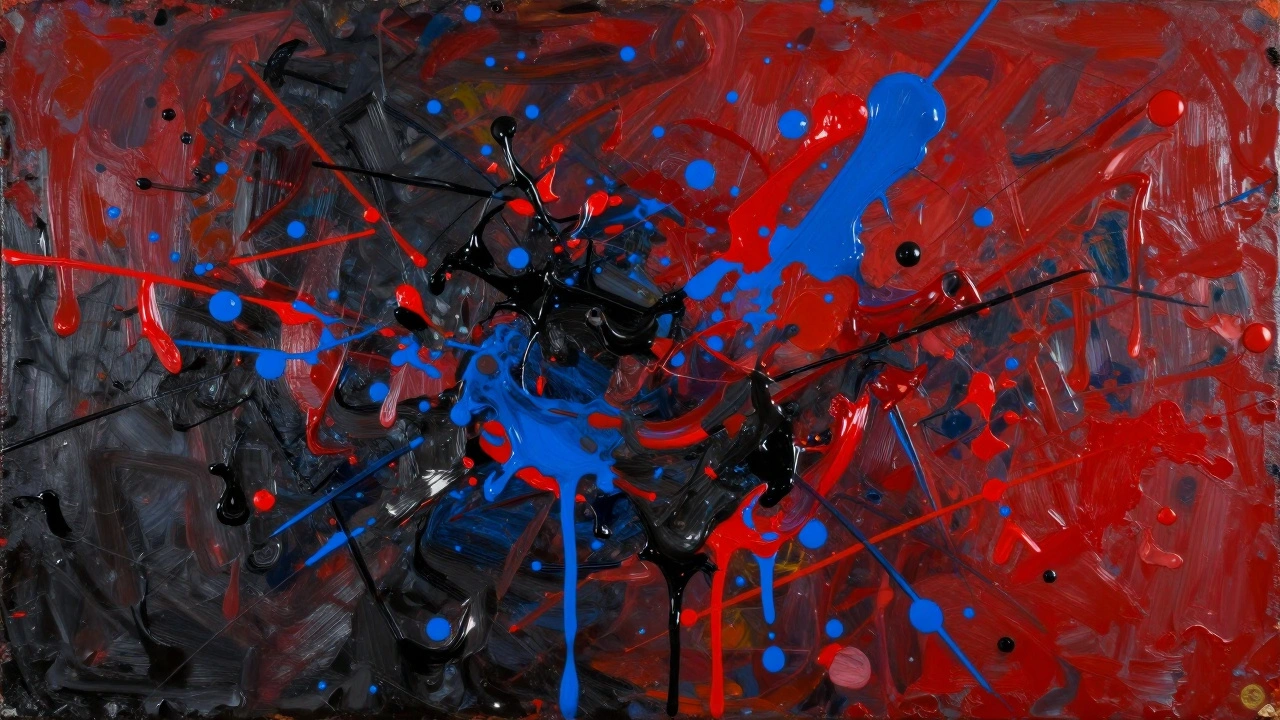
After two world wars, Europe was shattered. Artists didn’t want to rebuild the old world. They wanted to express the chaos inside. In New York, a new movement exploded: Abstract Expressionism. Jackson Pollock dripped paint onto huge canvases laid on the floor. Willem de Kooning slashed and scraped figures out of thick oil. Mark Rothko painted floating rectangles of color that felt like emotional storms.
These artists didn’t paint objects. They painted feelings. Pollock called it "action painting"-the physical act of painting was the art. De Kooning’s women weren’t portraits. They were rage, desire, fear made visible. Rothko’s colors didn’t represent anything. They made you feel something-loneliness, awe, silence.
This was the first time art became a direct line to the soul. No stories. No symbols. Just color, movement, and raw emotion. And it worked. By the 1950s, New York had replaced Paris as the center of the art world. Modern art had gone global.
Pop, Minimalism, and the Rise of the Everyday
By the 1960s, Abstract Expressionism felt too serious. Too heavy. A new generation looked at advertising, comic books, and supermarket shelves-and saw art there too. Andy Warhol painted Campbell’s soup cans. Roy Lichtenstein turned comic panels into giant oil paintings. Claes Oldenburg made giant soft sculptures of hamburgers and typewriters.
Pop Art didn’t mock consumer culture. It mirrored it. It asked: if a can of soup is mass-produced, why shouldn’t it be art? If a celebrity is on every magazine cover, why shouldn’t their face be painted a hundred times?
At the same time, artists like Donald Judd and Agnes Martin turned away from emotion entirely. They made clean, geometric shapes. Steel boxes. Painted grids. No brushstrokes. No meaning. Just form, material, and space. Minimalism stripped art down to its bones. No stories. No symbolism. Just presence.
These movements didn’t just change what art looked like. They changed what art could be. A factory-made object. A blank canvas. A stack of bricks. All of it could be art-if you looked at it the right way.
Contemporary Art: No Rules, Just Questions
Today, modern art has become contemporary art. And the rules? They’re gone. An artist might use AI to generate a painting. Another might turn a gallery into a functioning laundry room. Someone else might film themselves crying for eight hours and call it a sculpture.
Yayoi Kusama’s infinity rooms fill entire rooms with mirrored walls and floating lights. Ai Weiwei piles thousands of ceramic sunflower seeds on the floor to comment on mass production and individuality. Marina Abramović sits silently across from strangers for hours, letting them stare into her eyes.
There’s no single style. No dominant movement. Instead, there’s a flood of voices: Indigenous artists reclaiming ancestral stories, queer artists exploring identity, digital artists building virtual galleries. Art now lives on Instagram, in public protests, in augmented reality apps.
The thread that connects all of it? The same one that started with Manet: art as a way to question, to challenge, to see differently. Modern art didn’t end. It just stopped needing to be confined to a canvas.
Why Modern Art Still Matters
People still ask: "But is it art?" That question misses the point. Modern art isn’t about whether something looks pretty. It’s about whether it makes you think. Whether it unsettles you. Whether it shows you something you’ve never noticed before.
When you stand in front of a Rothko, you don’t analyze the brushstrokes. You feel the weight of the color. When you see Warhol’s Marilyn, you don’t just see a celebrity-you see fame, death, repetition. When you walk through Kusama’s room, you don’t just see lights-you feel small, lost, and strangely connected to everyone else in the room.
Modern art doesn’t give you answers. It asks questions. And in a world that’s always shouting, that’s the most powerful thing it can do.