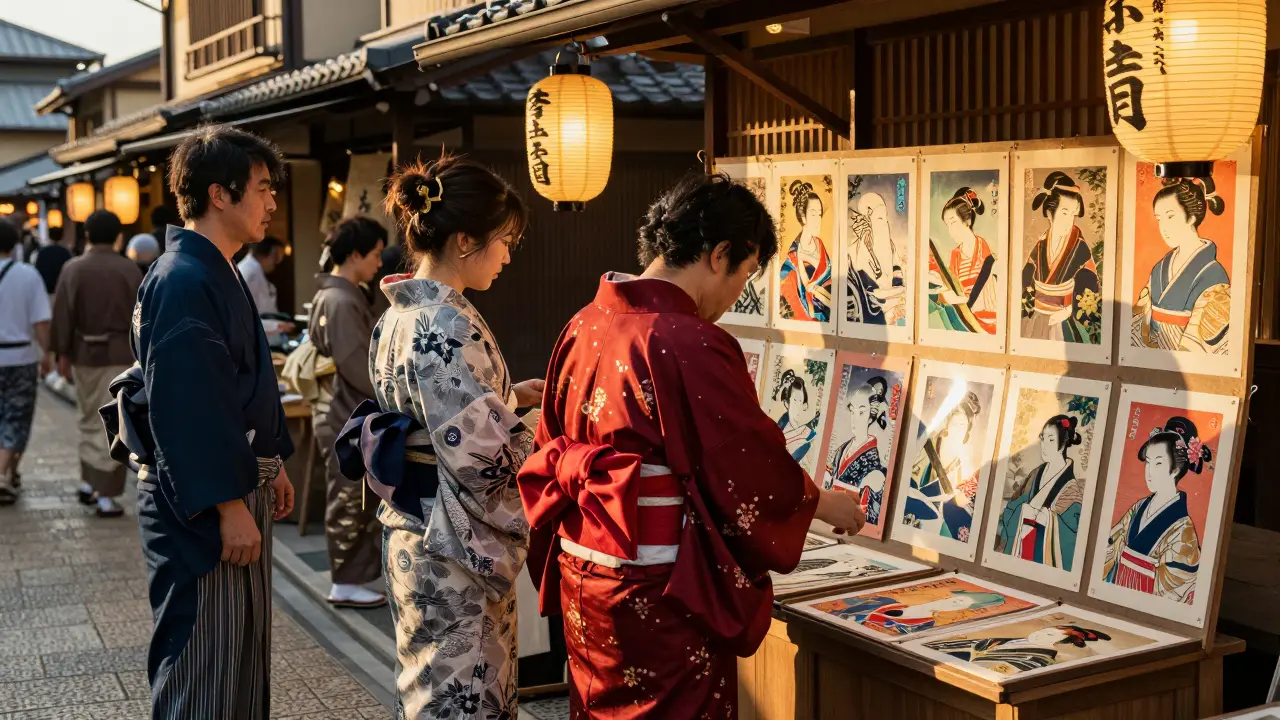
Imagine a world where the latest fashion trends, celebrity gossip, and travel guides weren't found on social media, but printed on paper and pasted up in the streets. That was the heartbeat of Ukiyo-e, a genre of Japanese art that flourished from the 17th to the 19th century, translating literally to 'pictures of the floating world'. It wasn't just high art for elites; it was pop culture for the masses. Today, when you see a wave crashing over a boat or a geisha looking over her shoulder, you are looking at the legacy of this revolutionary movement.
But how did ink on mulberry paper become one of the most influential art forms in history? And why does it still matter today? Let’s unpack the origins, the techniques, and the global impact of ukiyo-e, stripping away the academic jargon to show you what really made these prints tick.
The Floating World: Where It All Began
To understand ukiyo-e, you have to understand the mindset of the Edo period (1603-1868). Japan was under strict rule by the Tokugawa shogunate, but paradoxically, this stability allowed a merchant class to rise. These merchants had money but no political power. So, they spent their cash on pleasure. They frequented tea houses, theaters, and red-light districts. This lifestyle became known as the "floating world"-a way of living for the moment, detached from the harsh realities of feudal duty.
Art reflected this shift. Before ukiyo-e, Japanese art was largely reserved for the aristocracy or religious institutions. But now, artists started depicting actors, courtesans, and everyday scenes. The first ukiyo-e works were actually single-color black ink drawings called sumizuri-e. They were rough, quick, and cheap. You could buy them for the price of a bowl of noodles.
Then came the game-changer: color. In the 1760s, a technique called nishiki-e, 'brocade pictures,' which used multiple woodblocks to create vibrant, full-color prints took off. Suddenly, the floating world was in technicolor. This innovation turned ukiyo-e into a commercial powerhouse, with thousands of prints produced annually in cities like Edo (modern-day Tokyo) and Osaka.
How Woodblock Prints Were Made: A Team Effort
If you think of an artist sitting alone in a studio painting a canvas, forget it. Ukiyo-e was industrial before the Industrial Revolution. Creating a single print required a team of four specialists:
- The Artist (eshi): They drew the original design. Famous names like Hokusai and Hiroshige fall into this category. They didn't carve or print; they just provided the vision.
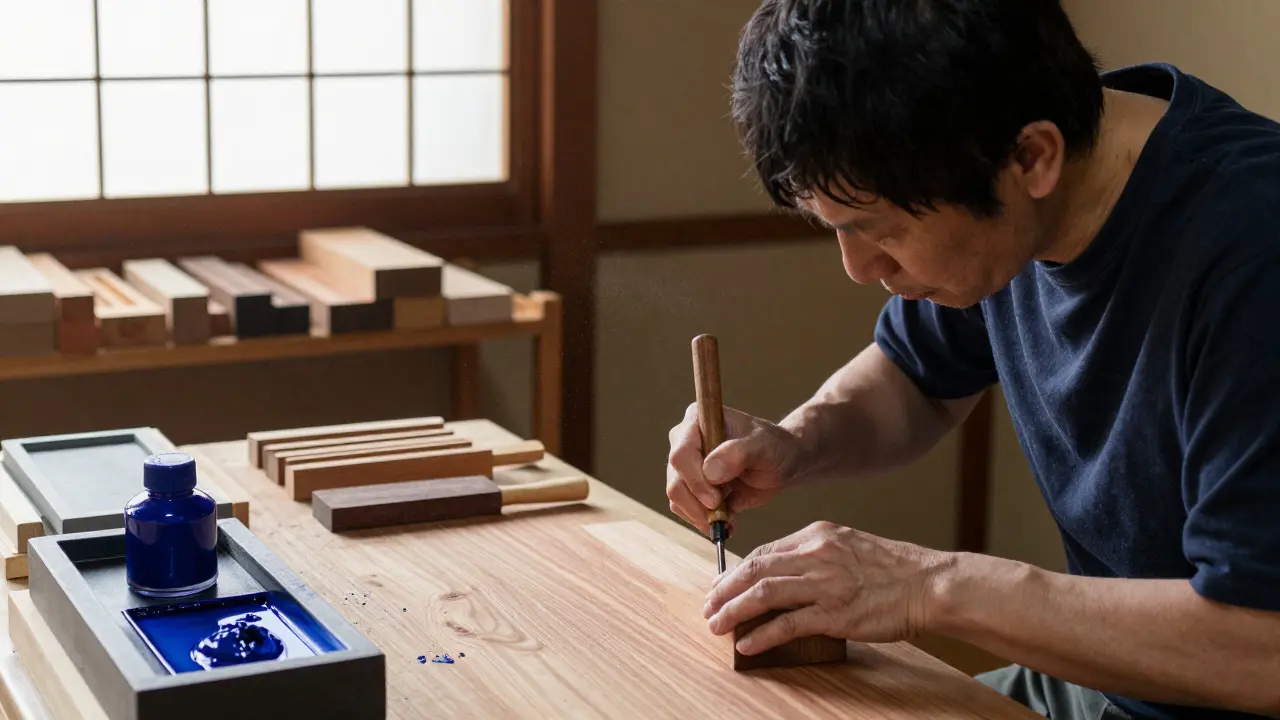
- The Carver (horishi): This person transferred the drawing onto a block of cherry wood and carved out the negative space. Cherry wood was chosen because it’s soft enough to carve detail but hard enough to withstand thousands of impressions.
- The Printer (surishi): They applied ink or water-based pigments to the block and hand-rubbed rice paper onto it using a tool called a baren. For a color print, they might use ten or more blocks, one for each color.
- The Publisher (hanmoto): Think of them as the modern-day gallery owner and marketing team combined. They funded the project, handled distribution, and often dictated what subjects would sell.
This division of labor meant that quality varied wildly. Some prints were mass-produced junk; others were masterpieces with intricate details and rare pigments. The collaboration also meant that the artist’s style had to work within the technical limits of woodblock carving. Sharp lines and flat areas of color became the signature look of ukiyo-e.
The Big Three: Masters Who Defined the Genre
You can’t talk about ukiyo-e without mentioning the titans who pushed the medium to its limits. While hundreds of artists worked during this era, three stand out for their distinct styles and enduring influence.
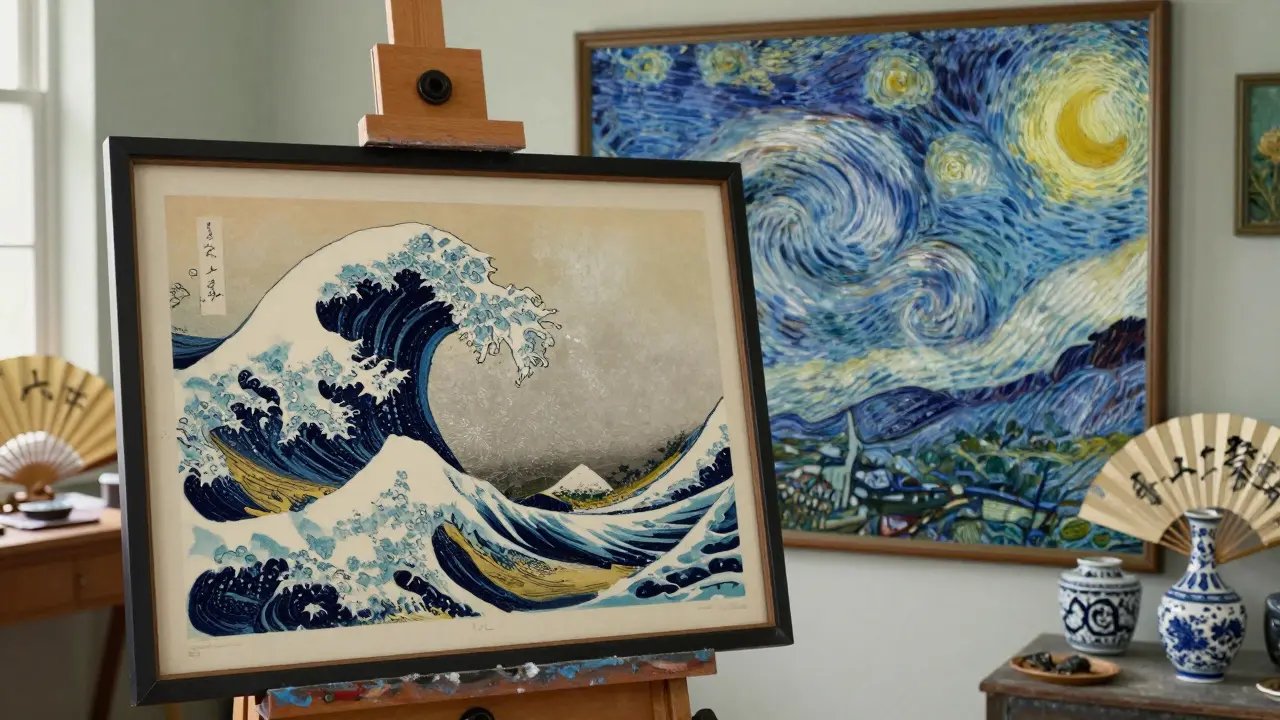
Katsushika Hokusai, best known for his series 'Thirty-Six Views of Mount Fuji' is probably the most famous. He lived to be nearly 90 and kept creating until the end. His most iconic work, The Great Wave off Kanagawa, isn’t just a picture of a wave; it’s a study in composition. The curling foam looks like claws, framing the distant, serene Mount Fuji. Hokusai mastered the use of Prussian blue, a new synthetic pigment imported from Europe that gave his skies and waters an electric intensity.
Then there was Utagawa Hiroshige, the master of landscapes and weather effects. If Hokusai was about drama, Hiroshige was about mood. His series Fifty-Three Stations of the Tōkaidō captured the journey between Edo and Kyoto. He focused on rain, snow, and mist, showing how the landscape changed with the seasons. His compositions were softer, more atmospheric, and deeply emotional.
We must also acknowledge Kitagawa Utamaro, who revolutionized portraiture with his 'bijin-ga' (beautiful women). Utamaro didn’t just draw pretty faces; he cropped his images tightly, focusing on the neck, shoulders, or hands. This close-up approach created intimacy and psychological depth. He showed the vulnerability and strength of courtesans, moving beyond mere idealization to something more human.
| Artist | Primary Focus | Signature Style | Iconic Work |
|---|---|---|---|
| Hokusai | Landscapes & Objects | Bold lines, dramatic angles, Prussian blue | The Great Wave off Kanagawa |
| Hiroshige | Travel & Weather | Atmospheric, soft colors, seasonal themes | Fifty-Three Stations of the Tōkaidō |
| Utamaro | Portraits (Bijin-ga) | Cropped compositions, psychological depth | A Courtesan Above Her Fan |
From Edo Streets to Paris Salons: Global Impact
Here’s where the story gets wild. In the mid-19th century, Japan opened its ports to Western trade. Crates of porcelain and silk were shipped to Europe, but hidden inside were bundles of ukiyo-e prints used as wrapping paper. European artists, bored with rigid academic traditions, stumbled upon these flat, colorful, asymmetrical images and were blown away.
This phenomenon was called Japonisme. Artists like Claude Monet, Vincent van Gogh, and Edgar Degas collected ukiyo-e prints. Van Gogh even copied Hiroshige’s Bridge in the Rain almost exactly. What did they learn? They saw that you didn’t need realistic perspective to create depth. You could use bold outlines, unexpected cropping, and bright, unmixed colors. This directly influenced the birth of Impressionism and Post-Impressionism.
Think about it: the wobbly brushstrokes of Monet and the vibrant yellows of Van Gogh owe a debt to Japanese woodblock printers. Ukiyo-e didn’t just survive outside Japan; it helped reshape Western art forever.
The Decline and Modern Legacy
So, what happened to ukiyo-e? Like all trends, it faded. The Meiji Restoration in 1868 ended the Edo period and brought rapid modernization. Photography arrived, offering a cheaper and more accurate way to capture reality. Younger generations preferred Western-style oil paintings. The demand for traditional woodblock prints plummeted.
However, the art form didn’t die completely. In the early 20th century, a group of artists led by Hasui Kawase, a key figure in the Sosaku-hanga (creative prints) movement revived interest in woodblock printing. Unlike the old collaborative method, Sosaku-hanga artists designed, carved, and printed their own works, treating it as fine art rather than commercial product.
Today, ukiyo-e lives on in anime, manga, and graphic design. The dynamic angles, speed lines, and expressive faces in modern Japanese animation trace their roots back to those Edo-period prints. When you see a character with wide eyes and a dramatic pose, you’re seeing the DNA of ukiyo-e.
Why Ukiyo-e Still Matters
In a world saturated with digital images, ukiyo-e reminds us of the value of craftsmanship and intentionality. Each print was touched by human hands-from the carver’s knife to the printer’s baren. There’s a warmth and texture that digital pixels can’t replicate.
It also teaches us about cultural exchange. Ukiyo-e shows how art can cross borders, challenge conventions, and inspire new movements. Whether you’re an artist, a designer, or just someone who appreciates beauty, understanding ukiyo-e gives you a deeper appreciation for the visual language we share globally.
Next time you see a poster or an illustration with bold colors and clean lines, take a closer look. You might just spot a ghost of the floating world, waving hello from the past.
What does 'ukiyo-e' actually mean?
The term translates to 'pictures of the floating world.' The 'floating world' refers to the hedonistic lifestyle of the Edo period's merchant class, who sought pleasure in the moment, detached from feudal obligations.
Who invented ukiyo-e?
There isn't a single inventor. The genre evolved in the late 17th century, with artists like Suzuki Harunobu credited with perfecting the multi-color nishiki-e technique in the 1760s, which popularized the form.
Is ukiyo-e the same as manga?
Not exactly, but they are related. Manga means 'whimsical pictures' and has existed since the 18th century as a separate genre of humorous sketches. However, ukiyo-e's use of line work and expressive characters heavily influenced the development of modern manga and anime.
Why did ukiyo-e decline?
The rise of photography in the late 19th century offered a faster, cheaper alternative for capturing images. Additionally, the Meiji Restoration shifted cultural tastes toward Western art forms, reducing demand for traditional woodblock prints.
How can I tell if a ukiyo-e print is authentic?
Authenticity depends on age, condition, and provenance. Original Edo-period prints will show signs of aging, such as foxing (brown spots) and wear on the edges. Look for publisher seals and artist signatures. Be wary of modern reproductions sold as originals; consulting an expert or auction house record is best.