Constructivism art didn’t just change how people saw art-it changed how they thought about it. Born in Russia after the 1917 Revolution, it wasn’t about beauty or emotion. It was about function, structure, and the future. Artists didn’t paint pretty landscapes or emotional portraits. They built things-scaffolds, posters, machines, even furniture-using steel, glass, and wood. They believed art should serve society, not decorate it. And for a brief, intense period, it did.
What Constructivism Art Actually Is
Constructivism art is abstract, geometric, and industrial. It uses clean lines, sharp angles, and primary colors. Think rectangles stacked like building blocks, circles spinning like gears, lines cutting through space like steel beams. The artists rejected traditional painting. They called it "bourgeois" and "useless." Instead, they turned to materials that came from factories: metal, plastic, plywood, wire. Their art wasn’t meant to hang on a wall. It was meant to be touched, used, or seen in public spaces.
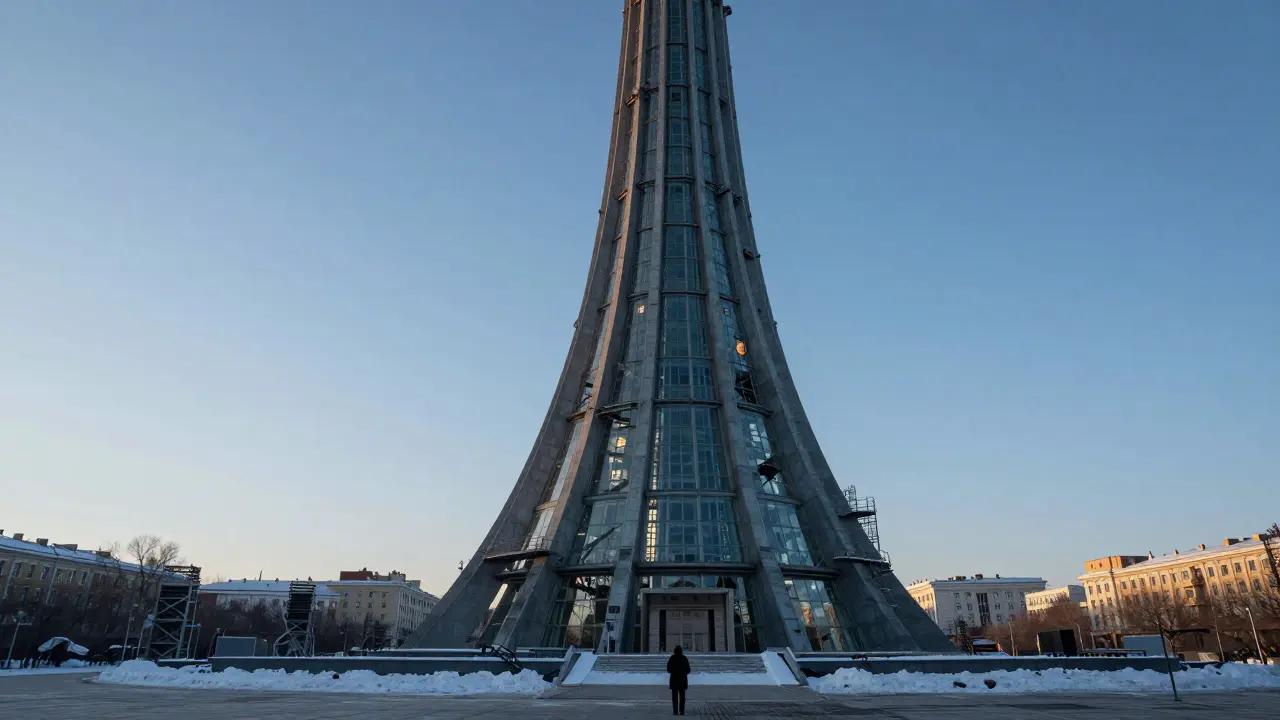
One of the first major works was Vladimir Tatlin’s Monument to the Third International-a spiraling tower of steel and glass meant to be taller than the Eiffel Tower. It was never built, but the design alone changed everything. It wasn’t a statue. It was a machine for propaganda, broadcasting news and speeches. Art as a tool. Art as infrastructure.
The Russian Roots and Revolutionary Spirit
Constructivism didn’t come out of a studio. It came out of a revolution. After the Bolsheviks took power, artists like Alexander Rodchenko, El Lissitzky, and Varvara Stepanova were given funding and space to experiment. The state wanted new symbols for a new world. Posters had to convince peasants to join the Red Army. Book covers had to make communist theory feel urgent. Factories needed layouts that workers could understand at a glance.
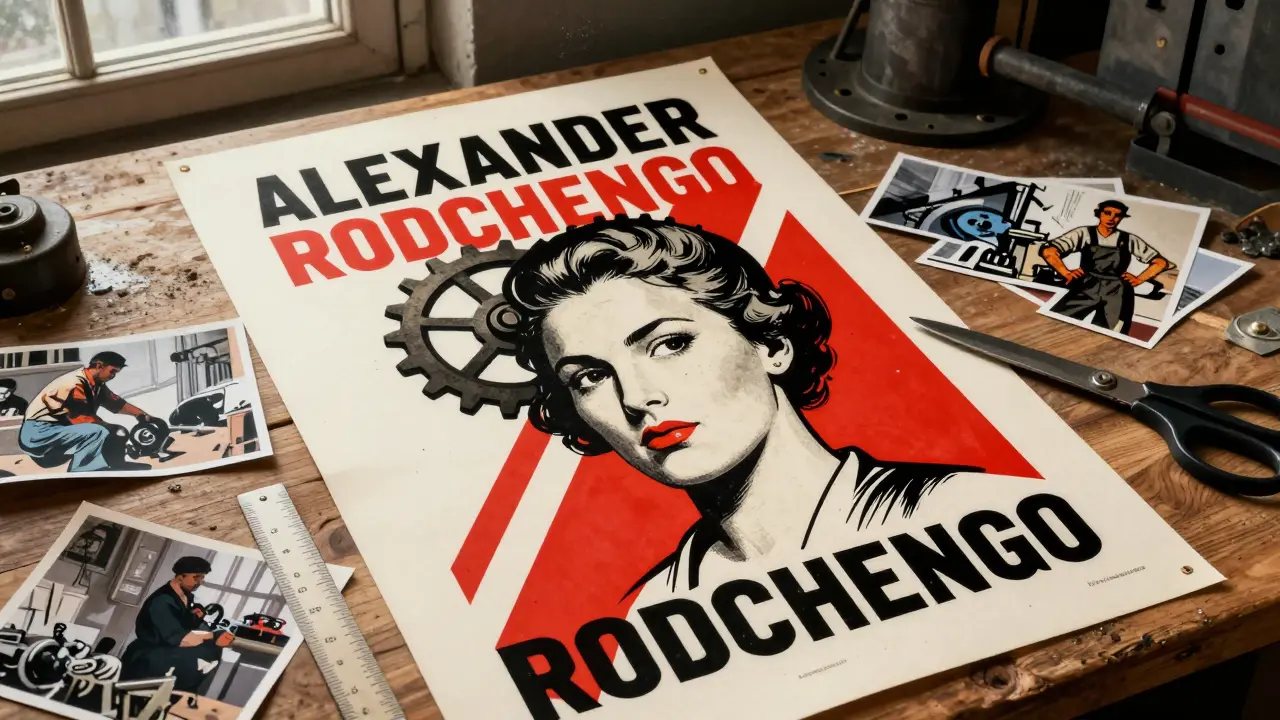
Rodchenko’s posters are still studied today. He used bold sans-serif fonts, diagonal lines, and photomontage-cutting photos and pasting them together to create shock. One poster showed a woman holding a megaphone, her face half-hidden by a spinning gear. The message? The future is mechanical. The future is collective. The future is now.
Unlike Western modernists who focused on individual expression, Russian Constructivists worked in teams. They designed for mass production. They didn’t sign their work. They stamped it with the collective name: INHUK (Institute of Artistic Culture). Art wasn’t a personal statement. It was a public service.
How It Changed Design and Architecture
Constructivism didn’t stop at posters. It moved into furniture, clothing, typography, and buildings. El Lissitzky designed the Proun series-abstract compositions that looked like blueprints for impossible cities. They weren’t paintings. They were proposals for new ways to live.
At the Bauhaus in Germany, teachers like László Moholy-Nagy brought Constructivist ideas west. He taught students to use light, motion, and industrial materials. His photographs of spinning tops and glass towers looked like science fiction-but they were real experiments. The Bauhaus began making chairs out of tubular steel, inspired by bicycle frames. That’s how the iconic Wassily Chair was born.
Even today, the clean lines of IKEA furniture, the minimalist logos of Apple, and the grid layouts of websites all trace back to Constructivist principles. It’s not about decoration. It’s about clarity. It’s about removing anything that doesn’t serve a purpose.
Constructivism’s Influence on Modern Sculpture
Before Constructivism, sculpture was carved or molded-something solid, static, and often religious or heroic. Constructivists turned that upside down. They built sculptures from parts. They suspended them. They let air flow through them.
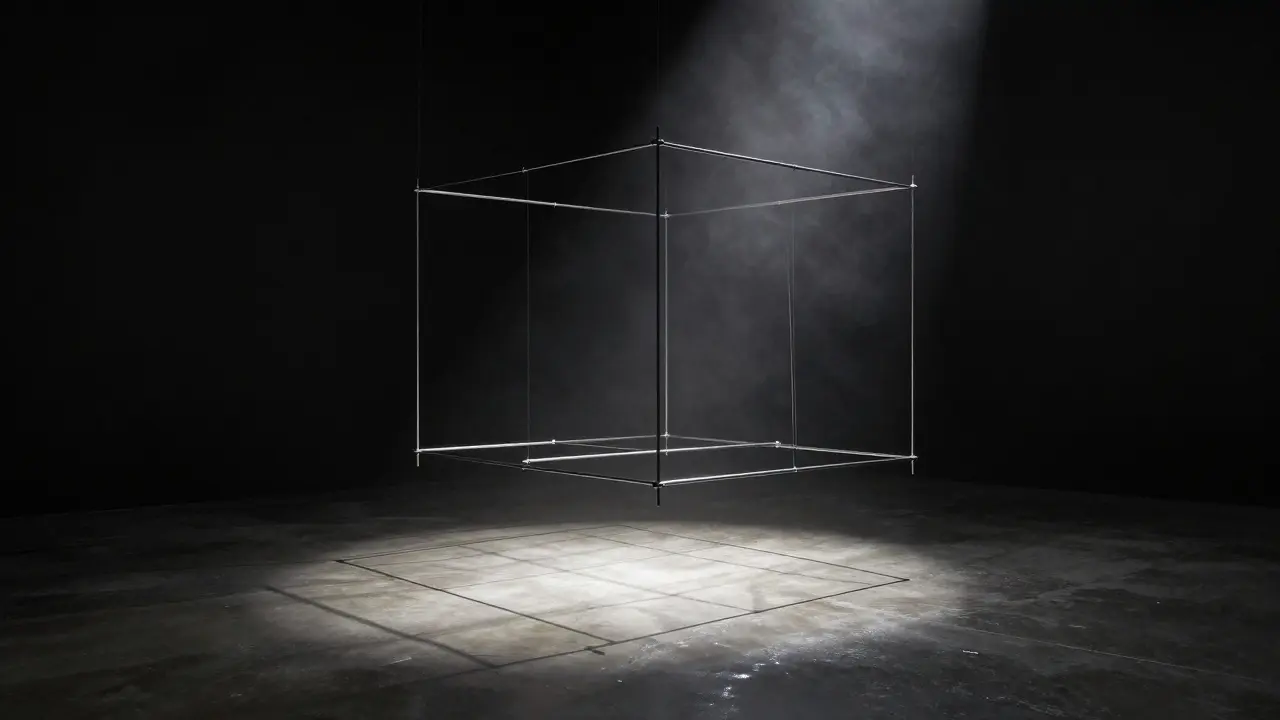
Naum Gabo’s Linear Construction in Space No. 1 (1942-43) is made of nylon thread stretched between metal rods. It looks like a ghost of a cube. You can walk around it. You can see through it. It doesn’t block space-it redefines it. This was radical. Sculpture wasn’t an object anymore. It was an experience.
Today, artists like Anish Kapoor and Olafur Eliasson still use space, light, and industrial materials the way Gabo did. Their installations aren’t just seen-they’re felt. That’s the legacy of Constructivism: art that doesn’t sit still, that demands you move, think, and participate.
Why It Matters Today
Look around you. Your smartphone screen? Grid layout. Your fitness app? Minimalist icons. Your subway map? Clean lines, no decoration. That’s Constructivism. It’s not a style from the past. It’s the invisible architecture of modern life.
When designers say "less is more," they’re quoting Mies van der Rohe-but Mies was borrowing from Rodchenko. When tech companies talk about "user experience," they’re echoing the Constructivist belief that form must follow function.
Even social media has roots here. Instagram’s grid of squares? A direct visual descendant of El Lissitzky’s photomontages. TikTok’s fast cuts and bold text? That’s Rodchenko’s energy, translated into digital motion.
Constructivism reminds us that art doesn’t need to be pretty to be powerful. It doesn’t need to be expensive. It doesn’t need to be in a museum. It just needs to work.
Where to See Constructivism Art Today
You can’t find Constructivism in every museum, but it’s in the right places. The Tate Modern in London has a strong collection of Rodchenko and Gabo. The Museum of Modern Art in New York holds key pieces from the movement, including Lissitzky’s Proun series. In Moscow, the State Tretyakov Gallery keeps original posters and designs from the 1920s.
Some works are rare. Many were destroyed during Stalin’s crackdown on avant-garde art in the 1930s. The state wanted socialist realism-heroic workers, smiling farmers, idealized landscapes. Constructivism was too cold, too mechanical, too foreign. It was erased. But not forgotten.
Today, design schools from Tokyo to Melbourne still teach Constructivist principles. Students learn to sketch with rulers, not freehand. They learn to think in grids. They learn to ask: What is this for? Who is it for? Does it need to be here?
Constructivism vs. Other Modern Movements
It’s easy to confuse Constructivism with other modern styles. But the differences matter.
| Feature | Constructivism | Suprematism | De Stijl | Bauhaus |
|---|---|---|---|---|
| Goal | Art as social tool | Art as spiritual experience | Harmony through pure form | Art meets industry |
| Materials | Steel, glass, plywood | Paint, canvas | Paint, wood, glass | Steel, glass, fabric |
| Color | Primary + black/white | Black, white, red, yellow | Primary + gray | Primary + neutral |
| Form | Geometric, dynamic | Geometric, static | Grids, right angles | Functional geometry |
| Where it lived | Posters, factories, public spaces | Paintings, small objects | Paintings, architecture | Design, furniture, typography |
Suprematism, led by Kazimir Malevich, was more about feeling than function. His black square on a white background wasn’t meant to be used-it was meant to be meditated on. Constructivism had no patience for that. It wanted to build a new world, not just stare at it.
Why Constructivism Still Feels Fresh
It’s 2026. We’re drowning in clutter. Ads, notifications, memes, influencers. Everything screams for attention. Constructivism whispers: simplify. Strip away. Focus.
That’s why designers today keep coming back to it. When Apple launched the first iPhone, they didn’t use ornate icons. They used flat, bold shapes. No gradients. No shadows. Just function. That’s Constructivism, 100 years later.
When you see a protest sign with bold white letters on a black background? That’s Rodchenko. When a startup’s app uses a clean grid and no decorative elements? That’s Lissitzky. When a building’s structure is exposed, not hidden behind plaster? That’s Tatlin.
Constructivism didn’t die. It just went underground. It became the language of efficiency. The DNA of modern design. The silent force behind everything that works without asking for applause.
Is Constructivism art still being made today?
Yes, but not as a movement. Today’s artists don’t call themselves Constructivists. But you see their work everywhere: in minimalist apps, modular furniture, public installations that use light and space. Artists like Rachel Whiteread and Thomas Hirschhorn use industrial materials and focus on social context-exactly what the original Constructivists did.
Why was Constructivism banned in the Soviet Union?
By the late 1920s, Stalin wanted art that glorified workers, not abstract machines. Constructivism was too cold, too intellectual. It didn’t show smiling peasants or heroic soldiers. The state replaced it with Socialist Realism-paintings of strong men with hammers, looking toward a bright future. Many Constructivist artists were forced to quit or flee. Some, like El Lissitzky, switched styles to survive.
Did Constructivism influence only art and design?
No. It changed how people thought about cities, education, and even communication. Soviet architects planned entire neighborhoods using Constructivist principles-open spaces, shared facilities, modular housing. Film directors like Dziga Vertov used rapid editing and montage techniques developed by Constructivists. Even advertising in the 1920s borrowed their bold typography and visual urgency.
Can I learn Constructivism without formal training?
Absolutely. Start by studying Rodchenko’s posters. Try making a poster using only three colors, one font, and no images. Use a ruler. Cut and paste. Ask yourself: What’s the message? Is it clear? Can it be understood in two seconds? That’s the Constructivist test. You don’t need a degree-just a rulebook: function over form, clarity over decoration.
Is Constructivism the same as modernism?
Constructivism is a branch of modernism, but not all modernism is Constructivist. Modernism is the big umbrella-it includes Bauhaus, De Stijl, and International Style. Constructivism is the most radical part: it insists art must be useful, collective, and tied to industry. Other modernists were happy with beauty. Constructivists demanded purpose.
Final Thought: Art That Works
Constructivism didn’t ask you to feel something. It asked you to do something. To read. To build. To join. To move. That’s its lasting power. In a world full of noise, it’s still the clearest voice saying: cut the fluff. Make it matter.