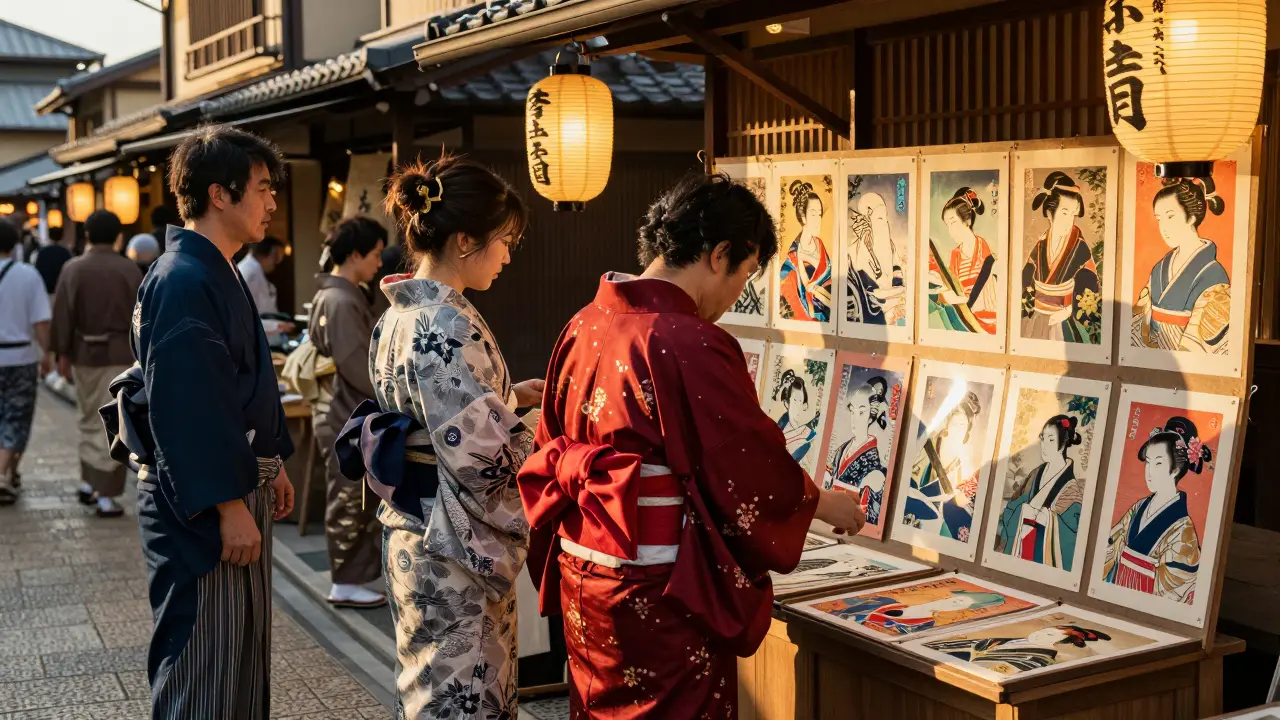
Japanese Woodblock Prints – What They Are and Why They Matter
Japanese woodblock prints, known as ukiyo-e, are a form of mass‑produced art that started in the Edo period (1600‑1868). Artists carved images into wooden blocks, inked them, and pressed paper to create vibrant scenes of everyday life, landscapes, and theater. Because each block could be reused, prints became cheap enough for ordinary folks, turning art into a shared visual language.
Key Artists and Iconic Works
When you think of ukiyo‑e, the names Hokusai and Hiroshige pop up first. Hokusai’s "The Great Wave" from his Thirty‑Six Views of Mount Fuji series is instantly recognizable; its bold blue and dynamic curve still influences designers today. Hiroshige, on the other hand, captured quiet moments along the Tōkaidō road, like the famous Rainstorm at Shōjō-ji. Both artists used exaggerated perspective and flat color blocks, giving their work a modern feel that still feels fresh.
How to Find and Collect Authentic Prints
Spotting a genuine ukiyo‑e starts with a few practical checks. Look for a clear, unbroken edge on the paper – older prints often show a slightly rough border where the block met the sheet. The ink should sit smoothly on the surface; a raised texture can mean the block was re‑cut, which lowers value. Check the signature; authentic pieces usually bear the artist’s name in a stylized brushstroke, and many include an imprint from the publisher.
Museums are the best places to see original examples. The British Museum, the Metropolitan Museum of Art, and Tokyo’s Ukiyo‑e Museum all have rotating displays. If you want to buy, start with reputable dealers who provide provenance documents. Online auctions can be tempting, but set a budget and compare prices – a high‑quality Hokusai print can run from a few thousand dollars to six figures, depending on condition.
Even if you’re not collecting, appreciating the craft is easy. Look for recurring motifs: cherry blossoms for fleeting beauty, waterfalls for power, and Kabuki actors for drama. Notice how the background often uses simple gradients, letting the main figure jump out. These visual tricks are why ukiyo‑e still feels lively after centuries.
In short, Japanese woodblock prints blend art, history, and everyday life in a way that’s both accessible and deep. Whether you admire them in a gallery, spot a cheap replica at a market, or start a small collection, understanding the basics will make each piece more meaningful. So next time you see a bold wave or a quiet bridge, you’ll know the story behind the wood, the ink, and the artist’s hand.