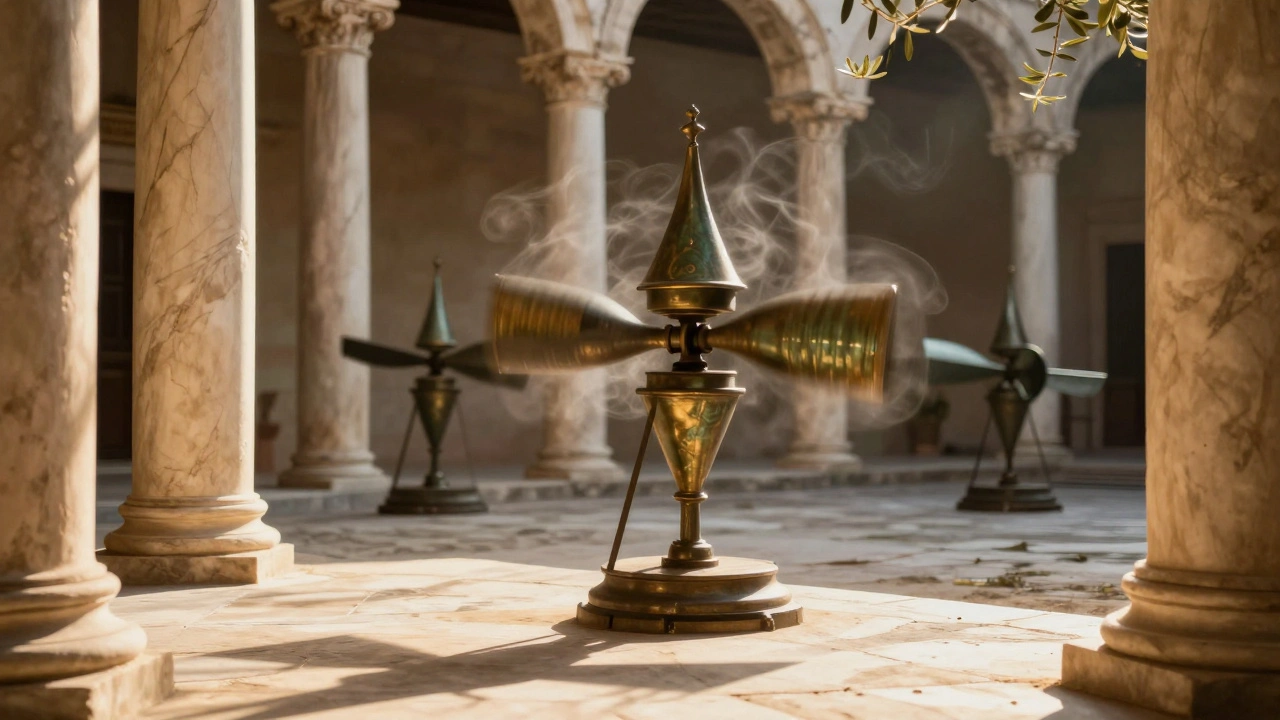
Mechanical Sculpture: Where Art Meets Motion and Machine
When you think of sculpture, you might picture a still statue carved from stone or cast in bronze. But mechanical sculpture, a form of art that uses moving parts, motors, and physics to create dynamic, living forms. Also known as kinetic art, it doesn’t sit quietly on a pedestal—it breathes, spins, sways, and sometimes even sings. This isn’t just art that moves. It’s art that reacts—to wind, to touch, to light, to the rhythm of the world.
Think of it as sculpture with a heartbeat. Artists like Jean Tinguely and George Rickey didn’t just make objects—they built machines that became expressions of time, force, and balance. A mechanical sculpture might use gears from old clocks, rods from bicycles, or magnets pulled by invisible fields. It’s not about perfection. It’s about the wobble, the creak, the slow turn that makes you pause and wonder how it works. This kind of art lives at the edge of kinetic art, a broader category that includes any artwork designed to move, and dynamic sculpture, a term often used interchangeably but often implies more complex, engineered motion. It’s where art and science, the careful marriage of creative vision and physical law come together in a single, spinning piece.
What makes mechanical sculpture different from a wind chime or a garden fountain? It’s intention. Every movement is designed—not just to turn, but to say something. A slow, rhythmic rotation might echo the passage of time. A sudden jerk could mirror human emotion. Some pieces respond to viewers, shifting as you walk by. Others are powered by the weather, turning with the wind like modern-day weather vanes with soul. These aren’t toys. They’re meditations on control, chance, and the quiet beauty of machinery.
You’ll find mechanical sculptures in museums, public plazas, and hidden corners of art schools. They’re rare, because they’re hard to make. They need skill in metalwork, electronics, balance, and aesthetics. But they’re unforgettable. Once you’ve seen a sculpture move on its own, you’ll never look at still art the same way again.
Below, you’ll find a curated collection of posts that explore the history, techniques, and artists behind this fascinating art form. From how wind turns steel into poetry, to why some of the most powerful modern artworks are built with gears and motors—you’ll see how mechanical sculpture isn’t just a niche. It’s a quiet revolution in how we think about art, motion, and what it means to create something alive.