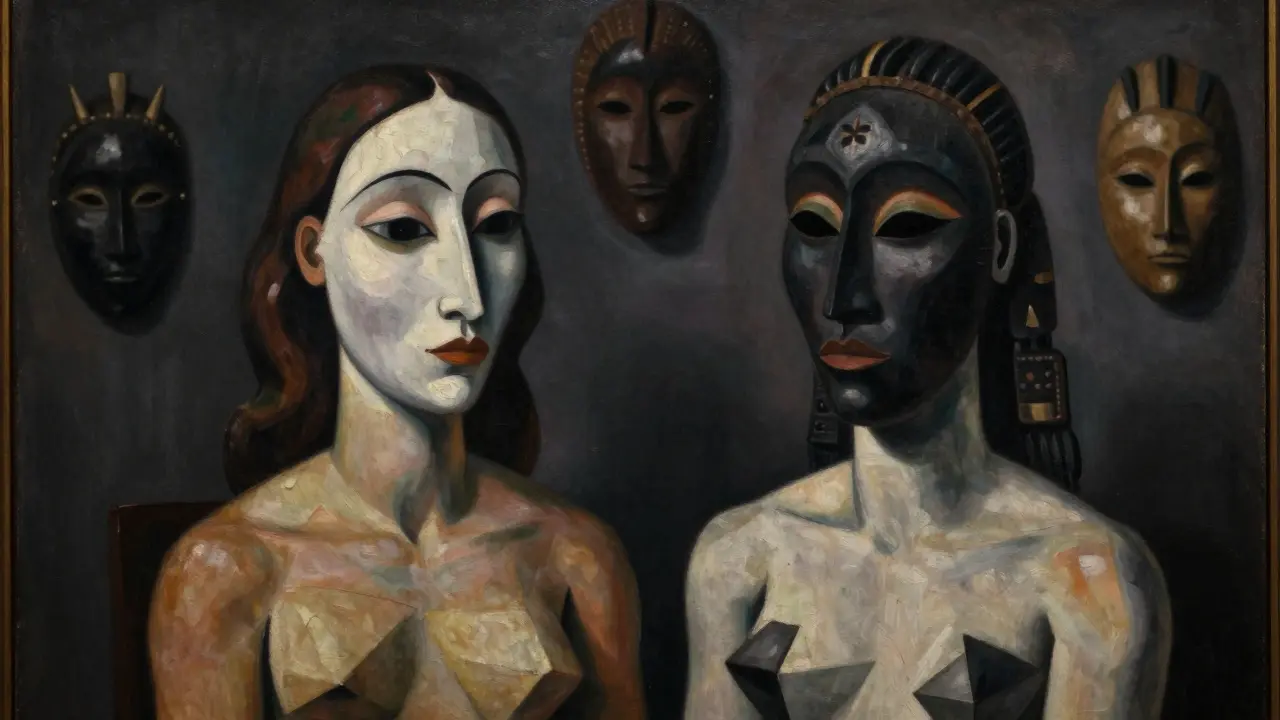
Walk into any major museum today, and you will likely see a Pablo Picasso's Les Demoiselles d'Avignon hanging prominently. The jagged faces, the distorted bodies-they look nothing like the realistic paintings that dominated European galleries before 1907. But look closer at those faces. They are not random distortions. They are direct references to African masks. This moment marks the birth of Primitivism is an artistic movement in Western art where artists borrowed styles from non-Western cultures, often labeled as 'primitive,' to break away from traditional realism. It wasn't just about looking different; it was a radical attempt to find something raw and authentic that European society had lost.
But here is the catch. While Primitivism changed the course of modern art forever, it also carries a heavy ethical burden. It relies on viewing other cultures through a lens of superiority, treating their sacred objects as mere aesthetic tools. To understand this movement, we have to look past the bold colors and strange shapes and ask: who really benefited from this "discovery"?
What Exactly Is Primitivism?
At its core, Primitivism is not a style with strict rules. Instead, it is an attitude. In the late 19th and early 20th centuries, European artists felt trapped by industrialization and rigid academic traditions. They believed that modern life was becoming too artificial, too cold. They looked toward societies they considered "uncivilized"-indigenous peoples in Africa, Oceania, and the Americas-and assumed these groups lived closer to nature and truth.
This belief led them to borrow visual elements from these cultures. They took the geometric patterns of African sculpture, the spiritual intensity of Oceanian carvings, and the naive simplicity of folk art. They stripped away the context-the religious rituals, the social functions-and repurposed the forms for their own abstract experiments. The result was a shock to the system, but it was built on a fundamental misunderstanding of the source material.
The Giants of the Movement
You cannot talk about Primitivism without mentioning the men who defined it. Their work didn't just reflect the trend; it created the market for it.
Paul Gauguin is often seen as the pioneer. Disillusioned with Parisian society, he moved to Tahiti in the 1890s. He wanted to live like a "native," seeking a pure, prelapsarian existence. His paintings feature bright, flat colors and simplified forms inspired by Polynesian wood carvings. However, Gauguin never truly integrated into the local culture. He remained an outsider looking in, romanticizing poverty and disease while maintaining his status as a wealthy European artist. His work captures a fantasy of Tahiti, not the reality.
Then came Pablo Picasso. In 1907, after visiting the Trocadéro Museum in Paris (which displayed colonial artifacts), Picasso was struck by the power of African masks. He began incorporating their angular features into his portraits. This shift marked the beginning of Cubism, which deconstructed subjects into geometric planes. For Picasso, African art was a tool to express psychological intensity, completely divorced from its original ceremonial purpose.
Henri Matisse approached it differently. He collected African bronzes and ivory carvings, admiring their decorative quality and rhythmic lines. He used these influences to simplify his compositions, focusing on color and pattern rather than depth. Meanwhile, members of Die Brücke (The Bridge) in Germany, such as Ernst Ludwig Kirchner, drew inspiration from Oceanic art to express angst and social critique, using sharp, jagged lines to mirror their turbulent emotions.
| Artist | Primary Influence | Key Work | Motivation |
|---|---|---|---|
| Paul Gauguin | Polynesian Culture | Where Do We Come From? | Escape from industrial Europe; search for primal truth |
| Pablo Picasso | African Masks | Les Demoiselles d'Avignon | Break from perspective; express psychological intensity |
| Henri Matisse | African Bronze/Ivory | The Dance | Simplify form; enhance decorative rhythm |
| Ernst Ludwig Kirchner | Oceanian Carving | Street, Berlin | Express urban anxiety; reject bourgeois norms |
The Colonial Context: Where Did These Objects Come From?
We must address the elephant in the room: how did these African masks and Oceanian statues end up in Paris museums? They were largely acquired during the height of European colonialism. Many were taken as spoils of war, bought under unequal conditions, or looted entirely. When Picasso picked up a mask, he was interacting with an object that had been removed from its community, its power, and its people.
This dynamic created a one-way street. Western artists could freely appropriate the aesthetics of colonized peoples, but those peoples had no voice in how their culture was represented. The term "primitive" itself is loaded. It implies a lack of development, a static state of being, ignoring the complex histories, technologies, and philosophies of these societies. By labeling them "primitive," European artists justified their exploitation as a form of enlightenment or rescue.
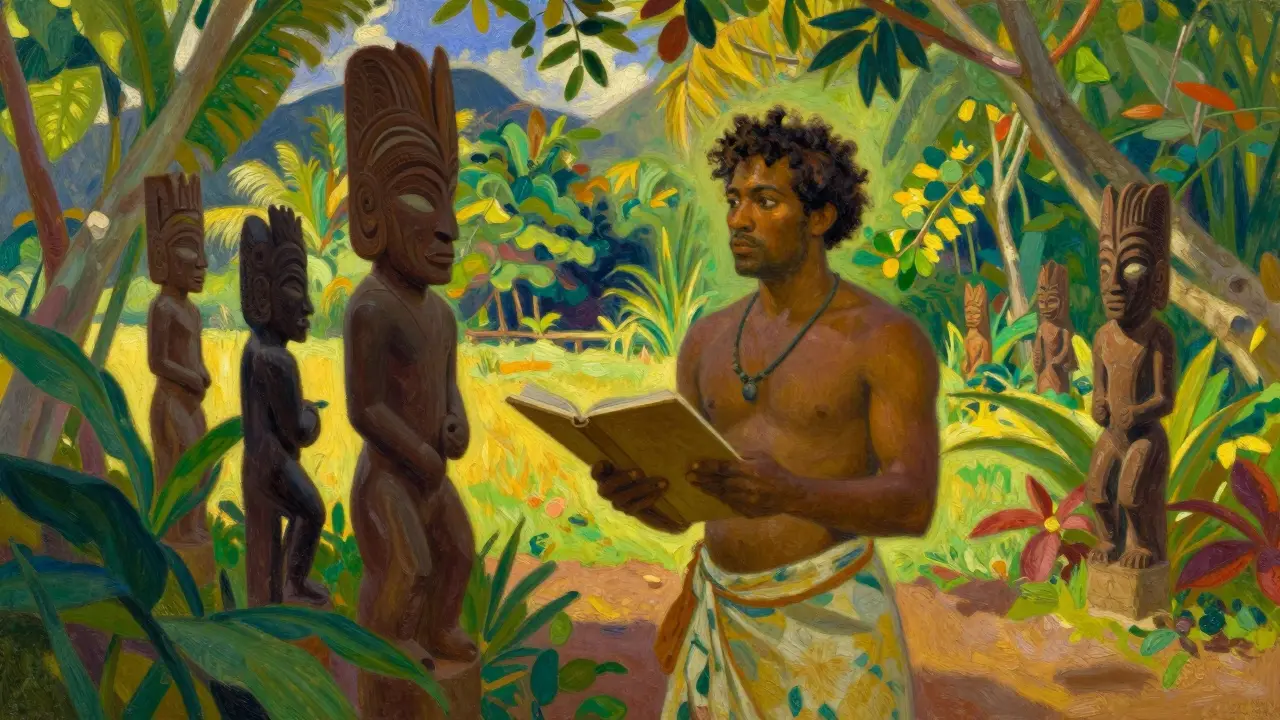
Why Did Modern Artists Love "Primitive" Art?
If the ethics are so questionable, why did so many talented artists embrace this approach? The answer lies in what European art had become. Academic art focused on precise anatomy, historical narratives, and realistic lighting. It was safe, polite, and predictable. Artists wanted to break free.
Non-Western art offered a different logic. It didn't try to mimic the physical world; it tried to capture spiritual or emotional truths. An African mask might exaggerate the eyes to show heightened awareness, or flatten the face to represent a spirit world. This abstraction gave European artists permission to distort reality. They realized that art didn't have to be a window onto the world; it could be a hammer to shape it.
This shift was crucial for the development of Modernism. Without the influence of Primitivism, we might not have seen the rapid evolution of Cubism, Expressionism, and Surrealism. It provided the vocabulary for abstraction. Artists learned that form could carry meaning independently of representation.
The Ethical Reckoning: Decolonizing the Museum
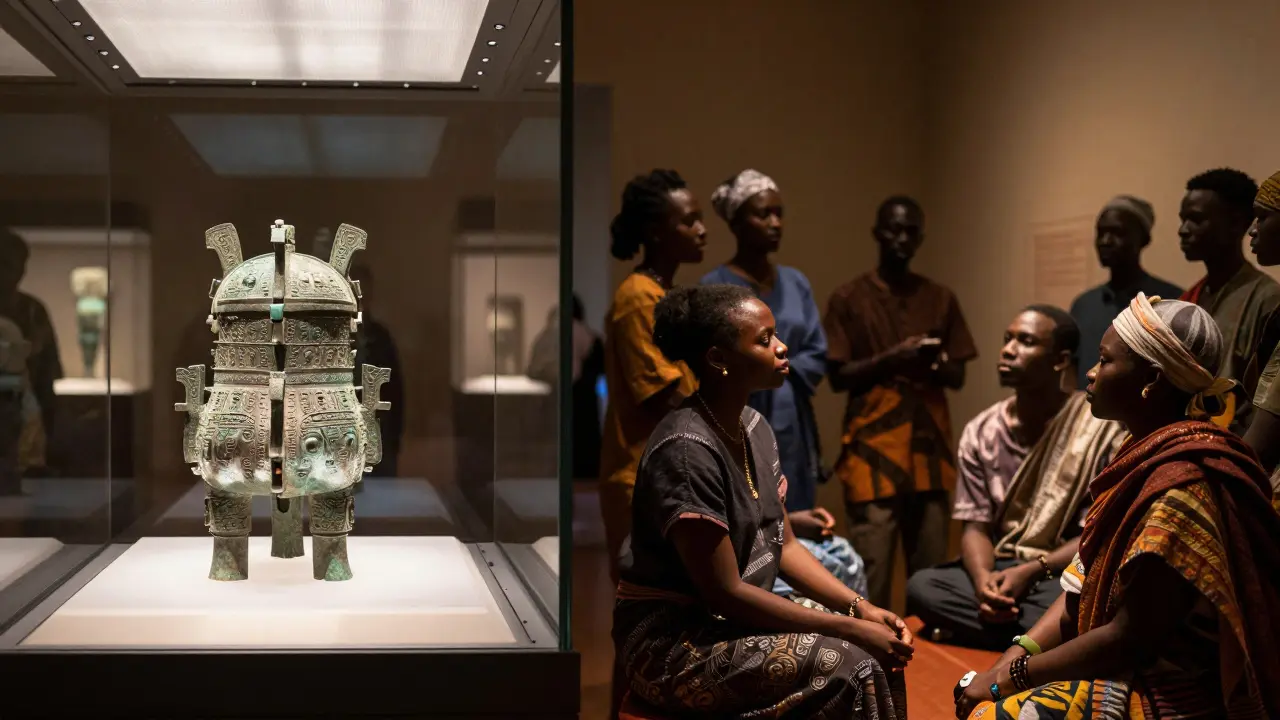
Today, the conversation around Primitivism has shifted dramatically. We no longer celebrate it uncritically. Scholars and curators are working to "decolonize" the narrative. This means acknowledging the harm caused by colonial appropriation and giving credit to the original creators.
Museums are facing pressure to return stolen artifacts. The debate over the Benin Bronzes is a prime example. These intricate metal sculptures were looted by British forces in 1897 and are now held in institutions across Europe and America. Nigerian communities have demanded their return for decades. Recent years have seen some progress, with museums repatriating hundreds of pieces. This isn't just about property rights; it's about restoring cultural heritage and dignity.
In the art world, there is a growing emphasis on context. When displaying works influenced by Primitivism, curators now include information about the source cultures. They explain the original function of the masks or carvings, rather than just praising the European artist's "genius" for finding them. This helps viewers understand the full picture, including the power imbalances involved.
Primitivism vs. Authentic Cultural Exchange
It is important to distinguish between Primitivism and genuine cross-cultural collaboration. Primitivism was extractive. It took without asking, credited only the taker, and ignored the giver. True cultural exchange involves mutual respect, dialogue, and shared benefit.
Contemporary artists from indigenous backgrounds are reclaiming their narratives. Artists like Romuald Hazoumè from Benin use recycled materials to create powerful installations that comment on colonial history and environmental issues. He doesn't hide behind a mask of "primitivism"; he speaks directly to global audiences about his specific experiences. This is the opposite of Primitivism. It is agency, not appropriation.
For us as viewers, the lesson is to look deeper. When you see a painting with "primitive" influences, ask questions. Who made the original object? Why was it taken? What does it mean to its community? Don't just admire the style; consider the story behind it.
Legacy in Contemporary Art
The shadow of Primitivism still looms large. Many contemporary artists continue to draw inspiration from non-Western traditions, but they do so with greater awareness. Some engage in collaborative projects with indigenous communities, ensuring fair compensation and creative control. Others critique the very idea of Primitivism, exposing its flaws through their work.
The movement taught us that art is not bound by geography or tradition. It showed us that diverse visual languages can enrich our understanding of the human experience. But it also warned us about the dangers of cultural arrogance. As we move forward, the goal should be to appreciate global art forms on their own terms, respecting their origins and complexities, rather than reducing them to exotic decorations for our own purposes.
Is Primitivism considered offensive today?
Yes, the term and the practice are widely criticized. The word "primitive" is seen as derogatory because it implies that non-Western cultures are less developed or static. The artistic practice is viewed as exploitative because it appropriated sacred objects from colonized peoples without consent or proper attribution. While the artworks themselves are historically significant, the ideology behind them is rejected by modern scholars and many communities.
How did African art influence Picasso?
Picasso was influenced by the geometric abstraction and expressive power of African masks. After seeing them in Parisian museums, he began distorting facial features in his own work to convey emotion rather than physical accuracy. This shift was pivotal in creating Cubism, where objects are broken down into basic shapes. However, Picasso rarely acknowledged the specific African artists or cultures that inspired him, treating the art as a universal resource rather than a specific cultural heritage.
What is the difference between Primitivism and Folk Art?
Folk art refers to traditional art made by ordinary people within their own communities, often passed down through generations. Primitivism is a Western artistic strategy that borrows from folk art, tribal art, or indigenous art, but strips it of its cultural context to serve modernist goals. Folk art is valued for its authenticity and tradition; Primitivism values it for its novelty and ability to disrupt European norms.
Are museums returning stolen "primitive" art?
Yes, the trend of repatriation is growing. Museums in Europe and North America are increasingly returning artifacts looted during colonial times to their countries of origin. High-profile cases include the return of Benin Bronzes to Nigeria and Ivorian masks to Côte d'Ivoire. This process is driven by ethical concerns, legal pressures, and demands from source communities for the restoration of their cultural heritage.
Who were the main artists associated with Primitivism?
The most prominent figures include Paul Gauguin, who sought inspiration in Tahiti; Pablo Picasso, who used African masks to develop Cubism; Henri Matisse, who admired the decorative qualities of African bronzes; and the German Expressionists of Die Brücke, such as Ernst Ludwig Kirchner, who drew from Oceanic art. These artists used non-Western aesthetics to challenge traditional European art standards.