Post-Impressionism didn’t just follow Impressionism-it broke it apart. While Impressionists painted light and fleeting moments, the Post-Impressionists asked: What if art wasn’t about seeing, but about feeling? This movement, born in the late 1880s and lasting into the early 1900s, didn’t just tweak a style. It rewrote the rules of what painting could do. And today, its fingerprints are all over modern art-from abstract expressionism to graphic design.
Why Post-Impressionism Wasn’t Just ‘More Impressionism’
- Impressionists like Monet and Renoir wanted to capture the way light hit a haystack at sunset. They painted quickly, outdoors, with loose brushwork.
- Post-Impressionists still used bright colors and visible brushstrokes-but they stopped chasing reality.
- They painted what they felt, not what they saw.
Paul Cézanne painted apples that looked like they were made of stone. Vincent van Gogh twisted trees into spirals because he believed emotion needed shape. Paul Gauguin left France for Tahiti to paint myths, not landscapes. None of them cared about accurate shadows or perfect perspective. They cared about meaning.
Van Gogh: Color as Emotion
Van Gogh didn’t paint sunflowers because they were pretty. He painted them because yellow screamed joy to him-and he was desperate for joy. In 1888, while living in Arles, he wrote to his brother Theo: “I am seeking, I am striving, I am in it with all my heart.” His brush didn’t just apply paint; it shook with urgency.
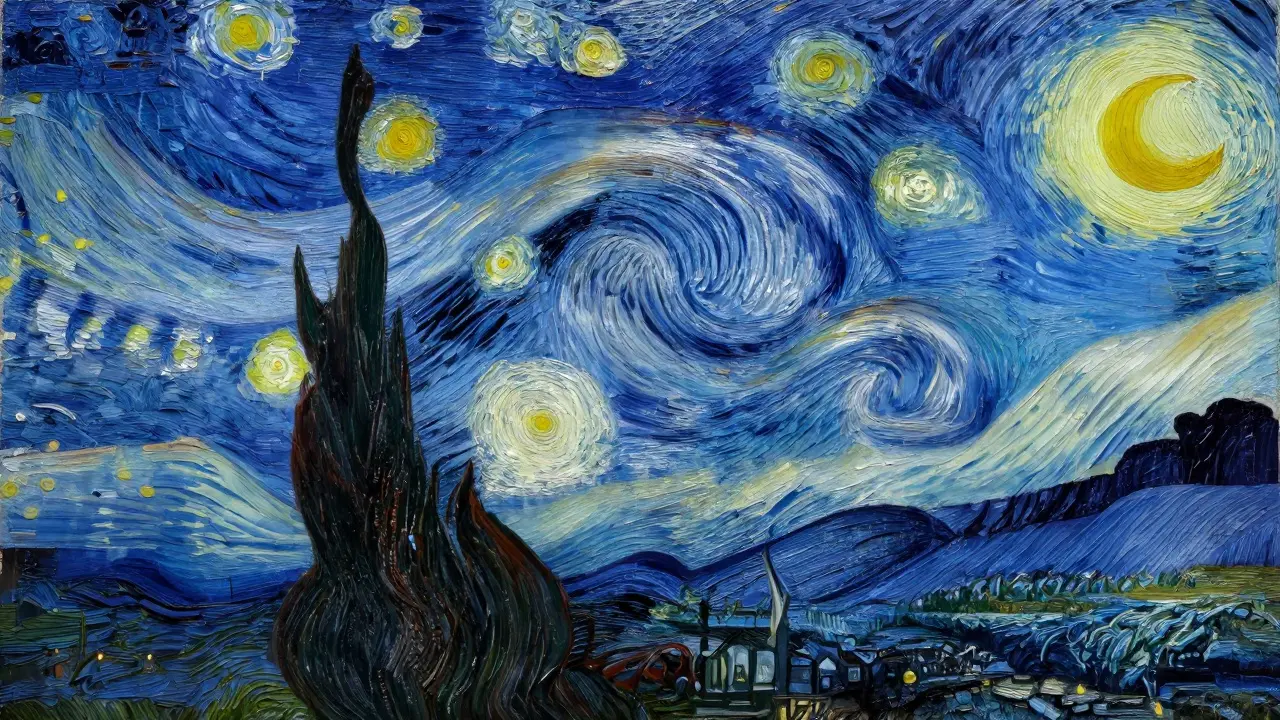
His use of color wasn’t naturalistic. The sky in The Starry Night isn’t blue-it’s a churning vortex of cobalt and cerulean, like a storm inside his mind. The cypress tree isn’t a tree; it’s a black flame reaching toward heaven. Critics called his work insane. Today, museums pay hundreds of millions for his sketches.
He didn’t sell a single painting in his lifetime. But his emotional honesty became the blueprint for every artist who wanted to say something real, not just pretty.
Cézanne: Building the World with Shapes
If Van Gogh painted feelings, Cézanne painted structure. He didn’t care if a table looked real. He cared if it felt solid.
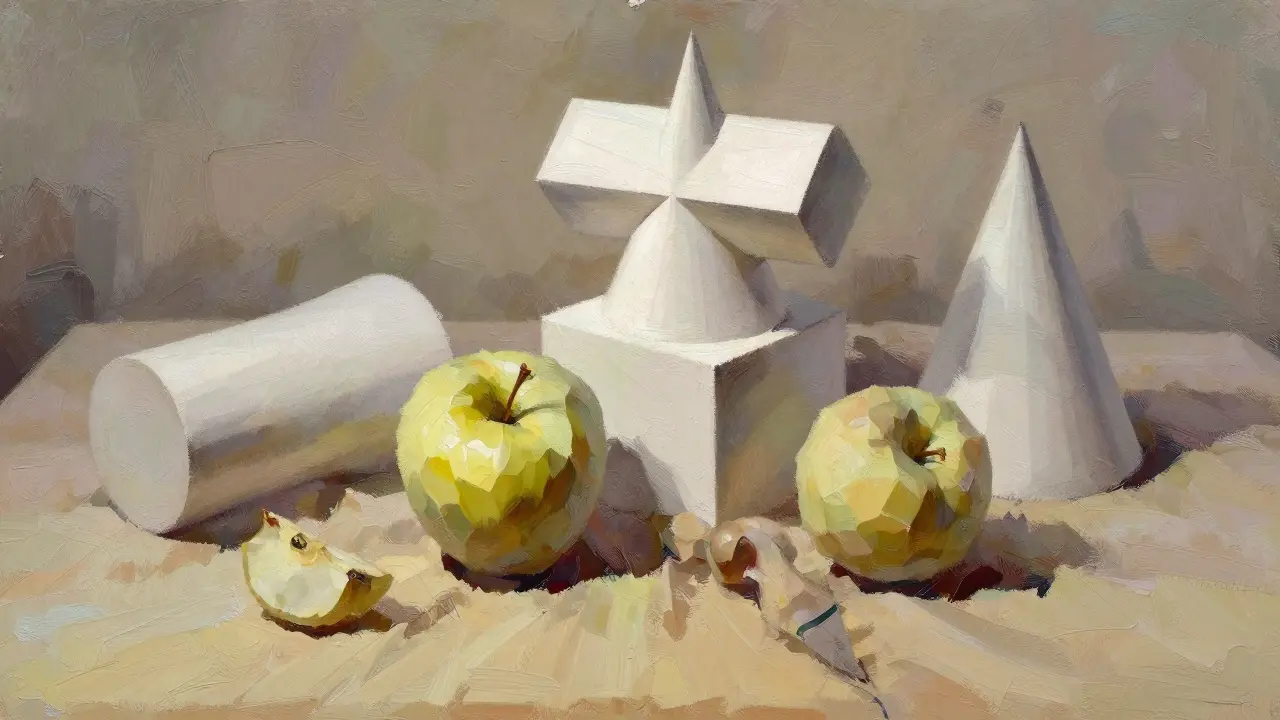
He broke objects into geometric planes-cubes, cylinders, cones. A pear wasn’t round; it was a cluster of angled surfaces. A mountain wasn’t a slope; it was layered blocks of green and ochre. He painted the same apple dozens of times, each one slightly different, because he was trying to understand how form holds space.
His work looked clumsy to his peers. But Picasso later said, “Cézanne is the father of us all.” Why? Because Cézanne taught artists that reality could be rebuilt from scratch. His approach became the foundation of Cubism. Without Cézanne, there’s no Picasso, no Braque, no modern abstraction.
Gauguin: Escaping the West to Find Something Raw
Gauguin didn’t just leave Paris-he ran from it. He hated the industrial world, the rules, the art market. In 1891, he sailed to Tahiti, hoping to find a society untouched by modernity. What he found wasn’t paradise. But it gave him permission to paint differently.
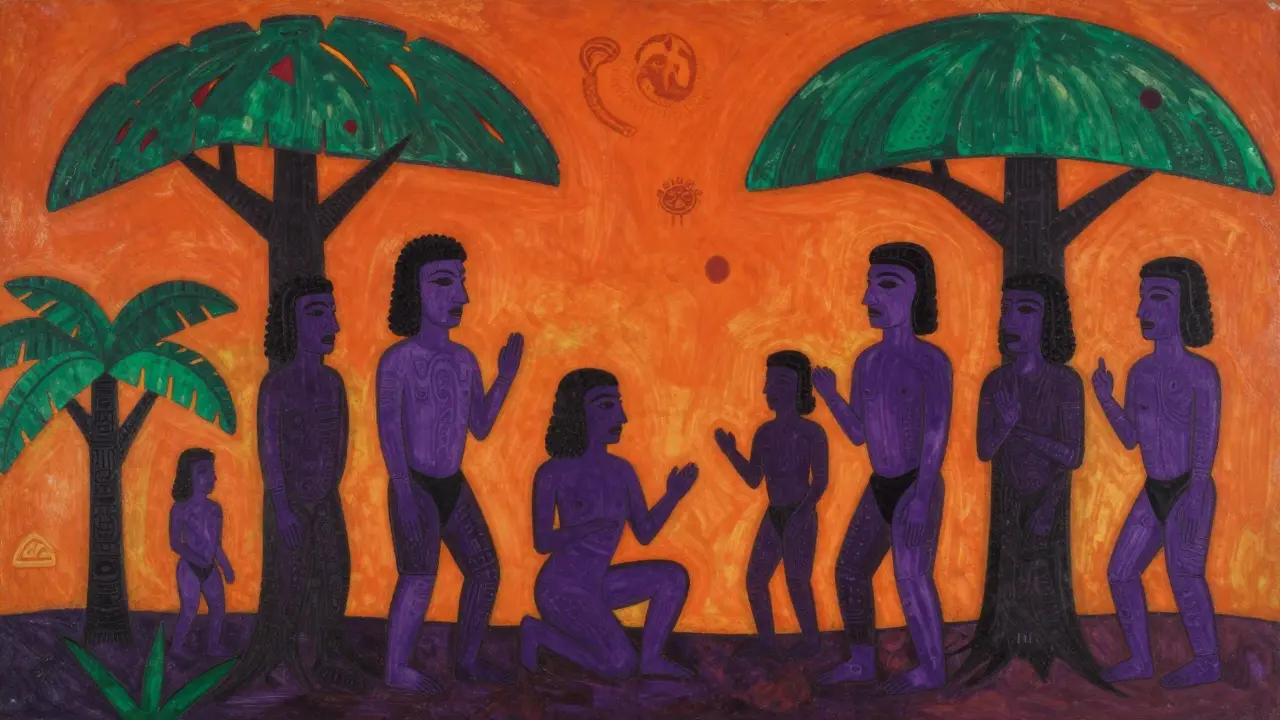
He abandoned perspective. He flattened space. He used bold outlines and unnatural colors: purple skin, green trees, orange skies. His figures looked like carvings, not people. He painted myths, not portraits. His painting Where Do We Come From? What Are We? Where Are We Going? isn’t a scene-it’s a question carved in pigment.
Gauguin’s work was controversial. He romanticized Polynesian culture. He exploited local women. But his artistic rebellion was undeniable. He proved that art didn’t need to be European to be powerful. His influence stretches to Matisse, the Fauves, and even modern illustration.
The Legacy: How Post-Impressionism Built Modern Art
Post-Impressionism didn’t end with the death of its main figures. It exploded into dozens of movements.
- Van Gogh’s emotional brushwork became the core of Expressionism.
- Cézanne’s geometry birthed Cubism and later, abstract art.
- Gauguin’s flat planes and symbolic color fed into Symbolism and Fauvism.
Even today, you can see Post-Impressionism in movie posters, album covers, and digital illustrations. When a graphic designer uses bold outlines and saturated colors to convey mood-not realism-that’s Gauguin. When an animator distorts perspective to show inner turmoil-that’s Van Gogh. When a painter reduces a face to basic shapes to suggest depth-that’s Cézanne.
These artists didn’t just paint. They invented new ways to think about seeing. They turned canvas into a space for truth, not decoration.
What Makes Post-Impressionism Still Relevant Today?
Because it’s not about technique. It’s about honesty.
In a world flooded with perfect Instagram photos and AI-generated landscapes, Post-Impressionism reminds us that art doesn’t need to be flawless to be powerful. It needs to be real. Van Gogh’s trembling brush, Cézanne’s awkward angles, Gauguin’s wild colors-they weren’t mistakes. They were declarations.
Modern artists still fight the same battle: Do I paint what’s expected? Or do I paint what’s inside?
Post-Impressionism says: Paint what’s inside. Even if no one understands it. Even if it sells for nothing. Even if you die alone.
Where to See the Real Works
If you want to feel the weight of these paintings, go to the originals. Not reproductions. Not screens. The texture of Van Gogh’s paint is thick enough to catch light. Cézanne’s brushstrokes are deliberate, almost surgical. Gauguin’s colors bleed with pigment you can’t replicate digitally.
- Van Gogh Museum in Amsterdam holds over 200 of his works, including Almond Blossom and The Bedroom.
- Orsay Museum in Paris has the largest collection of Post-Impressionist pieces, including Cézanne’s The Card Players and Gauguin’s Te Faaturuma.
- The Metropolitan Museum of Art in New York has key works like Van Gogh’s Wheat Field with Cypresses.
Visit these museums. Stand in front of a painting. Notice how the paint is layered. Notice how the colors don’t match nature. Notice how the artist didn’t care. That’s the point.
What’s the difference between Impressionism and Post-Impressionism?
Impressionists painted what they saw in the moment-light, atmosphere, movement. Post-Impressionists painted what they felt. They kept bright colors and visible brushstrokes but added structure, symbolism, and emotion. Where Monet painted a haystack, Van Gogh painted the ache of loneliness inside it.
Why is Van Gogh so famous if he sold only one painting?
He didn’t sell his art because his style was too raw for his time. But his letters to his brother Theo reveal a mind obsessed with truth in art. After his death, his sister-in-law collected and promoted his work. By the 1920s, artists and critics realized he had cracked open a new way to express inner life. His fame grew not because he was popular, but because he was honest.
Did Post-Impressionists have a formal group or manifesto?
No. They never formed a movement with rules. They were three separate artists with different goals. The term ‘Post-Impressionism’ was coined in 1910 by art critic Roger Fry to describe them collectively. Today, we group them because they all rejected Impressionism’s limits-but they didn’t agree on what to replace it with.
How did Post-Impressionism influence modern design?
Modern logos, posters, and UI design use flat color, bold outlines, and symbolic shapes because of Gauguin and Cézanne. Think of the simplified forms in Apple’s early ads or the emotional color palettes in Netflix’s thumbnails. That’s Post-Impressionism in action-emotion over realism, shape over detail.
Is Post-Impressionism still taught in art schools?
Yes. It’s one of the first movements students study after learning basic drawing. Why? Because it shows that technique is just a tool. The real power comes from intention. Every art student learns Van Gogh’s brushwork, Cézanne’s structure, and Gauguin’s symbolism-not to copy them, but to learn how to break rules with purpose.