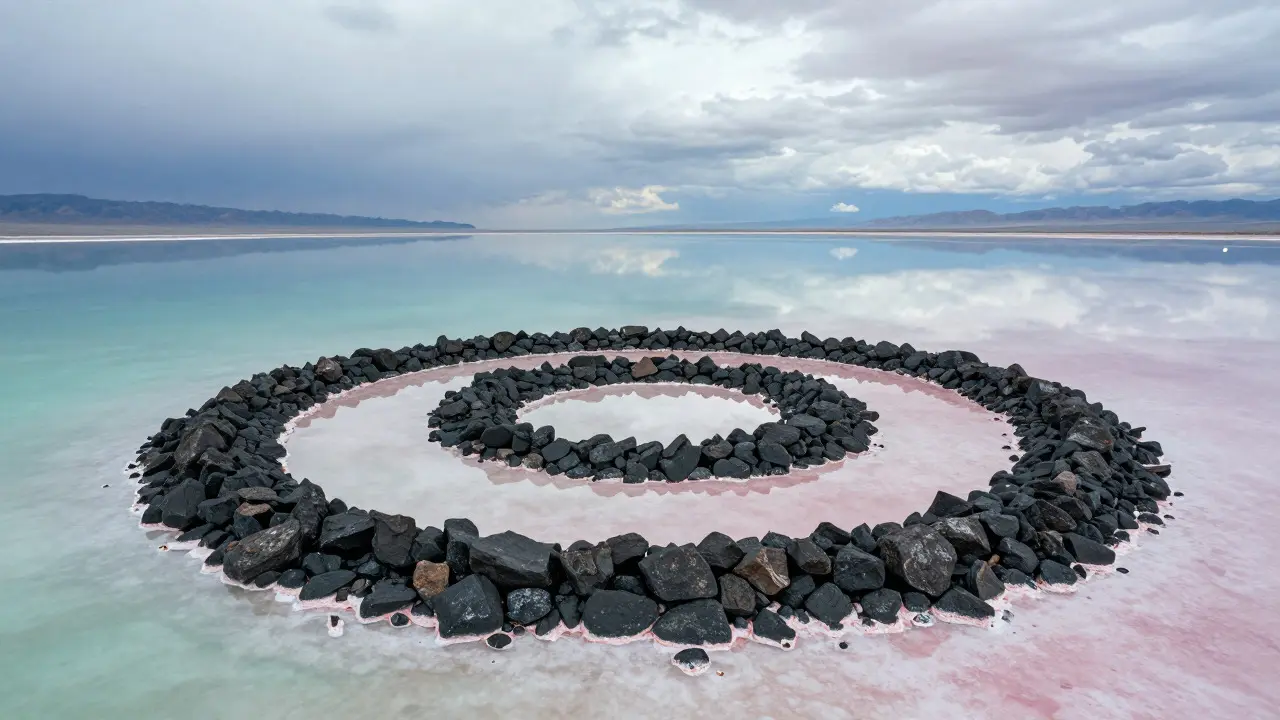
Imagine walking through a field in Utah and seeing a massive spiral made of black basalt rocks jutting out into the water. It’s not a ruin from an ancient civilization. It’s Land Art, also known as Earthworks. This movement changed how we think about galleries, museums, and even what counts as "art." But here is the twist that matters today: Land Art is one of the most natural fits for sustainable art. While modern culture obsesses over plastic waste and carbon footprints, artists have been working with dirt, stone, and light for decades without leaving a trace-or at least, without trying to.
What Exactly Is Land Art?
To understand why this matters now, you have to look back to the late 1960s. Artists were tired of the commercial art world. They didn’t want their paintings sold to rich collectors and hung in sterile white rooms. They wanted to go outside. The central entity here, Land Art, is an artistic movement where natural materials like soil, rock, and vegetation are used to create large-scale works in remote locations.
The pioneers weren't just painting landscapes; they were becoming the landscape. Take Robert Smithson. In 1970, he created Spiral Jetty in the Great Salt Lake. He used bulldozers to pile up tons of rock and mud into a 1,500-foot spiral. When the water levels rose, it disappeared underwater. When they dropped, it reappeared. The art wasn't static. It breathed with the environment. That is a core principle of sustainability: adaptation rather than domination.
The Sustainability Connection: Why Nature Is the Medium
Most contemporary art relies on shipping crates, electricity for lighting, and synthetic canvases. Land Art flips this script. By using local materials-stones found on-site, grass grown there, or shadows cast by the sun-the carbon footprint drops significantly. There is no need to import marble from Italy or oil paints from Germany. You use what the land gives you.
This approach aligns perfectly with the concept of Eco-Art, which is a branch of art focused on ecological processes and environmental awareness. Unlike traditional sculpture that sits forever in a park (often requiring maintenance and pesticides), many Land Art pieces are designed to erode. They return to the earth. This lifecycle management is something industrial design is only just starting to figure out. If your artwork decomposes naturally, you haven't created trash; you've created a temporary moment of beauty.
Key Figures and Their Earthworks
You can't talk about this movement without mentioning the heavy hitters. Their work provides the blueprint for how to interact with nature respectfully.
- Robert Smithson: As mentioned, his Spiral Jetty is the icon. But his theory was just as important. He wrote about "entropy"-the idea that everything eventually breaks down. Accepting decay is a sustainable mindset.
- Michael Heizer: His Negative Space in Nevada involves removing millions of tons of earth to create a massive void. It’s controversial because of the scale, but it forces us to look at the geology of the desert in a new way.
- Walter De Maria: Known for The Lightning Field in New Mexico. Four hundred stainless steel poles arranged in a grid. It doesn't change the land physically much, but it changes how you perceive the sky and weather. It’s low-impact, high-impact visually.
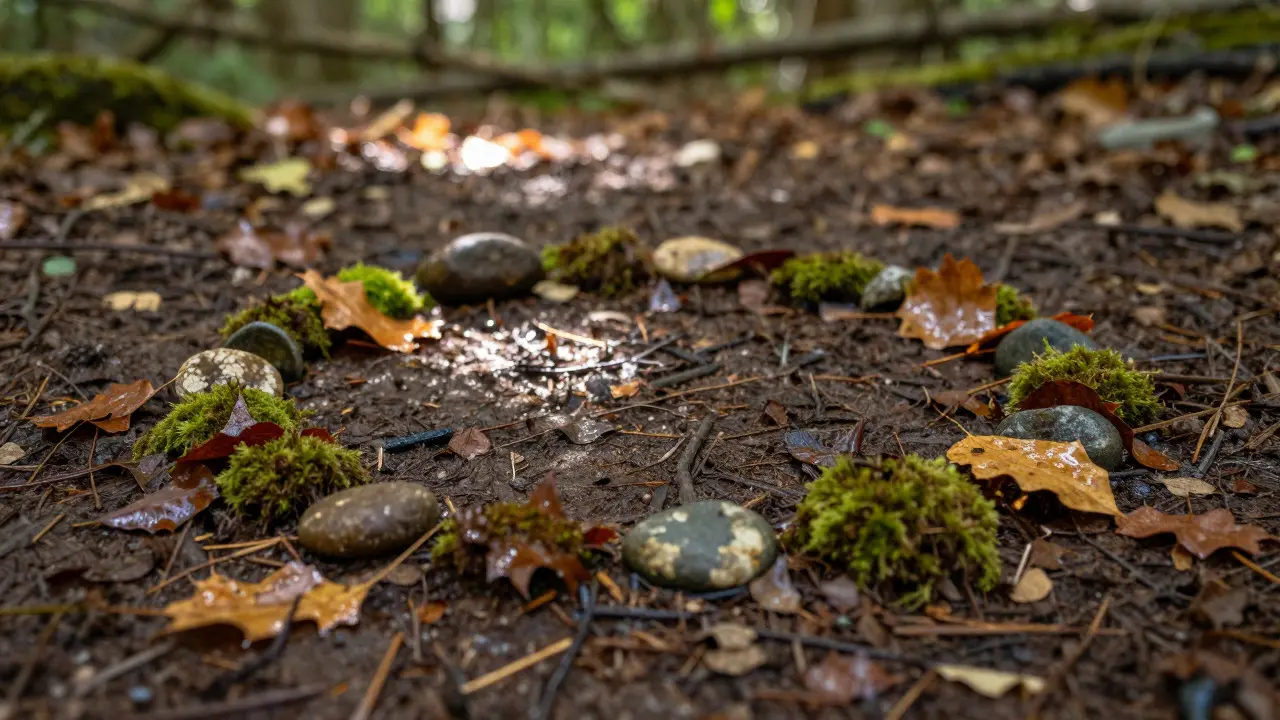
- Andy Goldsworthy: He brings a softer touch. He uses leaves, ice, and stones to make delicate sculptures that melt or blow away within hours. His work proves you don't need heavy machinery to make a statement.
How Land Art Differs From Traditional Sculpture
If you’re wondering why this isn't just "big outdoor statues," you're right to ask. The difference lies in ownership and permanence. Traditional sculpture is owned by someone. It is insured, cataloged, and protected. Land Art is often unownable. You can't put Spiral Jetty in a warehouse. It belongs to the lake, the salt, and the wind.
| Feature | Traditional Sculpture | Land Art / Earthworks |
|---|---|---|
| Materials | Bronze, Marble, Plastic | Soil, Rock, Water, Light |
| Location | Galleries, Museums, Parks | Remote Natural Sites |
| Lifespan | Permanent (Centuries) | Temporary or Eroding |
| Carbon Footprint | High (Shipping, Production) | Low (Local Materials) |
| Viewer Access | Easy (Urban Centers) | Difficult (Travel Required) |
The Environmental Debate: Is It Truly Green?
Let’s get real. Not all Land Art is eco-friendly. Some early works required massive bulldozers and helicopters, burning fossil fuels to move mountains. Critics argue that digging up the desert causes more harm than good. This is a valid point. True sustainable Land Art minimizes mechanical intervention. Think of Andy Goldsworthy again. He picks up a leaf; he doesn't blast a cliff face.
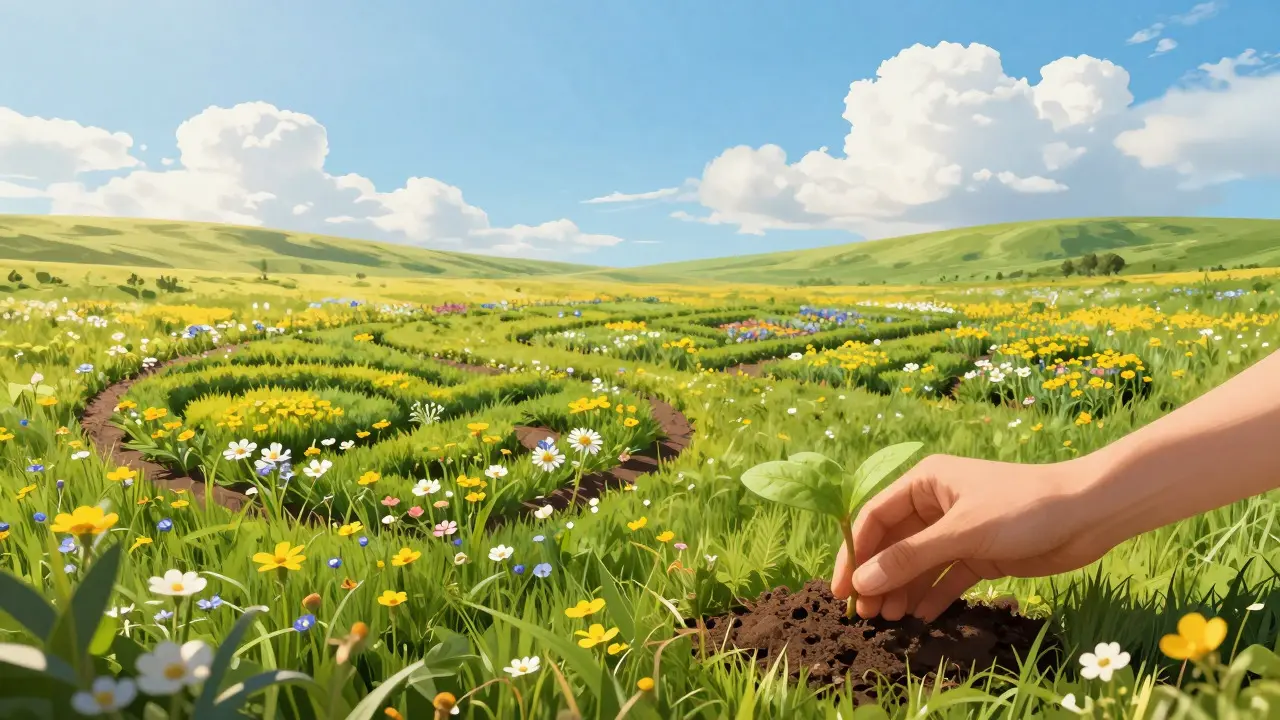
Today, the trend is shifting toward Restoration Art, which is artistic projects that actively repair damaged ecosystems. For example, some artists plant native species to stop erosion while creating visual patterns. This turns art into a tool for conservation. Instead of just observing nature, the artist helps heal it. This is the next evolution of the movement.
Why You Should Care About Land Art Today
In a world drowning in digital noise and fast fashion, Land Art offers a pause. It reminds us that time is slow. Rocks take millions of years to form. Leaves fall in weeks. Our lives are somewhere in between. Engaging with this art form-even if just through photographs or documentaries-shifts your perspective on consumption.
It teaches us that value doesn't mean permanence. A flower is beautiful because it dies. A digital file lasts forever but feels cheap. Land Art bridges this gap. It creates moments that feel eternal but are physically transient. That is a powerful lesson for anyone trying to live more sustainably. We don't need to own everything forever. We just need to appreciate what is here, now.
Experiencing Land Art Without Flying Around the World
You might be thinking, "Great, but I don't have a private jet to fly to Nevada." Fair enough. Most major Land Art sites are remote. However, you can still engage with the principles.
- Visit Local Earthworks: Many cities have smaller-scale installations. Look for public art that uses natural elements.
- Create Your Own: Go to a beach or a forest. Arrange sticks, stones, or shells. Take a photo. Let the tide or wind take it back. You’ve just made Land Art.
- Support Eco-Artists: Follow contemporary artists who focus on restoration and local materials. Buy prints or support their crowdfunding campaigns.
- Documentary Deep Dives: Films like Werner Herzog's Cave of Forgotten Dreams or documentaries on Smithson provide immersive experiences without the travel emissions.
The Future of Earth-Based Art
As climate change accelerates, Land Art will likely become more urgent. Artists are already responding to rising sea levels, melting glaciers, and deforestation. The art isn't just decoration anymore; it's evidence. It documents the changing planet. This makes Land Art not just a historical curiosity, but a vital part of our cultural response to the environmental crisis.
We are moving away from art that sits on a shelf and toward art that interacts with the world. Whether it's a giant spiral in a salt lake or a small ring of flowers on your sidewalk, the message is the same: pay attention to the ground beneath your feet. It’s the only canvas we really share.
What is the most famous piece of Land Art?
The most famous piece is Spiral Jetty by Robert Smithson, located in the Great Salt Lake, Utah. Created in 1970, it is a 1,500-foot coil of mud and basalt rocks that disappears and reappears depending on water levels.
Is Land Art considered sustainable?
Generally, yes. Because it uses local natural materials and often avoids permanent structures, it has a lower environmental impact than traditional gallery art. However, some large-scale earthworks require heavy machinery, which critics argue offsets the benefits.
Who are the key artists in the Land Art movement?
Key figures include Robert Smithson, Michael Heizer, Walter De Maria, Nancy Holt, and Andy Goldsworthy. Each brought a different approach, from massive geological interventions to delicate, ephemeral arrangements of natural objects.
Can I see Land Art if I don't travel to remote locations?
Yes. Many works are documented in high-quality photography and film. Additionally, you can create your own temporary Land Art using local materials like leaves or stones, capturing the experience without the travel footprint.
How does Land Art differ from environmental art?
Land Art typically focuses on the aesthetic transformation of the landscape using natural materials. Environmental art (or Eco-Art) often has a stronger activist component, aiming to raise awareness about ecological issues or directly restore damaged ecosystems.
Does Land Art damage the environment?
It can. Early works sometimes involved significant earth-moving operations. Modern practitioners tend to focus on minimal intervention or restoration techniques to ensure the art heals rather than harms the site.
What materials are commonly used in Land Art?
Common materials include soil, rocks, sand, water, wood, leaves, ice, and sunlight. The key is that these materials are usually sourced from the immediate location of the artwork.
Is Land Art permanent?
No, most Land Art is not permanent. It is subject to weathering, erosion, and natural decay. This impermanence is a core feature of the movement, reflecting the cycle of nature.