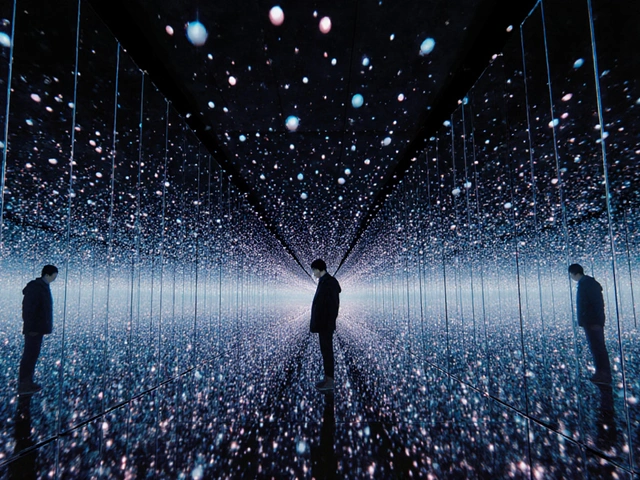
For centuries, art was something you looked at-frozen in time, silent, unmoving. A portrait stared back. A landscape held its breath. But what if art could breathe? What if it could twist, spin, ripple, or respond to you? That’s the quiet revolution happening in kinetic art.
What Exactly Is Kinetic Art?
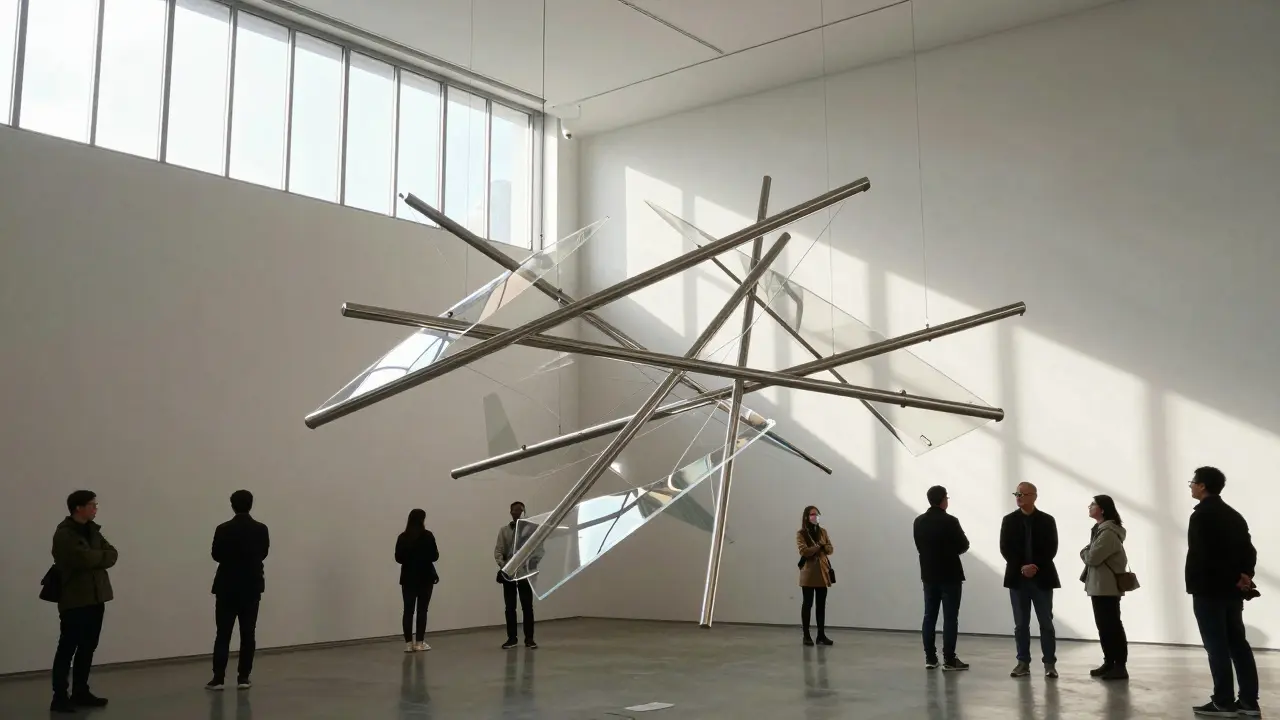
Kinetic art isn’t just sculpture that moves. It’s art designed around motion as its core element. Unlike traditional sculptures that rely on form and texture, kinetic art uses physical movement-whether from wind, motors, magnets, or human interaction-as part of its expression. The first true kinetic sculptures appeared in the 1920s, pioneered by artists like Naum Gabo and Alexander Calder. Gabo’s Linear Construction in Space used transparent plastic and metal rods to create depth that shifted as you walked around it. Calder’s mobiles, suspended and balanced, danced with air currents, turning galleries into living rooms for motion.
Today, kinetic art has evolved far beyond wind-powered metal rods. Modern pieces use sensors, LEDs, robotics, and even AI to respond to viewers, weather, or sound. The movement isn’t decorative anymore-it’s the message.
Breaking the Frame: Kinetic Art vs. Static Art
Traditional art forms-oil paintings, stone carvings, bronze statues-were made to last. They were about permanence. Kinetic art embraces impermanence. A piece might change shape every minute. It might disappear when no one is watching. This challenges everything we thought art was supposed to be.
Think about the Monet paintings in museums. You stand in front of them. You take a photo. You move on. With kinetic art, you don’t just observe-you participate. The 2023 installation Flow State by artist Lina Chen used motion sensors to alter the color and flow of water-based projections based on how fast people walked past it. The faster you moved, the more chaotic the patterns became. The slower you stood, the calmer it grew. The artwork didn’t just reflect emotion-it was shaped by yours.
This shifts the role of the viewer. You’re no longer a spectator. You’re a collaborator.

Technology Meets Tradition
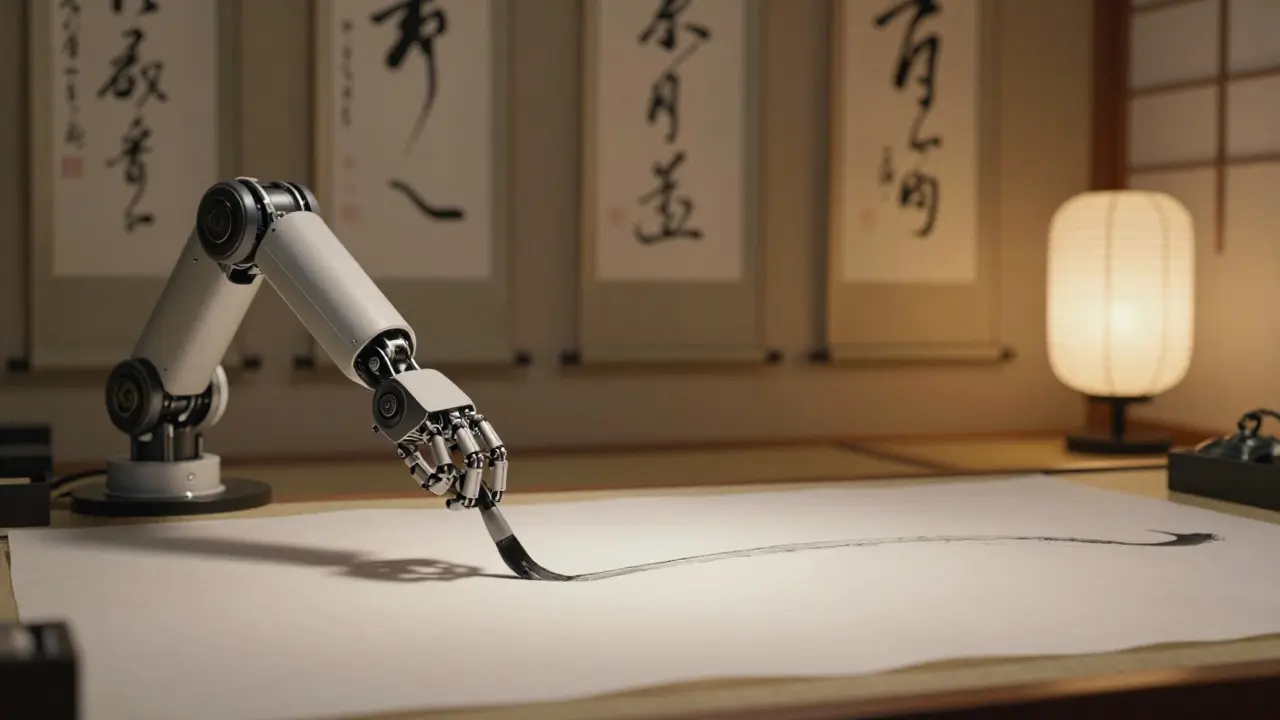
Kinetic art doesn’t reject tradition-it reimagines it. Take the ancient art of calligraphy. In 2024, Japanese artist Hiroshi Tanaka created Brush of the Wind, a kinetic installation that uses robotic arms to recreate brushstrokes from classical Japanese poetry. Each stroke is drawn in real time by a machine, but the motion is based on the breathing patterns of visitors recorded earlier. The result? A living poem that changes with every audience.
Or consider architecture. Buildings like the Dynamic Façade in Singapore use motorized panels that open and close based on sunlight and temperature. It’s not just energy-efficient-it’s a sculptural performance that changes with the day. This blurs the line between building and artwork. Is it architecture? Is it sculpture? Maybe it’s both.
Kinetic art is proving that old forms can be revived not by preserving them, but by making them alive.
Why It Matters Now More Than Ever
We live in a world of constant motion. Our phones buzz. Our feeds scroll. Our cities pulse with traffic and light. Static art feels out of step. Kinetic art mirrors our reality.
Studies from the University of Tokyo’s Art and Perception Lab in 2025 found that viewers spent 3.2 times longer engaging with kinetic installations than with static ones. More importantly, they reported stronger emotional connections-37% said they felt the art "understood" them. That’s not a coincidence. Motion creates empathy. Movement signals life.
Art institutions are taking notice. The Tate Modern’s 2025 exhibition Moving Minds featured 87 kinetic works and drew over 1.2 million visitors-more than any other exhibition in its history. The Whitney Museum in New York now has a permanent kinetic wing. Even the Louvre, once the temple of stillness, added a rotating kinetic interpretation of the Venus de Milo in 2024. It doesn’t replace the original. It talks to it.
The New Rules of Art
Kinetic art is forcing a rewrite of what art can be. Here are three shifts it’s driving:
- Time as a medium. Traditional art exists in space. Kinetic art exists in time. A piece might take 47 seconds to complete its cycle. That’s part of its value.
- Impermanence as beauty. A kinetic piece doesn’t need to last 100 years. Its power is in its fleeting nature. It’s like a firework-you don’t keep the smoke. You remember the light.
- Interaction as necessity. If no one moves near it, the art doesn’t complete itself. It’s not passive. It’s responsive.
These aren’t just trends. They’re new standards. Artists now design with motion in mind from the first sketch. Engineers collaborate with sculptors. Programmers write code that becomes part of the brushstroke.
What’s Next?
The next frontier? Art that learns. In 2026, a prototype called Echo Form debuted in Basel. Using machine learning, it analyzed the facial expressions and movement patterns of thousands of viewers over six months. Then, it created a new kinetic sculpture unique to each person who stood in front of it. No two experiences were alike. One viewer saw slow, fluid waves. Another saw sharp, staccato pulses. The art remembered them.
It’s not science fiction. It’s happening. And it’s changing how we define creativity itself.
Kinetic art doesn’t replace the Mona Lisa. It asks: What if she blinked? What if she smiled differently every time you looked? What if she moved because you did?
Is kinetic art considered real art by traditional institutions?
Yes. Major museums like the Tate Modern, MoMA, and the Centre Pompidou have had permanent kinetic art collections since the 1980s. In 2024, the Louvre included a kinetic reinterpretation of a classical statue in its main gallery. Institutions no longer see motion as a gimmick-they see it as a legitimate artistic language.
Can kinetic art be collected or sold?
Absolutely. High-end kinetic pieces sell for hundreds of thousands to millions. In 2025, a 1967 mobile by Jean Tinguely sold for $4.2 million at Christie’s. Collectors now buy not just the object, but the mechanism, the software, and the documentation of how it moves. Provenance includes maintenance logs and motion patterns.
Do you need technical skills to create kinetic art?
Not necessarily, but collaboration is key. Many artists partner with engineers, robotics experts, or coders. Some use off-the-shelf motion kits. Others build custom systems. What matters isn’t the tool-it’s the idea. A simple wind-driven piece can be just as powerful as a robot with AI.
Is kinetic art only for galleries and museums?
No. Public spaces are now the biggest canvas. Kinetic installations appear in subway stations, parks, shopping malls, and even hospital waiting rooms. In Toronto, a kinetic light sculpture in a transit hub changes color based on the weather outside. In Tokyo, a fountain responds to the rhythm of footsteps. Art is leaving the frame-and entering daily life.
Does kinetic art require electricity?
Not always. Many early kinetic works used wind, water, or human touch. Today, some use solar power, magnetic fields, or even body heat. The key is motion-not power. A sculpture that turns with the breeze can be just as compelling as one powered by a motor.