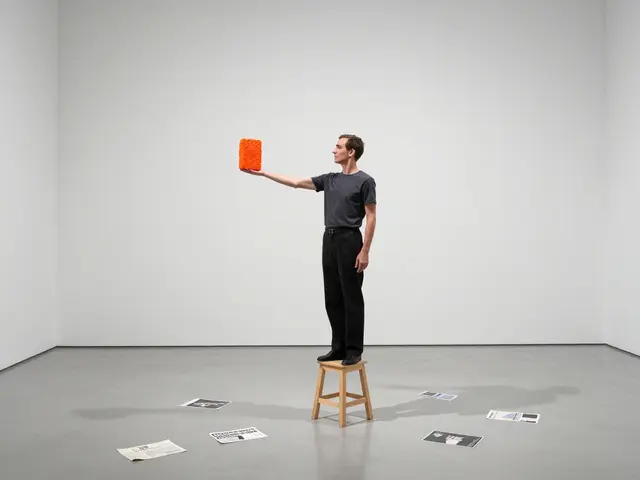
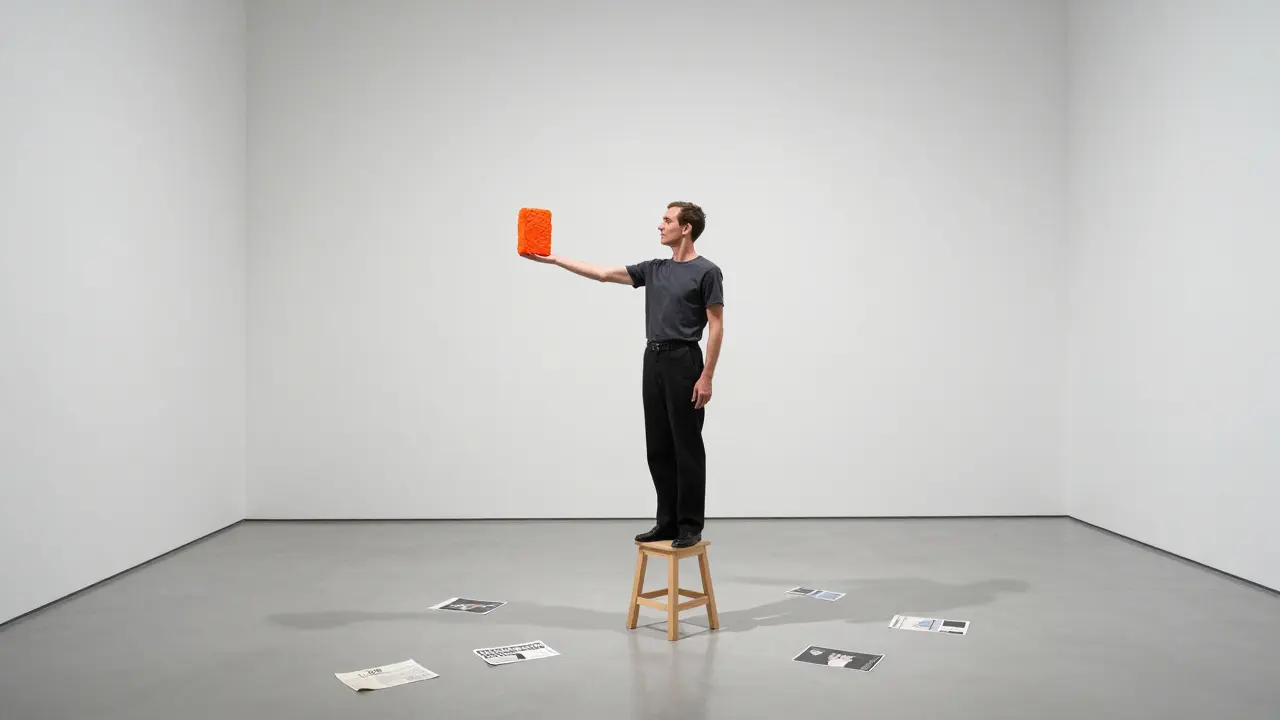
Imagine buying a ticket to a gallery only to find the artist handing out oranges. Or paying for a performance where the main action is someone breathing quietly into a microphone. This wasn't a prank; it was Fluxus. For decades, this radical group of artists dismantled everything we thought we knew about what art could be. They didn't just paint differently; they argued that painting itself was part of the problem.
If you look back at traditional art history, you see a clear line from Renaissance masters to modernists like Picasso. But Fluxus cut that line. They asked a dangerous question: Why must art be an object? Why can't it be an idea, a moment, or even a joke? By the time the movement peaked in the late 1960s and early 1970s, they had forced museums, critics, and collectors to redefine creativity from the ground up.
The Birth of an Idea
Fluxus didn't start with a manifesto or a grand declaration. It started with a man named George Maciunas, a Lithuanian-American artist and the central organizer of the Fluxus movement. In 1961, Maciunas was frustrated by what he saw as the commercialization of art. He believed galleries were turning creativity into expensive commodities for the wealthy elite. He wanted to return art to everyday life.
Maciunas coined the term "Fluxus" in 1961, derived from the Latin word *fluxus*, meaning flow or flux. The name suggested constant change, fluidity, and a rejection of static objects. He envisioned an international community of artists who would collaborate across disciplines-music, poetry, visual arts, and theater. Unlike previous avant-garde movements that sought to shock for shock's sake, Fluxus aimed to blur the boundary between art and life entirely.
The movement gained momentum through mail art and small performances called "events." Artists sent postcards, stamps, and instructions to each other around the world. These weren't just letters; they were collaborative artworks. This network allowed Fluxus to spread rapidly without needing expensive gallery spaces. It was a grassroots revolution fueled by postage stamps and photocopies.
Key Figures and Their Radical Ideas
While Maciunas organized the logistics, other artists provided the philosophical depth and creative spark. One of the most influential figures was Yoko Ono, a Japanese multimedia artist known for her conceptual works and participation in Fluxus events. Her piece "Cut Piece," performed in 1964, involved sitting on stage while audience members cut away pieces of her clothing. It was a raw exploration of trust, vulnerability, and the role of the viewer in creating the art.
Another pivotal figure was Nam June Paik, a Korean-American artist often credited as the founder of video art. Paik used television sets and electronics to challenge the passive consumption of media. He arranged TVs in sculptures, distorted signals, and created interactive installations. His work predicted our current digital age, where screens are everywhere, yet we rarely question their presence.
Allan Kaprow, an American painter and theorist who developed the concept of 'Happenings' also influenced Fluxus, though he later distanced himself from the label. Kaprow introduced "Happenings," which were unscripted events involving ordinary actions in non-theatrical spaces. These ideas merged with Fluxus principles to create art that was ephemeral and participatory. You couldn't buy a Happening; you could only experience it.

Democratizing Creativity Through Scores
One of Fluxus's most lasting contributions was the invention of the "event score." Instead of selling a sculpture or a painting, artists sold instructions. These scores were simple texts that told the performer (or the reader) what to do. For example, Dick Higgins, an American artist and writer who co-founded the Something Else Press and promoted intermedia art created scores that encouraged open interpretation. The beauty lay in the execution, not the object.
| Artist | Score Title | Action Described | Impact |
|---|---|---|---|
| Yoko Ono | Grapefruit | Instructions like "Peel an orange slowly and reverently" | Turned mundane acts into meditative rituals |
| Alison Knowles | Piece for John Cage | "Eat a raw onion" | Challenged notions of taste and endurance in art |
| Ben Vautier | I Am Always Happy | Repeat the phrase until you believe it | Explored psychological manipulation and repetition |
This approach democratized art. You didn't need a degree in fine arts to participate. If you followed the instructions, you became the artist. This shifted power away from institutions and toward individuals. It also made art accessible to people who couldn't afford museum tickets. A score could be printed on a napkin or whispered in conversation.
Anti-Art and the Rejection of Commerce
Fluxus was fiercely anti-commercial. Maciunas famously tried to dissolve the movement in 1963 because he feared it was becoming too trendy. He wanted to keep it pure, free from market forces. To this end, Fluxus artists often sold their works for very low prices, sometimes just a few dollars. They distributed catalogs that looked like cheap pamphlets rather than luxury brochures.
This stance directly challenged the art market's obsession with rarity and value. Traditional galleries relied on scarcity to drive up prices. Fluxus embraced abundance. They produced multiples-identical copies of prints, books, and objects. This strategy undermined the idea that art must be unique to be valuable. Instead, they argued that the idea behind the work mattered more than its physical form.
Critics at the time dismissed Fluxus as nonsense or childish play. Some accused them of being lazy, suggesting that if anyone could make art, then no one really could. However, this criticism missed the point. Fluxus wasn't about skill; it was about perception. By removing technical barriers, they forced viewers to focus on context, intent, and experience.

Legacy in Contemporary Culture
You might think Fluxus ended when the group disbanded in the 1970s, but its influence persists today. Look at any modern installation art, performance piece, or interactive exhibit, and you'll see traces of Fluxus thinking. Museums now regularly host events that invite audience participation, echoing the spirit of Happenings and event scores.
Digital culture owes much to Fluxus as well. Memes, viral videos, and online challenges operate on similar principles: simple instructions, widespread sharing, and user-generated content. When you share a meme, you're participating in a kind of collective art-making that Fluxus pioneered. The internet has become the ultimate Fluxus platform, allowing ideas to flow freely across borders.
Even contemporary artists like Marina Abramović continue to push boundaries using techniques inspired by Fluxus. Her endurance performances rely on the same vulnerability and audience interaction seen in Yoko Ono's early works. The connection is clear: art is not something you hang on a wall; it's something you live through.
Why Fluxus Still Matters Today
In a world saturated with images and products, Fluxus reminds us to pause and question. It teaches us that creativity isn't confined to studios or galleries. It happens in kitchens, streets, and conversations. By rejecting elitism, Fluxus opened doors for diverse voices and unconventional expressions.
The movement also highlights the importance of collaboration. Fluxus artists worked together, shared resources, and supported each other's experiments. This cooperative model contrasts sharply with today's competitive art scene, where individual success often overshadows collective growth. Embracing Fluxus values means prioritizing connection over competition.
Ultimately, Fluxus transformed the definition of art by expanding its scope. It showed us that art can be fleeting, conceptual, and deeply personal. It challenged us to look beyond objects and consider experiences, ideas, and relationships. In doing so, it left an indelible mark on how we understand and engage with creativity.
Who founded the Fluxus movement?
George Maciunas is credited with founding Fluxus in 1961. He organized the first Fluxus festival and created the initial manifestos that defined the movement's goals. While many artists contributed, Maciunas provided the structure and vision.
What is an event score in Fluxus?
An event score is a set of instructions given to performers or participants. Instead of creating a physical artwork, the artist provides directions for an action or experience. Examples include eating an onion or peeling an orange slowly. The act of following the score becomes the art.
How did Fluxus differ from Dadaism?
While both movements rejected traditional art norms, Dadaism focused on absurdity and chaos to protest World War I. Fluxus, emerging after World War II, emphasized simplicity, humor, and integration with daily life. Fluxus was less about destruction and more about reconstruction through new forms of expression.
Did Fluxus artists sell their work?
Yes, but often at very low prices. Fluxus artists opposed the commercialization of art. They sold multiples, such as printed scores and small objects, for minimal cost. This approach aimed to make art accessible and remove financial barriers to ownership.
Is Fluxus still active today?
As a formal organization, Fluxus dissolved in the 1970s. However, its ideas continue to influence contemporary art, performance, and digital culture. Many modern artists cite Fluxus as a major inspiration for their experimental practices.