
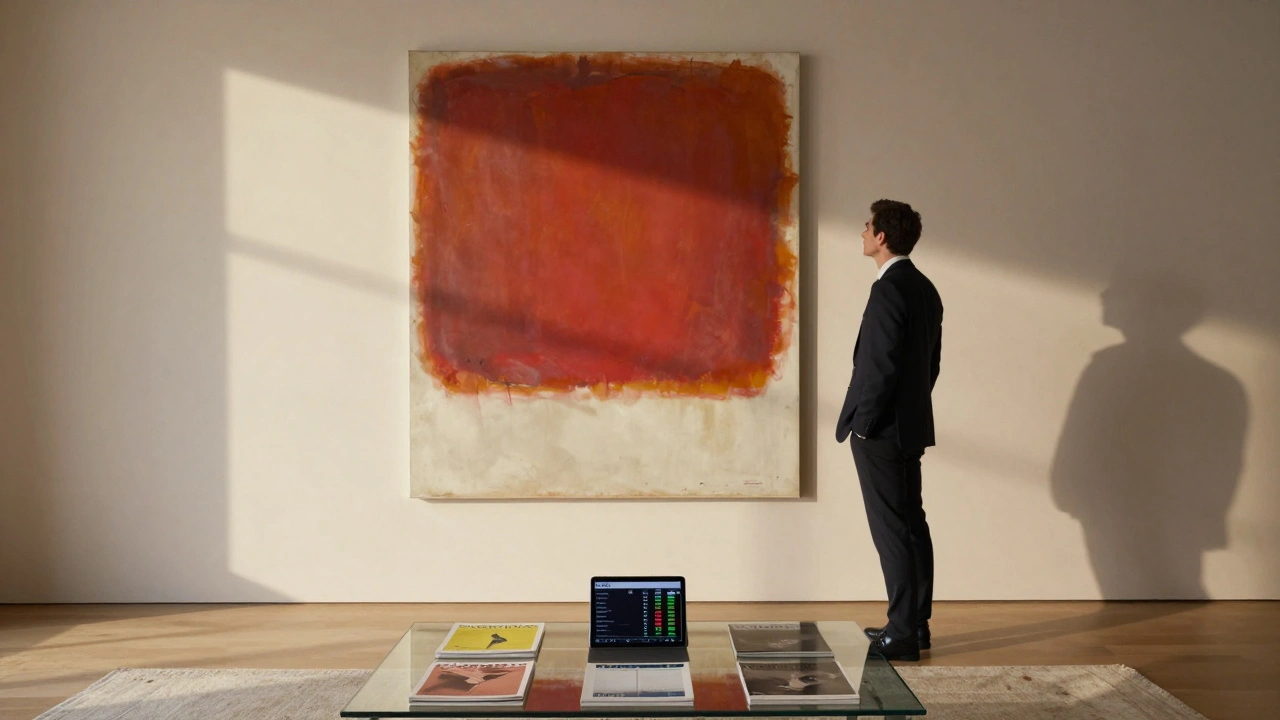
Modern Art Investment Calculator
Art Investment Calculator
Calculate projected returns after accounting for all investment costs
Investment Results
Projected Value After Holding Period
Before costs and taxes
Total Costs
Premium, storage, insurance, and taxes
Net Value After Costs
Your actual return on investment
Note: Modern art typically requires 7-12 years to appreciate significantly. Market conditions can affect returns. Always consider provenance, condition, and artist reputation when investing.
Modern art isn’t just about bold colors and abstract shapes-it’s also a growing financial asset class. People are putting real money into paintings, sculptures, and installations not just because they love them, but because they expect returns. In 2024, the global modern art market hit $28.3 billion, up 12% from the year before. That’s not a bubble-it’s a shift. More investors are treating art like stocks or real estate, and the rules are starting to change.
What Counts as Modern Art?
Modern art typically refers to works created between the 1860s and the 1970s. Think Picasso, Pollock, Kandinsky, Warhol, and Rothko. It’s different from contemporary art, which is made today. But in the market, the lines blur. Galleries and auction houses often group post-war modern artists with living artists under the same sales category. That’s important because it affects pricing. A 1960s Frank Stella might sell for $3 million, while a 2023 painting by a rising star might go for $2.5 million. The market values recognition, scarcity, and historical weight more than age.
When you’re looking to invest, focus on artists with established auction records. The top 100 modern artists account for over 70% of total sales volume. Artists like Jean-Michel Basquiat, Mark Rothko, and Willem de Kooning consistently appear in Christie’s and Sotheby’s top lots. Their works have been tracked for decades, so you can see how prices moved through recessions, booms, and pandemics.
How Do You Make Money From Modern Art?
You don’t earn dividends or interest from a painting. Profit comes from buying low and selling high. But timing matters. Art doesn’t move like the stock market. A piece might sit in a collector’s home for 15 years before resurfacing at auction. The average holding period for modern art is 7-12 years. That’s not a quick flip-it’s a long-term bet.
Historical data shows that top-tier modern art has returned an average of 8.5% annually over the last 30 years, outperforming the S&P 500 in six of the last ten decades. During the 2008 financial crisis, while stocks dropped 37%, the top 10% of modern artworks held their value or even rose slightly. In 2020, during lockdowns, art sales surged as wealthy buyers moved capital away from volatile markets. That’s when a Gerhard Richter painting sold for $37 million-up 40% from its last auction in 2017.
But not all art performs the same. A painting by an emerging artist with no auction history might cost $20,000 today and never sell for more than $30,000. Meanwhile, a small Rothko from the 1950s could double in value over five years. The difference? Provenance, condition, exhibition history, and critical recognition.
How Is Modern Art Valued?
There’s no formula like P/E ratios or discounted cash flows. Art valuation is messy. Auction houses use three main tools: comparables, historical sales data, and expert opinion. They look at similar works by the same artist that sold in the last three years. If a 1955 de Kooning abstract sold for $18 million last year, and your piece is the same size, same period, and in better condition, you might expect $20-22 million.
Condition matters more than you think. A painting with visible cracks, repaints, or poor restoration can lose 30-50% of its value. Provenance-the documented history of ownership-adds trust. If a piece was owned by a famous collector, exhibited at MoMA, or mentioned in a major catalog, it’s worth more. That’s why a Warhol self-portrait that once belonged to Andy Warhol’s dealer sold for $195 million in 2022, while another from the same series sold for $65 million without that pedigree.
Third-party appraisal services like Artnet and Artprice track over 30 million auction results. Their databases let you see trends. For example, between 2015 and 2025, prices for female modern artists rose 180%, while male artists’ prices rose 45%. That’s not just social progress-it’s market correction. Buyers are catching up.
Costs You Can’t Ignore
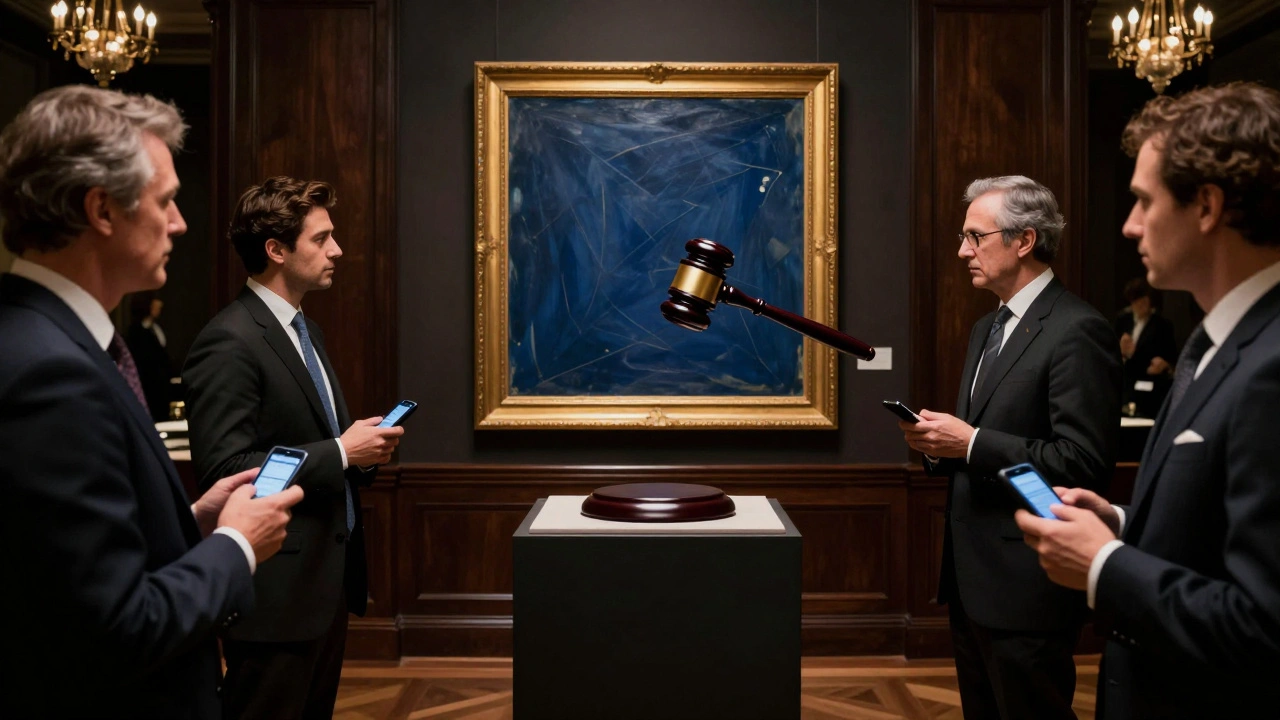
Buying modern art isn’t like buying a stock online. There are hidden fees. Auction houses charge buyers premiums-typically 15-25% on top of the hammer price. So if you bid $1 million and win, you pay $1.2 million or more. That’s before insurance, shipping, storage, and conservation.
Storage costs $1,500-$5,000 a year per piece, depending on climate control and security. Insurance runs 0.5-1% of the artwork’s value annually. For a $2 million painting, that’s $10,000-$20,000 a year just to keep it safe. If you’re not displaying it, you’re paying to keep it in a vault.
And then there’s taxes. In the U.S., art is classified as a collectible. Long-term capital gains on art are taxed at 28%, not the 15-20% rate for stocks. If you sell a painting you bought for $500,000 and it’s worth $2 million after 10 years, you owe $406,000 in federal taxes alone. That’s a big chunk out of your profit.
Some investors use art funds or fractional ownership platforms to spread risk and reduce costs. But those come with management fees (2-4% annually) and lock-up periods of 5-7 years. You’re giving up control for convenience.
Who’s Buying Modern Art Today?
The biggest buyers aren’t museums-they’re ultra-high-net-worth individuals. In 2024, 62% of modern art sales went to collectors with over $30 million in assets. China, the U.S., and the U.K. accounted for 70% of global spending. But new markets are rising. India, Brazil, and the Gulf states are buying more aggressively. In 2023, Saudi Arabia’s PIF bought three major modern works for over $100 million total.
Family offices are also getting involved. Instead of keeping cash in low-yield bonds, they’re allocating 1-5% of portfolios to art. That’s because art has low correlation to traditional markets. When stocks crash, art doesn’t always follow. That makes it a hedge.
But beware: the market is concentrated. Just 10% of collectors buy 80% of the high-value pieces. If you’re not part of that network, getting access to the best works is hard. Private sales, not auctions, handle most of the top-tier trading. You need connections-or a dealer you trust.
How to Start Investing in Modern Art
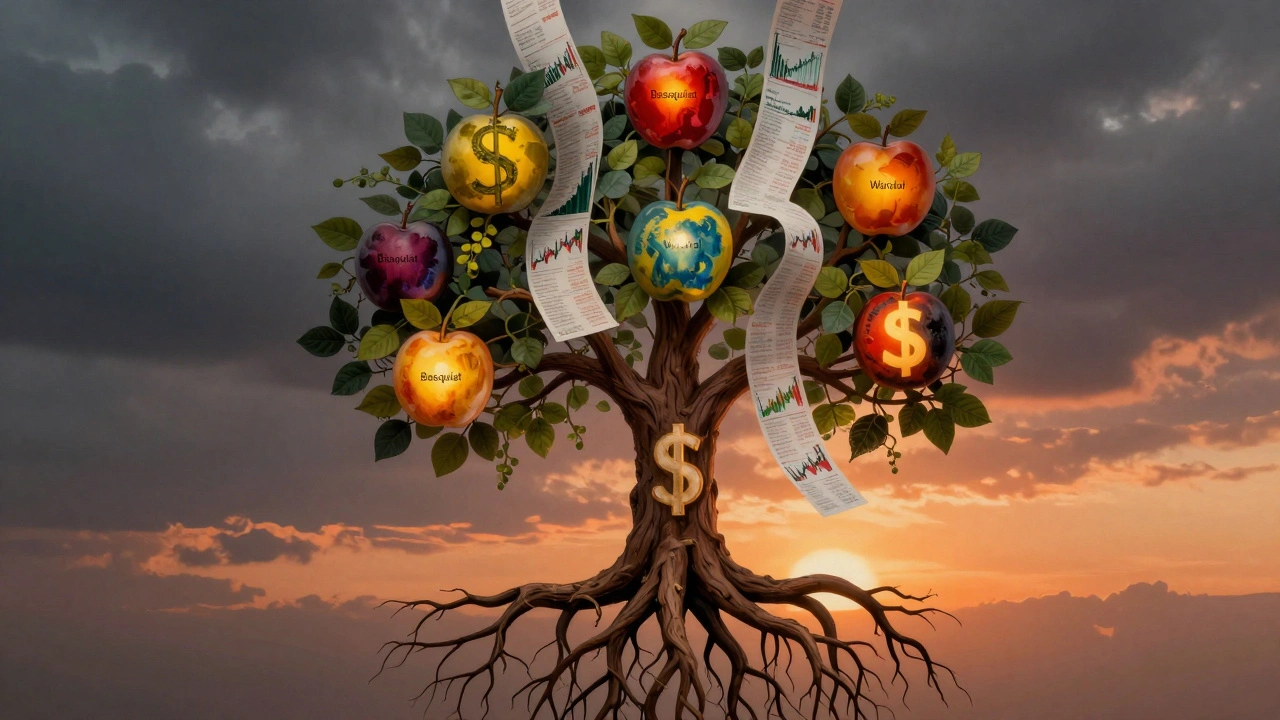
If you’re new, don’t start with a $5 million Picasso. Start small. Look at prints, editions, or works by lesser-known artists from the modern era. A signed lithograph by Miró might cost $5,000. A small oil by a post-war European artist could be $15,000. These are entry points with lower risk.
Here’s how to begin:
- Define your budget and time horizon. Are you investing for 5 years or 20?
- Focus on artists with auction history. Use Artnet or Artprice to check past sales.
- Buy from reputable galleries or auction houses with clear provenance.
- Get an independent condition report before purchasing.
- Factor in all costs: premium, insurance, storage, taxes.
- Hold for at least 7 years to give value time to grow.
Don’t buy what you love. Buy what has track record. You can love art and invest in it-but don’t let emotion override analysis.
When to Sell
Selling art is harder than buying it. There’s no ticker symbol. You can’t just click ‘sell.’ You need to find a buyer, negotiate, and wait. Timing matters. The best times to sell are during economic booms, when wealthy buyers are confident, and during major art fairs like Art Basel or Frieze.
Watch auction calendars. If a similar piece is being offered next month, hold off. If your artist is getting a major museum retrospective, that’s your moment. Public exposure lifts prices. A 2022 retrospective of Lee Krasner at MoMA pushed her auction prices up 300% in the following year.
But don’t wait too long. If a piece hasn’t moved in five years, it might be stuck. The market rewards liquidity. If you need cash, don’t hold on hoping for a miracle. Art isn’t a guaranteed return-it’s a speculative asset with high friction.
Final Thoughts
Investing in modern art isn’t for everyone. It’s slow, expensive, and opaque. But for those who understand the rules, it’s one of the few asset classes that can grow without being tied to Wall Street. It’s art, yes-but also a store of value, a diversifier, and sometimes, a rare opportunity.
The key isn’t predicting which painting will explode. It’s understanding the system: who buys, how prices move, what adds value, and what costs eat into profits. Do your homework. Work with experts. And remember-this isn’t about decorating your walls. It’s about building wealth, one brushstroke at a time.
Is modern art a good investment compared to stocks?
Modern art has historically returned about 8.5% annually over the past 30 years, slightly outperforming the S&P 500 in some decades. But unlike stocks, it has no dividends, low liquidity, and high transaction costs. It’s a long-term, illiquid asset best used to diversify a portfolio-not replace it.
Can you lose money investing in modern art?
Yes. Many artworks never appreciate. Artists without auction history, poor provenance, or damaged condition can lose value. A painting bought for $50,000 might only sell for $20,000 five years later if market taste shifts or the artist fades from relevance. Art is speculative by nature.
How do I know if a piece is authentic?
Always ask for a certificate of authenticity from a recognized expert or foundation tied to the artist. Check the provenance chain-previous owners, exhibition records, and catalog entries. Reputable auction houses and galleries provide detailed documentation. If anything is missing, walk away.
Do I need to pay taxes when I sell modern art?
Yes. In the U.S., art is taxed as a collectible. Long-term capital gains are taxed at 28%, not the lower rate for stocks. You may also owe state taxes and the Net Investment Income Tax. Always consult a tax advisor familiar with art sales before selling.
What’s the cheapest way to start investing in modern art?
Start with limited-edition prints, artist books, or small works by emerging modern-era artists. Signed lithographs by Miró or Ernst can cost $3,000-$10,000. These have lower entry points and still carry the artist’s name and historical context. Avoid buying online without verification.