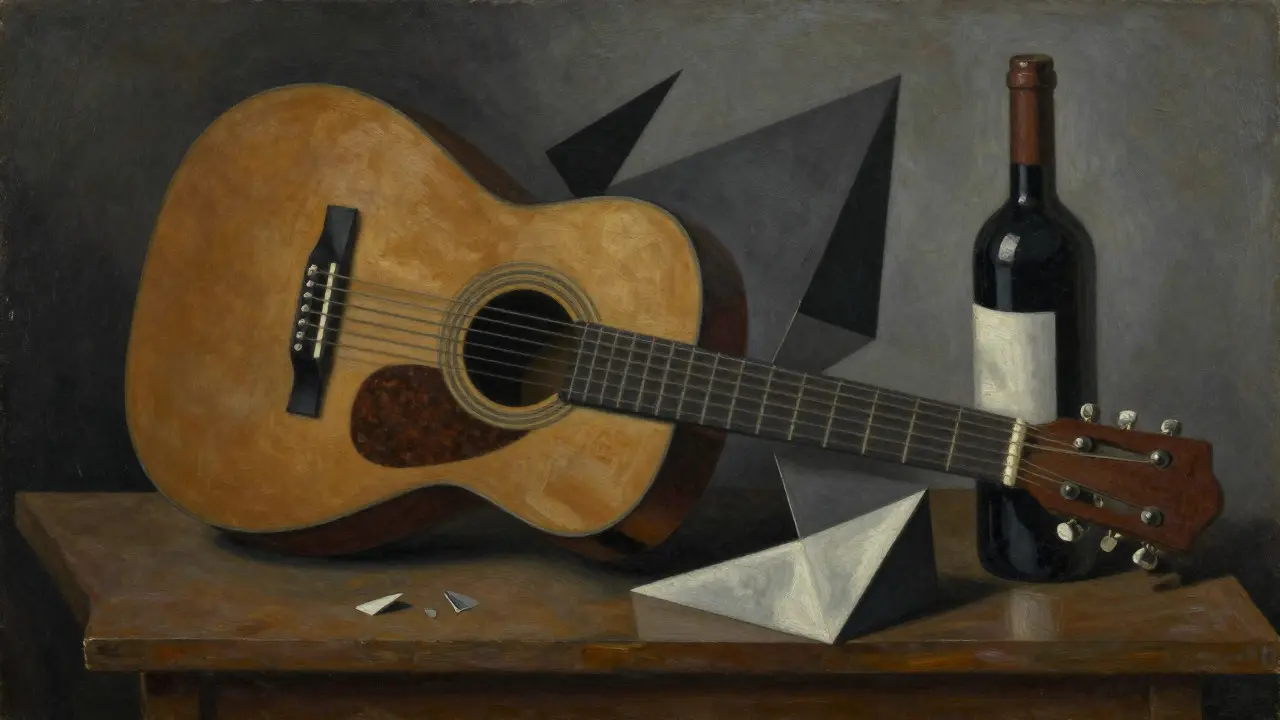
Imagine looking at a guitar. You see the neck, the sound hole, the strings. Now imagine seeing all of those parts at once, from every angle, smashed together on a flat canvas. That is exactly what Cubism is an avant-garde art movement that revolutionized European painting and sculpture by breaking objects into geometric shapes and presenting multiple viewpoints simultaneously. It wasn't just a new style; it was a total rethink of how we see the world.
Before this movement, artists tried to copy reality like a photograph. They used perspective to create depth on a flat surface. But in the early 20th century, two men decided that photography had already solved the problem of copying reality. So, they asked a different question: What if we painted not just what we see, but what we know? This shift didn't just change painting; it changed architecture, literature, and design for the next hundred years.
The Birth of a Revolution in Paris
The story starts in Paris, around 1907. The city was buzzing with ideas about science, time, and space. Albert Einstein was publishing theories about relativity, suggesting that time and space weren't fixed. Meanwhile, artists were exposed to African masks and Iberian sculpture, which favored abstract forms over realistic details.
Pablo Picasso created Les Demoiselles d'Avignon, a groundbreaking painting that challenged traditional representation by depicting five female nudes with fragmented, angular features inspired by African art. This painting is often called the first Cubist work. It looks jarring today, but back then, it was shocking. The faces looked like masks, and the bodies were broken into sharp angles. There was no smooth shading or soft curves. Just raw, geometric structure.
Then came Georges Braque, who became Picasso's close collaborator. Braque brought a methodical approach to the chaos, focusing on the structural integrity of forms and developing the language of Cubism alongside Picasso. Together, they worked so closely that their paintings from this period are almost impossible to tell apart. They weren't trying to be original individuals; they were trying to solve a puzzle. How do you paint a three-dimensional object on a two-dimensional surface without using illusionistic depth?
Analytical vs. Synthetic: Two Phases of Change
Cubism didn't stay the same. It evolved quickly, splitting into two main phases that changed how artists approached materials and color.
| Feature | Analytical Cubism (1909-1912) | Synthetic Cubism (1912-1914) |
|---|---|---|
| Color Palette | Muted browns, grays, ochres | Brighter colors, varied tones |
| Technique | Fragmenting objects into small planes | Assembling simple shapes and textures |
| Materials | Oil paint only | Collage elements (paper, wallpaper) |
| Goal | Analyze form from multiple angles | Synthesize new realities from fragments |
In the Analytical phase, Picasso and Braque broke objects down into tiny, overlapping shards. They used a monochromatic palette so the viewer would focus on the structure, not the color. It looks like a window shattered into a million pieces. The subject matter-usually still lifes or musicians-became nearly unrecognizable. You had to look hard to find the bottle or the guitar.
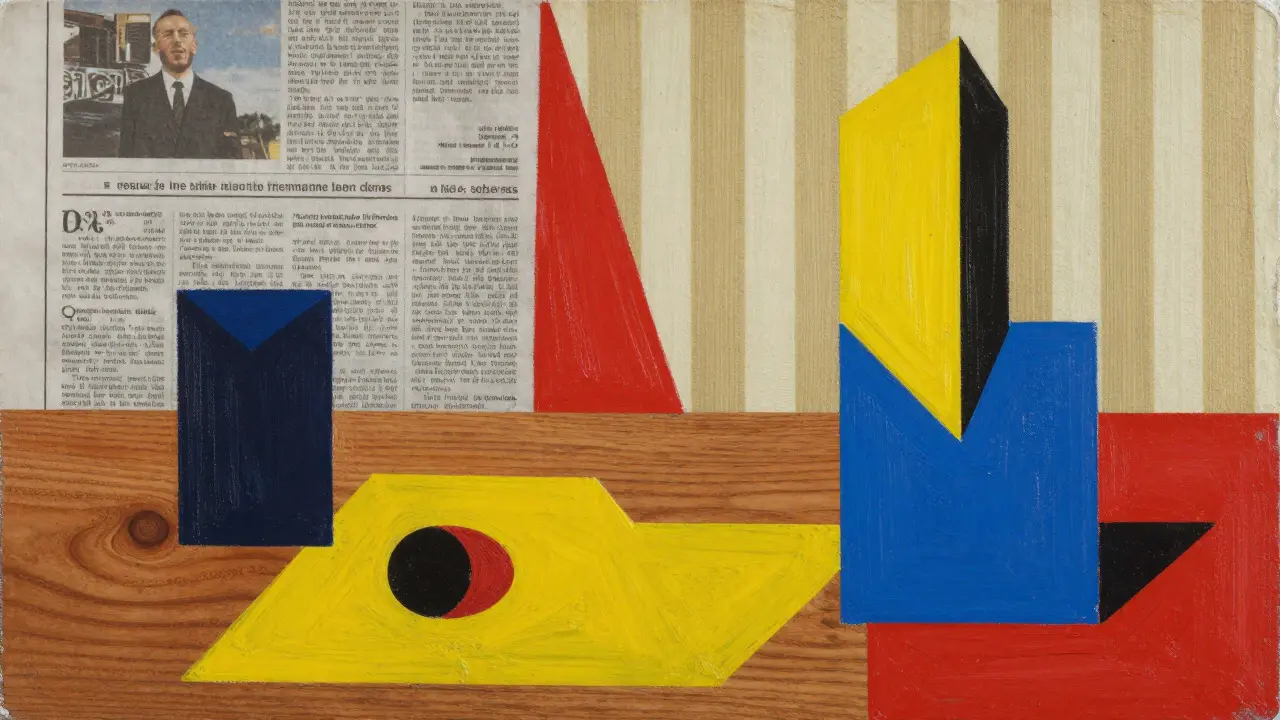
Then came the Synthetic phase. This is where things got playful. Instead of breaking things down, they started building them up. They introduced Collage, a technique where artists paste real-world materials like newspaper clippings, wallpaper, or fabric onto the canvas to blur the line between art and reality. Why paint a newspaper when you can glue a real piece of newspaper onto the canvas? This move was radical. It said that art doesn't have to be made only of paint. It can be made of anything. This idea opened the door for pop art, assemblage, and mixed media decades later.
Why It Matters: Changing How We See
You might think Cubism is just an old style that museums love. But its impact goes way deeper. Before Cubism, art was about creating an illusion. After Cubism, art was about exploring truth. The Cubists argued that seeing an object from one angle is a lie. To truly understand a chair, you need to see its front, back, top, and sides. By combining these views, they captured the essence of the object, not just its appearance.
This mindset spread beyond painting. Architects started designing buildings with fragmented facades. Writers like James Joyce and William Faulkner experimented with stream-of-consciousness, jumping around in time and perspective just like Cubist painters jumped around in space. Even fashion designers began playing with asymmetry and geometric patterns.
Consider how movies work today. A film editor cuts between shots of a character's face, their hands, and the environment. This editing technique mirrors Cubist principles. We don't see everything at once in real life, but cinema allows us to experience multiple perspectives rapidly. Cubism taught us that fragmentation isn't chaos; it's a way to show complexity.
The Key Players Beyond Picasso and Braque
While Picasso and Braque led the charge, they weren't alone. Other artists joined the movement, each adding their own twist.
- Juan Gris was known for his highly structured and colorful approach to Cubism, often using precise geometric compositions that resembled mathematical equations. He called his style "Synthetic Cubism" before anyone else did, emphasizing clarity and order.
- Fernand Léger focused on industrial themes and cylindrical forms, bringing a mechanical aesthetic to Cubism that reflected the modern urban experience. His work feels more robust and less fragile than Picasso's.
- Robert Delaunay explored color theory and light, leading to Orphism, a branch of Cubism that prioritized vibrant colors over geometric structure. He believed color could create rhythm and movement on its own.
These artists showed that Cubism wasn't a rigid rulebook. It was a toolkit. You could use it to explore mathematics, industry, or pure color. This flexibility is why the movement lasted so long and influenced so many other styles.
Legacy: The Ripple Effect on Modern Life
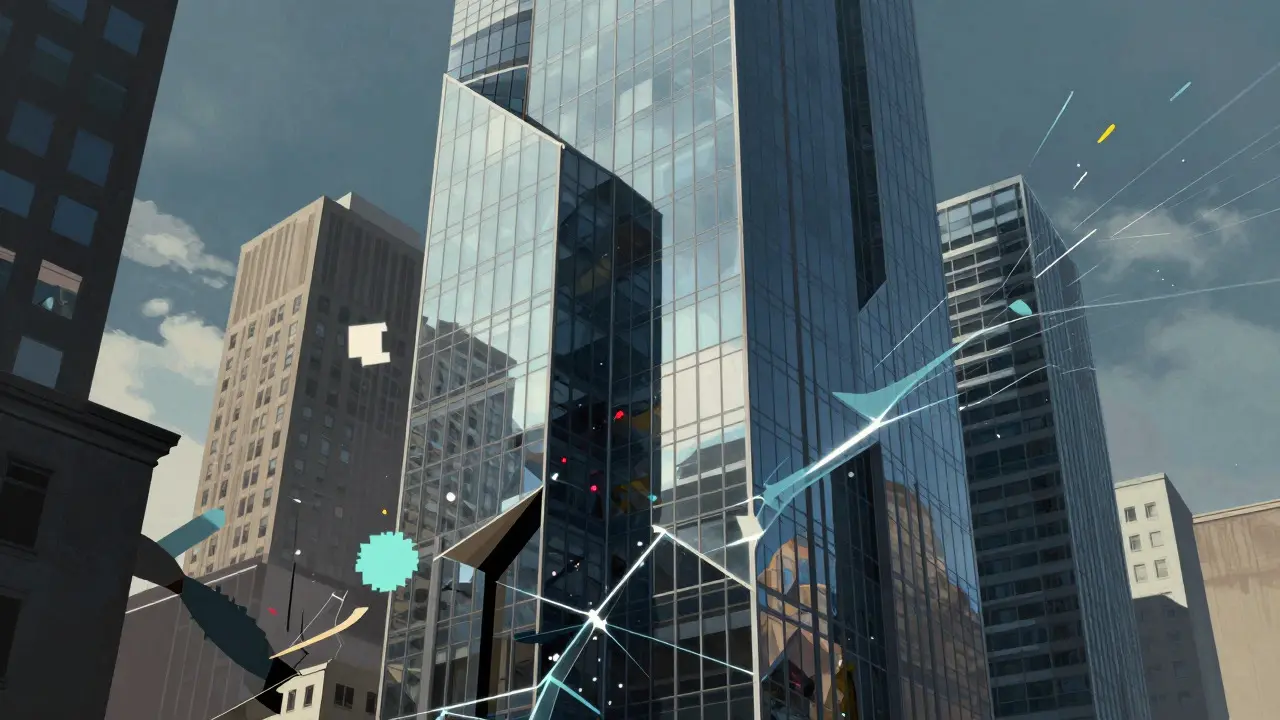
If you walk through a modern city, you're surrounded by Cubism. Look at skyscrapers with jagged edges. Look at graphic designs that layer text and images. Look at video games that render characters from multiple angles. All of this traces back to the early 1900s in Paris.
Cubism also changed how we value creativity. It proved that art doesn't have to be beautiful in a traditional sense. It can be intellectual, challenging, and strange. This paved the way for Abstract Expressionism, Minimalism, and Conceptual Art. Artists felt free to experiment because Cubism had already broken the rules.
Today, when we take selfies from weird angles or edit photos to combine multiple exposures, we're doing something very Cubist. We're manipulating perspective to tell a story. We're accepting that reality is subjective. That's the lasting gift of this movement. It taught us to look closer, to question our assumptions, and to see the world in pieces that make a whole.
Who invented Cubism?
Pablo Picasso and Georges Braque are credited with inventing Cubism between 1907 and 1914. While Picasso created the initial shock with Les Demoiselles d'Avignon, Braque helped develop the systematic approach that defined the movement. They worked so closely during this period that their styles became nearly indistinguishable.
What is the difference between Analytical and Synthetic Cubism?
Analytical Cubism (1909-1912) involved breaking objects down into small, fragmented planes using muted colors to focus on structure. Synthetic Cubism (1912-1914) reversed this process, building up images from simpler shapes and incorporating collage elements like newspaper and wallpaper. Synthetic Cubism was brighter and more playful.
Why did Cubist artists use collage?
Artists used collage to challenge the definition of art. By pasting real objects like newspaper clippings onto the canvas, they blurred the line between representation and reality. It suggested that everyday materials could be artistic and questioned the necessity of skilled painting techniques.
How did Cubism influence other art movements?
Cubism influenced Futurism, Constructivism, De Stijl, and Abstract Expressionism. Its emphasis on geometric forms and multiple perspectives inspired architects and designers. It also encouraged writers to experiment with narrative structure, leading to modernist literature that played with time and perspective.
Is Cubism still relevant today?
Yes, Cubism remains highly relevant. Its principles appear in digital design, photography, and architecture. The idea of presenting multiple viewpoints simultaneously is central to modern media consumption. Understanding Cubism helps us appreciate how contemporary art and design manipulate space and perception.