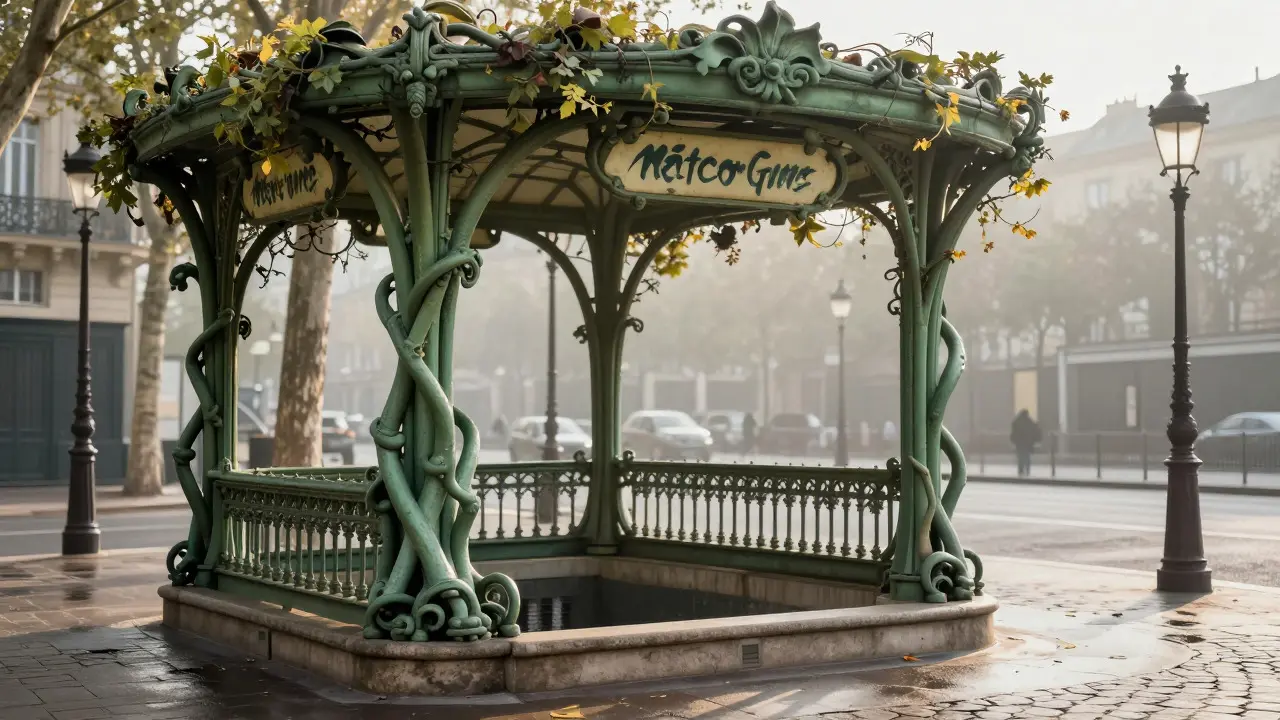
Have you ever walked past a Parisian subway entrance with its twisting iron vines or seen a poster where a woman’s hair flows into swirling patterns? That is Art Nouveau, a style that turned the world upside down at the turn of the 20th century. It wasn’t just about making things pretty; it was a rebellion against the stiff, historical copies of the past. Instead, this movement looked to nature for inspiration, creating a visual language of curves, flowers, and insects that still feels fresh today.
If you are trying to understand why this specific era matters, you have to look beyond the surface beauty. Art Nouveau was a total lifestyle overhaul. It aimed to erase the line between "high art" like painting and "crafts" like furniture making. This guide breaks down exactly what defines this style, who the key players were, and how you can spot its influence in the modern world.
The Roots of a Radical Style
To get Art Nouveau, you first have to understand what it was fighting against. In the late 19th century, Europe was drowning in revivalism. Architects and designers were copying Gothic cathedrals, Renaissance palaces, and Victorian clutter without any original thought. The Industrial Revolution had flooded markets with cheap, mass-produced goods that lacked soul.
A group of artists and thinkers decided enough was enough. They drew heavy inspiration from the Arts and Crafts Movement, led by figures like William Morris. Morris argued that handmade objects had dignity that machines couldn’t replicate. However, while Morris rejected industry entirely, Art Nouveau embraced new materials like cast iron and glass but shaped them in organic ways.
The name itself tells a story of division. In France, it was called Jeanne de Naples after Samuel Bing’s gallery, Maison de l’Art Nouveau, opened in 1895. In Germany, it was known as Jugendstil (Youth Style), named after an art magazine. In Austria, it became Secessionsstil because artists literally seceded from official academies to form their own groups. Despite these different names, the core idea remained the same: create a new style for a new age.
Defining Characteristics: What Makes It Art Nouveau?
You don’t need a degree in art history to spot this style once you know what to look for. The visual cues are distinct and consistent across borders. Here is what sets it apart:
- The Whiplash Curve: This is the most famous feature. Think of a vine snapping back or a tendril curling tightly. Lines are never straight or rigid; they flow dynamically, often asymmetrical.
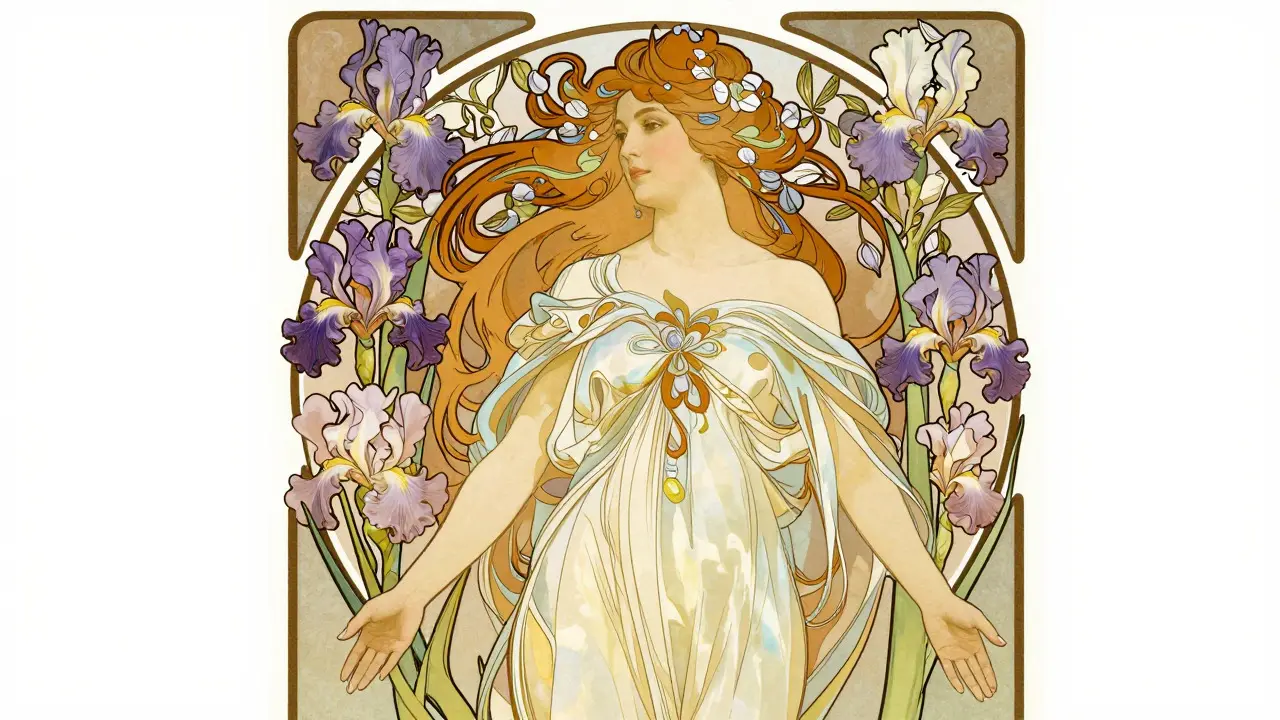
- Natural Motifs: Flowers (especially irises, water lilies, and orchids), insects (dragonflies and butterflies), and birds are common. But they aren’t realistic photos; they are stylized, simplified, and integrated into the design structure.
- Asymmetry: Unlike classical architecture which relies on balance and symmetry, Art Nouveau embraces imbalance. A door handle might curve left while the frame curves right, creating tension and movement.
- Total Work of Art (Gesamtkunstwerk): The goal was harmony. The wallpaper, the chair, the lamp, and the building facade should all feel like they belong to the same ecosystem. Nothing stands out awkwardly.
This approach meant that even functional items like door handles or book covers were treated with the same artistic seriousness as a museum painting. The aesthetic was meant to be immersive, surrounding the viewer in a continuous flow of natural forms.
Key Masters and Their Masterpieces
While many artists contributed, a few names stand out as the pillars of the movement. Understanding their work helps clarify the diversity within the style.
Alphonse Mucha is perhaps the most recognizable face of Art Nouveau. His posters for actress Sarah Bernhardt defined the "Mucha Style": women with halos of flowing hair, draped in loose robes, surrounded by floral wreaths. His use of flat colors and clear outlines made his images instantly readable from a distance, perfect for advertising. Yet, beneath the commercial success, Mucha held deep mystical beliefs, seeing his work as a spiritual mission.
In contrast, Hector Guimard brought the style to public infrastructure. As an architect, he designed the iconic entrances to the Paris Metro. These structures, with their green-painted iron stalks resembling giant plants, transformed a utilitarian necessity into a piece of public art. They showed that Art Nouveau could scale up to urban planning, not just private interiors.
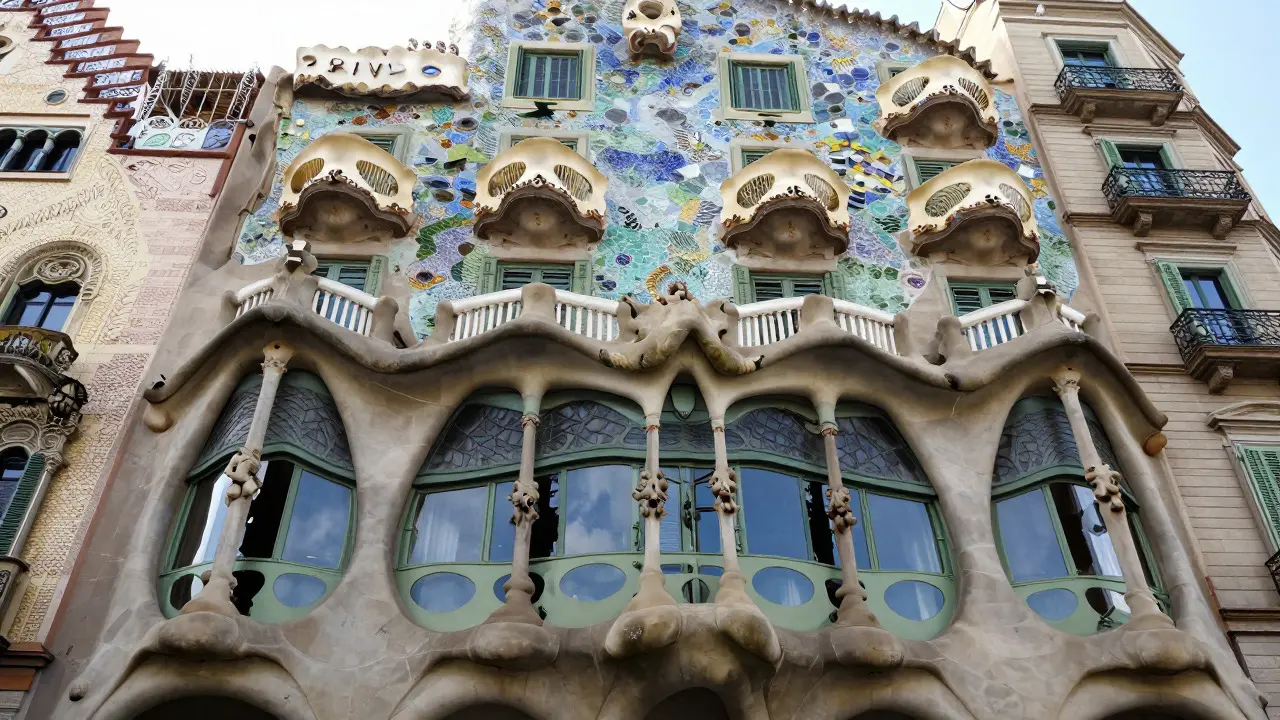
Then there is Antoni Gaudí in Barcelona. While others focused on surface decoration, Gaudí integrated organic forms into the very structure of his buildings. The Sagrada Família and Casa Batlló look less like stone constructions and more like frozen landscapes. He used catenary arches and hyperboloid shapes inspired by bone structures and tree branches, proving that nature provides the strongest engineering solutions.
| Artist | Primary Medium | Key Contribution | Famous Work |
|---|---|---|---|
| Alphonse Mucha | Graphic Design / Poster Art | Defined the commercial aesthetic of the style | Posters for Gismonda |
| Hector Guimard | Architecture / Ironwork | Brought organic forms to public transit | Paris Metro Entrances |
| Antoni Gaudí | Architecture | Integrated structural engineering with nature | Casa Batlló |
| Victor Horta | Interior Design / Architecture | Pioneered the use of iron in residential spaces | Hôtel Tassel |
Regional Variations: One Style, Many Voices
Art Nouveau didn’t look the same everywhere. Local culture and available materials shaped how the style manifested.
In Belgium, Victor Horta designed the Hôtel Tassel, where iron columns twisted like plant stems to support the floors. The light fixtures hung like exotic fruits. Here, the focus was on interior space and the play of light through stained glass.
In Austria, the Vienna Secession took a more geometric approach. Led by Gustav Klimt and Otto Wagner, the style was cleaner, flatter, and more abstract. Klimt’s paintings, like The Kiss, blend gold leaf and intricate patterns, moving away from the lush vegetation of France toward symbolic, decorative abstraction. This shift eventually paved the way for Modernism.
In Scotland, Charles Rennie Mackintosh created a stark, linear version. His designs for the Glasgow School of Art feature tall, narrow lines and sparse decoration. It’s a quieter, more restrained interpretation that emphasizes verticality and emptiness rather than dense ornamentation.
Why Did It Disappear So Quickly?
It seems strange that such a vibrant movement faded so fast. By World War I, Art Nouveau was largely gone. There are a few practical reasons for this.
First, it was expensive. Creating unique, handcrafted details for every home required skilled labor. As economies tightened before the war, clients wanted cheaper, faster solutions. Second, the style was exhausting. Living in a house where every corner curled and twisted can feel overwhelming over time. People began craving simplicity.
Third, the rise of the Bauhaus school in Germany promoted functionality over decoration. The mantra "form follows function" directly contradicted the Art Nouveau belief that beauty was essential. Straight lines and industrial materials replaced the whiplash curves. However, the spirit of Art Nouveau never truly died; it went underground, waiting for a resurgence.
The Modern Resurgence
Today, we are seeing a return to these principles. In a digital world dominated by sharp pixels and rigid grids, there is a growing appetite for organic warmth. Look at contemporary graphic design: brands are using fluid gradients and irregular shapes that echo Mucha’s compositions. Interior designers are mixing vintage Art Nouveau pieces with modern minimalism to add character without clutter.
The environmental movement also aligns with Art Nouveau’s ethos. The style’s respect for natural forms and sustainable materials resonates with today’s eco-conscious values. We are realizing that designing with nature, not against it, creates better living spaces. Whether you are decorating a home or designing a website, understanding these organic flows can make your work feel more human and inviting.
How to Identify Authentic Pieces
If you are hunting for Art Nouveau items, whether at an auction or a flea market, keep these tips in mind. Counterfeits exist, especially for popular items like Mucha prints.
- Check the Date: True Art Nouveau was produced roughly between 1890 and 1910. Anything dated later is likely a reproduction or influenced by the style but not part of the movement.
- Examine the Materials: Look for quality craftsmanship. Original pieces often use high-grade wood, hand-blown glass, or wrought iron. Poor joinery or plastic components are red flags.
- Look for Signatures: Many artists signed their work. Mucha, for example, often included his signature in the lower corner of his posters. Verify the spelling and placement against known examples.
- Assess the Condition: Age shows wear. A pristine piece might be too good to be true unless it has been professionally restored. Look for consistent patina on metals or slight fading in papers that matches the age.
Remember, value isn’t just about rarity; it’s about condition and provenance. If possible, consult an expert before making a significant purchase.
What is the difference between Art Nouveau and Art Deco?
Art Nouveau uses organic, flowing lines inspired by nature, while Art Deco features geometric shapes, zigzags, and streamlined forms. Art Nouveau was active around 1890-1910, whereas Art Deco emerged in the 1920s and 1930s as a reaction against the former's complexity.
Who is considered the father of Art Nouveau?
There is no single father, but Victor Horta in Belgium and Hector Guimard in France are often credited with pioneering the architectural aspects. Alphonse Mucha defined its graphic identity.
Is Art Nouveau still relevant today?
Yes, its emphasis on organic forms and holistic design influences modern architecture, graphic design, and interior decor. The desire for natural aesthetics in a digital age keeps its principles alive.
Where can I see original Art Nouveau works?
Major collections are found in museums like the Musée d'Orsay in Paris, the Victoria and Albert Museum in London, and the Museu Nacional d'Art de Catalunya in Barcelona. Many original buildings remain in cities like Brussels, Paris, and Vienna.
What materials were commonly used in Art Nouveau?
Artists used a mix of traditional and industrial materials, including wrought iron, cast iron, glass, ceramics, wood, and plaster. The innovation lay in shaping these materials into organic forms.