
Imagine a world where your chair wasn't just a place to sit, but a piece of engineering that looked like it belonged in a factory, yet felt like it was made by hand. That’s the core tension-and the ultimate solution-of the Bauhaus school of art, architecture, and applied arts founded in Weimar, Germany, in 1919. It sounds simple now, but back then, telling painters to learn welding and architects to study typography was revolutionary. The Bauhaus Manifesto, the founding document written by Walter Gropius that outlined the school's philosophy of uniting art, craft, and technology, didn't just start a school; it rewired how we see everything from our coffee mugs to our smartphones.
You might wonder why a document from over a century ago still matters when you're buying furniture or designing an app. Because every time you choose a clean, sans-serif font or prefer a minimalist interface, you're living inside the ideas Gropius laid out. He argued that the separation between "high art" (like oil paintings) and "craft" (like weaving or pottery) was artificial and harmful. His goal? To create a "total work of art" where form follows function, but beauty isn't sacrificed for utility.
The Core Philosophy: Breaking Down Barriers
Gropius started with a radical premise: there is no essential difference between the artist and the craftsman. Before the Bauhaus, artists were seen as geniuses working in isolation, while craftsmen were viewed as mere laborers. The manifesto smashed this hierarchy. It proposed that everyone should return to craftsmanship because, at its root, art is a skill. You don't just dream up a building; you understand the bricks, the mortar, and the light.
This wasn't just theoretical. The curriculum required students to spend their first six months learning basic materials-wood, metal, clay, fabric-before they could even think about specializing. Think of it like medical school: you can't be a surgeon without knowing anatomy. Similarly, you couldn't be a designer without understanding how steel bends or how dye sets on wool. This approach created designers who could talk to engineers and builders on equal footing.
| Aspect | Pre-Bauhaus Tradition | Bauhaus Philosophy |
|---|---|---|
| Role of Artist | Isolated genius creating unique objects | Collaborator integrating art into daily life |
| Production Method | Handcrafted, often ornate and expensive | Standardized, machine-friendly, affordable |
| Aesthetic Goal | Decoration and historical reference | Functionality, clarity, and universal appeal |
| Education Model | Specialized apprenticeships in single trades | Holistic training in materials, color, and form |
Technology as a Partner, Not a Threat
In the early 20th century, industrialization was scary. Machines were replacing skilled workers, and mass-produced goods were often ugly and poorly made. Most artists rejected technology entirely. Gropius did the opposite. He saw industrial production the use of machines and standardized processes to create goods efficiently as the future. But he insisted that designers needed to shape that future, not just react to it.
The manifesto called for architects, sculptors, and painters to turn back to handicrafts, yes, but with a twist: they had to design things that could be reproduced by machines. This meant simplicity became a virtue. If you could make a chair strong and beautiful using three parts instead of ten, you'd save money and resources. This logic birthed the iconic tubular steel furniture of Marcel Breuer and the sleek ceramics of Marianne Brandt. These weren't just pretty objects; they were prototypes for the modern consumer economy.
Consider the Wassily Chair, a famous armchair designed by Marcel Breuer in 1925 using bent tubular steel and canvas. It looks like bicycle handlebars wrapped in leather. Why? Because Breuer realized that the material used in bicycles was lightweight, durable, and easy to manufacture. He didn't try to hide the technology; he celebrated it. That's the Bauhaus spirit: honesty in materials and construction.
The Role of Color and Form
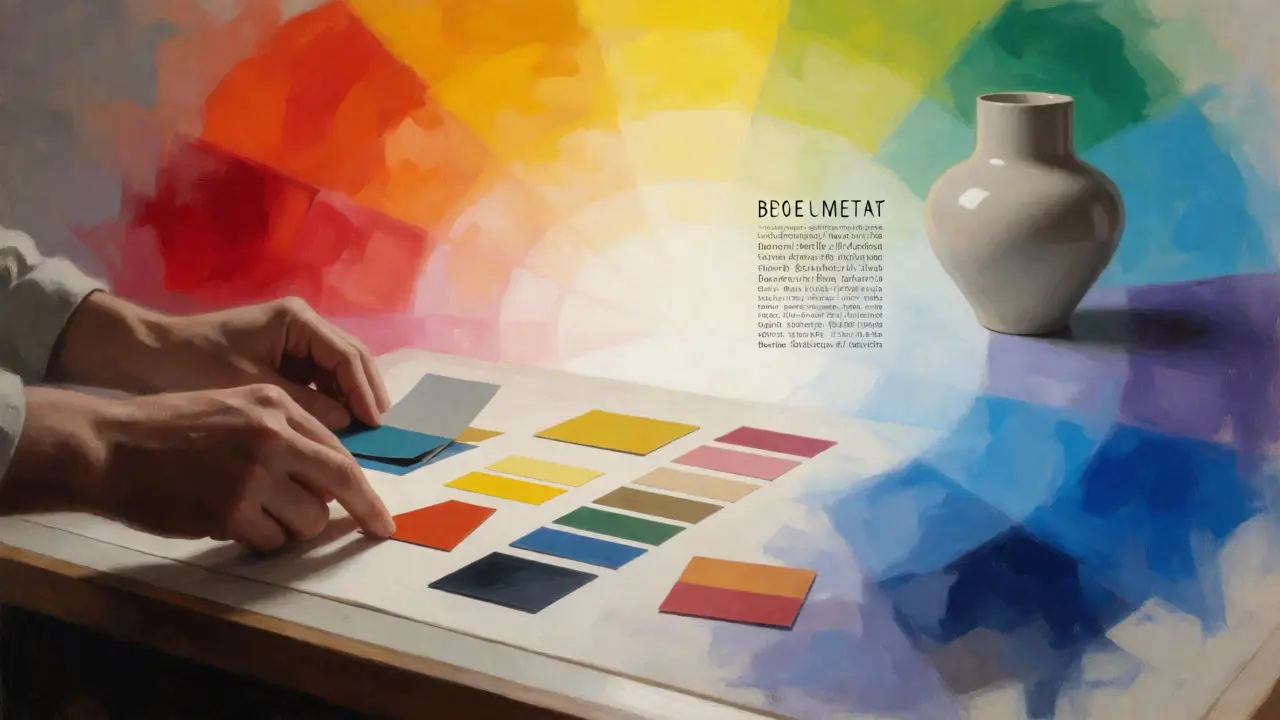
If you've ever taken a basic design course, you've likely studied Johannes Itten, a Swiss expressionist painter and one of the first masters at the Bauhaus who developed a preliminary course on color theory. He taught students that color isn't just decoration-it's a language. Red advances, blue recedes. Yellow feels warm, violet feels cool. By teaching these principles systematically, the Bauhaus gave designers a toolkit to guide user experience long before UX design existed.
Later, László Moholy-Nagy, a Hungarian photographer and typographer who replaced Itten and emphasized technology and new media, pushed this further. He argued that art should engage all senses, not just sight. He experimented with photography, film, and kinetic sculpture. Under his influence, the school shifted from its early romantic, craft-focused phase to a more rational, science-driven approach. This shift mirrored the broader societal move toward modernism and efficiency.
This emphasis on objective analysis helped standardize visual communication. The Bauhaus championed sans-serif typefaces like Futura, which are still ubiquitous today. Why? Because they are legible, neutral, and scalable across different mediums-from posters to billboards to digital screens. When you read a warning sign or use a mobile app, you're benefiting from this drive for clarity.
Social Impact: Design for Everyone
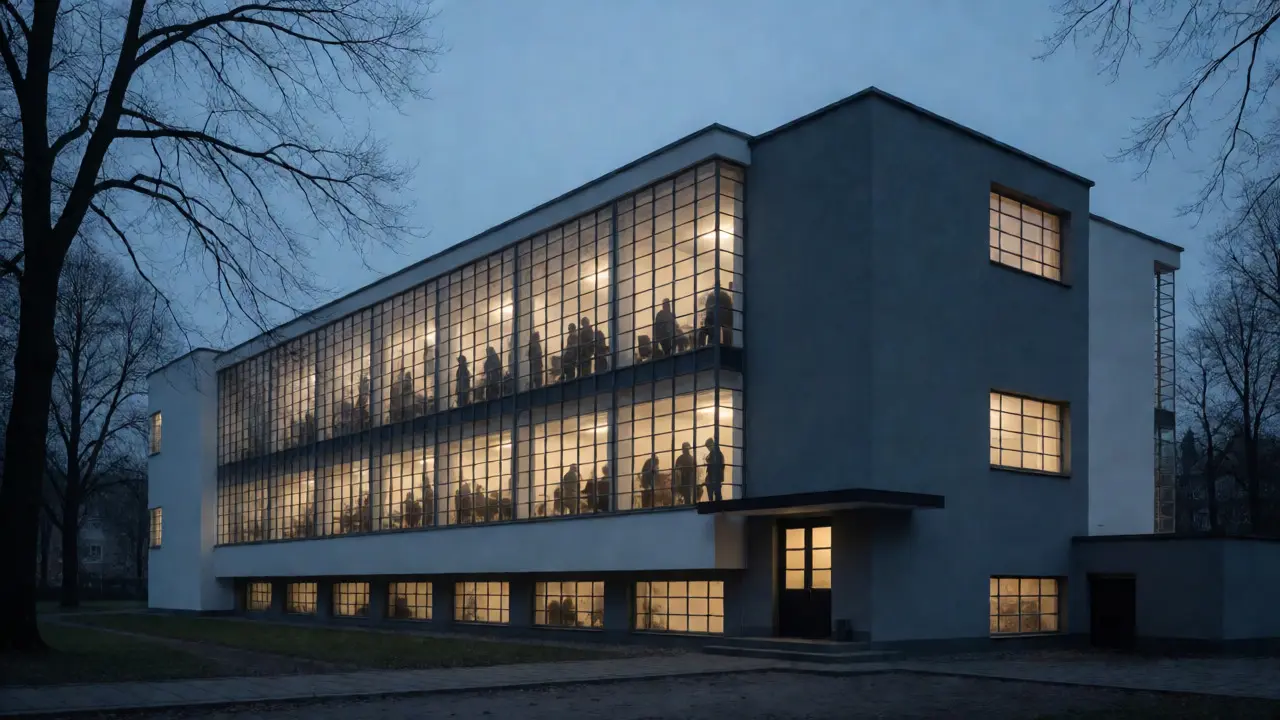
One of the most overlooked aspects of the manifesto is its social mission. Gropius believed that good design shouldn't be a luxury for the rich. It should improve the lives of ordinary people. After World War I, Germany faced a housing crisis. The Bauhaus responded with designs for affordable, efficient homes. They stripped away unnecessary ornamentation, focusing on light, air, and space.
This democratization of design changed how cities were built. Flat roofs, large windows, and open floor plans became hallmarks of modern architecture. While critics sometimes called these buildings sterile, proponents argued they were healthier and more practical. Today, when you walk into an IKEA store, you're seeing the direct legacy of this idea: well-designed, functional products accessible to the middle class.
However, this idealism faced harsh realities. The Nazis labeled the Bauhaus "degenerate" because of its internationalist and socialist leanings. In 1933, the school was forced to close. Many of its members fled to the United States, spreading these ideas globally. Figures like Mies van der Rohe and Josef Albers reshaped American education and architecture, proving that the manifesto's ideas were resilient enough to survive political oppression.
Why It Still Matters Today
You might ask, "Is the Bauhaus still relevant in the age of AI and virtual reality?" Absolutely. The core question remains: How do we balance aesthetics with functionality? As we design smart devices and sustainable cities, we still grapple with the same tensions Gropius identified. Should a product be purely functional, or does it need emotional resonance?
Modern tech companies like Apple have been heavily criticized for adopting Bauhaus principles without fully embracing its social ethos. Steve Jobs famously admired Braun products, which were themselves influenced by the Ulm School of Design-a successor to the Bauhaus. This lineage shows how deeply embedded these ideas are in our cultural DNA.
To truly understand the Bauhaus, look around your room. Notice the straight lines, the lack of clutter, the focus on usability. You're surrounded by the manifesto's legacy. It taught us that design isn't just about making things look nice; it's about making life better through thoughtful integration of art, craft, and technology.
What was the main goal of the Bauhaus Manifesto?
The main goal was to unify art, craft, and technology under one roof. Walter Gropius wanted to break down the barriers between fine artists and craftsmen, believing that good design should be both beautiful and functional, and accessible to everyone, not just the elite.
Who wrote the Bauhaus Manifesto?
The manifesto was written by Walter Gropius, the founder of the Bauhaus school. Published in 1919, it outlined the vision for a new kind of educational institution that would train artists and designers to meet the needs of the modern industrial society.
How did the Bauhaus influence modern design?
It established the principle that form follows function and promoted minimalism, geometric shapes, and the use of industrial materials. Its emphasis on typography, color theory, and ergonomic design continues to influence graphic design, architecture, and product manufacturing worldwide.
Why did the Bauhaus close?
The school faced increasing political pressure from the Nazi party, which considered its modernist style "degenerate" and its internationalist outlook suspicious. After moving from Weimar to Dessau and then Berlin, it was forcibly closed by the Nazis in 1933.
Are Bauhaus principles still used in tech design?
Yes, absolutely. The focus on user-centered design, simplicity, and functionality is central to modern UI/UX design. Companies like Apple and Google rely on Bauhaus-inspired principles to create interfaces that are intuitive and aesthetically pleasing.