Why does constructivism art stop you in your tracks? It doesn’t whisper. It doesn’t sigh. It clanks. It stacks. It angles. It shouts with steel and glass and paint that art isn’t just something to look at-it’s something to build with. Born in post-revolution Russia, this movement didn’t just change how art looked. It changed what art was for.
It Wasn’t Art for Art’s Sake
Before constructivism, art was mostly about beauty, emotion, or myth. Portraits of nobles. Landscapes of quiet fields. Religious scenes bathed in golden light. Then came 1917. The Tsar was gone. Factories were seized. Workers took over. And a new generation of artists-mostly young, radical, and tired of the old world-asked: Why make paintings for rich people’s walls when the whole country needed rebuilding?
Constructivists said: Art should be a tool. Not a decoration. Not a luxury. A tool. Like a hammer. Like a blueprint. Like a radio tower. Tatlin’s Monument to the Third International wasn’t meant to be displayed in a museum. It was meant to be built-tall, twisting, made of iron and glass, spinning with propaganda and light. It was a machine that made revolution visible.
The Geometry That Changed Everything
If you’ve ever stood in front of a Kazimir Malevich painting and felt like you were looking at a blueprint for the future, you’re not imagining it. His black square on white? It wasn’t a joke. It was a declaration: Let’s start over.
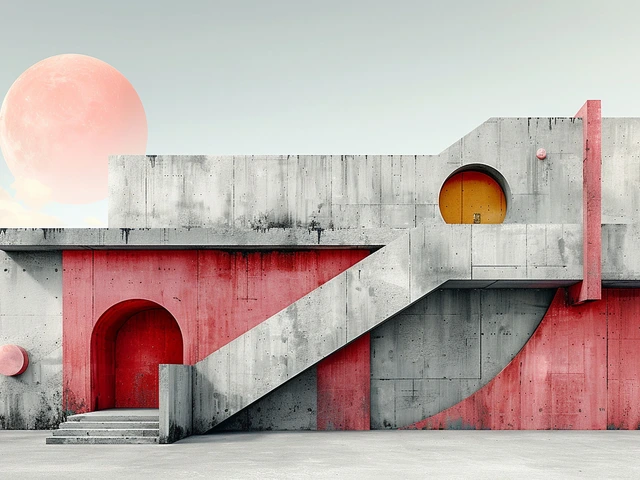
Constructivists ditched curves. They banned softness. They embraced sharp angles, clean lines, and bold primary colors. Why? Because those shapes came from factories, not studios. They came from welding, not brushstrokes. A tower made of intersecting steel beams? That was more honest than a landscape of clouds. A poster with bold red text on a yellow background? That got a message across faster than a poem.
They didn’t just paint. They designed. Posters. Book covers. Furniture. Stage sets. Even worker uniforms. Every object had a function. Every line had a purpose. There was no such thing as ‘just for looks.’ If it didn’t serve the collective, it didn’t belong.
Materials That Spoke Louder Than Brushstrokes
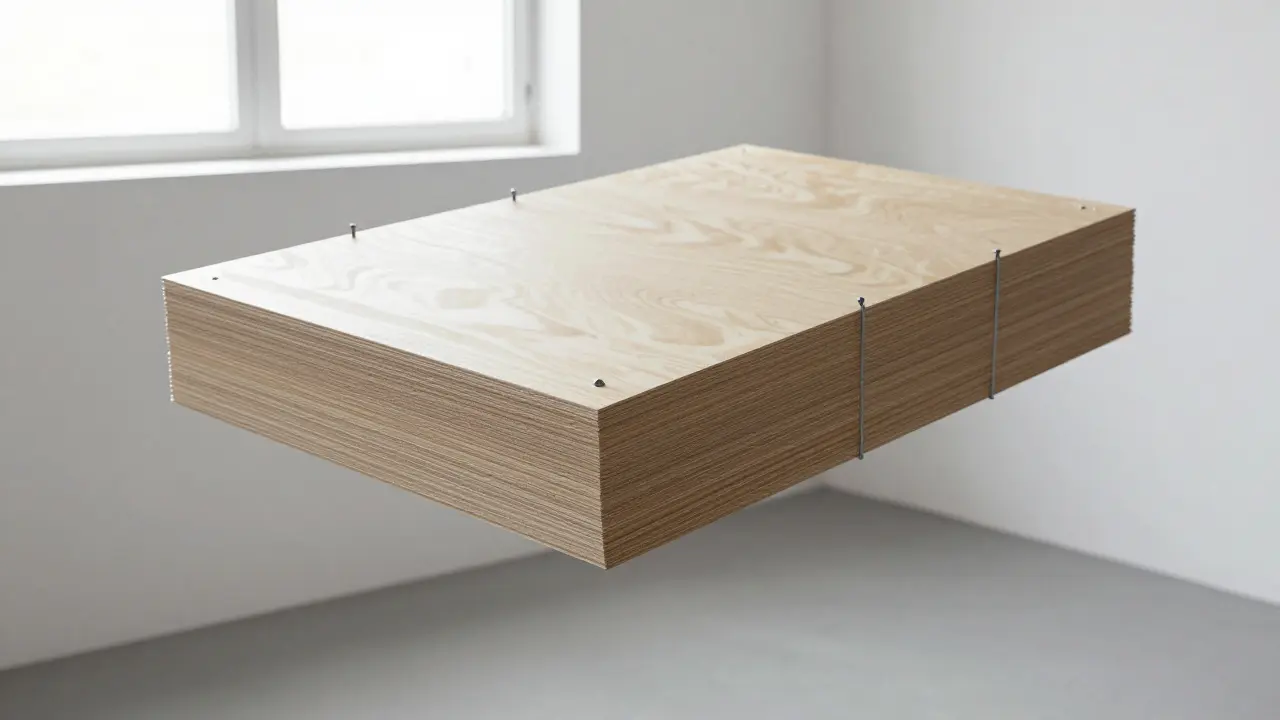
Forget oil on canvas. Constructivists worked with what the world was made of: metal, glass, plastic, plywood, wire, and concrete. Alexander Rodchenko didn’t just paint. He built. He stacked wooden panels. He bent wire into hanging sculptures. He used industrial materials because they were real. They didn’t pretend. They didn’t hide their seams. They didn’t need to be framed.
One of his most famous works, Black on Black, looks like a stack of plywood cut at odd angles. But it’s not abstract. It’s a prototype for a public bench. A structure you could sit on. A piece of art that refused to stay on a wall.
This wasn’t about technique. It was about truth. If a material was meant to be strong, use it strong. If it was meant to be transparent, leave it clear. No varnish. No hiding. No romanticizing. Just the raw logic of the material itself.
Art as Public Infrastructure
Think about what art does today: it hangs in galleries. It sells for millions. It’s Instagram fodder.
Constructivists asked: What if art was part of the street? The factory? The school? The newspaper?
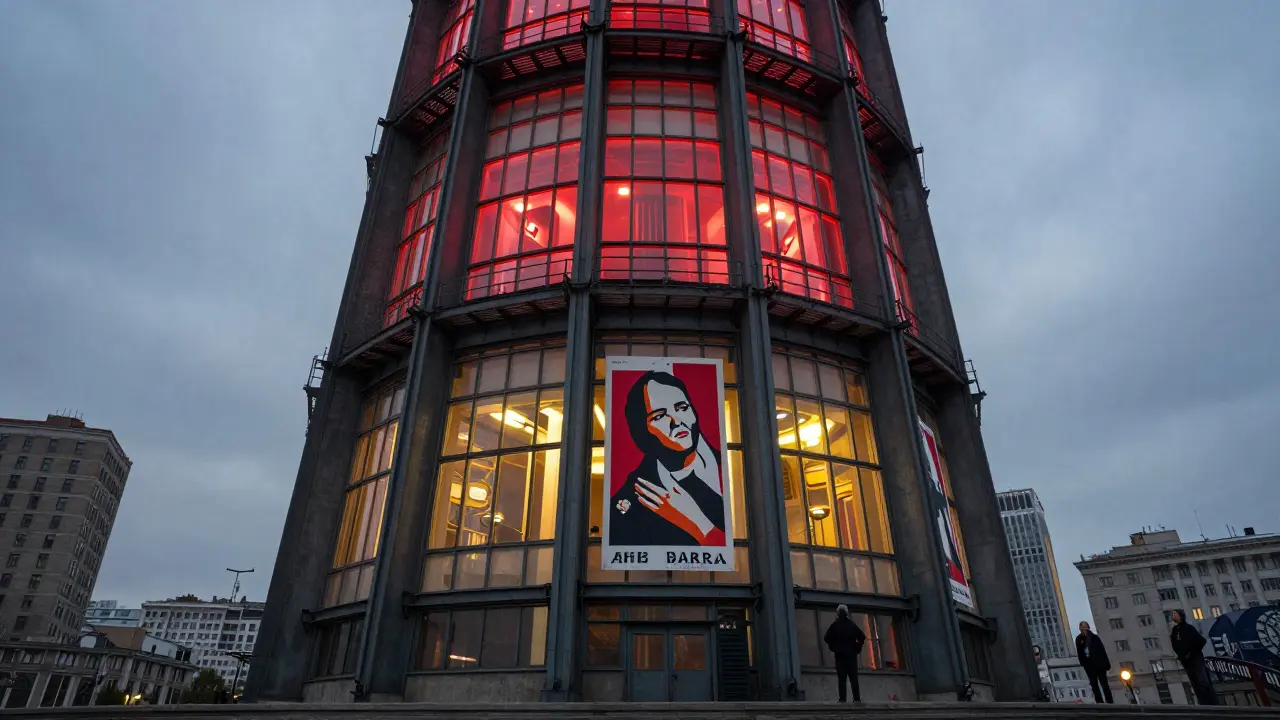
They designed agitprop posters that slapped headlines across walls in Moscow. They built radio antennas shaped like art. They made typography that moved like a heartbeat. They turned book covers into visual manifestos. They didn’t wait for people to come to art-they brought art to the people.
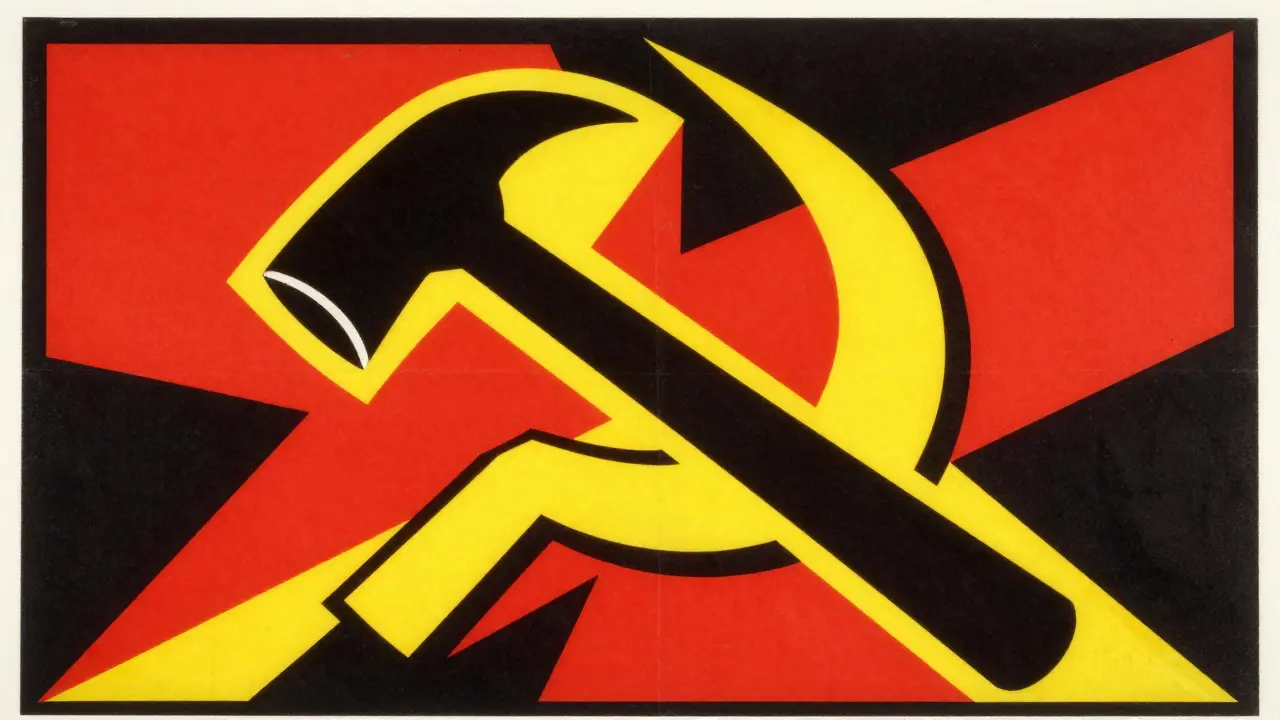
When you see a 1920s Soviet poster with bold red letters and a hammer and sickle slicing through the design, you’re not just seeing a political message. You’re seeing art that knew its job: to move, to inform, to mobilize.
Why It Still Feels So Alive Today
Look around you. Modern architecture. Minimalist design. Clean tech interfaces. Even the logos of Apple, Nike, or Google-they all whisper constructivism. Not because they’re revolutionary, but because they’re efficient. They strip away the noise. They use geometry. They trust the material. They don’t apologize for being functional.
That’s why constructivism still feels so urgent. It’s not stuck in the past. It’s the DNA of modern visual culture. You see it in the way subway maps are drawn. In the way apps use flat colors and sharp icons. In the way IKEA furniture looks like it was designed by engineers who also loved art.
It’s not just about looking cool. It’s about asking: What is this for? Who is it for? Does it work? If the answer is yes, then it’s beautiful.
The Quiet Rebellion of Constructivism
What makes constructivism art so captivating? It’s not the colors. Not the shapes. It’s the attitude.
It said: Art doesn’t need permission. Art doesn’t need to be pretty. Art doesn’t need to be expensive. Art can be built with scrap metal and a hammer. Art can be a megaphone. Art can be a bridge. Art can be a worker’s tool.
That’s why it still hits hard. In a world where so much art is about status, scarcity, and exclusivity, constructivism reminds us that creativity doesn’t need a gallery. It just needs a purpose.
Is constructivism art the same as Bauhaus?
No. While both movements embraced geometry and function, they had different roots. Bauhaus came from Germany and focused on blending art, craft, and industrial design under one roof. It was more about mass production and harmony. Constructivism came from Russia and was deeply political. It saw art as a weapon for social change, not just better chairs or lamps. Bauhaus softened the revolution. Constructivism shouted it.
Who were the main artists of constructivism?
The big names were Vladimir Tatlin, Alexander Rodchenko, El Lissitzky, and Naum Gabo. Tatlin designed the radical spinning tower. Rodchenko turned painting into sculpture and designed iconic posters. Lissitzky used geometry to create dynamic, floating compositions. Gabo, who later moved to the West, helped spread constructivist ideas into modern sculpture. Each one pushed art beyond the canvas and into real space.
Why did constructivism fade in Russia?
By the late 1920s, Stalin’s government wanted art that glorified the state, not challenged it. Constructivism’s radical, experimental nature didn’t fit. Socialist Realism took over-paintings of strong workers smiling in perfect fields. Constructivism was labeled "bourgeois" and banned. Many artists fled. Others stopped making art. But the ideas didn’t die. They spread underground, then exploded again in design movements decades later.
Can you still see constructivist art today?
Yes. Major museums like the Tate Modern in London, the Museum of Modern Art in New York, and the State Russian Museum in St. Petersburg have full collections. Some original posters and models are fragile, but digital archives and high-quality reproductions make them accessible. Even if you’ve never visited a museum, you’ve seen its legacy-in the logo of a subway map, the layout of a website, or the clean lines of a modern chair.
Did constructivism influence anything outside of art?
Hugely. It shaped modern architecture, graphic design, typography, industrial design, and even urban planning. The idea that form follows function? That came from constructivism. The use of bold sans-serif fonts in public signage? That was Rodchenko. The concept of designing for mass communication? That was Lissitzky. Even today’s user interface design owes a debt to constructivist principles: clarity, structure, and purpose over decoration.