When you hear the opening notes of Mozart's Symphony No. 40, something happens in your brain that a pop song rarely triggers. You feel a sense of order, clarity, and emotional depth that feels timeless. This isn't just nostalgia; it's the direct result of Classicism in music, a movement that fundamentally changed how humans organize sound. While we often associate "classic" with old things gathering dust in museums, the principles of musical classicism are actually alive and well in modern composition, film scoring, and even the way we structure digital content.
Musical Classicism refers to the aesthetic and structural ideals of the late 18th century, emphasizing balance, clarity, proportion, and formal logic in composition. It emerged as a reaction against the heavy ornamentation of the Baroque era. Think of it as the shift from a cluttered, baroque-style room to a clean, minimalist space where every piece of furniture has a specific purpose. For composers like Joseph Haydn and Wolfgang Amadeus Mozart, this wasn't just about making music prettier; it was about making music more understandable and emotionally direct for the listener.
The Core Principles: Balance and Clarity
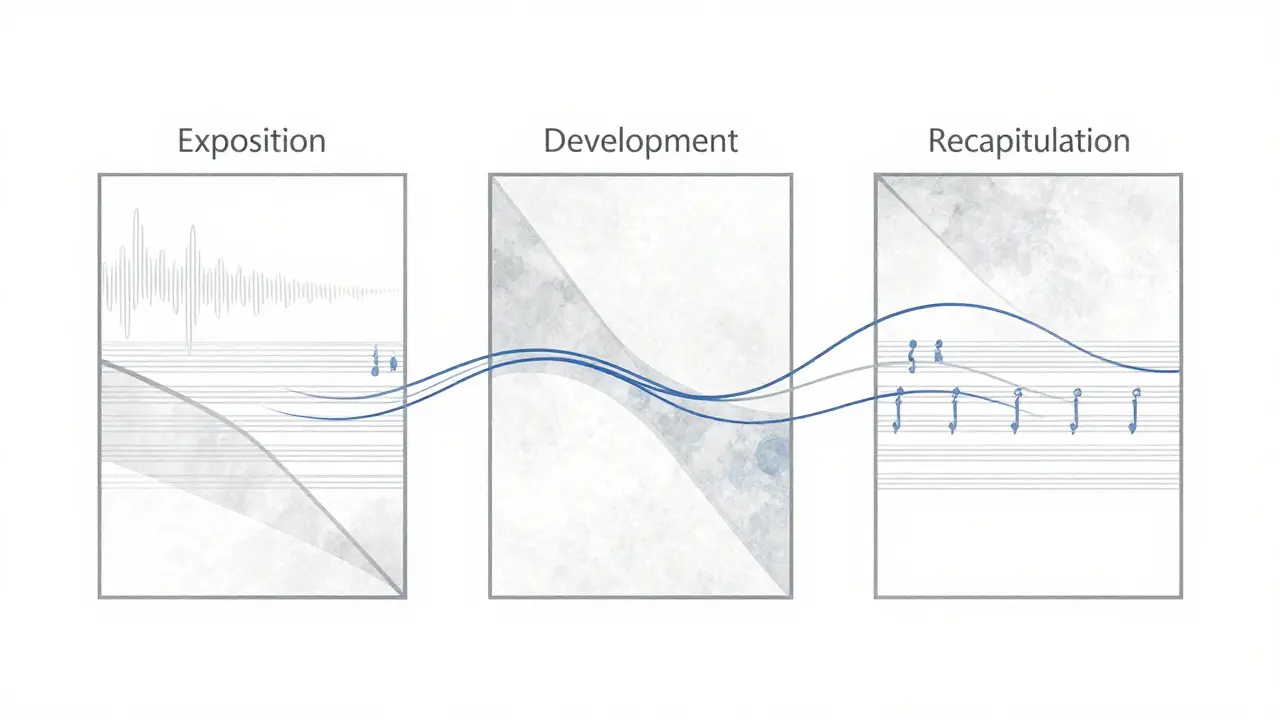
To understand why this legacy is so powerful, you have to look at the mechanics. The central entity here is the concept of Sonata Form. This is arguably the most important invention in Western art music. Before classicism, musical structures were often free-flowing or based on dance patterns. Sonata form introduced a logical narrative: an exposition (introducing themes), a development (twisting and turning those themes through different keys), and a recapitulation (bringing them back home). It’s essentially storytelling applied to harmony.
This structure created a sense of inevitability. When you listen to a classical sonata, you aren't just hearing random notes; you're following a logical argument. This principle of Thematic Development-taking a simple melody and transforming it-is what separates professional composition from mere melody writing. It teaches the ear to expect resolution after tension, creating a psychological satisfaction that is hard to replicate with other genres.
Key Figures and Their Contributions
You can't talk about this legacy without mentioning the big three: Haydn, Mozart, and Ludwig van Beethoven. Each contributed differently to the canon.
These composers didn't just write songs; they built a grammar for music. Today, when a film composer writes a score, they are often using this same grammatical structure to manipulate audience emotion without words.
How Classicism Shapes Modern Sound
Here is where it gets interesting for the average listener. Do you think modern music is far removed from these 18th-century ideals? Not really. The influence of Orchestration techniques developed during this period is everywhere. The idea of balancing instruments so that no single voice drowns out the others is a direct inheritance from classical practice.
Consider the rise of neoclassicism in the 20th century. Composers like Igor Stravinsky looked back at Bach and Mozart to rebel against the perceived chaos of early modernism. In fact, much of today's film scoring relies heavily on classical structures. When a director wants to signal danger or triumph, they often use harmonic progressions that date back to the Viennese Classical School. The emotional shorthand of major and minor keys, codified during this era, remains the primary language of cinematic emotion.
| Era | Primary Structural Focus | Emotional Goal | Key Representative |
|---|---|---|---|
| Baroque | Counterpoint and Ornamentation | Grandeur and Complexity | J.S. Bach |
| Classical | Sonata Form and Clarity | Balance and Logic | Mozart / Haydn |
| Romantic | Expression and Individuality | Intense Emotion | Chopin / Wagner |
Why the Aesthetic Still Resonates
There is a reason why people turn to classical music when they need to focus or relax. The predictability of the form provides a cognitive anchor. In a world that feels increasingly chaotic and fragmented, the Viennese Classical School offers a model of coherence. It suggests that complexity can be organized, that tension can be resolved, and that beauty comes from proportion rather than excess.
This legacy extends beyond the concert hall. It influences architecture, visual design, and even coding standards, where "clean code" is valued for its readability and structure-much like a well-written symphony. The principle that form should serve function, but also enhance it, is a universal human desire that classicism mastered centuries ago.
Getting Started with the Classics
If you want to experience this legacy firsthand, you don't need to be a music theory expert. Start with the basics:
- Listen to a complete symphony: Try Haydn's Symphony No. 94 (the "Surprise" Symphony) to hear the structural clarity.
- Explore Piano Sonatas: Mozart's Piano Sonata No. 16 is a perfect example of balanced melodic lines.
- Watch a Film Score Breakdown: Look for analyses of how composers use classical harmonies to build tension in movies.
Is classical music difficult to understand?
Not necessarily. While the vocabulary is complex, the structure is logical. Once you understand the basic narrative arc of sonata form (tension to resolution), many pieces become easier to follow because they tell a clear story through sound.
Who are the main composers of the Classical era?
The three most prominent figures are Joseph Haydn, Wolfgang Amadeus Mozart, and Ludwig van Beethoven. They worked primarily in Vienna during the late 18th and early 19th centuries.
How does classical music differ from Baroque music?
Baroque music is characterized by continuous bass lines and heavy ornamentation. Classical music moved toward clearer textures, distinct melodic lines, and simpler, more transparent harmonies, prioritizing balance over density.
Does classical music influence modern pop music?
Yes, indirectly. The chord progressions and harmonic resolutions used in modern pop and rock are largely derived from the tonal system perfected during the Classical era. Even when the style changes, the underlying mathematical relationships remain similar.
What is Sonata Form?
Sonata Form is a musical structure consisting of three main sections: Exposition (introduction of themes), Development (exploration and variation of themes), and Recapitulation (return of themes in the home key). It is the backbone of many symphonies and sonatas.