Sculpture Outdoors: How Art Lives in Nature and Public Spaces
When you think of sculpture outdoors, three-dimensional art designed to exist in open air, often interacting with weather, light, and human movement. Also known as outdoor sculpture, it doesn’t just sit there—it changes with the seasons, gets touched by rain, and becomes part of daily life. Unlike art locked inside museums, sculpture outdoors asks you to walk around it, stand under it, or even sit beside it. It doesn’t demand silence. It welcomes noise, wind, and the unexpected.
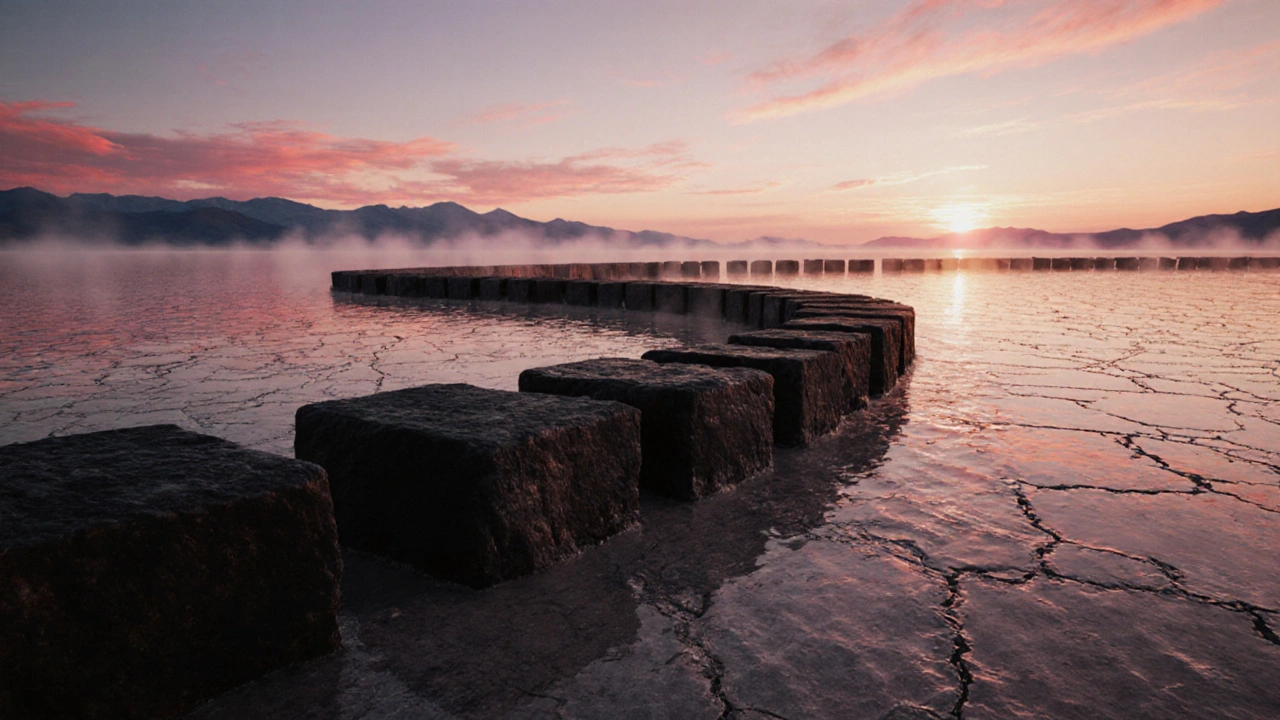
This kind of art isn’t just decoration. It’s a conversation between the maker, the land, and the people who pass by. You’ll find it in city plazas, forest trails, desert plains, and even abandoned industrial sites. Some pieces are made from bronze or stone, meant to last centuries. Others are built from wood, steel, or even ice—and they’re meant to disappear. That’s the point. land art, art created directly in the landscape using natural materials like earth, rocks, and plants. Also known as earthworks, it turns the whole environment into the canvas. Robert Smithson’s Spiral Jetty isn’t just a sculpture—it’s a 1,500-foot coil of rock in the Great Salt Lake that shifts with water levels. Andy Goldsworthy’s ice arches melt before you can photograph them properly. These aren’t accidents. They’re intentional.
Then there’s kinetic sculpture, sculpture that moves, often powered by wind, water, or mechanical forces. Also known as moving sculpture, it turns stillness into surprise. Imagine a tall, twisted metal form that creaks and spins when the wind picks up. It doesn’t just look different from every angle—it behaves differently every hour. That’s not just art. It’s a living thing. And when it’s placed outdoors, it becomes part of the rhythm of the day.
Public art, another close cousin, is often funded by cities or communities to spark connection. A bronze figure of a child reading on a park bench. A giant, colorful abstract shape in a transit station. These aren’t just pretty objects—they’re anchors for memory, places where people pause, take photos, or share stories. They don’t need a ticket. You don’t need to be an expert. You just need to be outside.
What ties all these together? They reject the idea that art belongs behind glass. They say: art belongs where people live. Where dogs run. Where kids climb. Where snow piles up and sun burns bright. environmental art, art that responds to ecological systems, often raising questions about nature, sustainability, or human impact. Also known as eco-art, it doesn’t just sit in nature—it speaks to it. Some pieces use recycled materials. Others grow moss over time. A few even clean the air.
When you look at the posts below, you’ll see how these ideas connect. You’ll find how modern sculptors use movement and nature to challenge old ideas. You’ll see how Baroque drama plays out in large-scale outdoor installations. You’ll learn how Bauhaus simplicity and Constructivist energy show up in steel structures you pass on your morning walk. This isn’t a niche topic. It’s everywhere. And if you’ve ever stopped to look at a strange metal shape in a park, you’ve already been part of it.
What follows isn’t just a list of articles. It’s a map. A guide to the hidden stories behind the art you didn’t know you were already seeing.