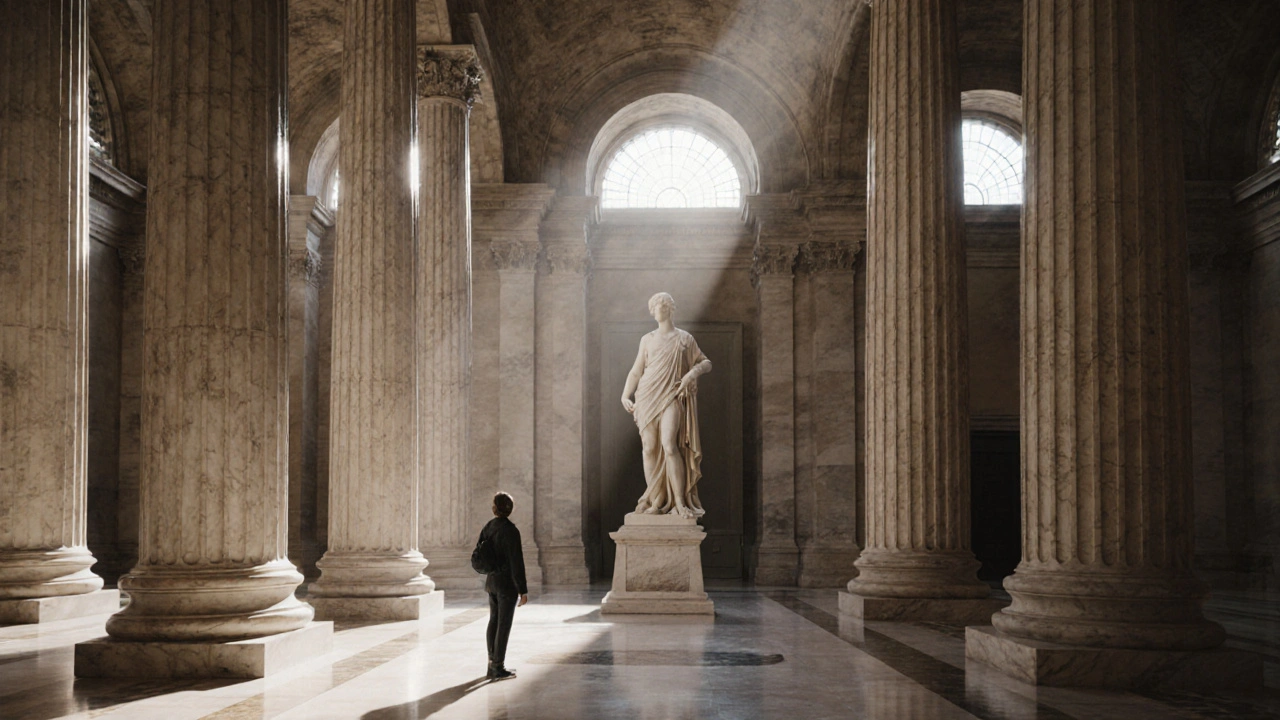
Neoclassical Art: The Return of Classical Beauty in a Modern World
When you see a building with tall columns, a calm face carved in marble, or a painting that looks like it could’ve been made in ancient Rome—you’re looking at neoclassical art, a movement that revived the ideals of ancient Greece and Rome in the 18th and 19th centuries. Also known as neoclassicism, it wasn’t just about copying the past—it was a reaction against the chaos of Baroque and Rococo, a return to clarity, balance, and moral purpose in art.
Neoclassical art didn’t appear out of nowhere. It grew from a deep fascination with Greek sculpture, the idealized human form that defined beauty for over a thousand years. When archaeologists uncovered Pompeii and Herculaneum in the 1700s, Europe went wild for ancient artifacts. Artists like Jacques-Louis David started painting heroes in togas, not lace and ruffles. Their subjects weren’t gods or kings in fancy robes—they were senators, warriors, and philosophers, shown with quiet strength and perfect proportions. This wasn’t decoration. It was a statement: reason over emotion, virtue over excess.
It wasn’t just about painting and sculpture. Renaissance art, the earlier revival of classical ideas in the 1400s, laid the groundwork. But neoclassicism took those ideas and made them sharper, stricter, and more political. Think of the U.S. Capitol or the Louvre’s grand staircases—these aren’t just buildings. They’re visual arguments for democracy, order, and civic duty. Even today, you’ll find neoclassical influences in government buildings, bank logos, and university campuses. It’s the quiet backbone of Western design.
What makes neoclassical art different from other styles? It doesn’t scream. It doesn’t swirl. It stands still and lets you think. No dramatic lighting like Caravaggio, no floating angels like Baroque painters. Just clean lines, clear narratives, and a sense that beauty comes from discipline. If you’ve ever felt moved by a statue of a soldier standing tall, or a portrait where every fold of cloth feels intentional—that’s neoclassicism speaking.
Below, you’ll find posts that dig into the roots of this movement, how it shaped modern design, and why its quiet power still echoes in today’s art. Whether you’re curious about how ancient Rome influenced a 19th-century painting, or why museums still look like temples, you’ll find the answers here.