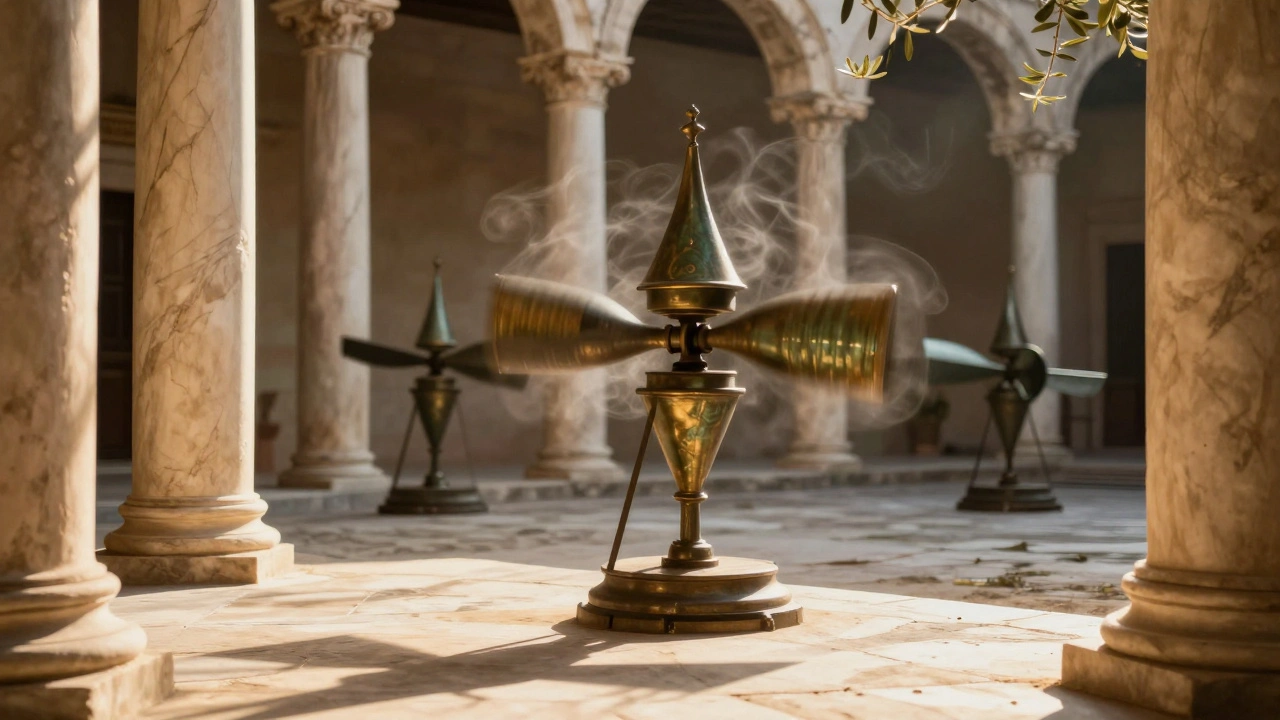
Alexander Calder: The Master of Kinetic Sculpture and Mobile Art
When you think of Alexander Calder, an American sculptor who turned metal and wire into living, breathing art. Also known as the father of mobile sculpture, he didn’t just make objects—he made experiences that danced with the wind. His work didn’t sit still on a pedestal. It moved. It swayed. It whispered. And that changed everything about what sculpture could be.
Calder’s mobiles, suspended, balanced sculptures that respond to air currents. Also known as kinetic sculptures, they turned galleries into places where motion became part of the art. You didn’t just look at them—you watched them. Each piece was a quiet dance between gravity, balance, and chance. His stabiles, large, stationary metal sculptures often placed outdoors. Also known as public art installations, they brought abstract forms into parks and plazas, making modern art part of everyday life. Unlike the heavy, serious statues of the past, Calder’s work felt alive—playful, unpredictable, and deeply human.
He didn’t need oil paint or marble to make a statement. A few bent wires, some painted metal, and a little physics were enough. His art didn’t shout. It invited you to pause, to notice how light shifts across a moving shape, how a gentle breeze can turn a simple line into a moment of wonder. That’s why his work still feels fresh today—because it wasn’t about permanence. It was about presence.
Calder’s influence runs deep. You see his spirit in every hanging sculpture, every interactive public installation, every piece of art that doesn’t just sit there but reacts to its environment. His ideas helped shape the rise of kinetic art as a movement, inspiring artists to think beyond the static and embrace movement, chance, and the natural world as collaborators.
Below, you’ll find a collection of posts that explore how Calder’s legacy lives on—in modern sculpture, in the way we think about space and motion, and in the quiet power of art that moves with the world around it.