You walk into a gallery in 2026 and look at a twisted face carved from wood. It looks ancient, powerful, maybe even scary. But if you look closer, you realize this isn't just some ancient artifact sitting on a pedestal. It's part of a deliberate shock tactic pulled off over a century ago by artists who wanted to smash the rules of Western painting. That’s Primitivism, an early 20th-century art movement where European creators turned to non-Western traditions. Unlike traditional art history, this story isn’t just about style changes. It’s about a cultural earthquake where the "modern" West looked to its own "savages" to save itself.
Why the Rebellion Happened
To understand why Primitivism challenged the status quo, you have to step back to Paris around 1900. Everything felt stifling. The academic art schools taught artists to paint smooth skin, perfect proportions, and mythological scenes that nobody really lived anymore. It was safe, polite, and boring. Artists felt trapped. They wanted raw energy. They wanted to get back to something human that hadn't been ruined by industrialization.
The rebellion started because these artists believed "civilized" society had lost its soul. They thought the solution lay outside of Europe. When Pablo Picasso saw wooden masks in Paris museums, he didn't see "ethnographic curios." He saw a language of form that could express violence, passion, and truth in a way classical Greek statues couldn't. It was a rebellion against perfection.
The Objects That Changed Art
You can't talk about this movement without talking about the actual objects. These weren't paintings hanging on walls yet. They were physical things brought back by colonizers, missionaries, and explorers. In 1907, Picasso visited the Musée du Trocadéro, a museum in Paris displaying global ethnographic collections. He later admitted this trip changed everything.
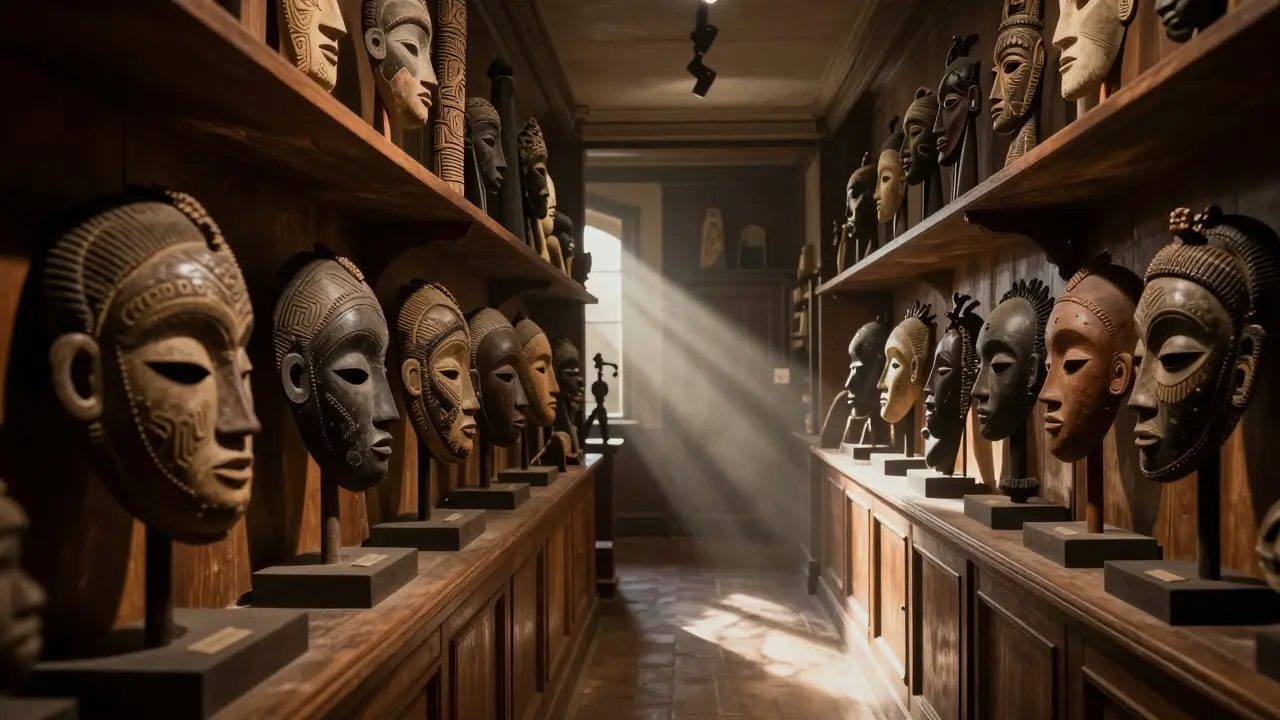
- African Masks: Specifically Dan masks from Liberia. These featured geometric faces and stylized features that rejected realistic representation.
- Oceanic Carvings: Totem poles and fertility statues from the Pacific islands that emphasized bold shapes over details.
- Iberian Sculpture: Ancient Spanish stone figures that offered a bridge between prehistoric art and modern abstraction.
These items sat in dusty halls meant for science, not art. The painters walked in, stole them away mentally, and put their spirit onto canvas. This created a new visual vocabulary.
Key Players in the Movement
It wasn't just one person. A group of radicals worked together, though they took different paths with the same materials.
| Artist | Primary Influence | Key Work |
|---|---|---|
| Pablo Picasso | African Masks | Les Demoiselles d'Avignon |
| Henri Matisse | Coptic Textiles / Masks | The Joy of Life |
| Amedeo Modigliani | Bantu Sculpture | Nude Woman with Necklace |
| Paul Gauguin | Oceanic Mythos | Where Do We Come From? |
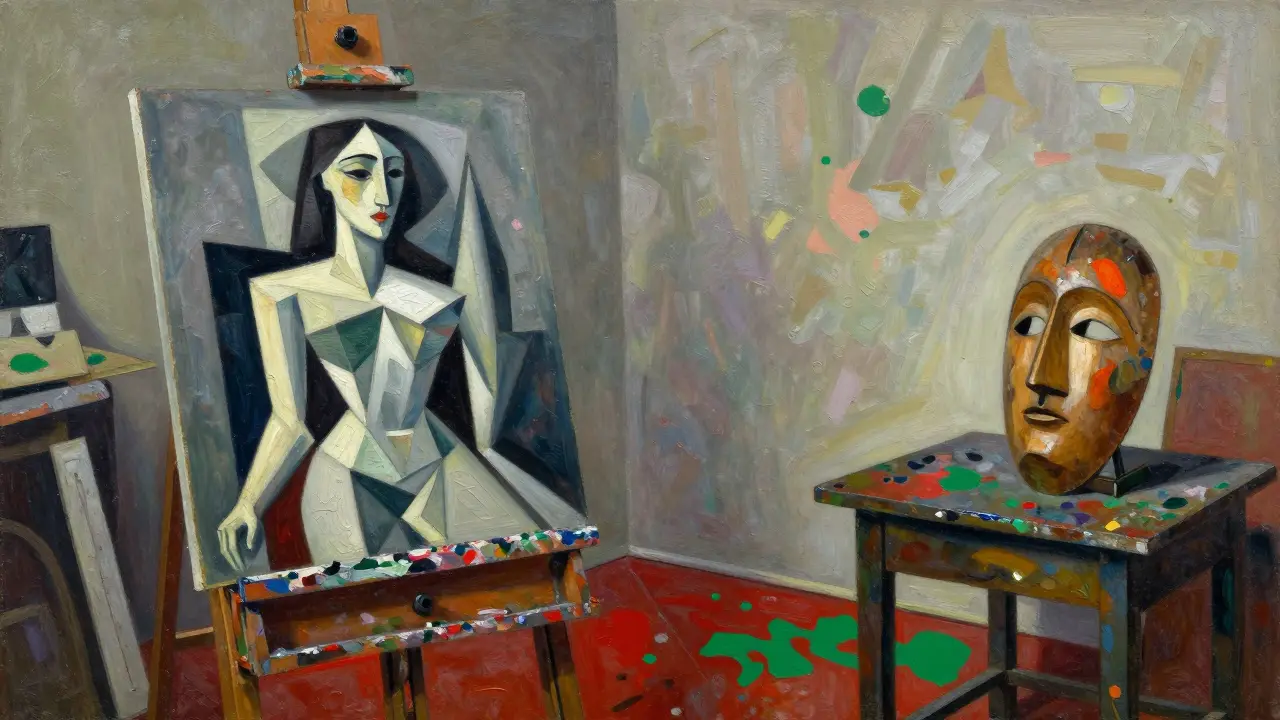
Pablo PicassoSpanish artist who pioneered Cubism using primitive structures took the broken geometry of the mask and applied it to the human figure in his masterpiece, *Les Demoiselles d'Avignon*. The women in that painting don't look like real people. Their eyes are slanted, their noses are angular. You can almost hear the audience gasping in 1907 because they recognized a shift in reality.
Meanwhile, Henri Matisse used the vibrant colors found in textiles collected by the French colonial empire. His Fauvismpainting style characterized by extreme brush strokes and wild use of color was partly inspired by how non-Western cultures prioritized emotion over photographic accuracy. For him, it was less about the shape and more about the feeling of color itself.
Sources of Inspiration and Material
Where did these artists get the physical stuff? In early 1900s Paris, there was a booming trade in "curios." Shops near Place Pigalle sold artifacts directly. The art scene treated these works as equal peers to the great masters, even though the originators-often anonymous artisans in Africa or Oceania-remained nameless to the public.
This access wasn't random. France had vast colonies across Africa and Southeast Asia. Objects flowed back to Europe through military channels and trade. By viewing these functional religious tools as "art," the French painters elevated their culture while simultaneously appropriating another's sacred symbols. It was a complex mix of admiration and theft.
The Dark Side of Appreciation
We have to talk about the uncomfortable truth here. Today, we view this period with skepticism. Calling it "primitivism" implies these source cultures were "backward" and that the Western artists were the ones doing the creative work of refinement. It frames the Global South as the "past" and Europe as the "present."
While the artistic output changed everything, the context matters deeply now. In 2026, art historians recognize that this movement often relied on colonial power dynamics. The artists didn't learn the spiritual meaning behind the Dan mask; they saw it as a shape. When you look at Modigliani's elongated heads, you see Bantu sculpture, but you miss the ancestral reverence embedded in the original carving.
Does this invalidate their genius? Not necessarily, but it complicates it. We have to acknowledge that Primitivism was an aesthetic borrowing that sometimes stripped the work of its original soul to serve Western narratives. It was a mirror held up to Europe, showing its own need for liberation, but the reflection belonged to someone else.
Legacy and Modern Impact
You might think this movement ended with World War I, but its DNA is everywhere. The breaking of form in Cubism came from these ideas. Abstract Expressionism in the 1950s leaned heavily on the notion of "raw" expression that Primitivism championed. Even contemporary artists today engage with this legacy by reclaiming the narrative.
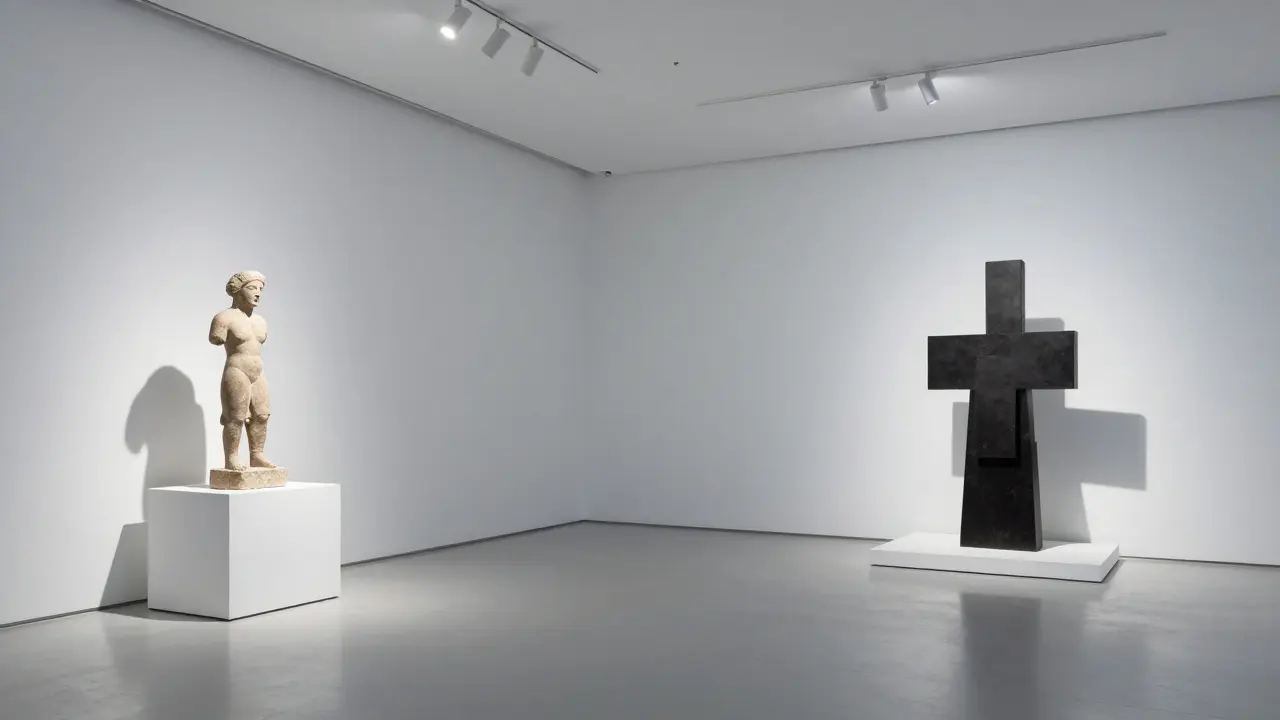
Modern curators now display African sculpture alongside Picasso in galleries, not just in separate anthropology sections. This recontextualizes the history. It forces us to ask: Did Picasso invent the style, or did he borrow a revolution that had already happened centuries before?
Frequently Asked Questions
What is the core definition of Primitivism in art?
Primitivism refers to an early 20th-century tendency among Western artists to imitate and incorporate non-Western styles, particularly African, Oceanic, and Native American art, to challenge established academic standards and express deeper human emotions.
How did African art influence Picasso?
Picasso was inspired by the distorted geometrical features of African masks and sculptures. He adopted the simplified planes and fragmented forms seen in these objects to create Cubist compositions, notably in his 1907 painting Les Demoiselles d'Avignon.
Is Primitivism considered offensive today?
The term is viewed critically today. While historically accurate to the movement, it carries colonial connotations that imply the source cultures were inferior or unsophisticated, ignoring their complex spiritual and artistic histories.
Which other movements overlap with Primitivism?
It overlaps heavily with Fauvism, German Expressionism, and Surrealism. All these movements shared an interest in bypassing intellectual reasoning to tap into instinctive or subconscious creativity.
Where can I see Primitivist art today?
Major museums like the Musée du Quai Branly in Paris and the MoMA in New York hold significant collections that explore both the non-Western originals and the Modernist derivatives created by artists like Picasso and Matisse.