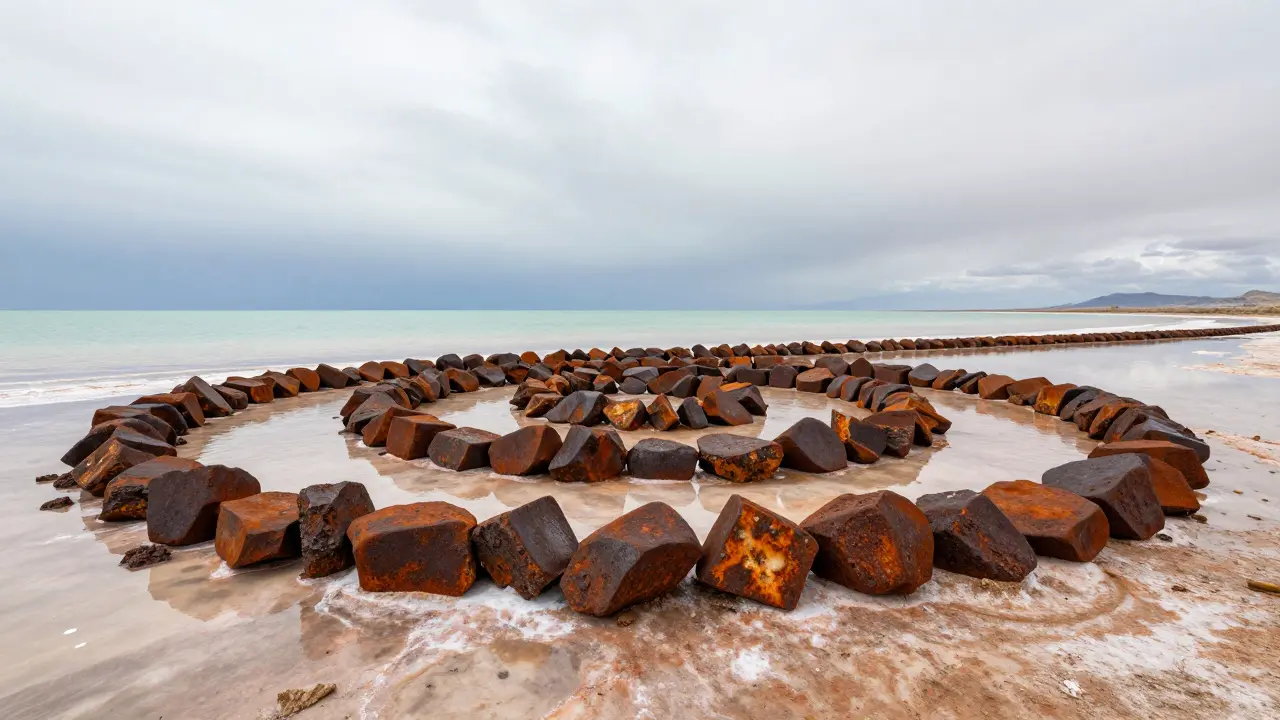
Imagine walking through a field and stumbling upon a massive spiral made of rusted rocks jutting out into a lake. It isn’t a sculpture you can buy in a gallery. You can’t hang it on your wall. In fact, nature is actively trying to destroy it. This is the essence of land art, a movement that kicked down the doors of traditional museums and declared that the earth itself was the ultimate canvas.
In the late 1960s, a group of artists got tired of the commercial art world. They didn’t want their work bought by collectors, stored in climate-controlled warehouses, or reduced to a price tag. Instead, they went to the desert, the mountains, and the oceans to create massive structures using natural materials like stone, soil, wood, and water. This shift didn’t just change where art was made; it changed what art could be.
The Birth of an Outdoor Revolution
To understand why land art emerged when it did, you have to look at the art scene of the mid-1960s. Minimalism was dominant, focusing on simple geometric shapes and industrial materials. But some artists felt this was still too confined. They wanted scale. They wanted time. They wanted entropy-the process of decay-to be part of the artwork.
One pivotal moment happened in 1968. A group of artists, including Robert Smithson, drove to Great Salt Lake in Utah. There, Smithson created Spiral Jetty, a 1,500-foot-long coil of basalt rocks and mud extending into the lake. This wasn't just a pretty shape; it was a statement. The jetty disappears when water levels rise and reappears when they fall. The art changes based on weather, seasons, and geological shifts. It was alive in a way a painting never could be.
Smithson’s essay "The Creative Act and a Process of Nature," published in 1967, laid the theoretical groundwork. He argued that art should not try to conquer nature but interact with it. This philosophy moved away from the idea of the artist as a god-like creator and toward the artist as a participant in natural processes.
Key Figures and Iconic Works
While Smithson is often called the father of land art, he wasn’t alone. Several other artists pushed the boundaries of this medium, each bringing a unique perspective to how humans interact with the landscape.
| Artist | Famous Work | Location | Key Characteristic |
|---|---|---|---|
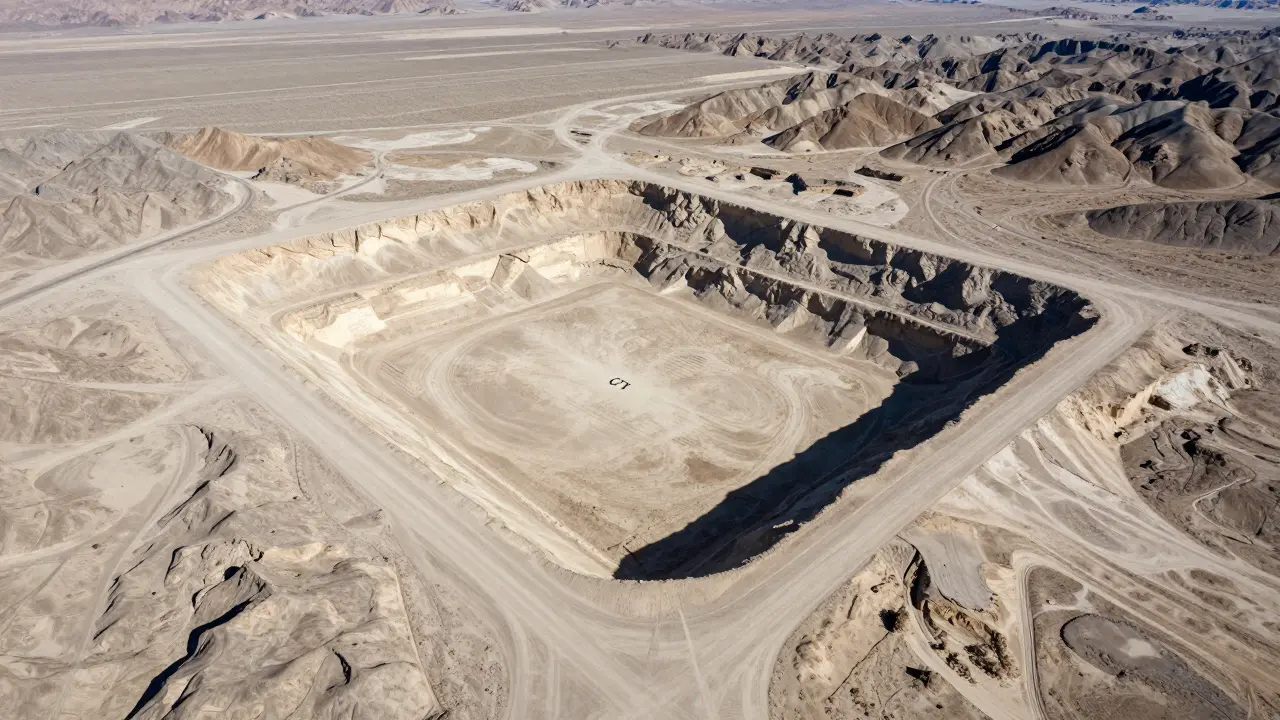
| Michael Heizer | City | Ruby Valley, Nevada | A massive excavation cut into the ground, visible only from the air. |
| Walter De Maria | The Lightning Field | Near Farmington, New Mexico | 400 stainless steel rods arranged in a grid across four acres of high desert. |
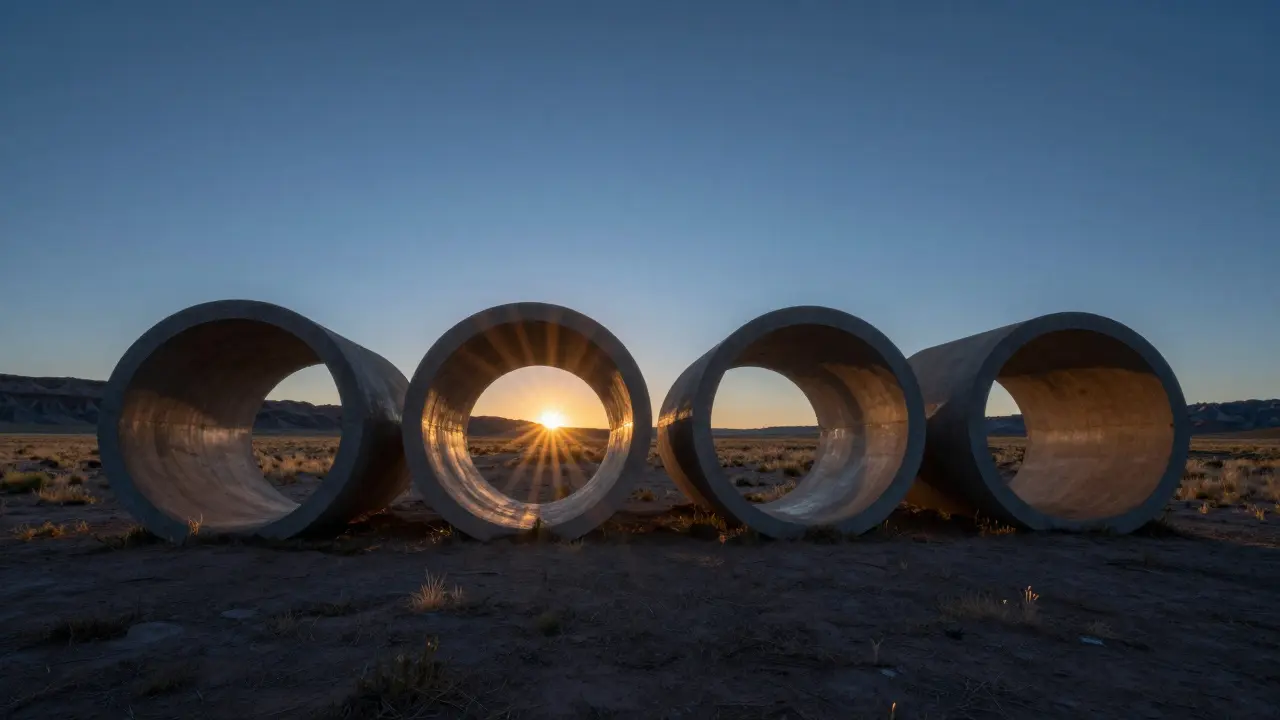
| Nancy Holt | Sun Tunnels | East Canyon, Utah | Four concrete tubes aligned with solstice sunrises and sunsets. |
| Andy Goldsworthy | Various ephemeral works | Global (UK, US, etc.) | Small-scale, temporary pieces using ice, leaves, and stones that decay naturally. |
Michael Heizer’s City is perhaps the most extreme example of scale. Started in 1972, it is a hole in the ground measuring 1,300 feet wide, 1,000 feet long, and 70 feet deep. It is so large that you cannot see the whole thing from the ground. You need a helicopter to appreciate its form. This work challenges the viewer’s perception of space and requires physical effort just to witness it fully.
On the other end of the spectrum is Andy Goldsworthy. Unlike the heavy machinery used by Heizer or Smithson, Goldsworthy uses his hands. He creates delicate sculptures out of ice, petals, and twigs. These works are ephemeral-they last only hours or days before melting, blowing away, or rotting. Goldsworthy documents them with photography, which becomes the permanent record of the transient art. This highlights a core tension in land art: is the art the object, or is it the experience and the memory?
Materials and Methods: Working with the Earth
Land art rejects traditional studio materials like oil paint, bronze, or marble. Instead, it embraces the raw elements found on-site. This choice has profound implications for both the creation and preservation of the work.
Artists often use heavy machinery-bulldozers, excavators, and cranes-to move tons of rock and earth. This industrial approach contrasts sharply with the natural setting, creating a dialogue between human technology and ancient geology. For example, Walter De Maria’s The Lightning Field required precise engineering to place 400 stainless steel poles exactly 28 feet apart across a one-mile-by-four-acre grid. The precision is mathematical, but the result is poetic, capturing lightning strikes during storms.
However, not all land art is industrial. Some artists prefer manual labor to connect more intimately with the material. Nancy Holt’s Sun Tunnels were poured concrete, but their purpose was astronomical. The tunnels frame the sunrise and sunset on the summer and winter solstices. They turn the landscape into a clock, marking time through light and shadow rather than gears or digital displays.
The reliance on natural materials means these artworks are vulnerable. Wind erosion, rain, freezing temperatures, and vegetation growth constantly alter them. This impermanence is not a bug; it’s a feature. It forces viewers to confront the reality that nothing lasts forever, not even art.
Documentation: Photography as the Archive
If you can’t visit a remote desert in Nevada or a frozen lake in Utah, how do you know the art exists? Photography became the primary way land art reached a wider audience. Artists like Robert Smithson understood that the photograph was not just a record; it was a separate artwork in its own right.
Photos of Spiral Jetty circulated in magazines and galleries, allowing people who never saw the actual site to engage with the concept. This raised interesting questions about authenticity. Is the photo the art, or is the distant rock pile the art? Most critics argue that the physical presence is essential, but the photographic archive ensures the work survives in cultural memory even if the physical structure erodes.
This documentation also democratized access. Land art sites are often thousands of miles from major cities. Traveling to see them is expensive and logistically difficult. Photographs brought the grandeur of the American West into urban living rooms, expanding the reach of the movement beyond its geographic limitations.
Criticism and Environmental Impact
Land art hasn’t been without its critics. One major concern is environmental impact. Critics argue that moving tons of rock and digging huge holes disrupts local ecosystems. Even though artists often claim to leave no trace, the process of creation involves fuel consumption, noise pollution, and habitat disturbance.
Another criticism is elitism. While land art claims to reject the commercial gallery system, many of these works are inaccessible to the average person. They are located on private land or in protected areas with restricted access. To see City or The Lightning Field, you often need to pay for a tour or hike for hours. This contradicts the democratic ideals of public art.
Additionally, some indigenous communities have expressed discomfort with land art. For Native Americans, the land is sacred and already holds deep spiritual meaning. Imposing abstract geometric forms onto these landscapes can feel like a continuation of colonial domination, treating the earth as a blank slate for Western artistic expression rather than respecting its existing cultural significance.
Legacy: From Earthworks to Eco-Art
Today, land art has evolved. The raw, destructive energy of the 1970s has given way to more sustainable practices. Contemporary artists focus on restoration, ecology, and climate change. This new wave is often called eco-art or ecological art.
Instead of imposing forms on the landscape, these artists work to heal it. They might plant native species to restore biodiversity, clean up polluted rivers, or create installations that highlight rising sea levels. The goal is no longer just aesthetic beauty but environmental activism.
Agnes Denes’ Wheatfield - A Confrontation (1982) is a precursor to this shift. She planted two acres of wheat on a landfill near the World Trade Center in New York City. The juxtaposition of agricultural production in the heart of a financial district sparked conversations about food, war, and land use. It showed that land art could be political, not just visual.
Modern land art continues to challenge us. It asks us to slow down, to look at the horizon, and to consider our place within the natural world. It reminds us that art doesn’t have to be owned to be valuable. Sometimes, the most powerful art is the kind that returns to the earth.
What is the difference between land art and environmental art?
Land art, particularly from the 1960s and 70s, often involved altering the landscape significantly using heavy machinery and non-biodegradable materials like steel or concrete. Environmental art, or eco-art, tends to be more focused on sustainability, restoration, and raising awareness about ecological issues. While land art is often about form and scale, environmental art is frequently about function and message.
Is Spiral Jetty still there?
Yes, Spiral Jetty still exists in Great Salt Lake, Utah. However, due to fluctuating water levels caused by drought and climate change, it has been submerged for several years. As of recent reports, it has begun to re-emerge as water levels drop, making it visible again to visitors.
Can I visit famous land art sites?
Some sites are open to the public, while others require permits or guided tours. Sun Tunnels in Utah is open to the public with a small fee. The Lightning Field in New Mexico offers limited viewing times. Michael Heizer’s City is accessible via organized tours. Always check current access rules before planning a trip, as conditions can change.
Why did land art decline in popularity?
Land art declined as a dominant movement because it was expensive, logistically difficult, and environmentally controversial. The rise of conceptual art, which prioritized ideas over physical objects, offered a cheaper and less intrusive alternative. Additionally, growing environmental awareness led to stricter regulations on altering public and private lands.
Who is considered the father of land art?
Robert Smithson is widely regarded as the father of land art due to his seminal work Spiral Jetty and his influential writings on the relationship between art and nature. His theoretical framework helped define the movement’s goals and aesthetics.