
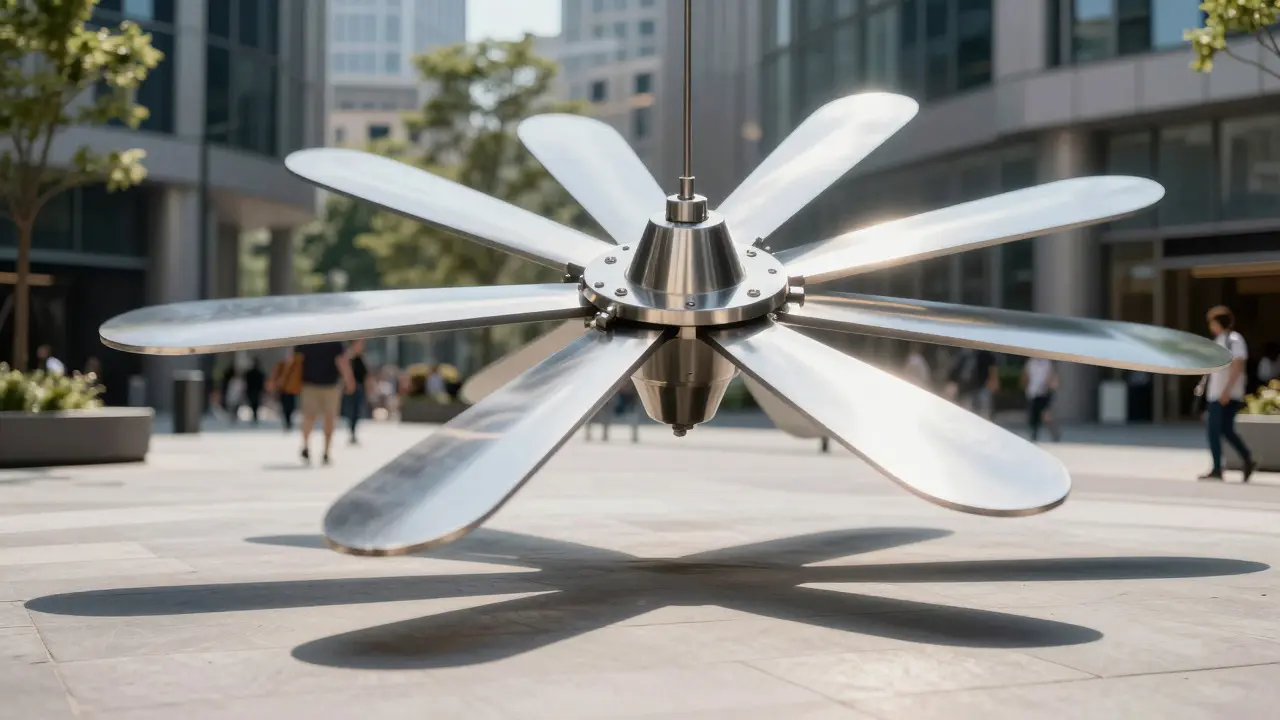
Have you ever walked past a metal structure in a plaza that seemed to breathe? It wasn't alive, but it moved. The blades shifted with the breeze, casting dancing shadows on the pavement. That is Kinetic Art, an art form where motion is an essential component of the work. Unlike a static painting or a stone statue, kinetic art changes over time. It interacts with its environment, often relying on air currents, water, light, or mechanical forces to create a living visual experience.
This movement isn't just about things spinning. It challenges our perception of space, time, and balance. When you look at a traditional sculpture, you walk around it to see different angles. With kinetic art, the artwork comes to you, changing its shape and presence without you having to move. It turns passive observation into an active engagement with physics and chance.
The Roots of Movement in Art
While it might feel like a modern invention, the idea of moving art has deep historical roots. Ancient cultures used sundials and water clocks that were both functional and artistic. However, the specific term "kinetic art" emerged in the early 20th century during the rise of avant-garde movements. Artists began experimenting with how technology could influence aesthetics.
In the 1910s and 1920s, Constructivism and Dadaism laid the groundwork. Artists like Naum Gabo published manifestos arguing that sculpture should not be bound by solid mass alone. He proposed using vibration and light as sculptural materials. This was a radical shift from marble and bronze. Around the same time, Marcel Duchamp created Rotoreliefs, discs that, when spun, created optical illusions of three-dimensional shapes. These experiments proved that motion could alter perception itself.
By the 1950s, the concept had crystallized into a distinct genre. The exhibition "The Kinetic Image" at the Museum of Modern Art in New York helped define the field, showcasing works that relied on actual physical movement rather than just implied motion.
Alexander Calder and the Birth of the Mobile
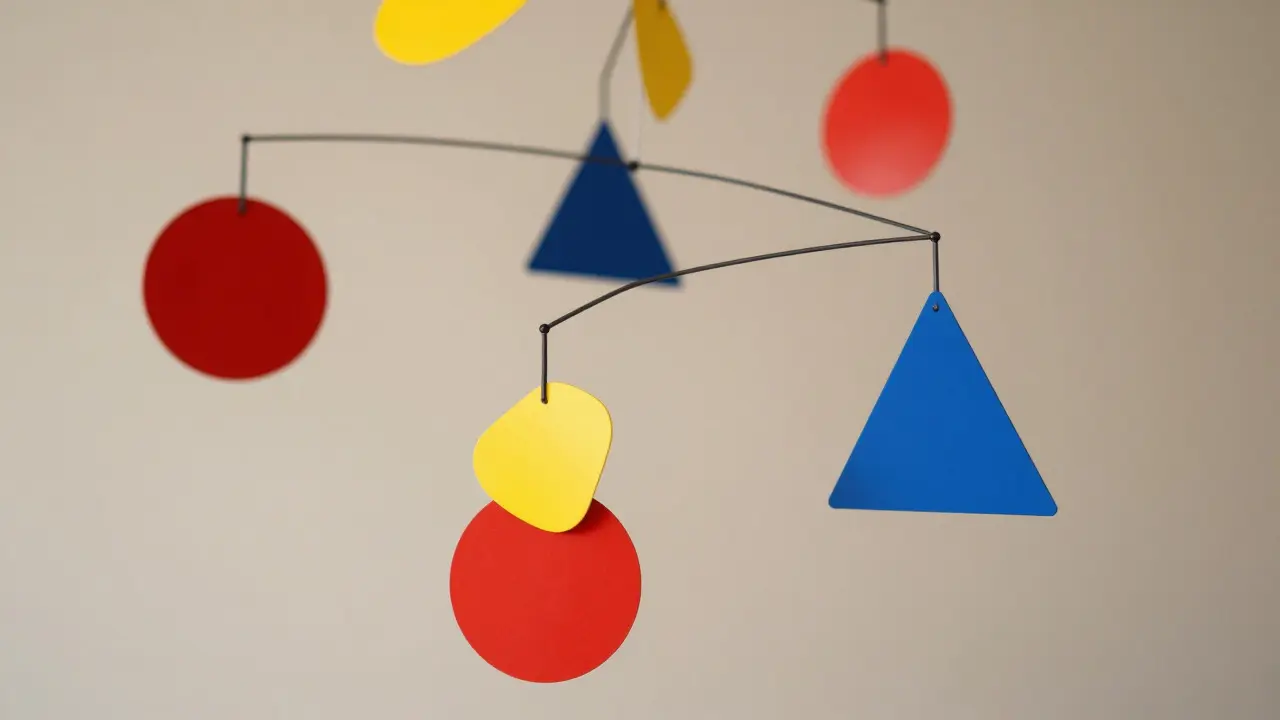
If there is one name synonymous with kinetic art, it is Alexander Calder. An American sculptor born in 1898, Calder revolutionized the field by inventing the mobile. Before Calder, most sculptures were heavy and stationary. Calder introduced lightweight, balanced structures that hung from wires and rotated freely.
Calder's mobiles are masterclasses in equilibrium. Each piece consists of painted metal shapes-circles, triangles, and irregular forms-suspended by thin threads or rods. The center of gravity is calculated so precisely that even the slightest draft in a room sets the entire composition in motion. There is no motor; there is only air and balance.
What makes Calder’s work special is its unpredictability. You can never see the exact same configuration twice. As the mobile rotates, colors clash and align, creating new patterns continuously. This element of chance appeals to viewers because it feels organic. It mimics the way leaves flutter in the wind or clouds drift across the sky. Calder also created "stabiles," which are static sculptures inspired by his mobiles but fixed to the ground. These large-scale steel structures often dot public spaces worldwide, offering a bold contrast to their delicate hanging counterparts.
Mechanical vs. Natural Forces
Kinetic art generally falls into two categories based on what drives the movement: natural forces and mechanical systems. Understanding this distinction helps clarify why some pieces feel serene while others feel energetic.
| Feature | Natural Force Driven | Mechanically Driven |
|---|---|---|
| Power Source | Wind, water, sunlight, heat | Electric motors, gears, hydraulics |
| Motion Pattern | Unpredictable, random, gentle | Precise, repetitive, controlled |
| Maintenance Needs | Low (balance checks) | High (motor repairs, wiring) |
| Typical Examples | Calder's mobiles, wind chimes | Jean Tinguely's machines, digital installations |
Natural force-driven art relies on the environment. A classic example is a wind spinner in a garden. These are accessible forms of kinetic art that bring joy to everyday spaces. They require no electricity and produce no noise. Their charm lies in their simplicity and connection to nature. On the other hand, mechanically driven art offers precision. Artists use motors to create complex rhythms or synchronized movements. This allows for more intricate storytelling through motion, such as a machine that appears to draw itself.
The Chaos of Jean Tinguely
While Calder brought elegance and balance, Swiss artist Jean Tinguely brought chaos and humor. Tinguely is famous for his meta-mechanical sculptures, which are essentially junk-art machines. He built them from scrap metal, old car parts, springs, and motors.
Tinguely’s works often looked like they were falling apart. They clattered, shook, and sometimes even destroyed themselves. His most famous piece, Homage to New York, was a self-destructing machine exhibited at the Guggenheim Museum in 1960. It performed a chaotic dance before collapsing into a pile of ash and smoke. This performance challenged the idea that art must be permanent or beautiful in a traditional sense.
Tinguely’s approach highlights the absurdity of industrialization. By making machines that do nothing useful except make noise and move erratically, he commented on the mechanization of modern life. His work invites laughter and confusion, proving that kinetic art doesn't always have to be graceful. It can be loud, messy, and provocative.
Light and Optics in Motion
Motion isn't just about physical objects moving through space. It can also involve light and shadow. Op Art (Optical Art) often intersects with kinetic principles. Artists like Victor Vasarely created static images that appeared to vibrate or pulse due to geometric patterns. However, true kinetic op art takes this further by physically rotating elements to create moiré patterns.
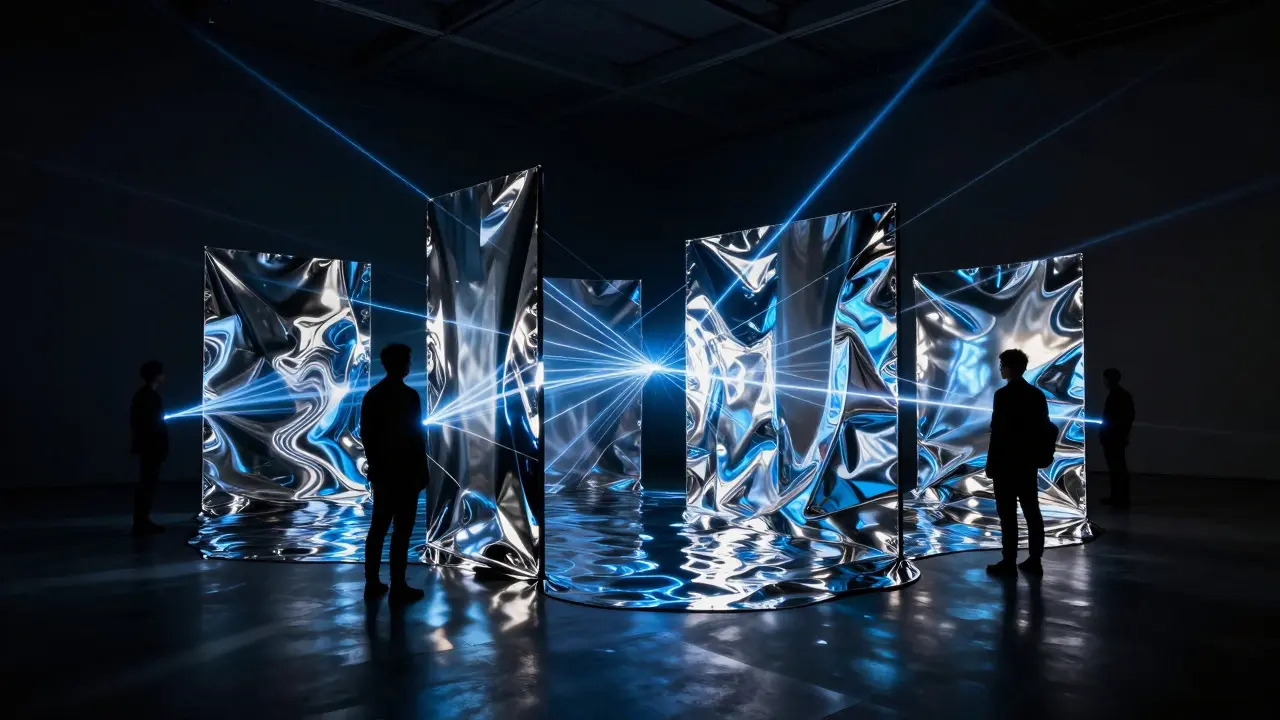
Consider a simple disc with concentric circles. When you rotate it slowly, your eye struggles to track the lines, creating a sensation of depth or movement. Artists like Getulio Alviani used thousands of tiny aluminum mirrors attached to flexible sheets. As viewers walked past, their body heat and air displacement caused the mirrors to ripple, reflecting light in shimmering waves. This type of work blurs the line between the viewer and the artwork. You become part of the mechanism that creates the visual effect.
Kinetic Art in Public Spaces
Today, kinetic art is increasingly common in urban environments. Cities install large-scale kinetic sculptures to enliven plazas, train stations, and office lobbies. These installations serve multiple purposes. They act as landmarks, provide entertainment, and encourage people to pause and observe their surroundings.
One notable example is the Rain Room installation by Random International. While technically an immersive environment, it functions as kinetic art because it uses sensors and automated systems to control water flow. Visitors walk through a downpour without getting wet because the rain stops wherever they step. This interaction between human movement and technological response creates a magical experience. It demonstrates how kinetic art can evolve beyond simple mechanics into smart, responsive environments.
Smaller scale examples include kinetic facades on buildings. Some modern architects incorporate sun-tracking panels that open and close like petals throughout the day. These aren't just functional shading devices; they are aesthetic statements that change the building's appearance hourly. This integration of function and art shows how kinetic principles are influencing design beyond traditional galleries.
How to Appreciate Kinetic Art
Viewing kinetic art requires a different mindset than viewing a painting. Here are a few tips to enhance your experience:
- Give it time: Don't just glance and move on. Stand still for a minute or two. Watch how the piece evolves. Notice the speed of rotation, the rhythm of oscillation, or the randomness of the movement.
- Observe the mechanics: Try to understand how the movement is achieved. Is it balanced on a single point? Is there a hidden motor? Appreciating the engineering adds another layer of enjoyment.
- Notice the environment: See how the artwork interacts with its surroundings. Does it cast moving shadows? Does it reflect nearby lights? How does the ambient temperature or airflow affect it?
- Engage your senses: Many kinetic sculptures produce sound. Listen to the clicks, whirs, or swishes. This auditory component is often intentional and adds to the overall atmosphere.
The Future of Moving Art
As technology advances, so does kinetic art. Digital fabrication tools like 3D printing allow artists to create complex geometries that were previously impossible to manufacture. Smart materials, such as shape-memory alloys, can change form in response to heat or electricity, enabling new types of movement.
We are also seeing a rise in interactive kinetic installations powered by AI and sensors. These works respond to data streams, social media feeds, or biometric inputs from viewers. For instance, a sculpture might speed up its rotation if the crowd gets louder or change color based on the local weather forecast. This trend suggests that the future of kinetic art will be deeply connected to real-time information and human behavior.
Whether it's a delicate mobile in a quiet corner or a massive robotic facade in a bustling city, kinetic art reminds us that beauty is not static. Life is in constant motion, and art that captures this truth resonates with us on a fundamental level. It breaks the boundary between the object and the observer, inviting us to participate in the creation of the moment.
What is the difference between kinetic art and Op Art?
Op Art (Optical Art) uses static patterns to create the illusion of movement, vibration, or flashing in the viewer's eye. Kinetic art involves actual physical movement of the artwork itself. While they often overlap, kinetic art requires the object to move in reality, whereas Op Art tricks the brain into perceiving motion where none exists.
Who invented the mobile sculpture?
Alexander Calder invented the mobile sculpture in the late 1920s and early 1930s. The term "mobile" was coined by French artist Marcel Duchamp, derived from the word "mobility." Calder's innovation was balancing lightweight shapes so they could rotate freely with air currents.
Is kinetic art difficult to maintain?
It depends on the mechanism. Simple wind-driven mobiles require minimal maintenance, mostly just occasional cleaning and checking for rust. Mechanically driven pieces with motors, gears, and electronics need regular servicing to ensure smooth operation and prevent breakdowns. Outdoor kinetic sculptures also face wear from weather exposure.
Can I buy kinetic art for my home?
Yes, many contemporary artists and designers create smaller-scale kinetic pieces suitable for homes. Wind spinners, desktop mobiles, and small motorized sculptures are widely available online and in art galleries. When buying, consider the space's lighting and airflow to ensure the piece performs well.
What materials are commonly used in kinetic art?
Artists use a wide variety of materials, including metal (steel, aluminum, brass), wood, plastic, glass, and paper. Motors, wires, bearings, and magnets are common mechanical components. Some artists also use light-emitting diodes (LEDs), mirrors, and water as integral parts of the kinetic system.