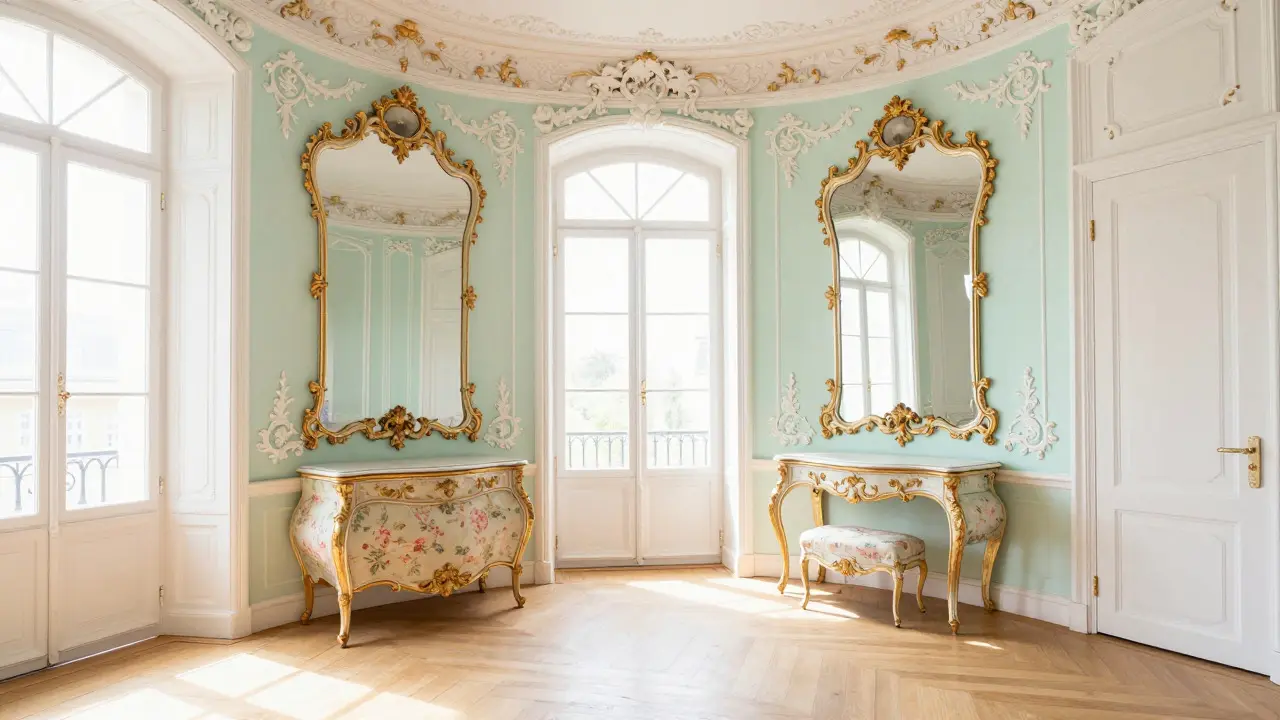
Picture a room where every surface curves. Walls are not flat planes but sweeping arcs covered in delicate plasterwork. Furniture looks less like heavy blocks and more like sculpted lace made of wood and gilding. This is the world of Rococo, a style that emerged in early 18th-century France and fundamentally changed how we think about living spaces. While many people associate this era with excess and frivolity, its impact on the evolution of interior design is far more profound than simple decoration. It introduced concepts of intimacy, lightness, and asymmetry that still influence modern homes today.
The Birth of Intimacy in Interior Spaces
Before Rococo, European interiors were dominated by the Baroque style. Think of grand halls, dark woods, and massive chandeliers designed to impress visitors and display power. The focus was outward, toward status and spectacle. But in the 1730s, something shifted. Wealthy Parisians began moving away from large public salons into smaller, private rooms known as salons or boudoirs. These spaces were designed for conversation, romance, and leisure rather than formal ceremonies.
This shift required a new aesthetic. The heavy symmetry of Baroque felt oppressive in these smaller contexts. Designers needed a language that felt lighter, more playful, and more personal. Enter Jean-Antoine Gaudreau, an architect who helped define the early Rococo sensibility by breaking rigid geometric rules. He and his contemporaries replaced straight lines with curves. They swapped dark mahogany for pale pastels and gold leaf. The result was an environment that felt airy and inviting, prioritizing the comfort of the inhabitants over the awe of the observer.
This move toward intimacy was revolutionary. It marked the first time interior design began to prioritize psychological comfort and social interaction over sheer scale. Today, when you design a cozy reading nook or a intimate dining area, you are echoing the Rococo desire for personal sanctuary within the home.
Asymmetry and Nature: Breaking the Rules
If there is one visual hallmark of Rococo, it is asymmetry. For centuries, Western design had been obsessed with balance. If you placed a vase on the left, you needed a matching one on the right. Rococo designers rejected this rigidity. They looked to nature for inspiration, observing how vines grow, how shells spiral, and how clouds form. Nature is rarely symmetrical, and neither was their work.
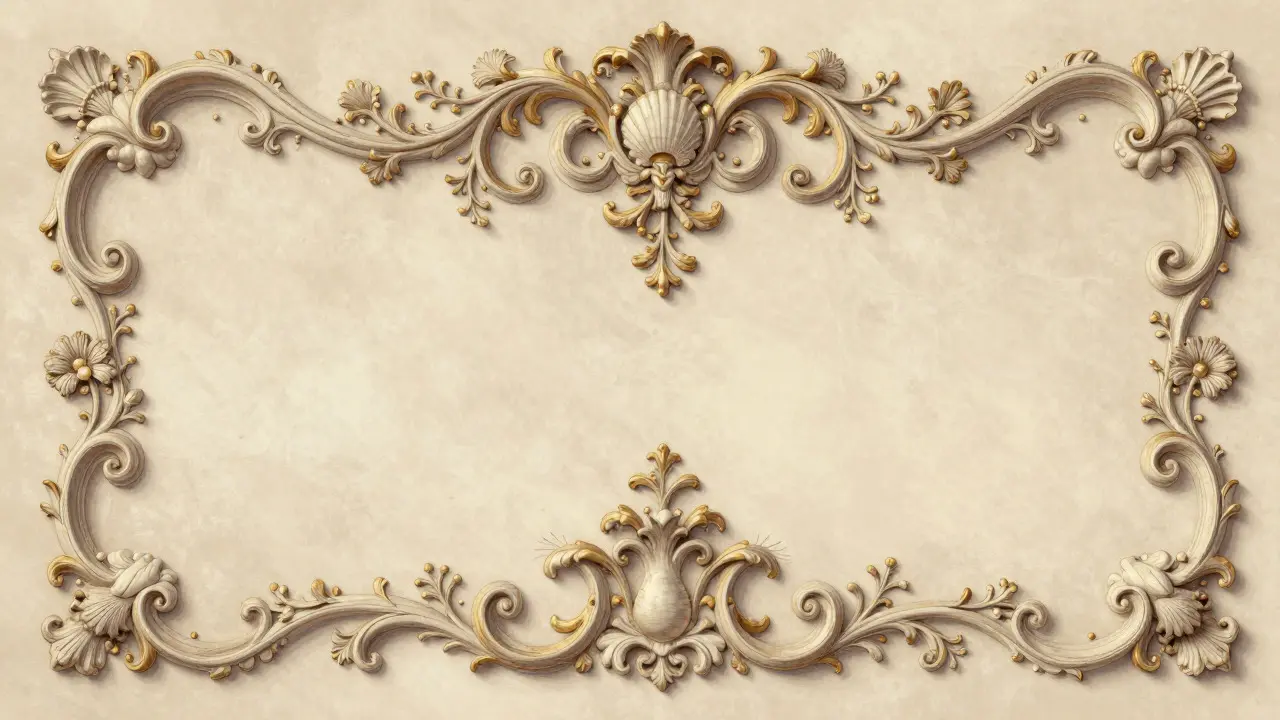
François Boucher, a leading painter of the era, often depicted scenes filled with swirling foliage and organic forms that mirrored the architecture around them. In interior design, this translated to wall panels (known as boiserie) that featured uneven arrangements of scrolls, shells, and floral motifs. A mirror might be framed by a cascade of leaves on one side and a cluster of flowers on the other. There was no center line to follow, only a sense of dynamic movement.
This embrace of irregularity freed up space visually. Because the eye was constantly drawn along curving lines rather than stopping at rigid corners, rooms felt larger and more fluid. Modern open-plan living spaces owe a debt to this philosophy. By removing visual barriers and using flowing transitions between areas, contemporary designers achieve the same sense of expansiveness that Rococo architects created through ornate, asymmetric detailing.
Light, Color, and the Illusion of Space
Rococo interiors are famous for their lightness, but this was not just a stylistic choice; it was a technical achievement. Before electric lighting, rooms relied entirely on natural light and candles. Dark colors absorbed light, making spaces feel cramped and gloomy. Rococo designers solved this by embracing a palette of whites, creams, soft pinks, mint greens, and sky blues. These pastel tones reflected light, bouncing it around the room to create a luminous atmosphere.
Mirrors played a crucial role in this strategy. Large, intricately framed mirrors were placed opposite windows to double the amount of daylight entering the space. Juste-Aurèle Meissonnier, a goldsmith and designer, pioneered the use of elaborate mirror frames that integrated seamlessly with wall decorations. His designs often featured C-scrolls and S-curves that led the eye from the wall to the glass and back again, creating a continuous loop of reflection.
Today, we use similar techniques to make small apartments feel bigger. Light paint colors, strategic mirror placement, and minimal clutter are standard advice for maximizing perceived space. Rococo proved that color and reflection could manipulate our perception of volume long before modern psychology studied the effects.
Furniture as Sculpture
In earlier periods, furniture was functional and sturdy. Chairs were built to last generations, often with thick legs and heavy upholstery. Rococo turned furniture into art. Pieces became lighter, more delicate, and highly decorative. Legs were carved into cabriole shapes-curved like a horse’s knee-and feet were often shaped like animal claws or shells.
André-Charles Boulle, though associated with the preceding Baroque period, influenced Rococo cabinetmakers with his intricate marquetry techniques. However, Rococo artisans took this further, using lighter woods like walnut and spruce, which were easier to carve into complex forms. Upholstery fabrics featured floral patterns that matched the wall decor, creating a cohesive look throughout the room.
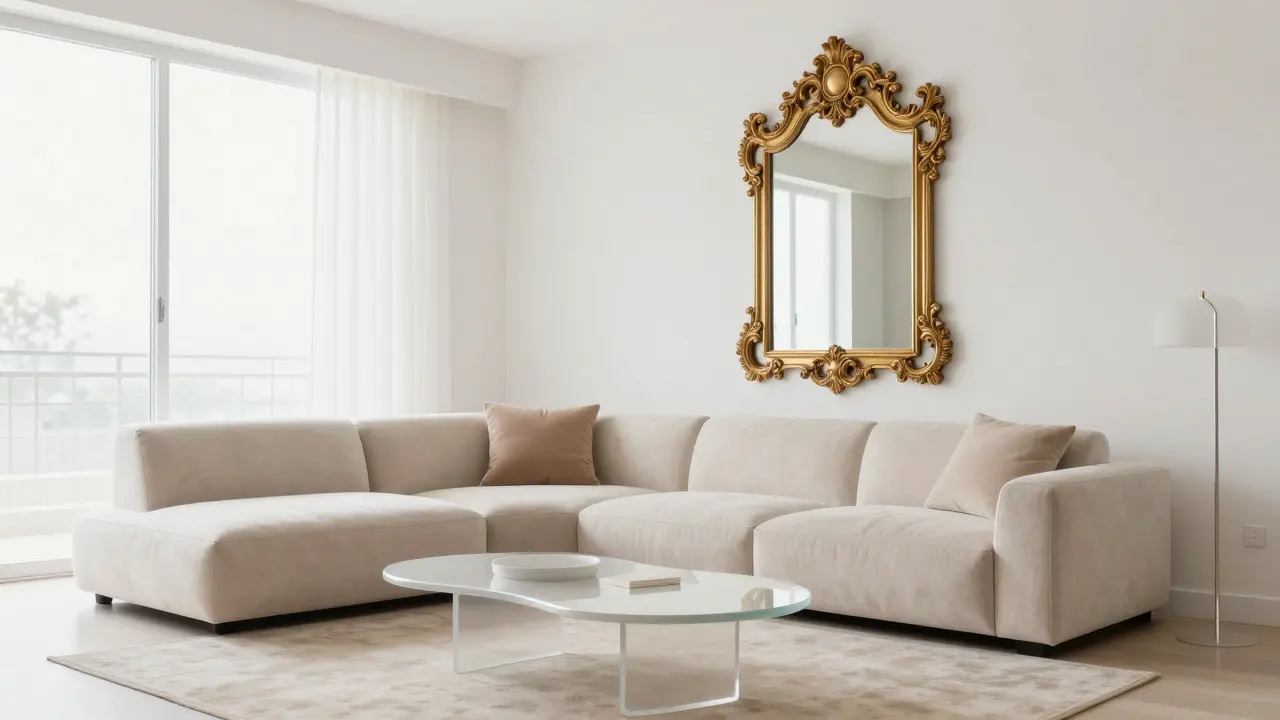
The most iconic piece of Rococo furniture is the commode, a low chest of drawers with curved fronts. Unlike rectangular dressers, commodes fit into corners and against walls without disrupting the flow of the room. Their serpentine shapes echoed the architectural curves surrounding them. Today, curved sofas and organic-shaped coffee tables reflect this same desire for furniture that complements the architecture rather than dominating it.
The Decline and Legacy of Rococo
By the mid-18th century, tastes began to change. Critics argued that Rococo was too frivolous, lacking the moral seriousness and classical order they valued. The rise of Neoclassicism brought back straight lines, ancient Greek and Roman motifs, and a sense of restraint. Rococo fell out of favor, dismissed as a decadent interlude in the history of design.
However, its legacy endured. During the 19th century, Victorian designers revived Rococo elements, particularly in the use of ornate moldings and pastel colors. In the 20th century, Art Deco borrowed its love of luxury and craftsmanship, while mid-century modernism embraced its emphasis on functionality and human scale.
Today, Rococo influences can be seen in various ways. The "Shabby Chic" trend popularized in the late 20th century draws heavily on Rococo’s distressed finishes and romantic aesthetics. Contemporary designers also use Rococo-inspired curves in lighting fixtures and bathroom vanities, blending historical elegance with modern materials like acrylic and metal.
Why Rococo Still Matters Today
Understanding Rococo helps us appreciate the importance of emotional resonance in design. It reminds us that spaces should not just be efficient or beautiful, but also engaging and comfortable. The style teaches us that asymmetry can create interest, that light can transform a room, and that furniture can be both functional and artistic.
For those looking to incorporate Rococo elements into modern homes, start small. Add a curved mirror with an ornate frame, choose a sofa with rolled arms, or select wallpaper with subtle floral patterns. You don’t need to replicate the entire style to benefit from its principles. Focus on creating a sense of flow, using light colors to brighten spaces, and choosing pieces that invite touch and interaction.
What defines Rococo interior design?
Rococo interior design is characterized by asymmetry, intricate ornamentation, pastel color palettes, and curved lines. It emphasizes lightness, intimacy, and natural motifs such as shells, flowers, and foliage. Key features include ornate mirrors, gilded details, and furniture with cabriole legs.
How did Rococo differ from Baroque design?
Baroque design is grand, symmetrical, and dramatic, often using dark colors and heavy materials to convey power. Rococo, in contrast, is lighter, more playful, and asymmetrical. It focuses on intimacy and comfort, using pastels and delicate curves to create a sense of airiness and elegance.
Can Rococo elements work in modern homes?
Yes, Rococo elements can enhance modern homes by adding warmth and character. Incorporating curved furniture, ornate mirrors, or pastel accents can bring a touch of historical elegance without overwhelming the space. Balancing these features with clean lines and minimal clutter ensures a contemporary feel.
Who were key figures in Rococo design?
Key figures include Jean-Antoine Gaudreau, who pioneered architectural asymmetry; François Boucher, whose paintings inspired decorative themes; Juste-Aurèle Meissonnier, known for innovative mirror frames; and André-Charles Boulle, whose marquetry techniques influenced later cabinetmakers.
Why did Rococo decline in popularity?
Rococo declined due to changing cultural values. Critics viewed it as overly frivolous and lacking moral seriousness. The rise of Neoclassicism, which emphasized order, simplicity, and classical references, aligned better with Enlightenment ideals, leading to a shift away from Rococo’s ornate style.