Before pop art, modern art was serious, abstract, and often distant. Paintings were meant to be pondered in silence, not laughed at or pinned to your fridge. Then, in the mid-1950s, something changed. Artists started using soup cans, comic strips, and celebrity faces as their subjects. They didn’t just paint them-they celebrated them. Pop art didn’t just enter the art world. It crashed through the door, turned up the volume, and made everyone pay attention.
What Pop Art Actually Was
Pop art wasn’t a style you could pin down with brushstrokes or color palettes. It was a mindset. It took the everyday objects of postwar life-bottles, advertisements, packaging, TV screens-and turned them into art. No mythological gods, no moody landscapes. Just Coca-Cola bottles and Marilyn Monroe, repeated over and over. The point wasn’t to make them beautiful. It was to make you wonder: why are we treating this stuff like it’s sacred?
It started in Britain with artists like Richard Hamilton, who put together a collage called Just What Is It That Makes Today’s Homes So Different, So Appealing? in 1956. A bodybuilder, a TV, a vacuum cleaner, a canned ham-all arranged like a dream ad. It was funny, ironic, and totally new. By the early 1960s, the movement exploded in New York. That’s where Andy Warhol and Roy Lichtenstein became the faces of pop art.
Andy Warhol and the Factory
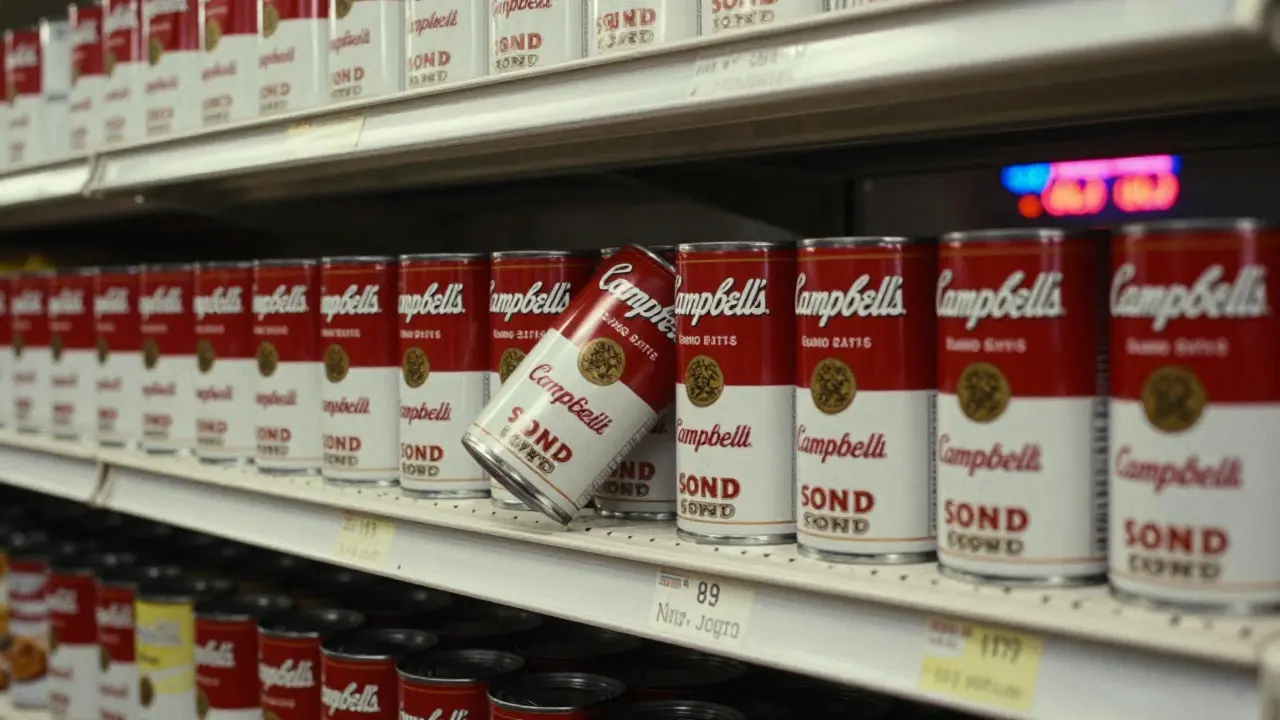
Andy Warhol didn’t just paint soup cans-he turned them into icons. His Campbell’s Soup Cans from 1962 wasn’t a critique of consumerism. It was a mirror. He didn’t judge the cans; he just showed them exactly as they were: identical, mass-produced, everywhere. He didn’t hide his process either. He used silkscreen printing, the same technique used on T-shirts and posters. That was the point. Art didn’t have to be hand-painted to matter.
Warhol’s studio, The Factory, became a hub for musicians, actors, and outsiders. It wasn’t just a place to make art-it was a performance. People came to be seen, to be part of the scene. Warhol didn’t care if you were famous or not. If you showed up, you were part of the artwork. His Brillo Boxes looked exactly like the cardboard boxes in grocery stores. You couldn’t tell the difference unless someone told you. That’s what made it powerful. It blurred the line between what’s real and what’s art.
Roy Lichtenstein and the Comic Strip Revolution
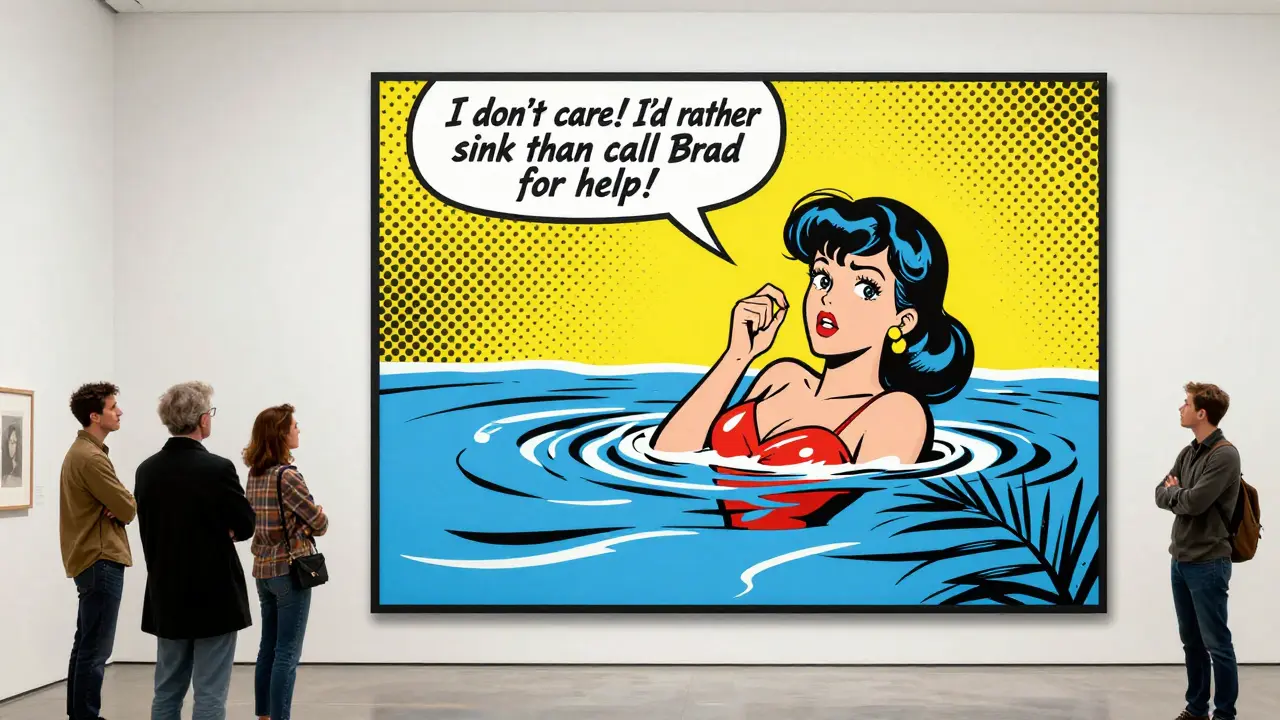
If Warhol made art out of products, Roy Lichtenstein made it out of stories. He took panels from comic books-romance, war, action-and blew them up to gallery size. He painted them with bold outlines, primary colors, and those signature Ben-Day dots. His painting Drowning Girl (1963) copied a panel from a romance comic, but now it hung in a museum. The dramatic text bubble-“I don’t care! I’d rather sink than call Brad for help!”-wasn’t just melodrama. It was a commentary on how emotions were sold to women through media.
People laughed at first. “That’s not art,” they said. But Lichtenstein didn’t care. He was asking: Why is a painting by Picasso considered genius, but a comic artist’s work is trash? He forced the art world to confront its own snobbery. His work wasn’t about skill-it was about value. Who decides what’s worth looking at?
Pop Art and the Rise of Mass Culture
Pop art didn’t happen in a vacuum. It happened because of television, advertising, and the rise of consumer culture. After World War II, people had money. They bought refrigerators, cars, and washing machines. They watched the same commercials, read the same magazines, and followed the same celebrities. Pop artists didn’t invent this culture-they just held up a mirror to it.
Before pop art, art was something you had to be educated to understand. Pop art said: you already understand this. You see these images every day. Why pretend they’re not important? Warhol’s Marilyn Diptych (1962) showed the actress’s face 50 times, fading from bright color to gray. It wasn’t just a portrait. It was about fame, death, and how quickly we consume people until they’re just another image.
Pop art made art democratic. You didn’t need to know about Renaissance techniques to get it. You just needed to have seen a cereal box or a movie poster. That’s why it spread so fast. It spoke the language of the street, not the gallery.
The Legacy: Where Pop Art Lives Today
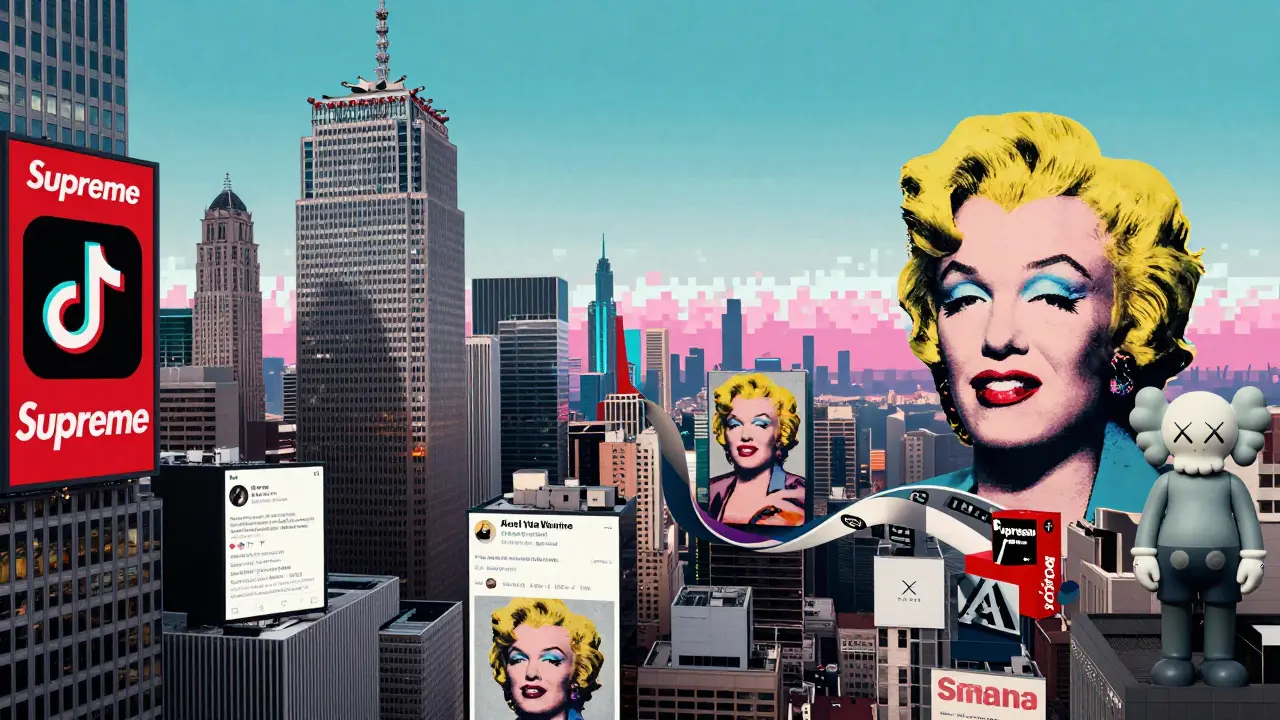
Pop art didn’t die. It just changed shape. Today, you see its DNA everywhere. Street artists like Banksy use pop imagery to make political statements. Social media influencers post selfies like Warhol’s celebrity portraits-repeated, filtered, commodified. Brands like Supreme and KAWS use pop art’s repetition and bold graphics to sell clothes. Even TikTok trends follow the same logic: take something ordinary, repeat it, add humor, and watch it go viral.
Museums still fight over Warhol’s work. A single Marilyn sold for $195 million in 2022. But the real victory isn’t the price tag. It’s that pop art made people rethink what art could be. It didn’t need to be rare. It didn’t need to be profound. It just needed to be real.
Why It Still Matters
Pop art taught us that art doesn’t have to be separate from life. It can be part of it. That’s why it still resonates. In a world where we scroll through ads, memes, and product images every day, pop art feels more relevant than ever. It asked the right question: if we live in a world shaped by images, shouldn’t art reflect that?
It didn’t just change what art looked like. It changed who could make it, who could understand it, and why it mattered. You don’t need a degree to get pop art. You just need to have bought something, watched something, or felt something because of an image. That’s the real legacy.
What was the main goal of pop art?
The main goal of pop art was to challenge the idea that art had to be serious, exclusive, or difficult to understand. Artists used everyday objects and mass media imagery to show that ordinary life was just as worthy of artistic attention as traditional subjects like landscapes or religious scenes. They wanted to break down the barrier between high art and popular culture.
Is pop art still relevant today?
Yes, pop art is more relevant than ever. Its influence is visible in social media, advertising, fashion, and digital art. Memes, influencer culture, and branded merchandise all follow pop art’s logic: repeat an image, make it bold, and embed it into daily life. Artists like KAWS and street designers continue the tradition by turning commercial visuals into fine art.
How did Andy Warhol change the art world?
Andy Warhol changed the art world by treating mass-produced objects like art and using industrial techniques like silkscreen printing. He showed that art didn’t need to be handmade or unique to be valuable. His work blurred the line between artist and celebrity, and his studio, The Factory, turned art-making into a social spectacle. He made fame itself a subject of art.
Why did pop art use bright colors and bold lines?
Bright colors and bold lines were borrowed directly from advertising and comic books-two major forces in postwar mass media. These visual styles were designed to grab attention quickly. Pop artists used them to mimic the look of commercial imagery, not to decorate. The goal was to make viewers recognize the source and question why that style was considered "low" in art but "high" in ads.
Was pop art meant to criticize consumer culture?
It wasn’t always criticism. Some artists, like Warhol, were more observers than critics. They didn’t condemn consumer culture-they reflected it. Others, like Lichtenstein, exposed how emotions were manipulated through media. The power of pop art was that it didn’t give you one answer. It made you ask the question: are we being sold something, or is this just how life looks now?