Imagine reading a book where the sentences don't follow grammar rules, the plot jumps around in time, and the characters speak in fragments. For readers today, this might feel like a puzzle. But for writers in the early 20th century, it was a revolution. This is the world of Avant-garde, which means "vanguard" or "advance guard" in French. These were the experimental movements that didn't just change how stories were told-they changed how we think about reality itself.
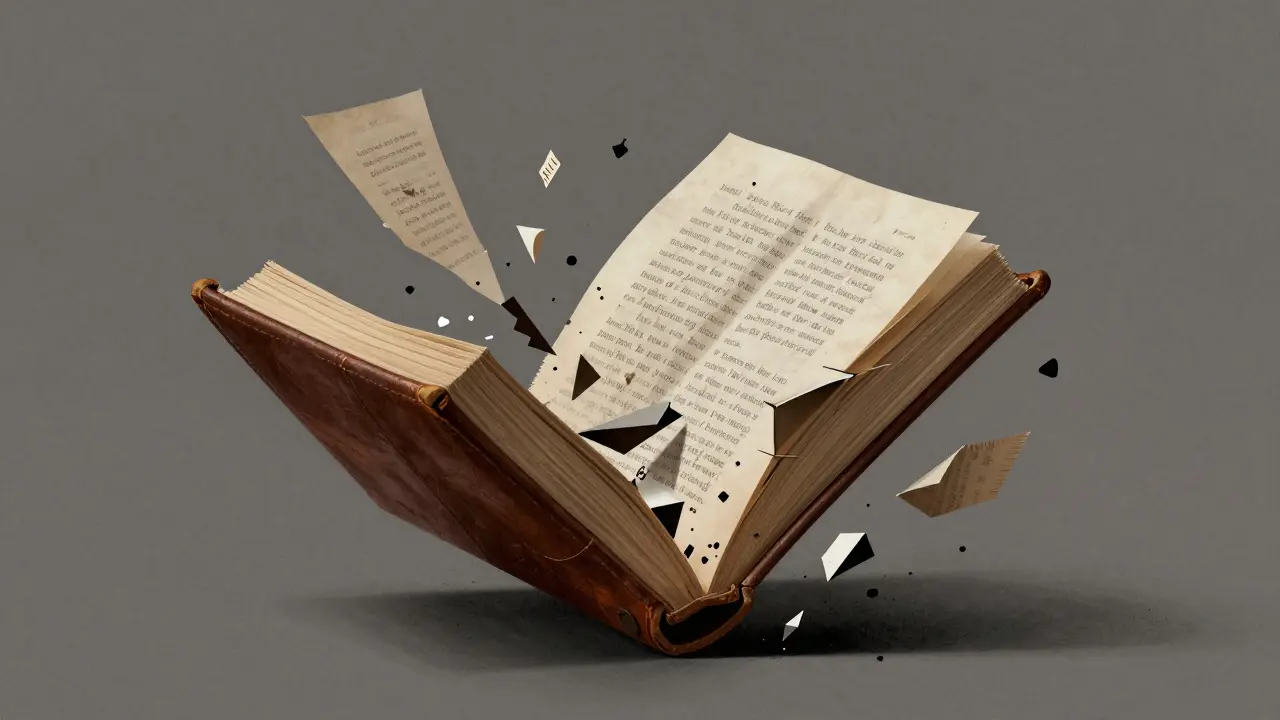
The avant-garde wasn't just a style; it was a reaction. It emerged when the old ways of seeing the world collapsed under the weight of industrialization, world wars, and rapid social change. Writers couldn't use traditional Victorian structures to describe a world that felt broken. So they broke the structure themselves. If you want to understand modern literature, you have to look at the radical experiments that came before it.
The Core Philosophy: Art as Life
At its heart, the avant-garde believed that art should not just reflect life-it should be life. Traditional literature often had a clear beginning, middle, and end, with moral lessons wrapped neatly inside. The avant-garde rejected this. They wanted to capture the raw, chaotic experience of being human.
This shift required new tools. Writers started using techniques that mimicked the way our minds actually work. Instead of linear narratives, they used fragmentation. Instead of clear dialogue, they used interior monologues. The goal was authenticity over comfort. When you read these works, you aren't just observing characters; you are stepping into their unfiltered thoughts.
Consider the concept of "defamiliarization." This idea, popularized by Russian Formalists, suggests that art should make the familiar strange. By breaking language conventions, writers force readers to pay attention to every word. You stop skimming and start feeling the texture of the text. This technique became a hallmark of modernist writing.
Key Movements That Redefined Storytelling
The term "avant-garde" covers several distinct movements, each with its own flavor but sharing a common rebellious spirit. Understanding these specific groups helps clarify how modernist literature evolved.
| Movement | Time Period | Core Technique | Key Figure |
|---|---|---|---|
| Dadaism | 1916-1924 | Nonsense, anti-art, randomness | Hugo Ball |
| Surrealism | 1920s-1950s | Dream logic, subconscious imagery | André Breton |
| Futurism | 1909-1944 | Speed, technology, violence | Filippo Tommaso Marinetti |
| Expressionism | 1905-1930s | Distorted reality, emotional intensity | Frank Wedekind |
Dadaism was perhaps the most radical. Born out of the horror of World War I, Dadaists believed that if society could produce such senseless destruction, then art should also be senseless. They used collage, chance operations, and nonsense poetry to mock traditional culture. It wasn't about beauty; it was about shock.
Surrealism took a different path. Influenced by Sigmund Freud's theories on the unconscious, Surrealists tried to bridge the gap between dreams and reality. They used automatic writing-writing without thinking-to let the subconscious flow onto the page. This resulted in vivid, often bizarre imagery that challenged logical reasoning.
Futurism celebrated speed, technology, and youth. While more common in visual arts, Futurist ideas influenced literature through fragmented syntax and dynamic pacing. They wanted to destroy museums and libraries, replacing them with the energy of the machine age.
Stream of Consciousness: Mapping the Mind
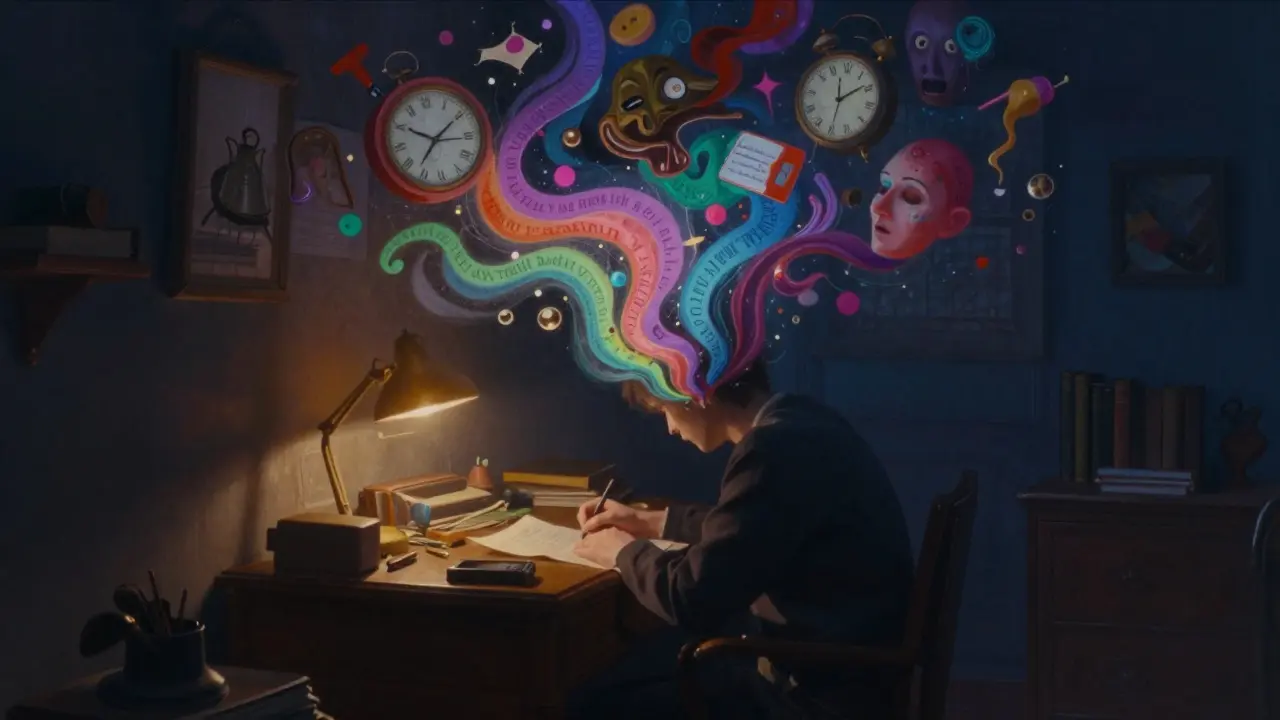
If there is one technique that defines the link between the avant-garde and modernist literature, it is stream of consciousness. Before this method, novels were usually told from an external perspective. The narrator described what characters did and said, but rarely showed exactly what they thought.
Avant-garde writers argued that this was dishonest. Our minds don't think in complete sentences. We jump from memory to sensation to abstract thought in milliseconds. To capture this, writers like James Joyce and Virginia Woolf developed stream of consciousness narration.
In this style, punctuation often disappears. Tenses shift suddenly. Internal associations drive the narrative rather than external events. Reading it can be difficult because you have to navigate the character's mind directly, without a guide. But it offers an intimacy that traditional storytelling cannot match. You hear the character's voice exactly as they hear it themselves.
This technique relied heavily on earlier avant-garde experiments in poetry and visual art. The idea that form should follow function meant that if the function was "thinking," the form had to be fluid and non-linear.
James Joyce and the Ultimate Experiment
No discussion of avant-garde influence is complete without mentioning James Joyce. He stands as the bridge between radical experimentation and canonical literature. His novel Ulysses is often cited as the peak of modernist achievement.
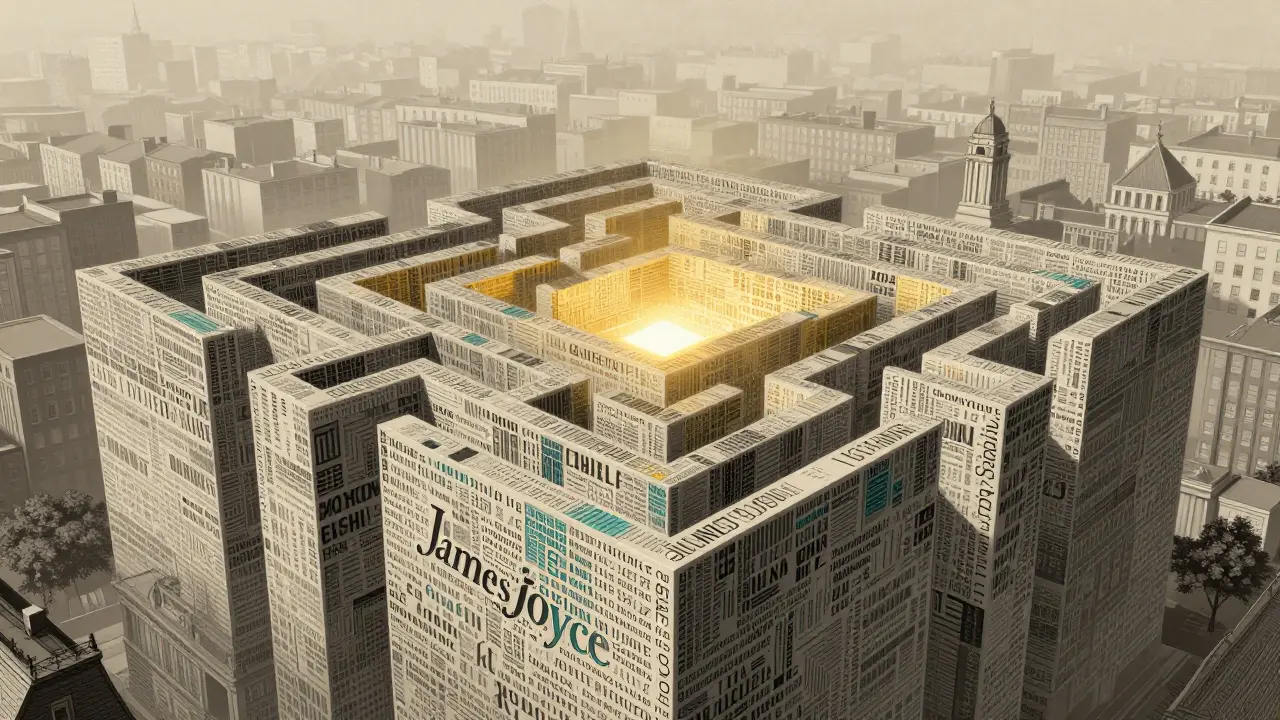
Joyce didn't just write a story; he constructed a linguistic labyrinth. In Ulysses, each chapter uses a different style, mimicking various forms of communication from newspaper headlines to religious hymns. This polyphonic approach reflects the diverse voices of Dublin itself.
His later work, Finnegans Wake, goes even further. It attempts to create a dream language that encompasses all languages. Words are coined, puns are layered, and history cycles endlessly. While nearly unreadable to the average person, it represents the ultimate avant-garde ambition: to create a new system of meaning entirely.
Joyce’s work shows that the avant-garde wasn't just about rejecting tradition; it was about expanding the possibilities of language. He proved that fiction could be as complex and multifaceted as life itself.
The Impact on Narrative Structure
Apart from style, the avant-garde fundamentally changed how stories are structured. Traditional plots relied on cause and effect. A leads to B, which leads to C. The avant-garde introduced non-linear narratives.
Writers began to experiment with time. Past, present, and future could coexist in the same paragraph. This reflected the modern understanding of psychology, where memories intrude on the present moment. Marcel Proust’s In Search of Lost Time is a prime example, though it leans more toward high modernism than pure avant-garde chaos.
Fragmentation became a key structural element. Instead of a single coherent plot, readers encountered shards of experience. This mirrored the fragmented nature of modern urban life. In cities like Paris, London, and New York, individuals experienced thousands of stimuli daily. A linear narrative couldn't capture that density.
This shift forced readers to become active participants. You couldn't just passively consume the story; you had to piece it together. The meaning wasn't handed to you; you had to construct it from the fragments provided.
Why It Matters Today
You might wonder why these early 20th-century experiments matter now. The answer is simple: they created the toolkit for contemporary literature. Every time you read a book with flashbacks, multiple perspectives, or unreliable narrators, you are experiencing the legacy of the avant-garde.
Modern genres like postmodernism, magical realism, and even some forms of science fiction owe their existence to these pioneers. They broke the rules so that future writers could build new ones. Without the avant-garde, literature would likely still be stuck in 19th-century conventions.
Moreover, the avant-garde taught us to question authority-not just in politics, but in art. It encouraged skepticism towards established norms. This critical mindset is essential in a world flooded with information and media. Learning to see beyond the surface is a skill honed by engaging with challenging texts.
What is the difference between avant-garde and modernist literature?
Avant-garde refers to the radical, experimental movements that pushed boundaries, often prioritizing shock and innovation over readability. Modernist literature is the broader body of work that emerged from these experiments, incorporating techniques like stream of consciousness and non-linear plots into more structured, albeit complex, novels. Think of avant-garde as the laboratory and modernism as the published result.
Who are the most important avant-garde writers?
Key figures include James Joyce, Virginia Woolf, Franz Kafka, T.S. Eliot, and André Breton. Each contributed unique approaches to language and form. Joyce revolutionized narrative structure, Woolf perfected psychological depth, and Breton defined Surrealist principles.
Is stream of consciousness hard to read?
It can be challenging for first-time readers because it lacks conventional punctuation and linear progression. However, with practice, it becomes rewarding. It offers direct access to a character's inner world, providing a level of intimacy that standard narration cannot achieve.
Did the avant-garde influence visual arts as well?
Yes, absolutely. The avant-garde was a cross-disciplinary movement. Cubism in painting, atonal music, and abstract sculpture all shared the same goal of breaking traditional forms. Literary avant-garde often collaborated closely with visual artists, exchanging ideas and techniques.
Why did avant-garde movements emerge after World War I?
The war shattered faith in progress, reason, and traditional values. Artists felt that existing cultural frameworks were inadequate to express the trauma and absurdity of the modern experience. The avant-garde arose as a necessary response to this crisis, seeking new ways to represent a fractured world.