Abstract Expressionism didn’t just change how art looked-it blew up the rules of what art could even be. Before the 1940s, European traditions still dominated American painting. Artists were expected to depict recognizable scenes, follow perspective, and honor classical technique. Then came a group of painters in New York who said: forget all that. They didn’t paint objects. They painted feelings. They painted energy. They painted the act of painting itself. And in doing so, they gave artists something no movement had before: total freedom.
Breaking the Chains of Representation
For centuries, art had to mean something. A portrait showed a person. A landscape showed a place. Even modern movements like Cubism still held onto recognizable forms. Abstract Expressionism threw that out. Artists like Jackson Pollock didn’t paint a tree-they painted the chaos of a storm, the tension of a heartbeat, the rush of raw emotion. His drip paintings weren’t about what he saw. They were about what he felt while he moved.
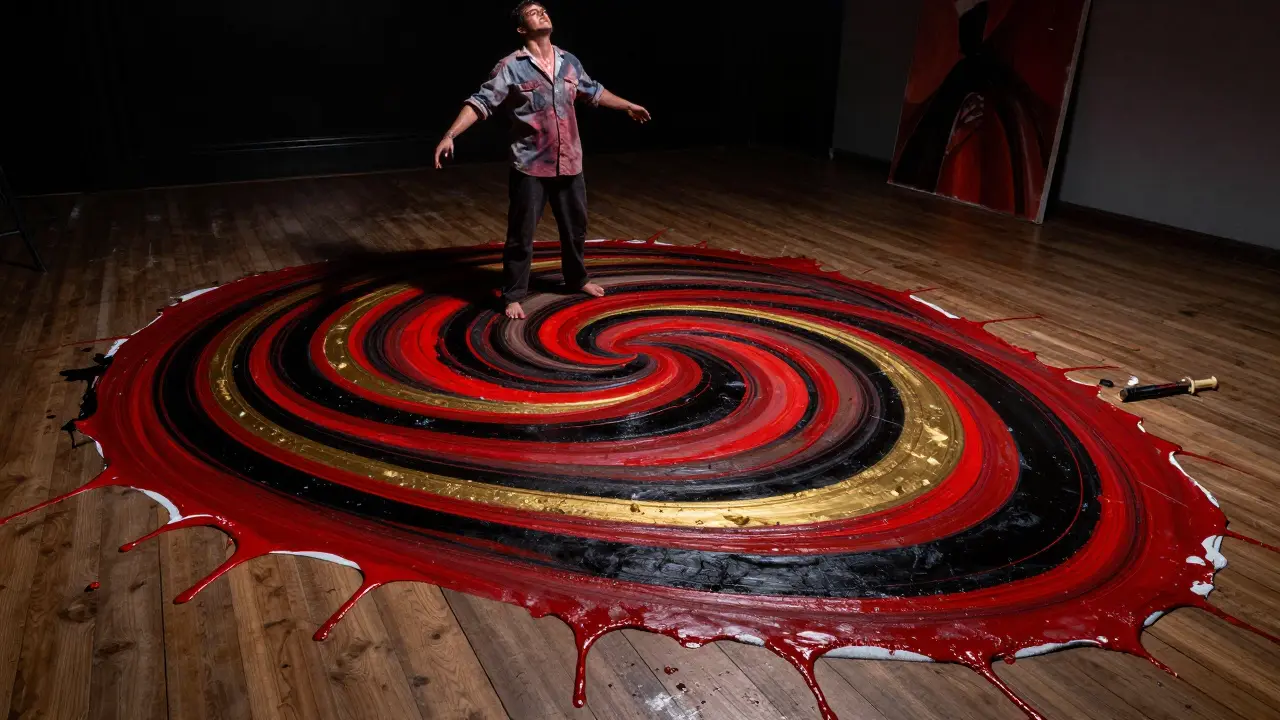
Pollock’s technique wasn’t accidental. He laid canvases on the floor. He used sticks, trowels, even basting syringes to pour and fling paint. No brush. No easel. No rules. He called it "action painting" because the painting was a record of his body in motion. The canvas became a stage. The paint became his voice. And viewers? They weren’t supposed to "understand" it. They were supposed to feel it.
The Emotional Weight of Color and Space
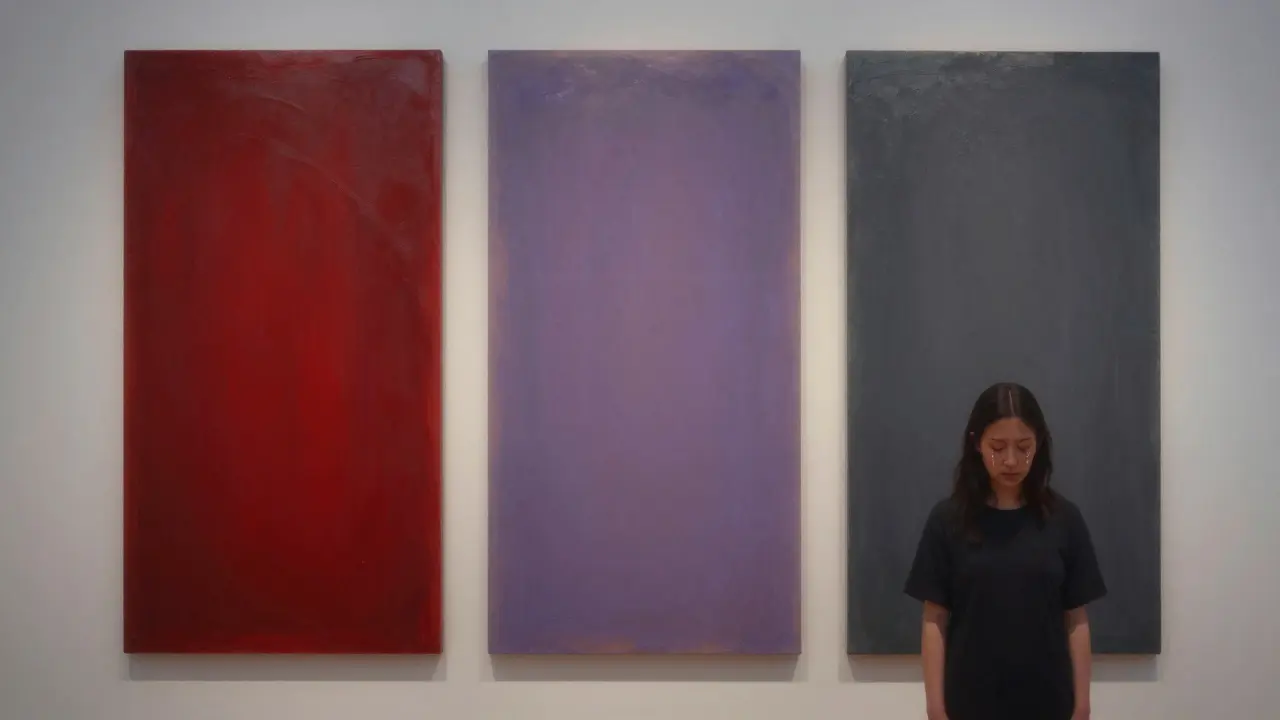
While Pollock moved, Mark Rothko sat still. His paintings look simple-large rectangles of color floating on a field. But they’re not simple at all. Rothko spent years perfecting the way pigments layered, bled, and glowed. He mixed his own paints with egg yolk and glue, thinning them until they shimmered like stained glass. He wanted viewers to stand close, almost face-to-face with his work, so the color would surround them.
His paintings didn’t tell stories. They created moods. A deep red might feel like grief. A soft lavender could feel like quiet hope. People have stood in front of Rothko’s works for hours, crying without knowing why. That’s the power of non-representational art: it bypasses the mind and speaks directly to the soul.
Why New York? Why Then?
Abstract Expressionism didn’t emerge in Paris or Rome. It exploded in New York City after World War II. Why? Because Europe was in ruins. The old art centers were gone. And American artists, many of them immigrants or children of immigrants, had nothing to lose. They weren’t trained in academies. They didn’t owe allegiance to tradition. They were free to experiment.
At the same time, the U.S. was becoming a global superpower. The government, through the CIA’s covert cultural program, saw Abstract Expressionism as the perfect symbol of American freedom-unlike Soviet Socialist Realism, which forced artists to glorify workers and factories. So suddenly, museums in Europe and Asia were showing Pollock’s work. The U.S. State Department shipped Rothko’s paintings to international exhibitions. Art became propaganda. But it was propaganda that didn’t feel like propaganda. It felt real.
The Artists Who Changed Everything
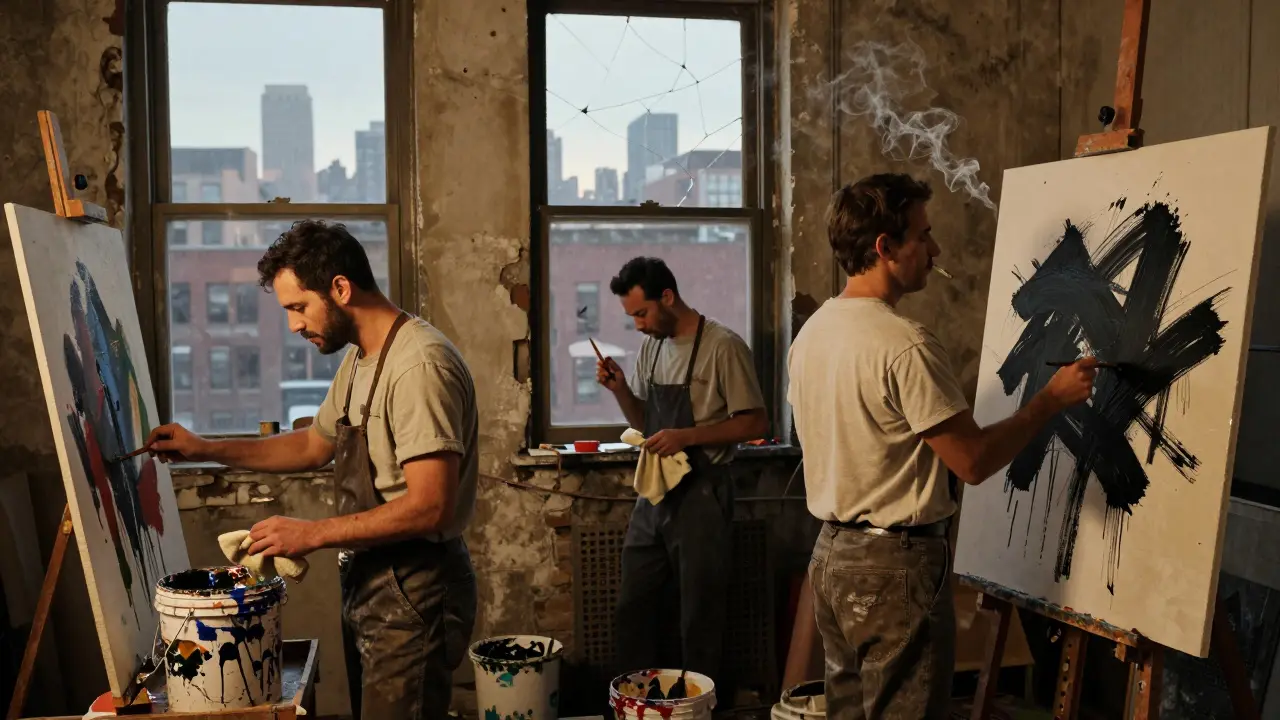
Pollock and Rothko are the most famous names, but they weren’t alone. Willem de Kooning slashed and scraped figures into chaotic fields of paint. Barnett Newman created towering vertical lines he called "zips," dividing color fields like spiritual revelations. Franz Kline turned black paint into bold, calligraphic strokes that looked like urban energy frozen in time.
Each had a different method, but they shared one belief: the artist’s inner world mattered more than the outer world. There was no right or wrong way to paint. No checklist of skills. No jury to approve your vision. You didn’t need to draw a perfect hand. You just needed to be honest.
Before Abstract Expressionism, artists spent years learning anatomy, perspective, chiaroscuro. After? They spent years learning how to listen to themselves. That shift-from technical mastery to emotional truth-was revolutionary.
The Legacy: Freedom That Still Echoes
Today, you see Abstract Expressionism’s DNA everywhere. Street artists spray murals that aren’t about realism-they’re about rage, joy, protest. Contemporary painters use mixed media, textures, and chaos to express mental states. Even digital artists who generate swirling, non-representational visuals online are following the same impulse: let the medium speak before the mind intervenes.
It’s why you can walk into a modern art gallery and see a canvas covered in splatters, stains, or smears-and not laugh. Because we’ve internalized what these artists fought for: the right to create without permission.
Abstract Expressionism didn’t just give us new styles. It gave us permission. Permission to be messy. Permission to be emotional. Permission to not explain. Permission to not conform. That’s why it still matters. Not because the paintings are beautiful in a traditional sense. But because they proved art doesn’t need to make sense to be powerful.
What It Meant for Artists Today
If you’re an artist today who feels trapped by expectations-whether it’s from clients, schools, or social media-remember this: Abstract Expressionists were told they were crazy. Critics called Pollock’s work "childish." Rothko was accused of being "pretentious." But they kept going. They didn’t wait for approval. They didn’t try to please anyone. They painted for themselves first.
That’s the real lesson. Not how to drip paint. Not how to mix colors. But how to trust your own voice-even when no one else gets it.
What made Abstract Expressionism different from earlier art movements?
Unlike earlier movements that still relied on recognizable subjects-like landscapes, portraits, or still lifes-Abstract Expressionism rejected representation entirely. It focused on emotion, gesture, and the physical act of painting. The subject wasn’t the image-it was the artist’s inner experience. This was a radical shift from art as a record of the world to art as a record of the self.
Was Abstract Expressionism only a New York phenomenon?
Yes, it emerged as a distinctly American movement centered in New York City during the 1940s and 1950s. While European movements like Surrealism influenced its early development, Abstract Expressionism became the first major American art movement to gain global influence. It replaced Paris as the center of the art world, making New York the new capital of modern art.
Did Abstract Expressionists reject all technique?
No. They rejected traditional academic techniques like perspective and realistic drawing, but not technique itself. Pollock’s drip technique required years of experimentation to master. Rothko’s layered glazes took months to achieve the right luminosity. Their methods were highly deliberate, even if they looked spontaneous. The difference was that their technique served emotion-not realism.
How did politics influence Abstract Expressionism?
During the Cold War, the U.S. government covertly funded exhibitions of Abstract Expressionist art abroad to promote American values of freedom and individualism. While the artists themselves weren’t politically motivated, their work became a symbol of cultural superiority over Soviet Socialist Realism, which demanded rigid, state-approved imagery. This made Abstract Expressionism both an artistic revolution and a political tool.
Can anyone just splatter paint and call it Abstract Expressionism?
No. Abstract Expressionism wasn’t about random splatters-it was about intention, control, and emotional depth. Pollock’s drips were the result of years of disciplined practice. He moved his whole body, rhythmically, with precision. Rothko spent weeks adjusting paint thickness to get the right glow. The power of these works comes from the artist’s deep inner focus, not chance. What looks chaotic is actually the product of intense self-discipline.