Gothic Art is a Gothic Art is a stylistic period of Western art that flourished from the 12th to the 16th century, characterized by verticality, ornate detail, and a deep focus on spiritual transcendence. While we often think of it as just "dark" or "spooky" today, in its time, it was the height of innovation. It was the art of the church and the crown, designed to make you feel small in the presence of God.
The Peak of the Gothic Spirit
To understand why the Renaissance felt so radical, we have to look at what it was replacing. Gothic art wasn't trying to be "realistic" in the way we think of it now. It was symbolic. If a figure in a painting was huge, it wasn't because they were a giant; it was because they were more important than the people around them. This is called hierarchical scale.
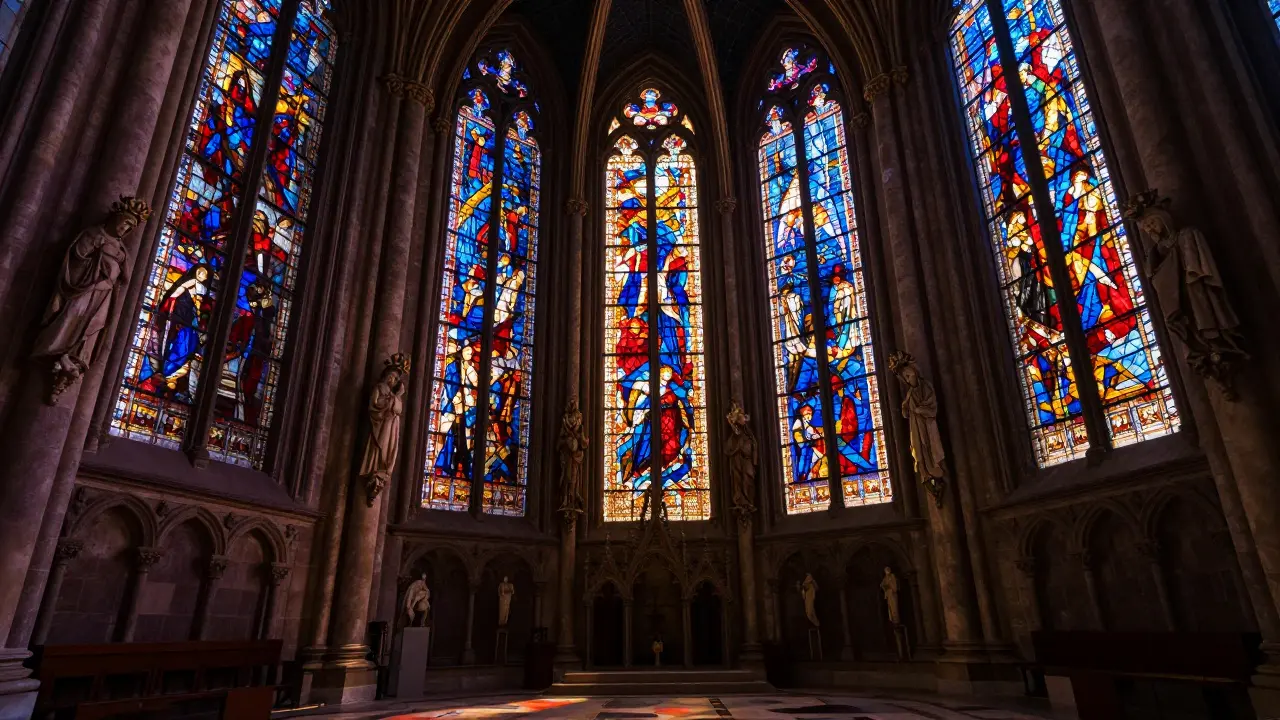
The heartbeat of this era was the Cathedral of Notre-Dame de Chartres, where the architecture and art worked together. The use of Flying Buttresses allowed walls to be thinner and higher, making room for massive Stained Glass. These windows weren't just decorations; they were the "Bibles of the poor," telling stories to a population that couldn't read.
The figures in these works were often elongated, with graceful, sweeping curves. They didn't stand on the ground so much as they floated in a golden void. The focus was on the celestial, not the terrestrial. If you look at a 13th-century sculpture, the faces are serene and stylized-they represent an ideal of holiness, not a specific person from the street.
The Bridge: International Gothic
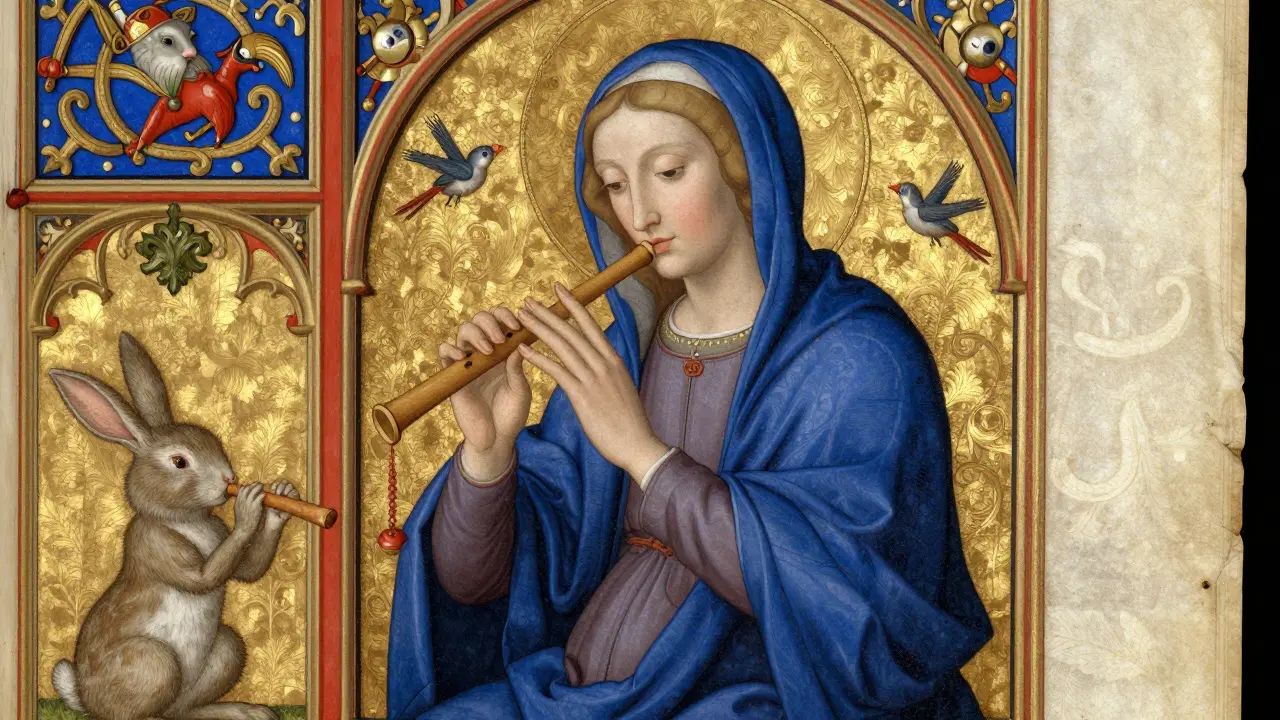
By the late 14th century, we hit a transition phase known as International Gothic. This style acted as a bridge between the stiff formality of the Middle Ages and the naturalism of the coming era. Artists began to notice the world around them. They started painting tiny birds in the trees and detailed fabrics in the clothing of nobles.
This was the era of the Manuscript Illumination. Wealthy patrons commissioned prayer books with margins filled with "drolleries"-tiny, funny creatures and scenes of daily life. For the first time, the "sacred" and the "profane" were sharing the same page. You might see a scene of the Virgin Mary, but in the corner, there's a rabbit playing a flute. This tiny spark of curiosity about the physical world was the seed of the Renaissance.
The Renaissance Collision
Then came the 15th century, and the world flipped. The movement known as Humanism shifted the focus from the divine to the human. Artists stopped asking "How do I represent heaven?" and started asking "How does light actually hit a human face?"
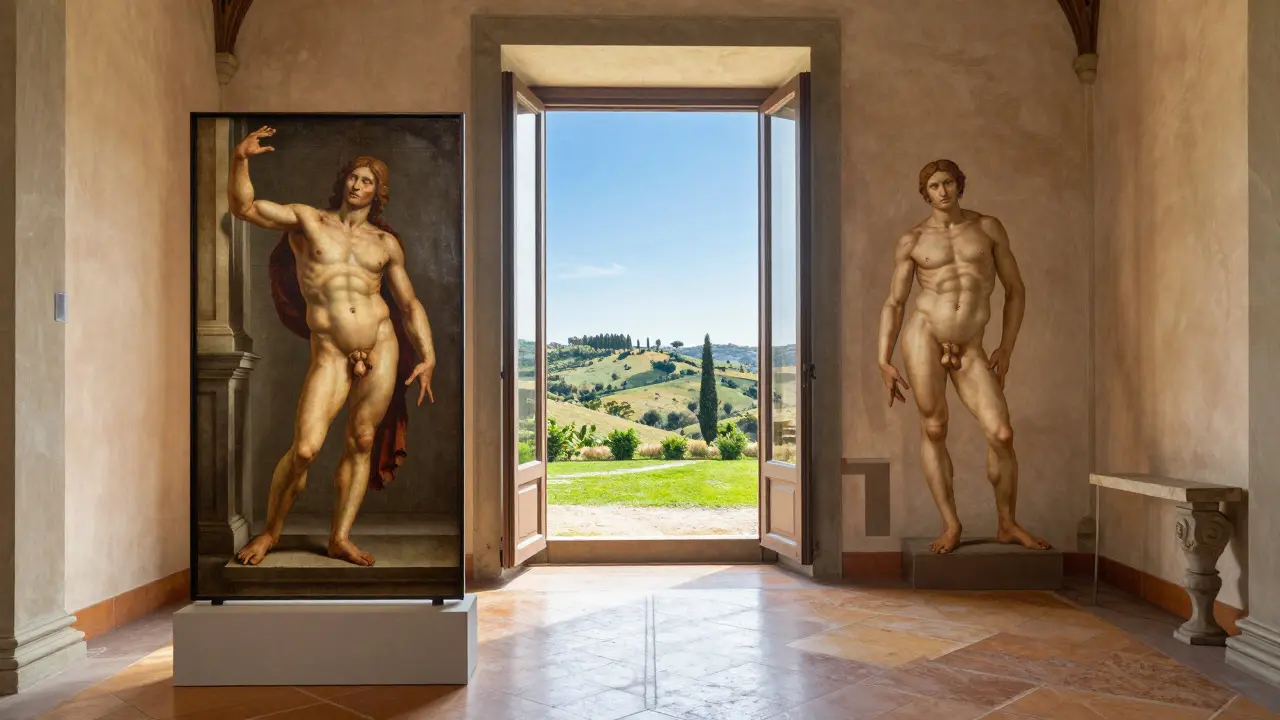
The biggest "killer" of the Gothic style was Linear Perspective. While Gothic art used a flat, gold background to signify a spiritual realm, Renaissance artists like Filippo Brunelleschi developed a mathematical way to create the illusion of depth. Suddenly, paintings became windows into a three-dimensional world. The floating figures of the Gothic era were replaced by bodies with weight, muscle, and bone.
| Feature | Gothic Art | Renaissance Art | |
|---|---|---|---|
| Perspective | Flat or intuitive; hierarchical scale | Mathematical linear perspective; vanishing points | |
| Human Form | Elongated, stylized, symbolic | Anatomically correct, weighted, realistic | |
| Backgrounds | Gold leaf or simple patterns (heavenly) | Natural landscapes and architectural settings | |
| Primary Goal | Spiritual awe and religious instruction | Humanist exploration and naturalism |
Why the Fall Felt Inevitable
The "fall" of Gothic art wasn't a sudden crash; it was an evolution. The black death in the mid-14th century had already shaken people's faith in the old systems. When the economy in cities like Florence boomed, a new class of merchants wanted art that reflected their own success, not just the glory of the church.
These patrons wanted portraits. They wanted to see their own faces, their own clothes, and their own cities in the art they bought. Gothic art, with its focus on the ethereal and the afterlife, couldn't satisfy this new craving for the "here and now." The Medici Family in Florence pushed artists to study Greek and Roman classics, reviving the balance and symmetry of antiquity which made the ornate, "cluttered" Gothic style look outdated and chaotic by comparison.
Think of it like moving from a highly decorated, candle-lit castle to a bright, open villa. The castle is beautiful, but the villa is where you can actually breathe and see the horizon. The Renaissance brought the light of reason and observation, which naturally pushed the mystical shadows of the Gothic era into the background.
The Lingering Ghost of Gothic
Even as the Renaissance took over, Gothic art didn't vanish overnight. In Northern Europe, particularly in Germany and France, the transition was slower. These regions developed a "Northern Renaissance" that kept some of the Gothic love for intense detail and emotional agony. Artists like Albrecht Dürer blended the two, using Renaissance perspective but maintaining a Gothic obsession with the intricate textures of nature.
The legacy of the Gothic era survives in the way we perceive "grandeur." Whenever we see a soaring ceiling or a complex pattern, we are reacting to the Gothic DNA. The Renaissance didn't so much destroy Gothic art as it absorbed its ambition and grounded it in reality.
Did Gothic art actually "fall" or just change?
It was more of a transition than a fall. The core elements of Gothic art-like its emphasis on light and verticality-evolved into the more structured and human-centric approach of the Renaissance. It didn't disappear so much as it became a foundation for the new naturalism.
What is the main difference between Gothic and Renaissance paintings?
The biggest difference is perspective and the human body. Gothic paintings are often flat, using gold backgrounds and figures that float or are sized by importance. Renaissance paintings use linear perspective to create depth and focus on correct anatomy and natural lighting.
Why was gold so common in Gothic art?
Gold wasn't just for showing wealth; it represented the divine light of heaven. Since the goal was to depict a spiritual realm rather than a physical place on earth, a gold background signaled that the scene was taking place in a timeless, celestial space.
What role did the Black Death play in this artistic shift?
The plague caused a massive social and psychological shift. The sheer scale of death led some to double down on religious fervor, but it also led others to question the old ways of thinking. This openness to new ideas helped pave the way for Humanism, which is the core philosophy of the Renaissance.
Is Gothic architecture the same as Gothic art?
They are deeply linked. Gothic art (painting, sculpture, glass) was designed to fit perfectly into Gothic architecture. The soaring arches and stained glass windows of the cathedrals provided the canvas and the lighting that defined the visual style of the period.
What to Explore Next
If you want to see this transition in action, start by comparing the sculptures at Chartres Cathedral with the works of Donatello. You'll see exactly when the stone stopped being a symbol and started being a human. From there, looking into the Northern Renaissance will show you how different cultures handled this shift differently, often clinging to Gothic mystery longer than the Italians did.