When you think of modern art, names like Picasso, Matisse, or Gauguin usually come to mind. But behind their bold brushstrokes and fractured forms lies a quiet, uncomfortable truth: much of what made their work revolutionary was borrowed-often without credit-from cultures they saw as "primitive." Primitivism in art wasn’t just a style. It was a lens. A colonial lens. And it shaped the way the Western world saw both art and humanity for over a century.
What Primitivism Really Meant in Art
Primitivism in art refers to the adoption of visual styles from non-Western, indigenous, or pre-industrial societies by European and American artists in the late 1800s and early 1900s. These weren’t just decorative influences. Artists took the angular masks of African sculptures, the bold lines of Oceanic carvings, the spiritual symbolism of Native American totems, and the raw energy of tribal body art-and turned them into modern masterpieces.
But here’s the catch: they didn’t call them African art. They called them "primitive art." The word itself says everything. It implied simplicity, lack of refinement, and a kind of childlike purity. It erased history. It ignored technique. It dismissed centuries of cultural context as mere "folklore."
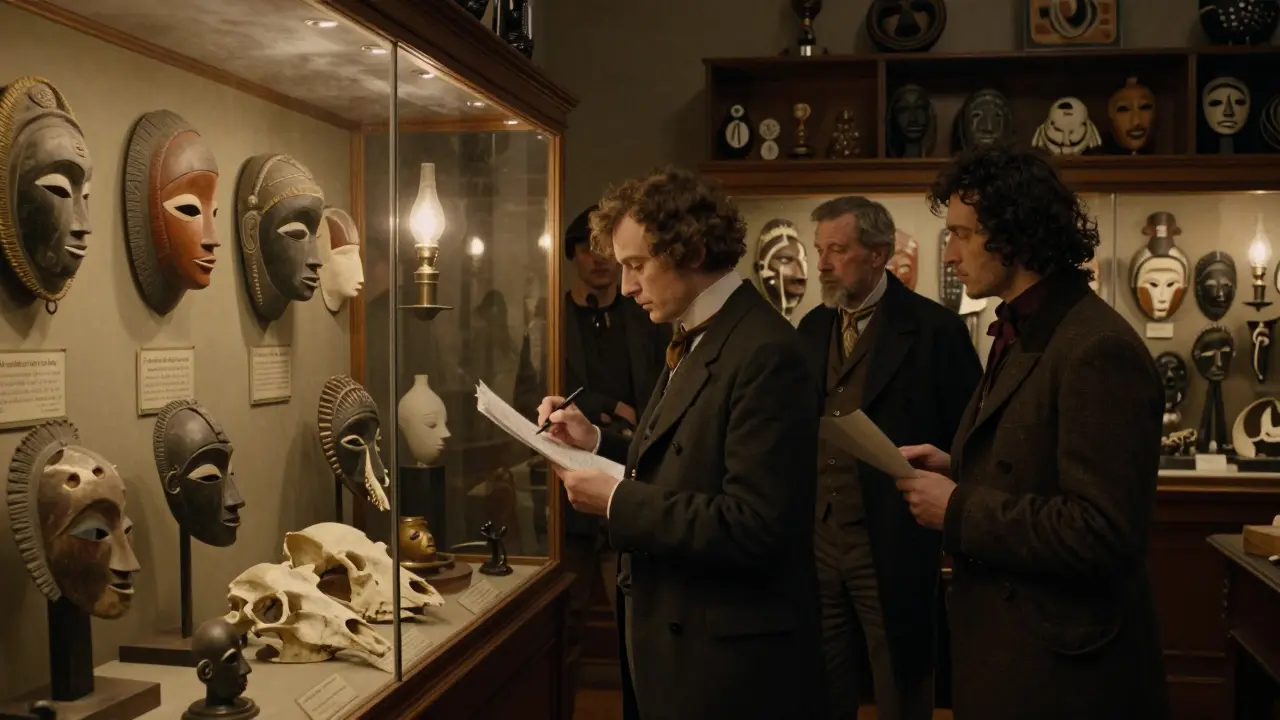
Picasso’s Les Demoiselles d’Avignon (1907) is the textbook example. The faces of the two women on the right? Directly inspired by Fang and Grebo masks from West and Central Africa. But Picasso never credited the artists who made them. He didn’t visit Africa. He didn’t learn their languages. He saw their work in a Parisian ethnographic museum and took what he wanted.
The Colonial Eye Behind the Canvas
Primitivism didn’t emerge in a vacuum. It rode on the back of empire. By the 1880s, European powers had carved up Africa, the Pacific, and parts of Asia. Museums filled with looted artifacts. Missionaries and soldiers brought back masks, drums, and carvings as souvenirs. These objects weren’t treated as art-they were curiosities, trophies, specimens.
Artists like Paul Gauguin didn’t just admire these cultures. He romanticized them as escape routes from industrial Europe. He moved to Tahiti in 1891, convinced he’d find a "pure" society untouched by modern corruption. His paintings of bare-breasted women and lush landscapes weren’t documentaries. They were fantasies. Fantasies built on stereotypes: the exotic native, the innocent savage, the timeless tribal.
And yet, the people he painted? They had names. Families. Stories. They were not "natives." They were Tahitians. They spoke Reo Tahiti. They had their own spiritual systems, their own hierarchies, their own art traditions that were complex, evolving, and deeply meaningful. Gauguin’s version? A colonial fantasy dressed in pastels.
The Genius That Was Ignored
The real genius of primitivism wasn’t in Picasso’s or Gauguin’s hands. It was in the hands of the artists whose work they copied.
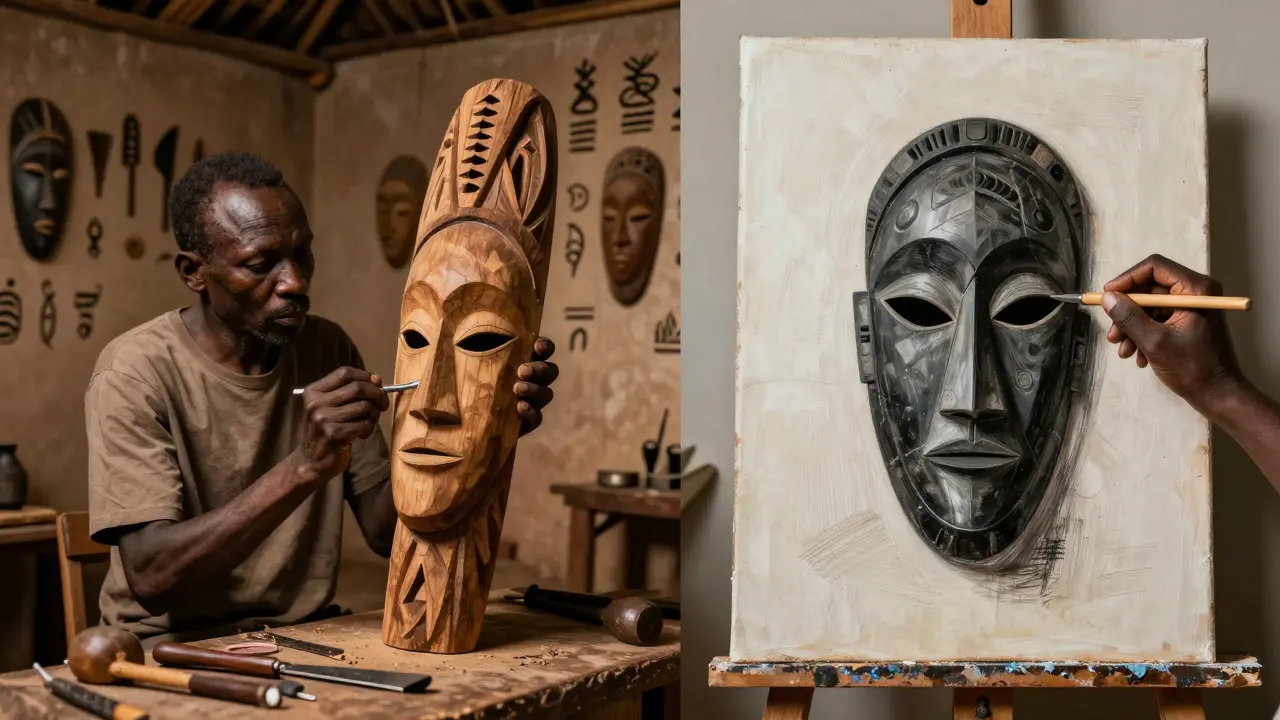
Take the Fang people of Gabon. Their wooden masks, with elongated faces and serene expressions, weren’t made for museums. They were used in initiation rites, ancestral worship, and community rituals. The sculptors spent months carving them. Each curve had meaning. Each line was tied to cosmology. The masks weren’t "primitive." They were sophisticated systems of knowledge encoded in wood.
Same with the Dogon of Mali. Their sculptures of human figures with elongated torsos and geometric faces weren’t "childlike." They were visual representations of their cosmology-their belief that the universe began with a cosmic egg. Their art was astronomy, theology, and philosophy in one.
And the Aboriginal dot paintings of Australia? They weren’t random splatters. Each dot was a map. Each pattern told a Dreamtime story. These weren’t decorations. They were archives.
Western artists saw shapes. They didn’t see systems. They saw aesthetics. They didn’t see ancestry. And because of that, they got credit for "inventing" something they merely borrowed.
How Primitivism Changed Modern Art
There’s no denying primitivism changed the course of art. Before it, Western art was obsessed with realism, perspective, and classical beauty. After it? Everything broke. Cubism. Expressionism. Surrealism. All of them owed something to the boldness, abstraction, and emotional rawness of non-Western forms.
But here’s what’s rarely said: modern art didn’t "discover" primitivism. It stole it. And then pretended it was original.
Matisse’s cut-outs? Inspired by North African textiles. Kandinsky’s spiritual abstractions? Borrowed from Russian folk icons and Siberian shamanic symbols. Even the Bauhaus movement, which claimed to be about functional purity, used African textile patterns in its fabric designs-without naming their source.
The irony? The same artists who praised "primitive" art for its "authenticity" refused to recognize the living cultures behind it. In 1910, the Museum of Ethnology in Paris displayed African masks alongside animal skeletons. Not as art. As relics. As evidence of "lesser" civilizations.
Why Primitivism Isn’t Just History
Primitivism didn’t end in 1930. Its legacy lives in museums, galleries, and even today’s fashion runways.
Look at brands like Gucci or Louis Vuitton. They’ve used African tribal patterns, Polynesian tattoos, and Native American motifs in their collections. No consultation. No credit. Just profit.
And in museums? Many African artifacts remain in Europe. The Benin Bronzes? Still mostly in Berlin, London, and Paris. Not because they were legally acquired. But because no one has fully returned them.
Meanwhile, artists from those same cultures-like El Anatsui from Ghana, or Julie Mehretu from Ethiopia-are now creating globally celebrated work. But they’re rarely called "primitive." They’re called contemporary. Why? Because they’re speaking on their own terms. Not through the filter of a colonial gaze.
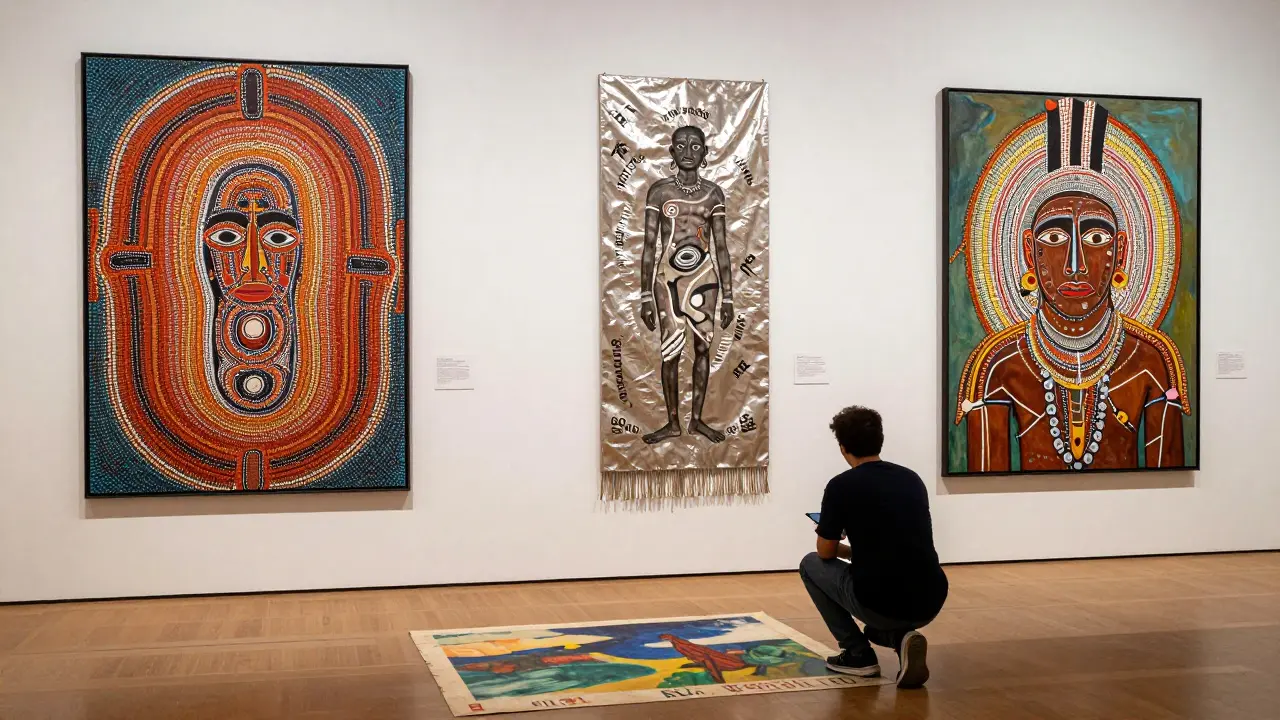
The Quiet Rebellion in Today’s Art
There’s a new generation of artists who are turning primitivism on its head. They’re not copying Western styles. They’re reclaiming their own heritage-and forcing the world to see it as art, not artifact.
Wangechi Mutu, a Kenyan-American artist, uses collage to fuse African body imagery with machine parts. Her work doesn’t ask for permission. It demands recognition.
Or consider the work of the Yolngu people of northern Australia. They’ve taken their traditional dot paintings and turned them into large-scale gallery installations. No longer hidden in remote communities, these works now hang in the Tate Modern and the Museum of Modern Art. And they’re labeled with the artists’ names. Their clans. Their stories.
This isn’t just about art. It’s about justice. It’s about saying: you didn’t invent beauty. You just saw it, took it, and called it your own.
What Primitivism Teaches Us Today
Primitivism isn’t a footnote in art history. It’s a mirror. It shows us how easily power can disguise itself as inspiration. How easily exploitation can wear the mask of admiration.
The genius of primitivism wasn’t in Picasso’s brush. It was in the hands of the unknown African carver, the Oceanic tattooist, the Aboriginal elder who painted stories onto the earth. Their work survived colonization, theft, and erasure. And now, slowly, it’s being seen-not as primitive-but as profound.
Real art doesn’t come from taking. It comes from listening.
Is primitivism in art the same as cultural appropriation?
Yes, in most cases, it is. Primitivism in art involved Western artists taking sacred, culturally specific imagery from colonized peoples and using it for their own gain-without permission, context, or credit. The key difference from simple influence is power imbalance: the source cultures had no voice in how their art was used, while the borrowing artists gained fame and fortune.
Did any artists challenge primitivism at the time?
A few did. French writer and critic André Breton questioned the romanticization of "primitive" cultures, and later, African-American artists during the Harlem Renaissance, like Aaron Douglas, deliberately rejected primitivist stereotypes by creating modernist work rooted in Black identity-not exoticized myths. But they were exceptions in a system built to silence them.
Why do museums still hold looted African art?
Many institutions claim they "preserve" the art, but the truth is more about control and legacy. Even today, only a fraction of looted artifacts have been returned. The Benin Bronzes, for example, are still mostly in Europe, despite decades of pressure. Some museums have started restitution programs, but progress is slow, often tied to political pressure rather than moral duty.
Can primitivism be separated from its colonial roots?
Not really. The term itself was invented by Europeans to label non-Western art as inferior. Even when artists admired these forms, they did so through a lens of superiority. You can’t separate the aesthetic from the power dynamic. Today, the focus is shifting: instead of studying "primitive art," scholars now study African, Oceanic, and Indigenous art on its own terms.
Who are some contemporary artists reclaiming these traditions?
Wangechi Mutu (Kenya/USA), El Anatsui (Ghana), Julie Mehretu (Ethiopia/USA), and the Yolngu artists of Australia are among the most influential. They don’t imitate Western styles. They use their heritage as a foundation to create bold, new work-and they credit their ancestors, their communities, and their histories.