
Imagine an art piece that isn’t a painting, a sculpture, or even an object you can hold. It might be a single word written on a card, a performance where you just stand still for five minutes, or a simple instruction to throw a coin into the air. This is Fluxus, an avant-garde international network of artists, composers, designers and poets who focused on experimental art genres. Launched in the early 1960s, it didn't just change how we look at art; it changed what we consider art to be in the first place.
If you walked into a gallery today and saw someone selling a "score" for a musical event that never happens, or a box containing a rubber stamp and a leaf, you are looking at the legacy of Fluxus. This movement rejected the elitism of traditional museums and the commercialization of the art market. Instead, they wanted art to be accessible, playful, and part of everyday life. They believed that if art was too serious, too expensive, or too hard to understand, it had failed its purpose.
The Birth of an Anti-Movement
Fluxus didn't start with a grand manifesto or a exclusive club meeting. It began in the chaotic cultural melting pot of the late 1950s and early 1960s. The central figure behind organizing this loose collective was George Maciunas, a Lithuanian-American artist and designer who served as the primary organizer and theoretician of the Fluxus movement. Maciunas hated the idea of "art for art's sake." He thought the art world had become too cluttered with pretension and profit motives.
In 1961, Maciunas published a pamphlet titled Anti-Art Activities. This document acted as a rallying cry for artists who were tired of being ignored by mainstream institutions. He used the term "Fluxus" from the Latin word flux, meaning flow or change. The idea was that art should not be a static object hanging on a wall but a continuous process of living and experiencing. By 1962, the name was officially adopted, and the movement spread rapidly across Europe and North America, connecting artists in New York, Tokyo, Cologne, and London.
Key Figures Who Defined Fluxus
While Maciunas was the organizer, the soul of Fluxus came from its diverse group of participants. These weren't just painters; they were musicians, writers, and performers who refused to stay in their lanes. Understanding these key figures helps explain why Fluxus felt so revolutionary at the time.
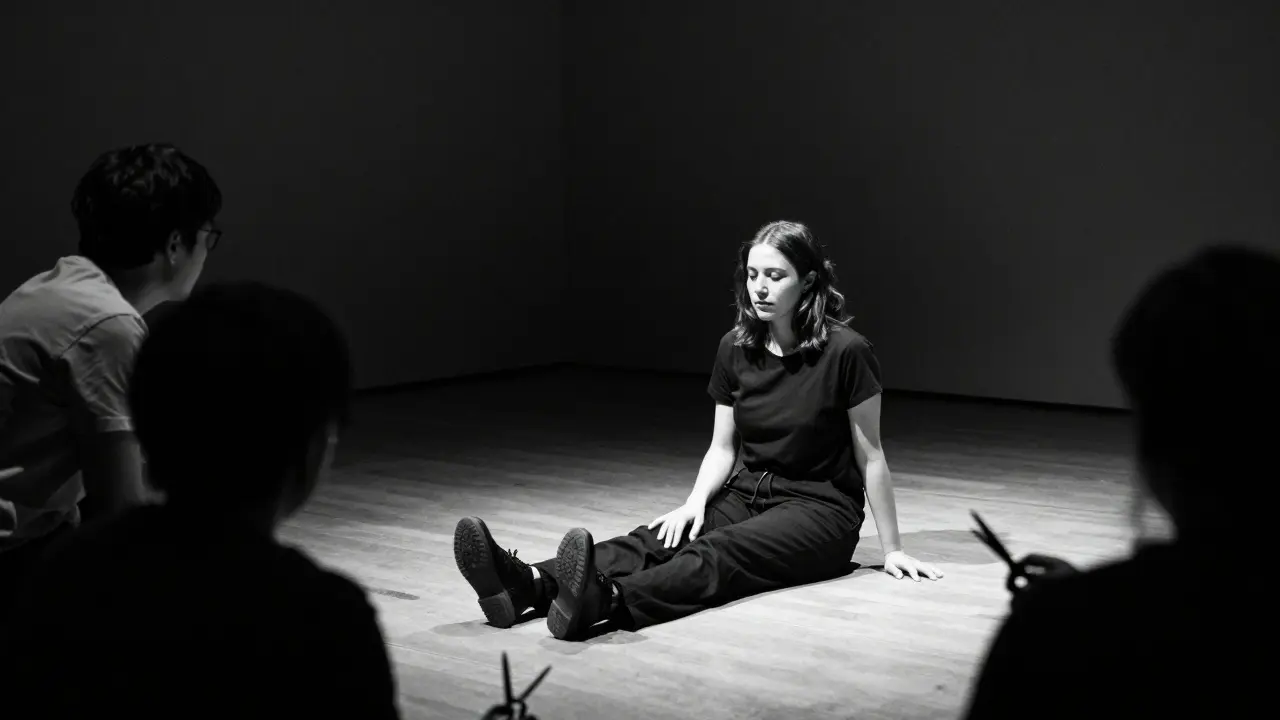
- Yoko Ono: Before she became famous as John Lennon’s wife, Ono was a leading Fluxus artist. Her work often involved audience participation. In her piece Cut Piece, she sat on stage while audience members slowly cut away her clothes. It was a raw exploration of vulnerability and trust, challenging the passive role of the viewer.
- John Cage: An American composer and music theorist, Cage was a major influence on Maciunas. Cage introduced the idea that silence could be music (as seen in his famous 4'33") and that everyday sounds-like the hum of a refrigerator or rain hitting a window-were worthy of artistic attention. His concept of chance operations influenced many Fluxus works.
- Nam June Paik: Often called the father of video art, Paik used television sets and electronic media to challenge traditional notions of art. He would smash TVs or arrange them in sculptures, predicting the digital age long before computers were common.
- Alison Knowles: Known for her food-based performances, Knowles turned cooking into high art. Her Violin Impromptu involved eating an apple while playing the violin, blending mundane actions with classical instruments to blur the lines between life and performance.
Fluxkits and Event Scores: Making Art Accessible
One of the most tangible contributions of Fluxus was the creation of "Fluxkits." These were small boxes containing objects, instructions, or ephemera that could be bought cheaply. Unlike a million-dollar painting, a Fluxkit cost just a few dollars. Inside, you might find a postcard, a button, a poem, or a set of instructions for a performance. This democratized art ownership. You didn't need a museum ticket or a fortune to engage with Fluxus; you just needed curiosity.
Another hallmark of the movement was the "event score." These were simple written instructions that anyone could follow. For example, one score might say: "Breathe in, breathe out." Another might instruct you to "make a sudden gesture." There was no right or wrong way to perform these scores. The value lay in the act itself, not in a perfect execution. This approach removed the pressure of technical skill and invited everyone to participate. It turned art into a verb rather than a noun.
| Feature | Traditional Art | Fluxus Approach |
|---|---|---|
| Primary Medium | Painting, Sculpture | Performance, Instructions, Objects |
| Role of Audience | Passive Observer | Active Participant |
| Value Determination | Market Price, Rarity | Experience, Concept |
| Permanence | Permanent Object | Ephemeral Moment |
| Goal | Aesthetic Beauty | Mental Shift, Playfulness |
The Philosophy Behind the Chaos
At its core, Fluxus was about breaking down barriers. The barriers between high art and low culture, between artist and audience, and between different disciplines. A poet could collaborate with a musician; a painter could write a program for a computer. This interdisciplinary approach was radical at a time when universities and galleries kept fields strictly separated.
The movement also embraced humor and absurdity. Many Fluxus works looked like jokes or pranks. But beneath the playfulness was a serious critique of consumer culture and institutional authority. By making art that couldn't be easily sold or hung on a wall, Fluxus artists challenged the art market's reliance on scarcity and prestige. They asked us to question why we value certain things over others. Is a diamond valuable because it's rare, or because we've been told it is? Fluxus suggested that value is subjective and often constructed by those in power.

Legacy and Influence Today
You might wonder if Fluxus is still relevant today. If you look around, you'll see its fingerprints everywhere. The rise of interactive installations in modern museums owes a debt to Fluxus participatory works. Social media, where users create and share content daily, mirrors the Fluxus ideal of art as a shared, everyday experience. Even the concept of "meme culture" shares DNA with Fluxus event scores-simple ideas that spread quickly through replication and variation.
Contemporary artists continue to draw inspiration from Fluxus principles. Artists like Marina Abramović, known for her endurance performances, cite Fluxus as a foundational influence. The blurring of boundaries between technology and art, pioneered by Nam June Paik, is now standard practice in digital art and new media. Fluxus taught us that art doesn't have to be solemn or distant. It can be funny, frustrating, confusing, and deeply human. It can happen anywhere, anytime, and involve anyone willing to pay attention.
Why Fluxus Matters Now More Than Ever
In a world saturated with information and images, Fluxus offers a refreshing counterpoint. It reminds us to slow down and notice the ordinary. To find beauty in a falling leaf or significance in a breath. It challenges us to stop consuming passively and start creating actively. Whether you're an artist, a student, or just someone curious about culture, engaging with Fluxus encourages a mindset of openness and experimentation. It invites you to break the rules, not to rebel for rebellion's sake, but to discover new ways of seeing and being. That spirit of flux-of constant change and possibility-is perhaps its greatest gift.
Who started the Fluxus movement?
The Fluxus movement was primarily organized by George Maciunas, a Lithuanian-American artist. While he coined the term and provided the organizational structure, Fluxus was a collaborative effort involving many artists like Yoko Ono, John Cage, and Alison Knowles who contributed to its philosophy and practices.
What is a Fluxkit?
A Fluxkit is a small box containing various art objects, instructions, or ephemera created by Fluxus artists. These kits were designed to be affordable and accessible, allowing people to own and interact with art without needing to visit a museum. They often included items like postcards, buttons, poems, or simple tools for performing art events.
How did Fluxus differ from other art movements?
Unlike traditional art movements that focused on creating permanent objects like paintings or sculptures, Fluxus emphasized process, performance, and everyday experiences. It rejected the commercialization of art and encouraged audience participation. Fluxus works were often ephemeral, humorous, and interdisciplinary, blending music, poetry, and visual art.
Is Yoko Ono considered a Fluxus artist?
Yes, Yoko Ono is one of the most prominent figures associated with Fluxus. She participated in early Fluxus festivals and created influential works such as Cut Piece and Apple Tree. Her focus on audience interaction and conceptual art aligns closely with Fluxus principles.
When did the Fluxus movement end?
Fluxus did not have a formal end date. However, the most active period was between the early 1960s and the mid-1970s. After George Maciunas died in 1978, the organized activities declined. Nevertheless, the ideas and influences of Fluxus continue to shape contemporary art, performance, and digital culture today.
What are some famous Fluxus artworks?
Famous Fluxus works include Yoko Ono's Cut Piece, John Cage's 4'33" (though pre-Fluxus, it heavily influenced the movement), Alison Knowles' Violin Impromptu, and various event scores like "Breathe in, breathe out." These works emphasize simplicity, participation, and conceptual depth over traditional aesthetics.