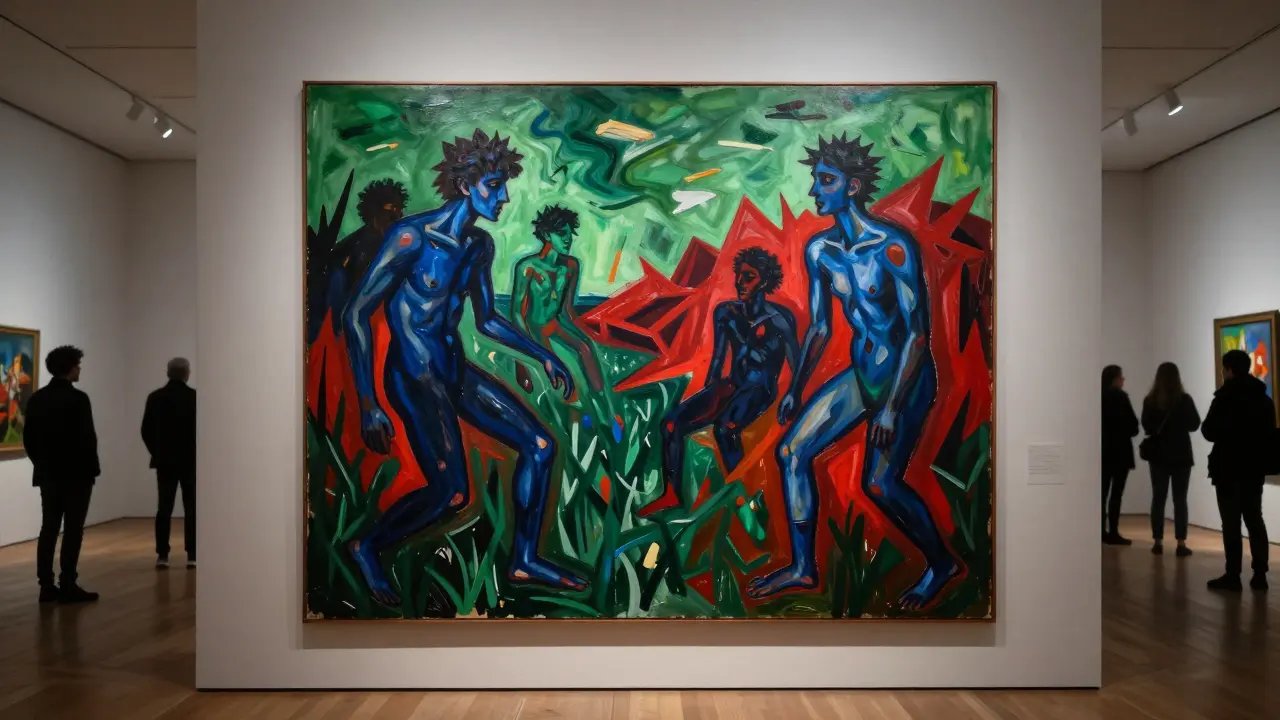
Walk into any major gallery today, and you’ll likely see a canvas that looks like it was attacked by a paintbrush with a grudge. Bold, jagged lines. Colors that don’t match reality-sky green, skin blue, grass red. It’s not a mistake. It’s Expressionism, the artistic movement that prioritizes inner emotion over outer appearance, still very much alive. While its roots trace back to early 20th-century Germany, Expressionism isn't stuck in history books. It has evolved, mutated, and thrived in today's digital and physical art scenes.
You might think of Edvard Munch’s *The Scream* or Egon Schiele’s twisted figures when you hear "Expressionism." But look closer at what’s happening now. The core idea-that art should express the artist’s subjective experience rather than mirror objective reality-is more relevant than ever in an age of curated social media feeds and AI-generated perfection. This article breaks down how this century-old movement is breathing new life into contemporary creativity, from street walls to NFT marketplaces.
The Core DNA of Expressionism
To understand where Expressionism is going, we need to remember what it actually is. At its heart, Expressionism is an artistic style that distorts reality for expressive effect to convey emotional experiences rather than physical truth. It rejects naturalism. If you feel angry, your painting shouldn’t look calm just because the subject matter is a quiet lake. The lake should look turbulent, dark, and chaotic.
This philosophy emerged around 1905 in Europe as a reaction against Impressionism, which focused on light and visual accuracy. Expressionists wanted to show the "inner truth" of the human condition-anxiety, alienation, passion, and fear. Key attributes include:
- Distortion: Warping shapes and perspectives to reflect psychological states.
- Vivid Color: Using non-naturalistic colors to evoke mood (e.g., yellow for jealousy, red for rage).
- Dynamic Brushwork: Visible, energetic strokes that suggest movement and tension.
- Subjective Perspective: The world seen through the artist’s eyes, not a camera lens.
These principles haven’t changed. What has changed is the medium and the context. Today’s artists use these tools to tackle modern anxieties: climate change, political polarization, and digital isolation.
From Canvas to Concrete: Street Art and Urban Expressionism
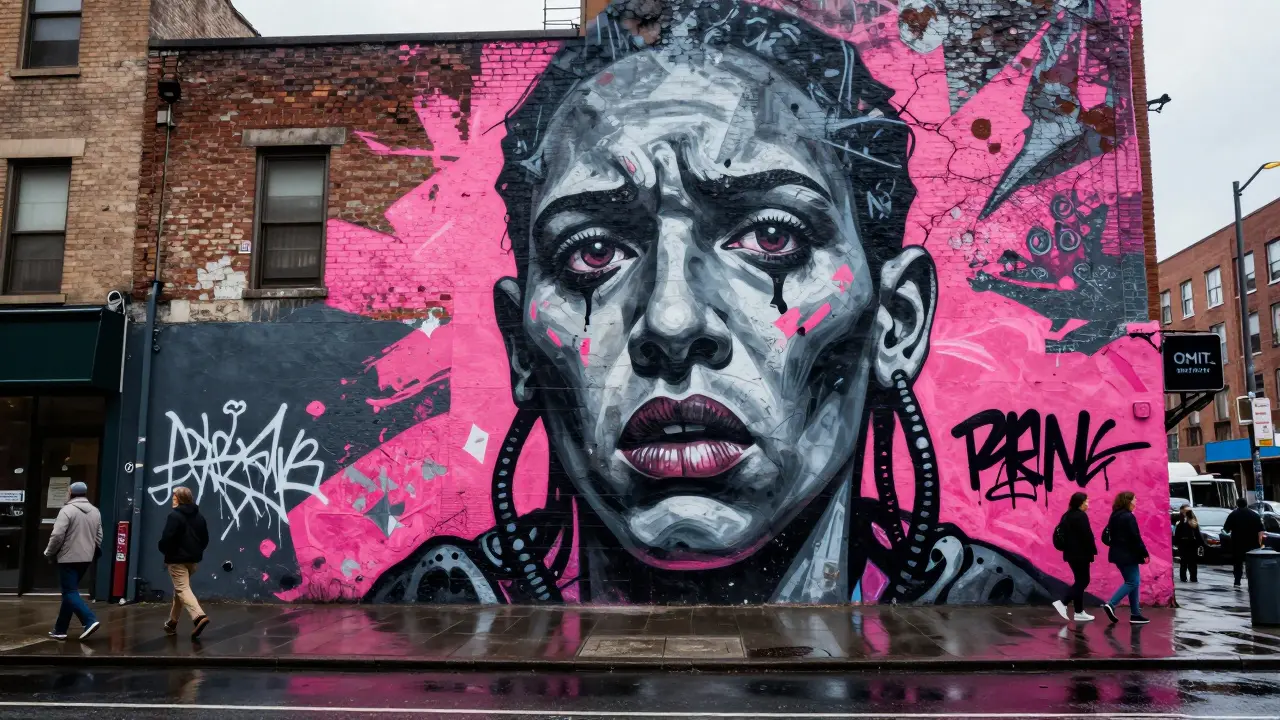
If you’ve ever walked through Berlin, London, or even Portland, you’ve seen modern Expressionism. Street art is arguably the most direct descendant of the original Expressionist ethos. Both movements are rebellious, raw, and often confrontational. They reject the polite confines of traditional galleries and speak directly to the public.
Consider the work of artists like Banksy or Shepard Fairey. While their styles vary, they share the Expressionist trait of using distortion and bold imagery to provoke an emotional response. A stencil of a girl holding a balloon isn’t just a picture; it’s a commentary on hope and loss. The simplicity forces the viewer to feel something immediate. This aligns perfectly with the Expressionist goal of bypassing intellectual analysis to hit the gut.
Moreover, urban environments provide the perfect backdrop for Expressionist themes. Cities are places of noise, chaos, and disconnection. Artists like JR paste large-scale, distorted portraits onto buildings, forcing passersby to confront the humanity of those often ignored. This is Expressionism scaled up-using the city itself as the canvas to express social unrest and empathy.
Digital Distortion: New Media and Virtual Expressionism
You might wonder if Expressionism survives in the digital age. Absolutely. In fact, technology has given artists new ways to distort reality. Digital art allows for manipulation that would be impossible with oil paints. Glitch art, for instance, takes errors in digital files and turns them into aesthetic statements. The broken pixels, color shifts, and fragmented images mirror the fragmentation of modern life.
Video games and virtual reality (VR) also embrace Expressionist techniques. Games like Inside or Limbo use stark, high-contrast visuals and distorted environments to create feelings of dread and isolation. The player doesn’t just watch the story; they feel the anxiety through the visual language. This is interactive Expressionism. The environment reacts to the user’s emotions, creating a feedback loop of feeling and form.
Even NFTs have tapped into this vein. Many digital artists selling on platforms like OpenSea or SuperRare use vibrant, surreal, and emotionally charged imagery. The scarcity of digital tokens adds a layer of value, but the art itself often relies on the same principles: vivid color, abstraction, and emotional intensity. Artists like Beeple blend hyper-realism with dystopian elements, echoing the Expressionist concern with societal decay.
Abstract Expressionism’s Lasting Shadow
We can’t talk about modern Expressionism without mentioning Abstract Expressionism, the mid-20th-century American offshoot. Led by figures like Jackson Pollock and Mark Rothko, this movement took Expressionism further by removing recognizable subjects entirely. The emotion was in the gesture, the color field, the act of painting itself.
This influence is everywhere today. Look at the resurgence of "process art," where the method of creation is as important as the final piece. Contemporary painters often focus on texture and layering, building up surfaces that feel visceral and tactile. Artists like Julie Mehretu create complex, layered canvases that resemble architectural drawings mixed with chaotic energy. Her work expresses the complexity of global migration and urban growth-not through figures, but through dense, overlapping lines and colors.
Abstract Expressionism taught us that emotion doesn’t need a face. Today’s artists continue this legacy, using abstraction to explore mental health, identity, and spirituality without being constrained by representation.
| Feature | Early 20th Century Expressionism | Today's Expressionism |
|---|---|---|
| Primary Medium | Oil paint, watercolor, woodcut | Digital tools, spray paint, VR, mixed media |
| Key Themes | Anxiety, war, industrialization, alienation | Climate crisis, digital isolation, identity politics |
| Viewing Context | Galleries, museums, private collections | Streets, social media, virtual spaces, galleries |
| Goal | Express inner turmoil against societal norms | Provoke emotional engagement in a saturated media landscape |
Why Emotion Matters Now More Than Ever
In a world dominated by algorithms and data, why do we still crave art that feels messy and human? Because Expressionism reminds us of our shared vulnerability. Social media presents a polished facade, but behind the screens, people feel anxious, lonely, and overwhelmed. Expressionist art validates those feelings. It says, "It’s okay to be chaotic. It’s okay to be sad. It’s okay to be angry."
This resonance is why Expressionism continues to thrive. It’s not just a style; it’s a coping mechanism. For artists, it’s a way to process personal trauma or societal injustice. For viewers, it’s a mirror that reflects their own hidden emotions. When you stand before a painting by Francis Bacon or a mural by a local street artist, you’re not just looking at colors. You’re experiencing a release.
Furthermore, Expressionism challenges the dominance of realism in photography and film. With AI able to generate photorealistic images instantly, the value of hand-made, imperfect, emotional art increases. We don’t need another perfect image. We need a true one. Expressionism offers authenticity in a synthetic world.
How to Spot Modern Expressionism
If you want to engage with Expressionism in today’s art scene, here’s what to look for:
- Emotional Intensity: Does the piece make you feel something immediately? Joy, discomfort, awe?
- Distorted Forms: Are faces stretched? Are landscapes warped? Is perspective broken?
- Bold Color Choices: Are colors used symbolically rather than realistically?
- Visible Process: Can you see the brushstrokes, the glitches, or the layers? Is the effort visible?
- Personal Narrative: Does the work feel intimate, as if the artist is sharing a secret?
You’ll find these elements in everything from Instagram illustrations to large-scale installations. Don’t limit yourself to museums. Check out local street art tours, follow digital artists on Twitter or TikTok, and visit indie galleries that showcase emerging voices. Expressionism is democratic-it belongs to anyone who feels deeply.
The Future of Feeling
As we move further into the 2020s, Expressionism will likely evolve again. Expect to see more integration with biometric data, where art changes based on the viewer’s heart rate or brainwaves. Imagine a room that paints itself red when you’re stressed and blue when you’re calm. That’s the next step in expressing inner states.
But the core will remain the same. As long as humans have emotions, there will be art that tries to capture them. Expressionism isn’t fading; it’s adapting. It’s finding new voices, new mediums, and new audiences. And in doing so, it keeps reminding us that art isn’t about looking pretty. It’s about feeling real.
Is Expressionism only about negative emotions?
No. While early Expressionism often focused on anxiety and despair due to the historical context (pre-WWI Europe), modern Expressionism covers the full spectrum of human emotion. Joy, love, ecstasy, and peace are all common themes. The key is intensity, not negativity. An artist might use bright yellows and swirling patterns to express pure happiness, just as they might use dark blues and jagged lines for sadness.
How does Expressionism differ from Impressionism?
Impressionism aims to capture the fleeting effects of light and color in the external world. It’s about what the eye sees. Expressionism aims to convey the artist’s internal emotional state. It’s about what the heart feels. An Impressionist might paint a sunset to show how the light hits the clouds. An Expressionist might paint a sunset in black and red to show how the end of the day makes them feel melancholic.
Can digital art be considered Expressionist?
Absolutely. The medium doesn’t define the movement; the intent does. If a digital artist uses software to distort images, exaggerate colors, and prioritize emotional impact over realistic representation, their work is Expressionist. Tools like Photoshop, Procreate, or Blender allow for the same kind of subjective interpretation that oil paints did in the 1900s.
Who are some famous contemporary Expressionist artists?
Several living artists carry the torch. Julie Mehretu is known for her complex, layered abstract paintings. Cecily Brown creates visceral, gestural works that blur figure and ground. Kehinde Wiley uses vibrant, distorted backgrounds to challenge traditional portraiture. In street art, artists like Blu use large-scale murals to express political and social critiques with exaggerated forms.
Why is Expressionism popular in therapy and education?
Because it removes the pressure to be "good" at drawing. Since the goal is emotional expression rather than technical accuracy, it’s accessible to everyone. In art therapy, clients use Expressionist techniques to process trauma or stress. In schools, it encourages students to trust their instincts and communicate their feelings visually, fostering creativity and self-awareness.