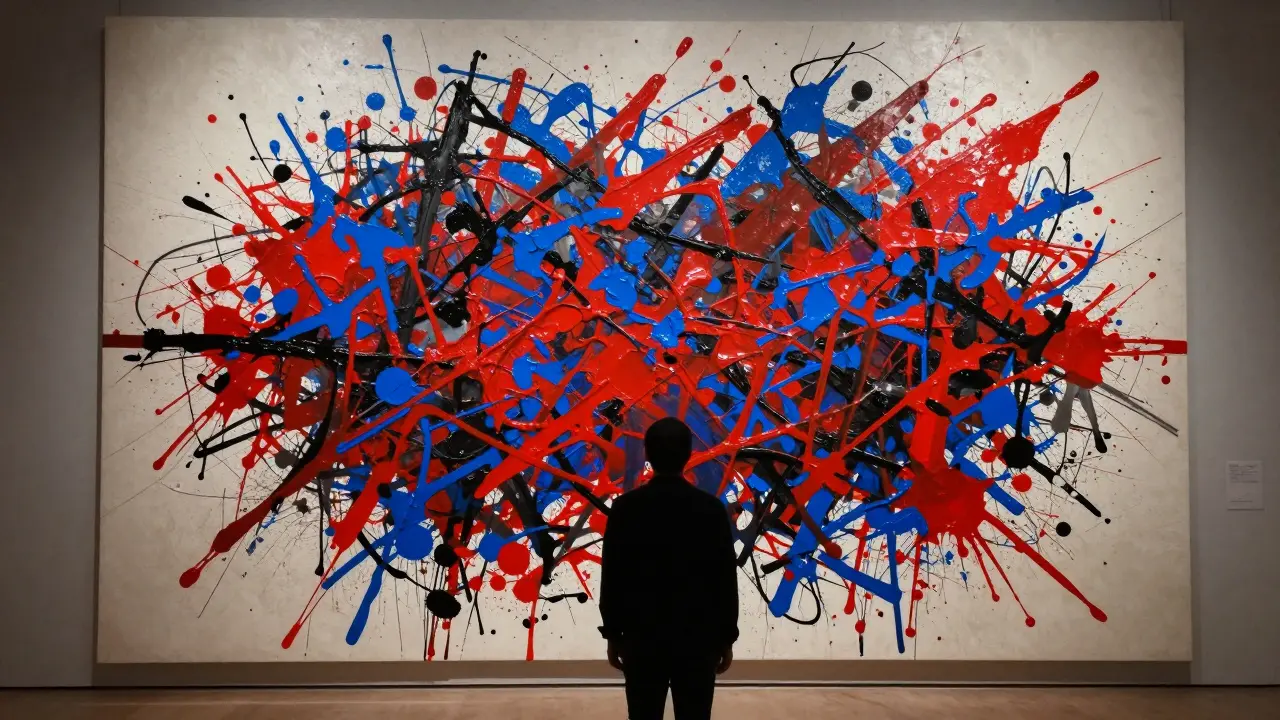
You stand before a large canvas. There is no recognizable landscape, no person staring back, no distinct object to name. Instead, you see chaos, vibrant splatters, or vast washes of color that seem to breathe. This is the core experience of Abstract Expressionism, an art movement that prioritized spontaneous, automatic, or subconscious creation over realistic depiction. Also known as the New York School, this revolution moved the center of the art world from Paris to Manhattan in the late 1940s. The movement wasn't just about how a painting looked; it was about capturing the raw energy of the artist's psyche.
In a world recovering from massive conflict, these artists turned inward. They believed that painting could express emotions that language couldn't touch. If you have ever felt overwhelmed by a storm or calmed by the sunset, Abstract Expressionism attempts to translate those visceral feelings directly onto canvas without using symbols. It challenges you to stop looking for "things" and start feeling the gesture.
The Definition of Abstract Expressionism
To understand this movement, you first need to strip away the expectation of reality. Before this era, art often depicted scenes from daily life, mythology, or nature with precision. Abstract Expressionismrejects subject matter in favor of abstract forms, colors, and textures to convey emotional states. This isn't random doodling, however. Every mark carries intention. The paint itself becomes the subject. When a painter throws paint onto a floor-mounted canvas, the paint isn't representing water or grass; the paint is the expression.
This approach required courage. Without a recognizable image, critics and buyers had no standard to judge the work against. Success depended entirely on the authenticity of the gesture. The philosophy drew heavily from Surrealisman earlier movement that explored dreams and the unconscious mind. Artists adopted the idea of automatism-letting the hand move freely without conscious planning to reveal inner truths. But unlike the surrealists, who often kept dream imagery, Abstract Expressionists removed the imagery completely.
Historical Context: The Rise of New York
Why did this happen in America? Why not France? The answer lies in the chaos of World War II. As war broke out across Europe, many intellectuals and artists fled to the United States, bringing European avant-garde ideas with them. Simultaneously, American artists were hungry for something new, something distinct from traditional academic training.
New York City became the hub of this activity. Galleries like Betty Parsons Gallery and the Stable Gallery began showcasing work that defied categorization. The timing was crucial. After the trauma of global conflict, society felt a collective anxiety. These paintings reflected that unease. The sheer size of many canvases was also significant; they were designed to immerse the viewer. You didn't just look at the painting from a distance; you stood inside the work.

Two Distinct Paths: Action and Color Field
While often grouped together, Abstract Expressionism actually contains two major styles with different goals. Understanding the difference helps decode what you are seeing.
| Feature | Action Painting | Color Field Painting |
|---|---|---|
| Focus | The act of painting | The color itself |
| Technique | Dripping, splashing, aggressive brushing | Pouring, staining, smooth gradients |
| Emotion | Chaos, energy, urgency | Calm, meditation, sublime |
| Key Artist | Jackson Pollock | Mark Rothko |
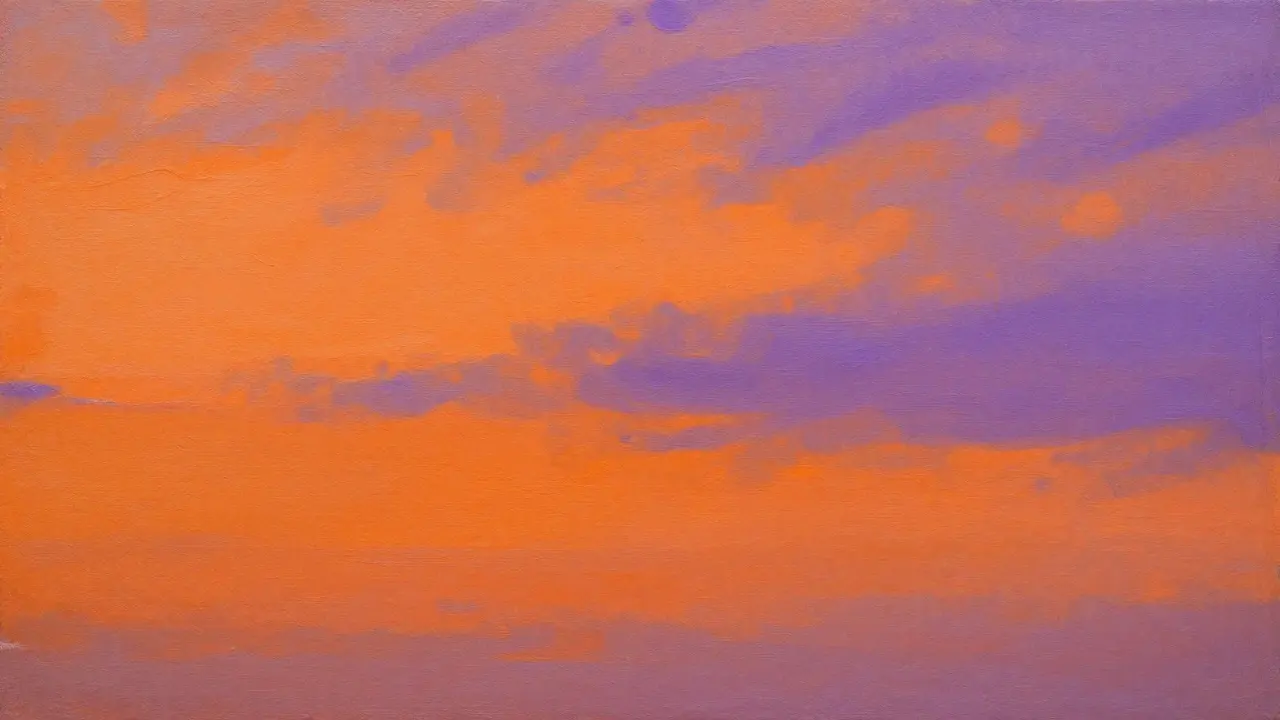
Action Paintingfocuses on the physical act of painting as part of the final work. Think of the canvas as a battleground. The artist moves around it, dripping, pouring, or slashing paint with tools or sticks. The resulting web of lines shows the history of the artist's movements. It captures speed and force. Conversely, Color Field Paintinguses large areas of solid color to evoke deep contemplation. There is little visible brushwork. Instead, soft rectangles of red, blue, or orange float on top of each other. The goal here is spiritual rather than kinetic. Viewers often describe feeling small when standing in front of these massive blocks of color.
The Titans of the Movement
You cannot talk about this era without mentioning the figures who defined it. Their names are synonymous with the movement itself.
Jackson Pollockan American painter known for his unique drip technique
took the idea of action painting to its extreme. He laid his canvases on the floor, allowing him to walk around the work. His piece *No. 5, 1948* sold for $140 million years later, proving the market eventually caught up to the movement's significance. He transformed the process of creation into a performance.Willem de Kooninga Dutch-American artist known for blending abstraction with figure painting
offered a different perspective. While he used heavy, textured strokes similar to Pollock, he often retained hints of the human figure. His series on women remains controversial today for its intensity. Then there is Mark Rothko. His museum in Houston houses murals that feel like windows into another dimension. He refused to call his work abstract, preferring terms like "human drama." For Rothko, color was a vehicle for tragedy and joy.Barnett Newmanknown for large canvases divided by vertical color bars called zips
worked similarly to Rothko but favored stark geometry. Robert Motherwelloften associated with the New York School, created works exploring black and white contrasts added intellectual depth through his writings and theoretical contributions.Impact and Legacy in Modern Art
The ripple effects of this movement lasted decades. By emphasizing the artist's individual expression, it paved the way for almost every contemporary art form we see today. Pop Art, which came after, was partly a reaction against the seriousness of this style, yet it relied on the freedom these artists established.
Museums like the MoMA and Guggenheim built collections around these works, cementing their status in history. Today, the concept of expressing raw emotion through non-representational means is accepted worldwide. The movement proved that art doesn't need to copy the real world to be valuable; it just needs to connect honestly with the human experience. Whether you enjoy the visual noise or the quiet zones, the legacy of Abstract Expressionism remains the ultimate proof that art is a living conversation.
What makes Abstract Expressionism different from Cubism?
Cubism breaks objects down into geometric shapes based on mathematical logic. Abstract Expressionism discards the object entirely to focus on emotion, spontaneity, and the physical act of applying paint.
When did Abstract Expressionism start?
The movement officially emerged in the mid-1940s in New York City, reaching its peak popularity throughout the 1950s.
Who are the most famous painters of this style?
Jackson Pollock, Mark Rothko, Willem de Kooning, Barnett Newman, and Joan Mitchell are considered the primary leaders of the movement.
Is there any representational imagery in Abstract Expressionist art?
Generally, no. However, some artists like de Kooning occasionally included hints of figures or landscapes, but the style primarily avoids depicting real-world subjects.
How much do Abstract Expressionist paintings sell for today?
Major works by key artists like Pollock or Rothko can sell for tens of millions of dollars, sometimes exceeding $100 million at private auctions.