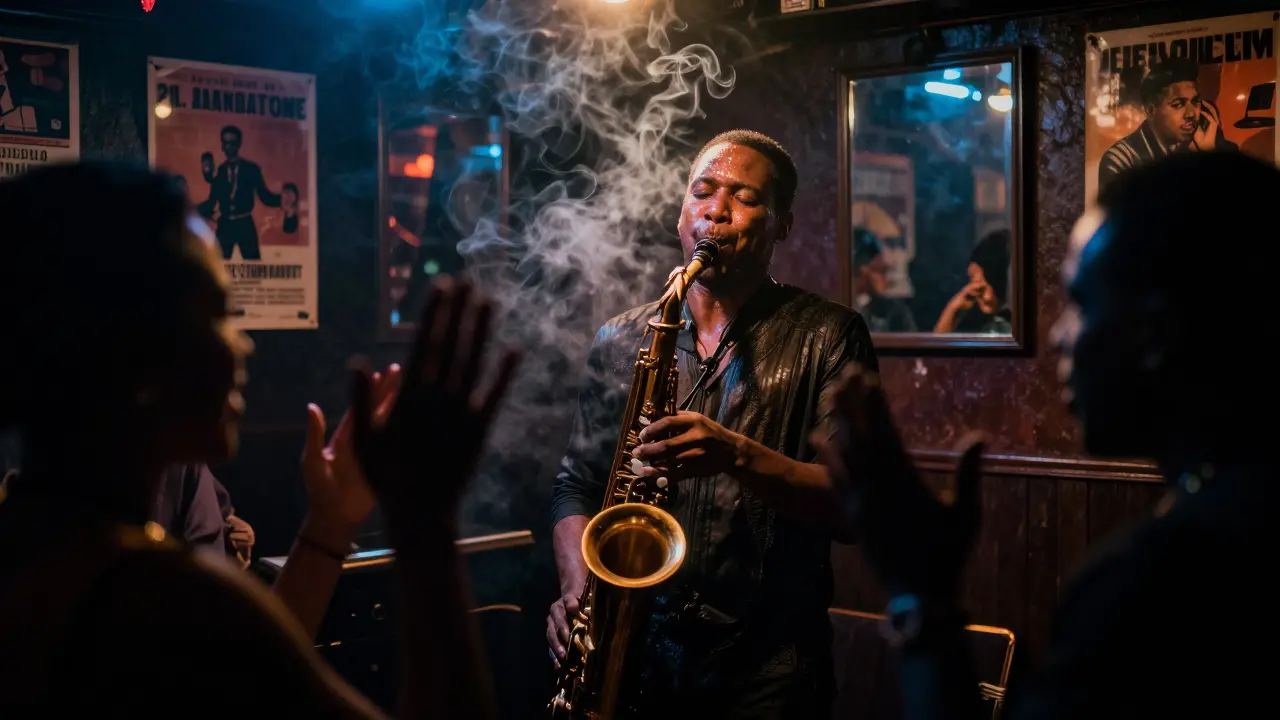
Picture New York City in the early 1920s. The air is thick with smoke from cigar shops and street vendors. But if you step into a basement club on 135th Street, the atmosphere changes completely. You hear the wail of a saxophone, the snap of fingers, and voices singing about heartbreak and hope. This wasn't just entertainment. It was a revolution happening in real-time.
We often call this period the Harlem Renaissance, also known as the New Negro Movement. It was a cultural explosion centered in Harlem, New York, that lasted roughly from the end of World War I to the mid-1930s. While many people associate it strictly with jazz and blues, those genres were merely the soundtrack to something much bigger: the redefinition of Black identity in America.
The Great Migration: Fueling the Fire
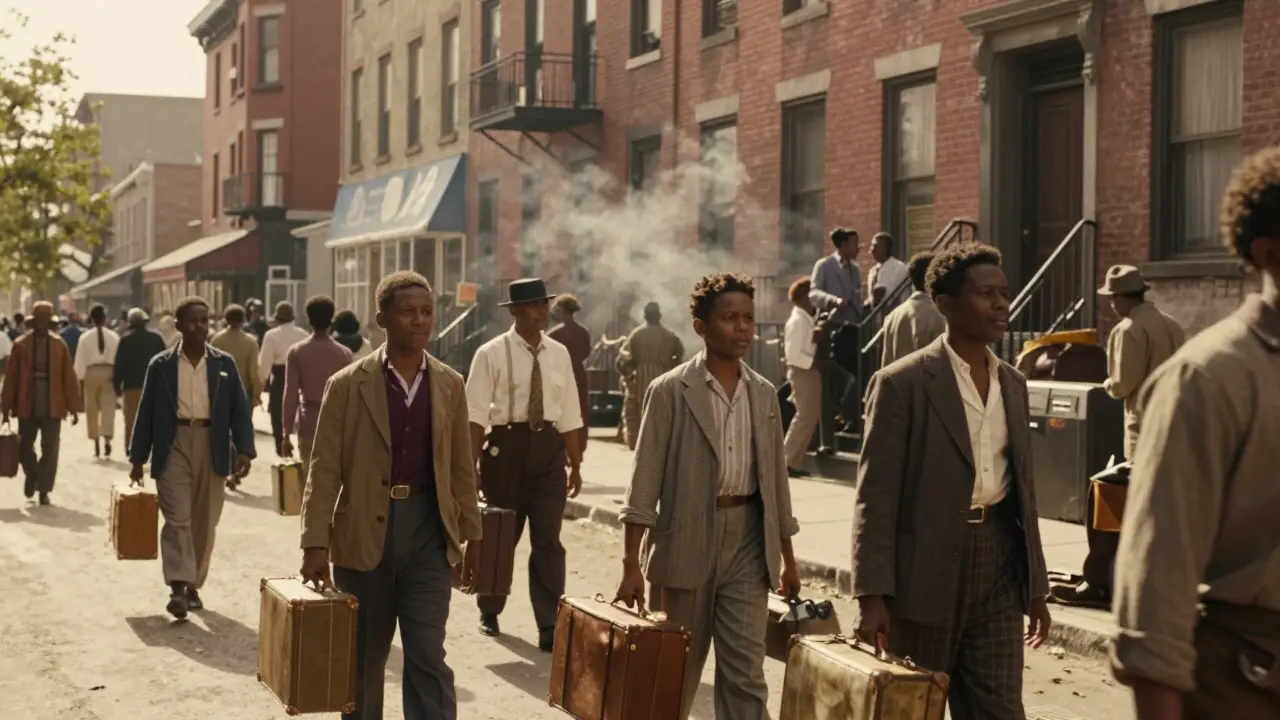
You can't understand the music without understanding the movement of people. Before the 1910s, most African Americans lived in the rural South, trapped by sharecropping and the brutal Jim Crow laws. Then came the Great Migration. Between 1916 and 1970, six million Black Americans moved north and west, seeking industrial jobs and freedom from racial violence.
Harlem became the primary destination. In 1910, only 15,000 Black residents lived there. By 1930, that number had skyrocketed to nearly 200,000. This sudden influx created a dense, vibrant community where ideas could spread like wildfire. Artists, writers, and musicians who had been isolated in small towns now found themselves surrounded by thousands of others sharing their experiences. This density allowed for the rapid exchange of artistic styles and political philosophies that defined the era.
The economic boom of the 1920s played a role too. Although discrimination remained severe, the war effort had opened some doors. Black workers filled factories vacated by white men fighting overseas. This newfound economic power meant more disposable income for entertainment, supporting clubs, theaters, and publications.
Jazz and Blues: The Sound of a New Identity
Let's talk about the music, since that's what brought you here. Jazz and blues weren't just genres; they were languages. They expressed emotions that polite society couldn't articulate. The blues spoke to the pain of displacement and loss, while jazz celebrated resilience, joy, and complexity.
Jazz emerged from the brass bands of New Orleans but found its true voice in Harlem. Musicians like Duke Ellington turned his residency at the Cotton Club into an art form. Ellington didn't just play songs; he composed suites that told stories. His band became a laboratory for new sounds, blending classical structures with improvisational freedom.
Then there was Louis Armstrong. Though he spent time in Chicago, his influence permeated every corner of the Harlem scene. Armstrong introduced the concept of the soloist-the individual voice rising above the ensemble. This mirrored the broader cultural shift: the emphasis on individual talent within the collective struggle.
The blues provided the emotional backbone. Artists like Bessie Smith, the "Empress of the Blues," commanded stages with raw power. Her lyrics dealt with love, betrayal, and poverty, resonating deeply with working-class audiences. She proved that Black women could be powerful public figures, defying the submissive stereotypes imposed by white society.
| Artist | Genre | Contribution |
|---|---|---|
| Duke Ellington | Jazz | Elevated jazz to high art through complex compositions |
| Louis Armstrong | Jazz/Blues | Pioneered scat singing and virtuosic trumpet solos |
| Bessie Smith | Blues | Defined the classic blues style with powerful vocals |
| Billie Holiday | Jazz/Blues | Introduced intimate, narrative-driven vocal phrasing |
The Literary Explosion: Words as Weapons
Music drew the crowds, but literature gave the movement its intellectual spine. Writers used poetry and prose to challenge racist narratives and claim dignity for Black people. This wasn't just writing for fun; it was a deliberate act of self-definition.
Langston Hughes is perhaps the most famous face of this literary wave. He believed that Black artists should embrace their heritage openly. His poem "The Weary Blues" captures the essence of the era: a pianist playing late at night, turning sorrow into beauty. Hughes wrote in vernacular English, reflecting how ordinary people actually spoke, which was revolutionary at a time when Black dialect was often mocked in mainstream media.
Zora Neale Hurston took a different approach. An anthropologist as well as a writer, she collected folktales from the South. Her novel *Their Eyes Were Watching God* (published slightly after the peak years but rooted in this mindset) centers on a Black woman's journey to self-discovery. Hurston argued against the idea that Black art needed to serve as propaganda for civil rights; instead, she wanted to show the full humanity and diversity of Black life.
Clarence Senior, a journalist and editor, played a crucial behind-the-scenes role. Through his magazine *Opportunity*, he organized essay contests that launched the careers of dozens of young writers. He acted as a curator, guiding the aesthetic direction of the movement and connecting artists with publishers.
Visual Arts: Painting the Truth
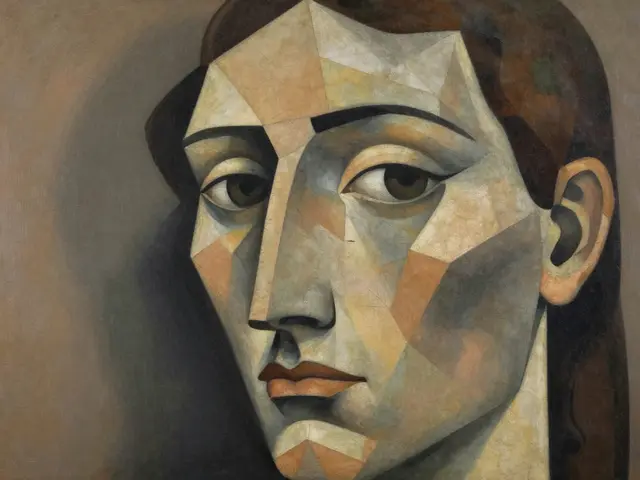
While words and music dominated, visual artists were equally active. They sought to create images that countered the caricatures seen in minstrel shows and advertisements. Instead of exaggerated features and subservient poses, they depicted strength, elegance, and everyday dignity.
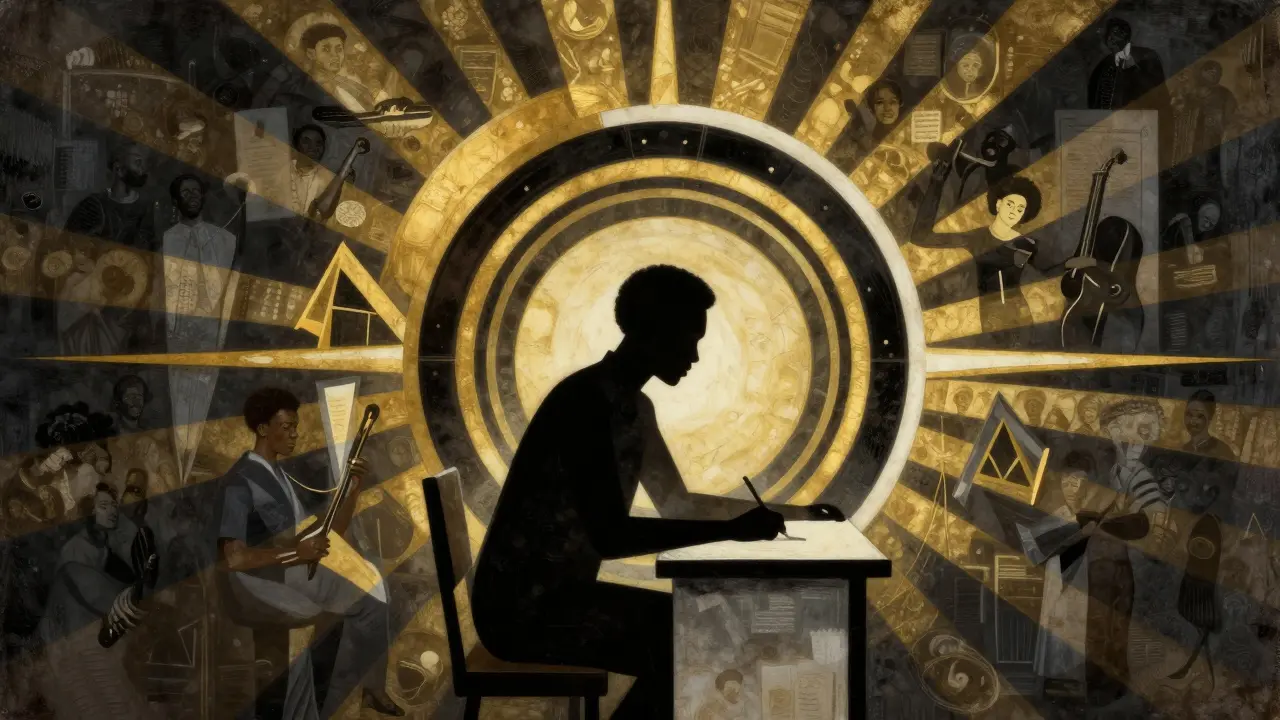
Aaron Douglas became the visual icon of the Harlem Renaissance. His murals combined Art Deco lines with African motifs. He used silhouettes and radiating light beams to suggest spiritual awakening and historical progress. His work adorned magazines like *The Crisis* and *Opportunity*, ensuring that millions saw this new visual language.
Jacob Lawrence started his career during this period. Known for his bold colors and dynamic compositions, he later painted series depicting the Great Migration itself. His style emphasized movement and emotion over realistic detail, capturing the energy of urban life.
The Role of Patrons and Institutions
Art doesn't happen in a vacuum. The Harlem Renaissance relied heavily on support from both Black and white patrons. On the Black side, figures like A. Philip Randolph and W.E.B. Du Bois provided ideological guidance. Du Bois, editor of *The Crisis* magazine for the NAACP, championed the "Talented Tenth"-the idea that educated Black leaders should guide the race toward equality.
White patrons also played a complex role. Charles S. Johnson, director of the Fisk University Settlement House in Harlem, hosted salons that brought together Black intellectuals and white liberals. While this funding helped sustain galleries and theaters, it sometimes led to compromises. Some artists felt pressured to present sanitized versions of Black life to appeal to white sensibilities. This tension between artistic integrity and financial survival remains a topic of debate among historians today.
Why the Harlem Renaissance Ended
No movement lasts forever. Several factors contributed to the decline of the Harlem Renaissance by the mid-1930s. First, the Great Depression hit hard. With money scarce, patrons cut back on arts funding. Clubs closed, and magazines folded.
Second, internal disagreements fractured the community. Debates raged over whether art should be socially engaged or purely aesthetic. Some younger artists criticized the older generation for being too elitist or disconnected from the struggles of the working class.
Finally, the rise of new political movements shifted focus. As labor unions gained strength and radical ideologies spread, many activists prioritized direct political action over cultural expression. The energy that fueled the Renaissance redirected into the Civil Rights movement of the 1940s and 50s.
Legacy: What Remains Today
So, what's left? The Harlem Renaissance didn't disappear; it evolved. It established the blueprint for modern Black arts. Every subsequent movement-from the Black Arts Movement of the 1960s to contemporary hip-hop culture-draws from the same well of pride, resistance, and creativity.
It taught us that culture is not separate from politics. When you listen to jazz today, you're hearing echoes of that struggle for recognition. When you read works by Toni Morrison or James Baldwin, you're seeing the continuation of the conversations started by Hughes and Hurston. The Harlem Renaissance proved that Black culture isn't just a subset of American culture-it is central to it.
When exactly did the Harlem Renaissance take place?
The Harlem Renaissance is generally dated from the end of World War I around 1918 to the mid-1930s. Its peak activity occurred during the 1920s, coinciding with the economic prosperity of the "Roaring Twenties."
Was the Harlem Renaissance only about music?
No, while jazz and blues were prominent, the movement encompassed literature, visual arts, theater, and political thought. Writers like Langston Hughes and Zora Neale Hurston were just as influential as musicians like Duke Ellington.
Who were the key figures of the Harlem Renaissance?
Key figures included musicians Duke Ellington, Louis Armstrong, and Bessie Smith; writers Langston Hughes, Zora Neale Hurston, and Claude McKay; and visual artists Aaron Douglas and Jacob Lawrence. Intellectual leaders like W.E.B. Du Bois also played critical roles.
How did the Great Migration influence the Harlem Renaissance?
The Great Migration brought hundreds of thousands of African Americans from the rural South to northern cities like New York. This concentration of population created a critical mass of talent and audience necessary for a cultural movement to flourish.
Did white people participate in the Harlem Renaissance?
Yes, white patrons, critics, and audiences participated significantly. Organizations like the NAACP and individuals like Carl Van Vechten supported Black artists financially and socially. However, this relationship was often complicated by racial prejudices and power imbalances.