You’ve probably heard the term Harlem Renaissance a cultural, social, and artistic explosion centered in Harlem, New York, spanning the 1920s and early 1930s. Maybe you associate it with black-and-white photos of men in fedoras or the smooth sounds of saxophones. But calling it just a "music era" misses the point entirely. This was a radical redefinition of Black identity in America. It wasn’t just about art; it was about claiming space, voice, and dignity in a country that often denied all three.
If you’re trying to understand modern African American literature, jazz history, or even contemporary discussions on racial identity, you have to look back at this period. Why did it happen? Who were the key players? And why does it still matter today? Let’s break down the mechanics of this movement without the academic jargon.
The Great Migration and the Birth of a Hub
To get why Harlem became the center of gravity, you need to look at demographics. Between 1910 and 1930, roughly 1.5 million African Americans moved from the rural South to urban centers in the North and Midwest. This shift, known as the Great Migration, was driven by two main factors: the brutal realities of Jim Crow laws and the sudden demand for labor in northern factories during World War I.
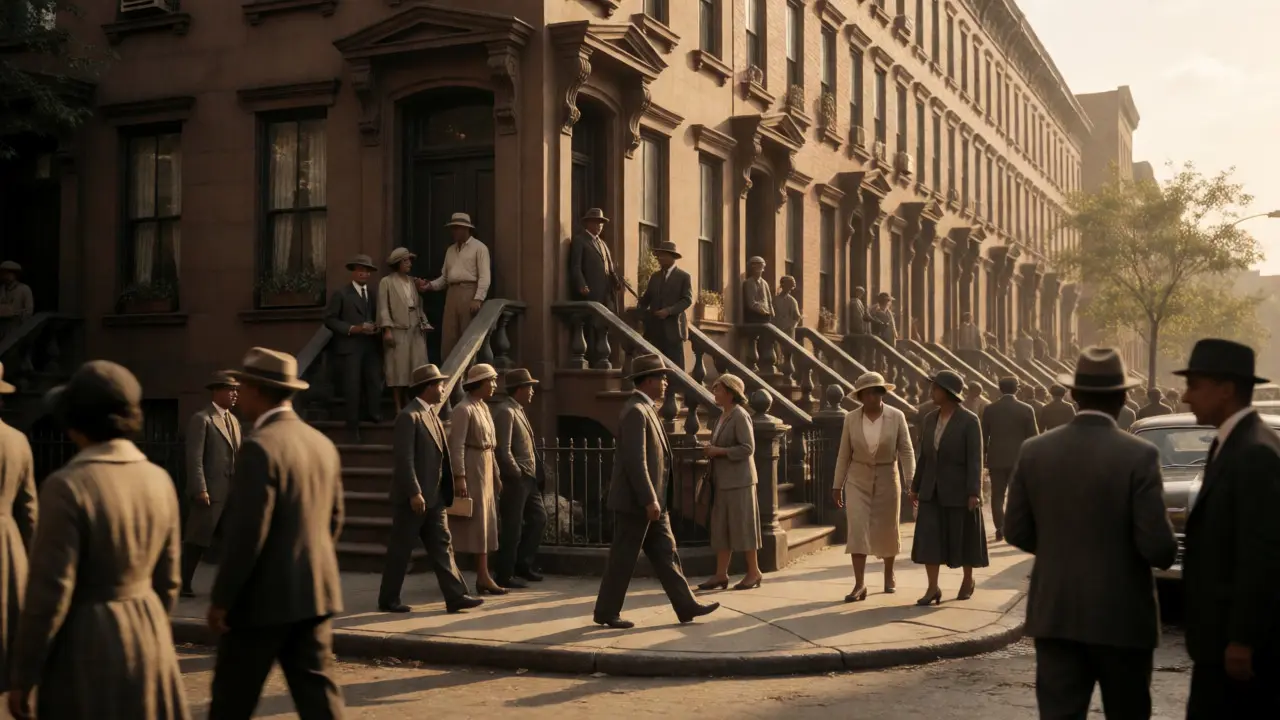
New York City, specifically the neighborhood of Harlem, became the primary destination. By 1920, Harlem had transformed from a predominantly white middle-class suburb into a densely populated Black metropolis. White landlords, facing economic pressure and changing neighborhood dynamics, began renting properties to Black tenants. This concentration of people created something powerful: critical mass. You had writers, musicians, intellectuals, and activists living within walking distance of each other. Ideas didn’t just circulate; they collided.
This density allowed for rapid collaboration. A poet could drop by a jazz club after work, meet a painter, and discuss a new literary magazine over dinner. That proximity fueled the creative output that defined the era. It wasn’t accidental; it was a demographic inevitability meeting cultural ambition.
Literature: Finding a Voice Beyond Stereotypes
Before the 1920s, mainstream American literature often depicted Black characters through caricatures or as sidekicks to white protagonists. The Harlem Renaissance writers rejected these tropes. They wanted to write complex, human stories rooted in their own experiences.
Langston Hughes is perhaps the most famous name here. He pioneered "jazz poetry," weaving the rhythms of blues and jazz directly into his verse. His poem "The Weary Blues" doesn’t just describe music; it mimics its cadence. Hughes argued that Black artists should express their individual dark-skinned selves without fear or shame. He wasn’t writing for white approval; he was writing for his community.
Then there’s Zora Neale Hurston. While Hughes focused on urban life, Hurston traveled the South to collect folklore. Her novel Their Eyes Were Watching God (1937) is a masterpiece of dialect and interiority. She captured the speech patterns and spiritual lives of rural Black Southerners, preserving a culture that was rapidly disappearing due to urbanization.
Other key figures include Countee Cullen, who used traditional sonnet forms to explore themes of heritage and racism, and Jean Toomer, whose experimental work Cane blended prose and poetry to depict the split between rural and urban Black life. These writers weren’t a monolith. They debated fiercely. Should Black art be political propaganda? Or should it be pure aesthetic expression? Those debates shaped the movement’s trajectory.
Jazz and Nightlife: The Soundtrack of Change
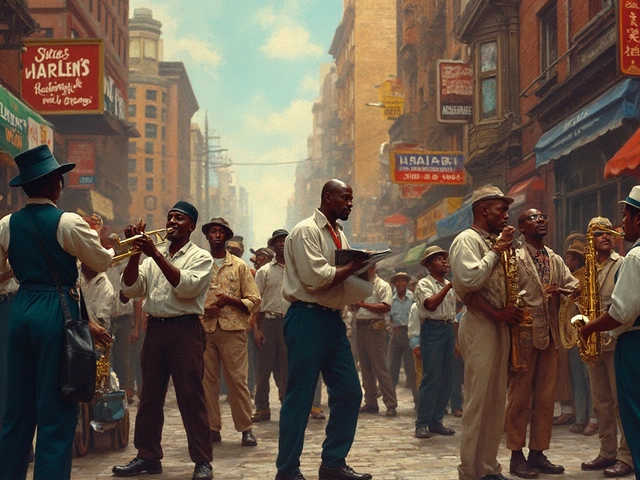
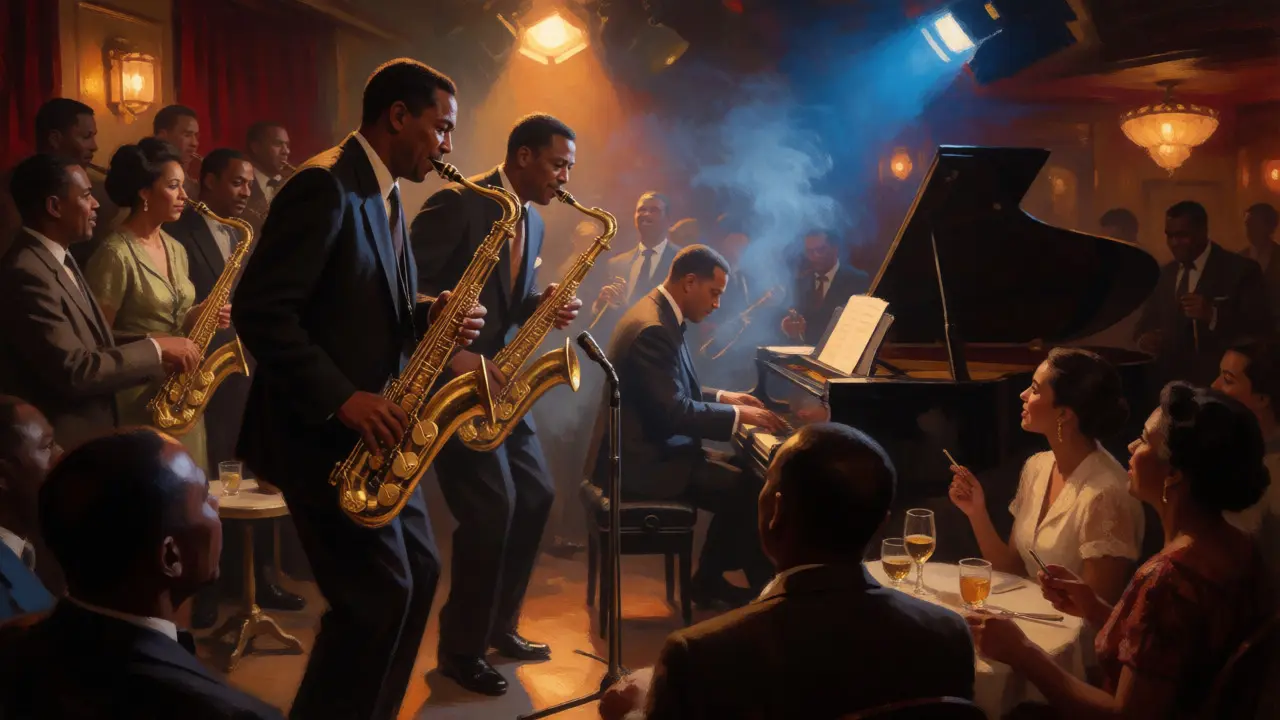
If literature provided the words, jazz provided the rhythm. Harlem’s nightlife was legendary, but it wasn’t just about partying. Venues like the Cotton Club and the Savoy Ballroom were sites of cultural negotiation.
The Cotton Club is a tricky example. It was owned by white gangsters and catered exclusively to white audiences, yet it featured Black performers like Duke Ellington. Ellington used this platform to elevate jazz from dance hall entertainment to sophisticated orchestral composition. Meanwhile, the Savoy Ballroom was integrated. It was where dancers invented the Lindy Hop, a dance form that required improvisation and partnership-much like jazz itself.
Jazz became a metaphor for freedom. Its improvisational nature mirrored the desire for social mobility. Musicians like Louis Armstrong and Bessie Smith brought emotional depth and technical innovation to their craft. Their records sold nationally, introducing millions of Americans to Black musical traditions. This exposure helped break down some racial barriers, even if segregation remained firmly in place.
Visual Arts and Intellectual Debates
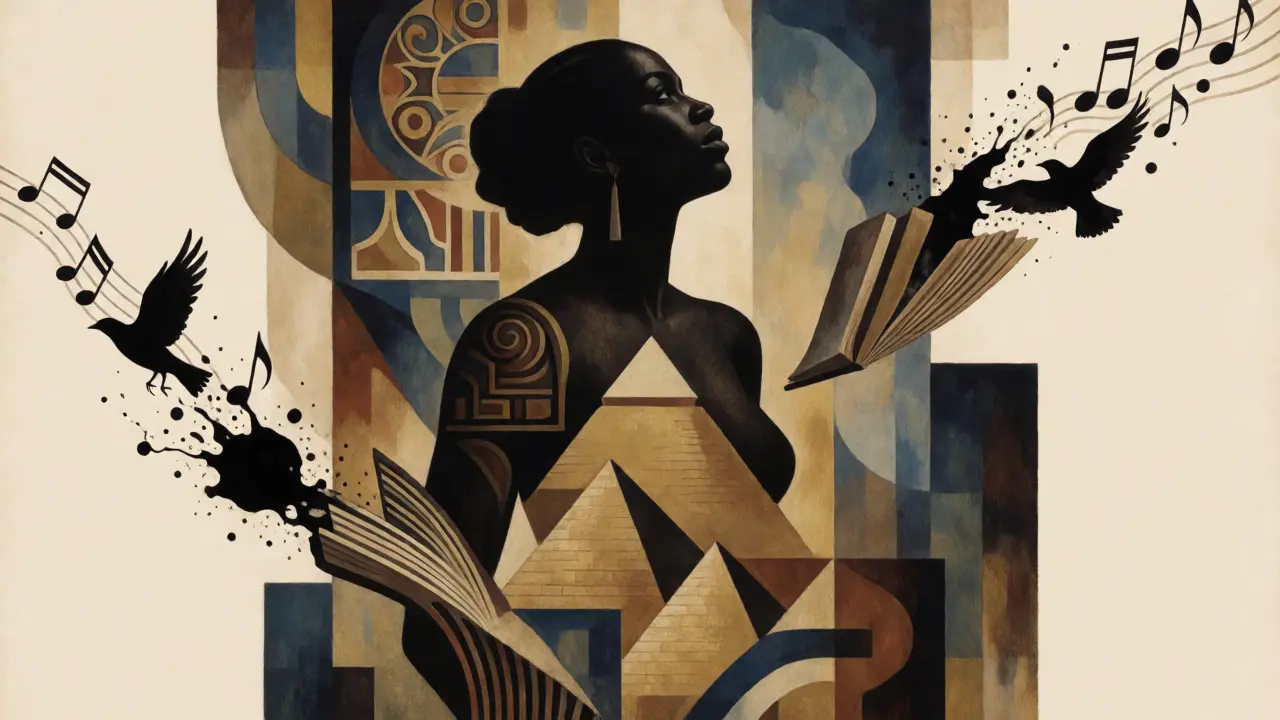
Painters and sculptors played a crucial role in visualizing the "New Negro." Aaron Douglas developed a distinctive style that combined Art Deco geometry with African motifs. His murals depicted Black history not as a narrative of slavery, but as one of resilience and ancient heritage. He wanted viewers to see connections to Egypt and West Africa, challenging the notion that Black culture started with American slavery.
Simultaneously, intellectual leaders shaped the discourse. Alain Locke, a philosopher and critic, edited the anthology The New Negro (1925). This book served as the movement’s manifesto. Locke argued that African Americans needed to redefine themselves culturally rather than just politically. He believed that art would lead the way to social acceptance.
On the other end of the spectrum was Marcus Garvey, the Jamaican-born activist who founded the Universal Negro Improvement Association (UNIA). Garvey advocated for Pan-Africanism and economic self-sufficiency. While Locke and others focused on integration and artistic recognition within America, Garvey pushed for separation and pride in African ancestry. His influence was massive, particularly among working-class Blacks who felt disconnected from the elite intellectual circles of Harlem.
Why Did It End?
Movements rarely end with a bang; they fade. The Harlem Renaissance collapsed under the weight of the Great Depression, which began in 1929. As unemployment soared, disposable income vanished. Patrons stopped buying paintings. Record sales dropped. Clubs closed. Many artists left Harlem for Chicago or Los Angeles in search of work.
Additionally, internal tensions grew. Some critics argued the movement was too focused on pleasing white patrons. Others felt it ignored the struggles of the poorest Black citizens. By the mid-1930s, the energy had dissipated. However, the infrastructure it built-publishing houses, arts organizations, and a network of intellectuals-remained.
Key Figures Comparison
| Name | Primary Role | Key Contribution | Famous Work |
|---|---|---|---|
| Langston Hughes | Poet/Novelist | Jazz poetry; depicting everyday Black life | The Weary Blues |
| Zora Neale Hurston | Anthropologist/Novelist | Folklore preservation; female agency | Their Eyes Were Watching God |
| Duke Ellington | Composer/Bandleader | Elevating jazz to high art | Black and Tan Fantasy |
| Alain Locke | Philosopher/Critic | Defining the "New Negro" concept | The New Negro (Anthology) |
| Aaron Douglas | Painter | African-inspired modernist art | Aspects of Negro Life |
Legacy and Modern Relevance
So, why should you care about events from a century ago? Because the questions raised then are still being asked now. How do Black artists balance commercial success with authentic expression? What is the relationship between culture and politics? The Harlem Renaissance proved that culture is a powerful tool for social change. It gave African Americans a sense of pride and visibility that persists today.
Contemporary movements like Black Lives Matter draw on the same wellspring of identity and resistance. When you watch a movie by Jordan Peele or listen to Kendrick Lamar, you’re seeing echoes of Hughes’ storytelling and Ellington’s sonic innovation. The Renaissance didn’t just create art; it created a framework for understanding Black excellence in America.
If you want to dive deeper, start with Alain Locke’s The New Negro for the philosophical context, then read Hughes’ short stories for the human element. Listen to Duke Ellington’s recordings from the Cotton Club era. Visit the Schomburg Center for Research in Black Culture in Harlem if you’re ever in New York. History isn’t dead; it’s waiting to be engaged.
When exactly did the Harlem Renaissance take place?
While exact dates vary, historians generally agree it spanned from approximately 1918 to 1937. The peak years were the 1920s, ending largely due to the economic impact of the Great Depression.
Was the Harlem Renaissance only about music and literature?
No. It was a broad cultural movement that included visual arts, theater, film, philosophy, and political activism. Leaders like W.E.B. Du Bois and Marcus Garvey influenced social and political thought alongside artists.
Who coined the term "New Negro"?
Philosopher Alain Locke popularized the term in his 1925 anthology The New Negro. It referred to a new generation of African Americans who refused to accept subservient roles and demanded civil rights and cultural respect.
Did the Harlem Renaissance benefit all African Americans equally?
Not necessarily. It primarily benefited the urban middle and upper classes in the North. Rural Black communities in the South saw less direct impact, though the cultural pride generated influenced broader national consciousness.
What caused the end of the Harlem Renaissance?
The Great Depression of 1929 devastated the economy, reducing funding for arts and patronage. Additionally, many artists migrated to other cities for work, dispersing the concentrated community that had fueled the movement.